
.svg)


4
min read

September 17, 2026
5 High-Impact AI Agent Deployments for Faster Enterprise Hiring Cycles
Many enterprise HR departments are currently exploring AI tools. While some recruiters use large language models (LLMs) like ChatGPT to refine job descriptions, the time-to-hire metric often remains unchanged. Basic productivity enhancements alone may not be sufficient to gain a competitive edge in talent acquisition. To achieve significant improvements, organizations need to move beyond superficial tools and adopt Deep Operational Integration of AI.
The next phase of AI in recruitment involves autonomous execution, not just faster content generation. Here are five high-impact strategies to transform your hiring cycle by deploying AI agents as a core component of your recruitment process.
1. Moving Beyond Generic AI with Custom Logic
Relying solely on off-the-shelf AI models can limit competitive advantage. True differentiation emerges when AI is tailored to your specific business logic. Generic prompts tend to yield generic candidate profiles. By embedding your organization's unique cultural attributes, specific technical requirements, and internal decision-making frameworks into an AI agent, you can ensure the system screens for your definition of an ideal candidate, rather than a broad industry standard.
2. Specialized Recruiting via Retrieval-Augmented Generation (RAG)
Publicly available AI models are generalists; they typically lack knowledge of your team's internal dynamics or the nuances of your most successful hires. By utilizing Retrieval-Augmented Generation (RAG), AI systems can be grounded in your proprietary data. This includes historical hiring successes, internal feedback loops, and specific project requirements. This approach transforms a standard LLM into a specialized recruiter that understands your company’s unique characteristics and can identify the subtle traits that contribute to long-term employee retention within your specific environment.
3. Transitioning from Passive Tracking to Autonomous Agents
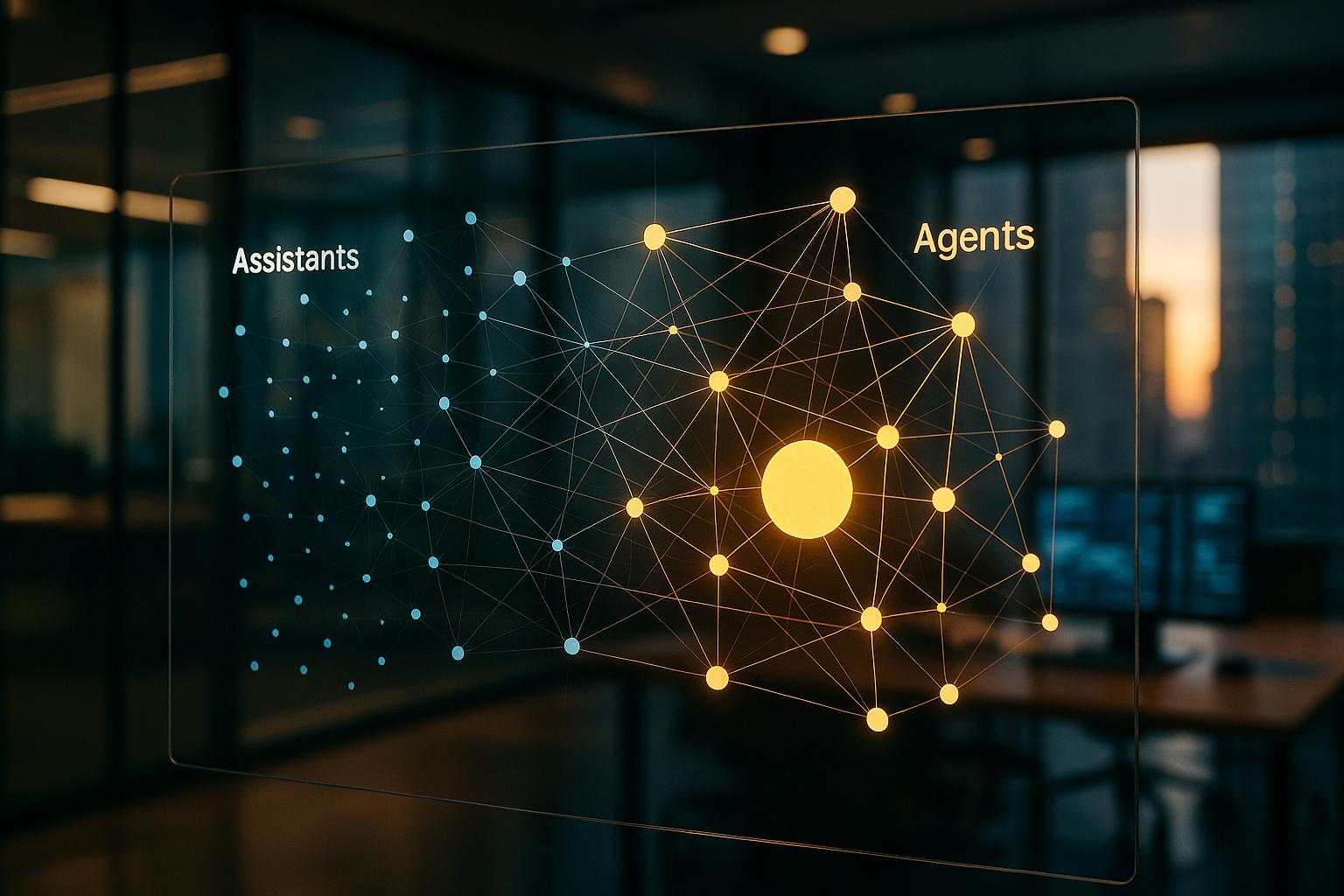
The true return on investment (ROI) from AI extends beyond simple document summarization. Significant value lies in Autonomous Agents that can execute workflow tasks. Instead of merely flagging a candidate, these agents can proactively cross-reference candidate availability, synchronize with team calendars, and draft personalized technical screening invitations for human review. This represents a shift from "AI as an assistant" to "AI as an operator" that manages administrative tasks, reducing friction in the hiring process.
4. Avoiding 'Pilot Purgatory' through Deep Stack Integration
A common barrier to AI adoption is tool fatigue. If recruiters need to switch between multiple applications or log into separate portals to use AI, adoption rates may be low. To overcome "pilot purgatory"—where promising pilot projects fail to scale—AI agents must be integrated directly into the tools your team already uses, such as applicant tracking systems (ATS) like Greenhouse or Lever, or customer relationship management (CRM) systems like Salesforce. When AI resides within your existing ATS, it becomes a natural extension of the workflow rather than a disruptive interruption.
5. Scaling with Enterprise-Grade Governance
In an enterprise environment, speed must be balanced with safety. Automated hiring processes require robust governance to ensure algorithms remain unbiased and comply with global data privacy standards. By adopting a governance-first approach, a successful pilot in one department can be scaled across an entire global organization without requiring a complete rebuild or risking compliance breaches.
From Strategy to Working Systems
The transition from conceptual AI to measurable business outcomes requires more than just software. It demands a partner who understands how to bridge the gap between strategic planning and practical execution.
Ready to optimize your hiring cycles? Explore how advanced AI solutions can deliver tangible results for your organization.