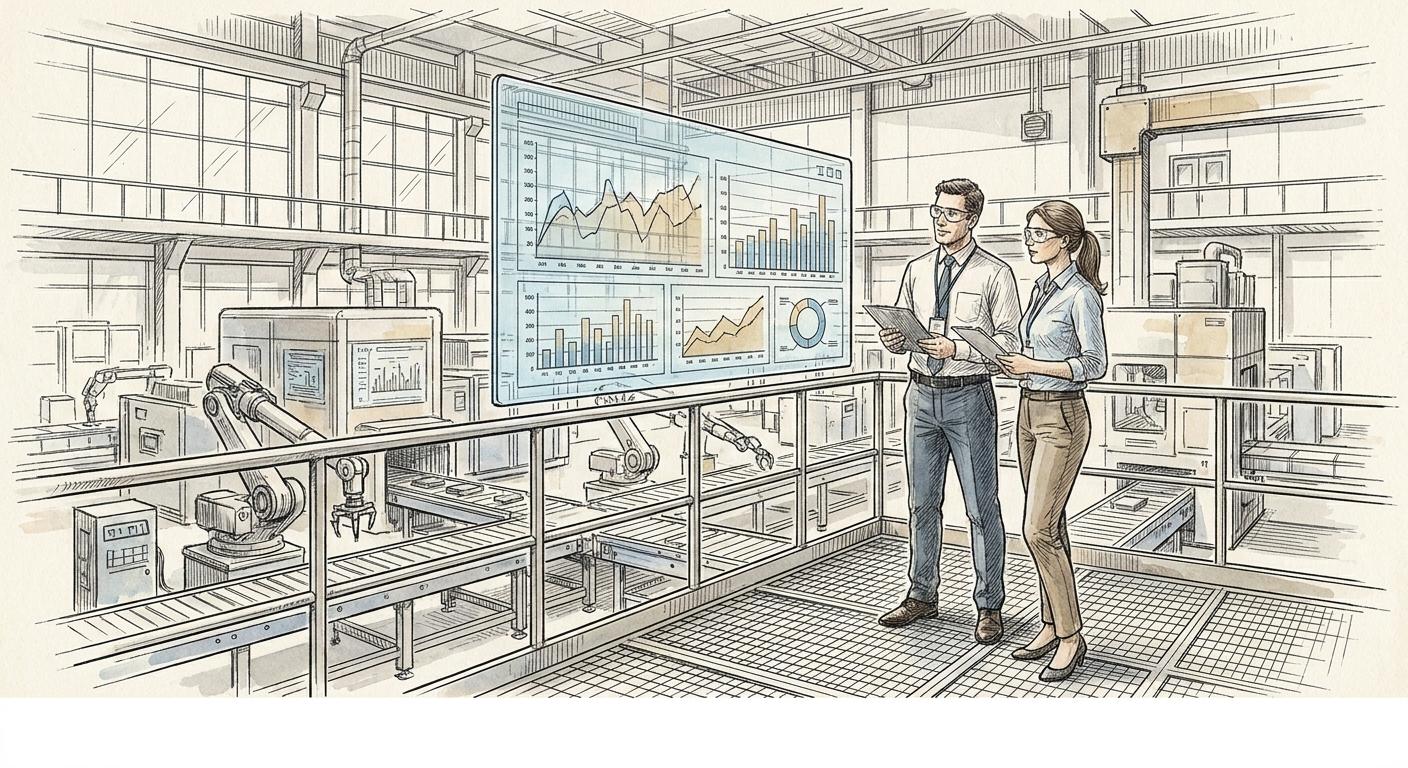
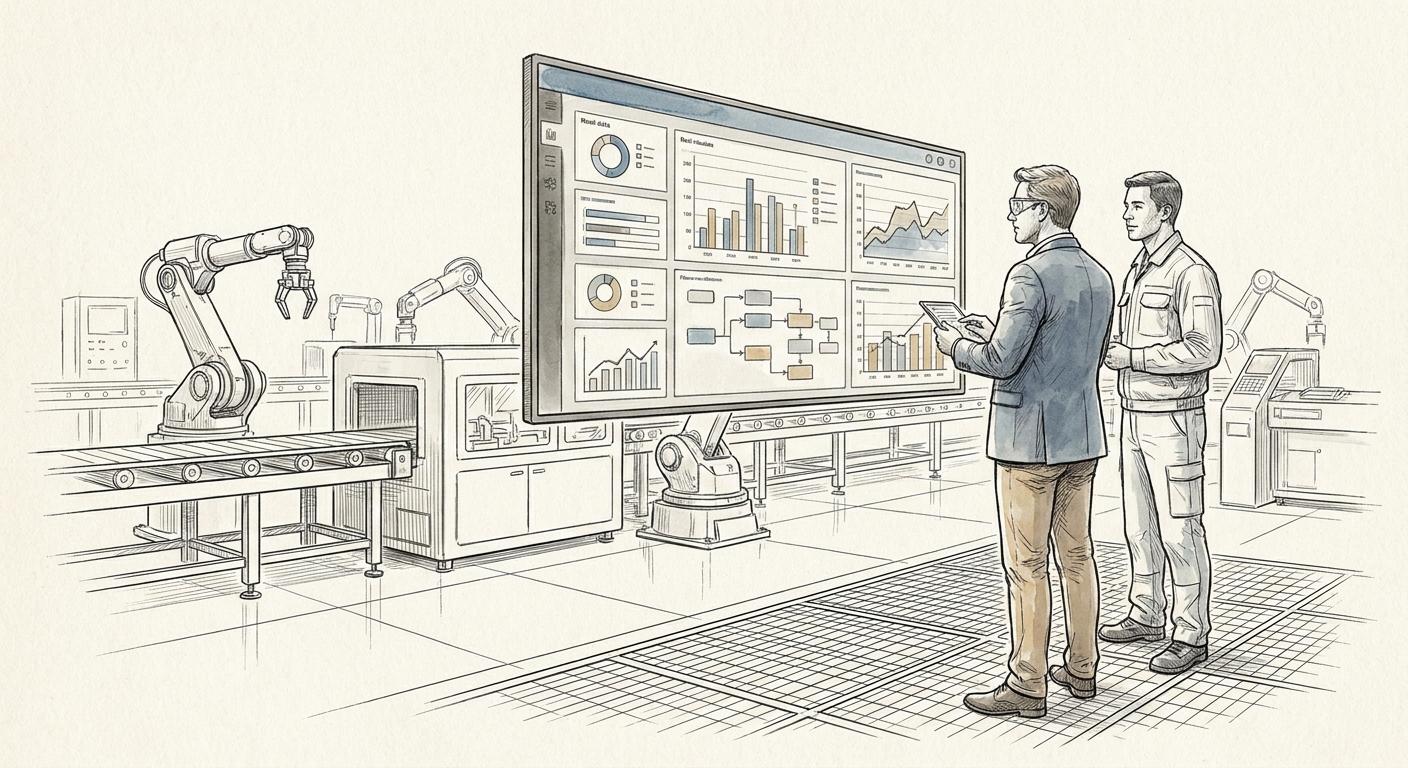
Manufacturing COOs frequently face a persistent disconnect between executive planning and the reality of the plant floor, often resulting in OTIF misses and margin leakage. While your ERP system provides a historical record of what happened, it lacks the real-time agility to prevent raw material waste as it occurs. Identifying high-impact AI use cases for manufacturing throughput is no longer a R&D experiment; it is a clinical necessity for protecting EBITDA in high-volume production environments. This playbook outlines seven specific ways to bridge the gap between your MES and ERP to drive measurable operational leverage.
The Throughput Crisis: Why ERPs Aren’t Enough
Traditional ERP systems are designed for accounting and static resource planning, not for the dynamic variables of a live production line. Because ERPs rely on "averages" - average cycle times, average scrap rates, and average lead times - they often ignore the delayed execution truth of the factory floor. When raw material quality fluctuates or a machine drifts out of alignment, the ERP remains blind until the batch is finished and the damage is done.
Raw material throughput optimization is the process of using data-driven insights to maximize the volume of finished goods produced from a specific amount of input material while minimizing waste and cycle time. By integrating AI as an execution layer above your existing systems, plant managers can transition from reactive troubleshooting to predictive orchestration, ensuring that every pound of raw material is converted into shippable product at the lowest possible cost.
1. Predictive Batch Optimization
In industries like chemicals, food processing, or metals, raw material variance is a primary driver of margin erosion. A slight change in moisture content or chemical composition can throw off an entire batch if standard recipes are followed blindly. AI models can analyze incoming material sensor data and automatically recommend real-time adjustments to temperature, pressure, or mix times. This ensures that the final product meets specifications on the first pass, significantly increasing raw material yield optimization without slowing down the line.
2. AI-Driven Scrap Reduction & Yield Recovery
The "hidden factory" - the portion of your plant dedicated to rework and scrap - directly eats into your bottom line. Traditional quality checks often happen after the material has already been processed and ruined. By deploying computer vision or vibration sensors, manufacturers can implement AI for manufacturing waste reduction that identifies defects at the point of origin. For example, iForAI has helped clients reduce manual validation time from minutes to seconds, allowing operators to stop a line before a single scrap event turns into a discarded shift’s worth of material.
3. Dynamic Bottleneck Detection (Real-Time MES Analysis)
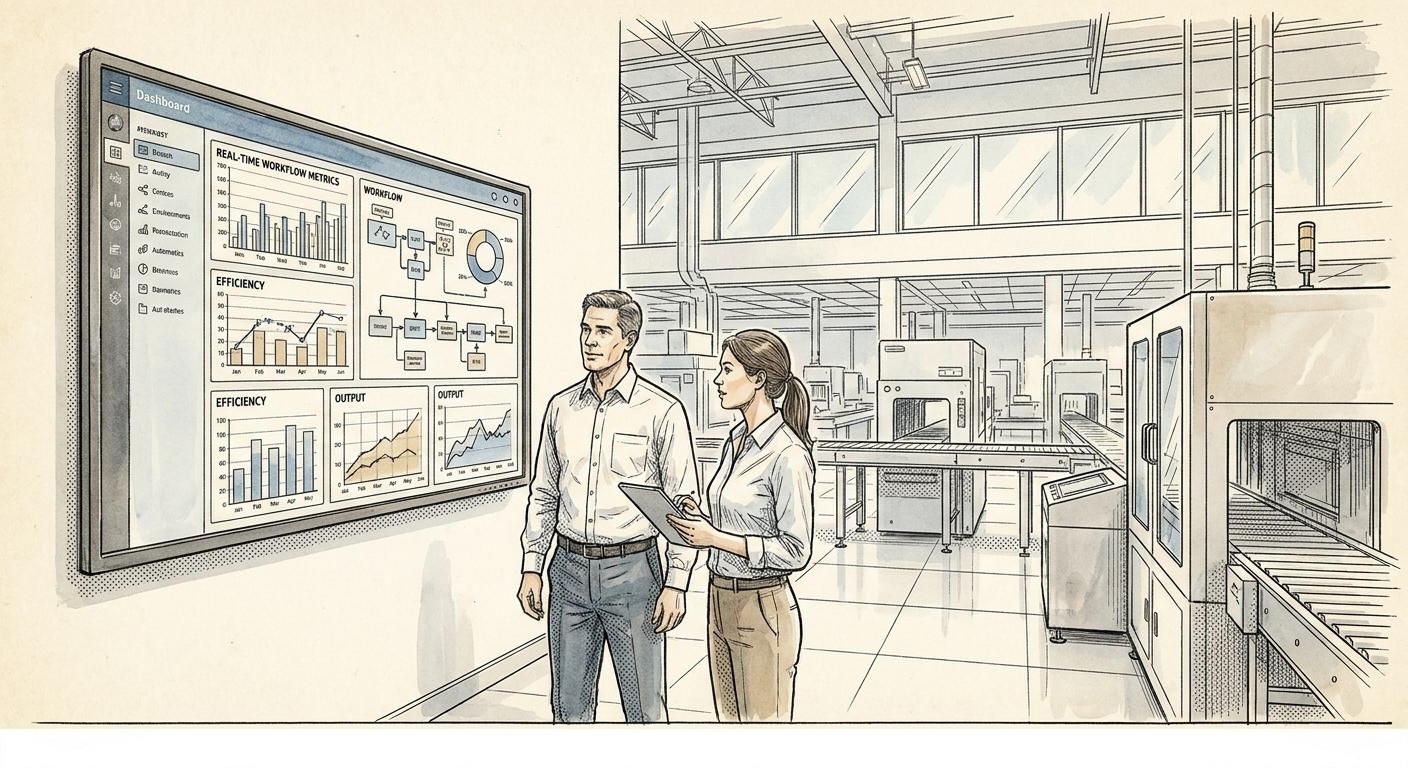
Standard OEE (Overall Equipment Effectiveness) reports are useful for monthly reviews but useless for mid-shift corrections. AI-enhanced MES analysis identifies "micro-stoppages" - short pauses of 30 to 60 seconds that don't trigger a red light but aggregate into massive throughput losses. By surfacing these patterns, COOs can address the root cause of operational efficiency in manufacturing, whether it’s a specific operator's setup technique or a faulty feeder mechanism that the maintenance team had previously overlooked.
4. Intelligent Demand-to-Floor Orchestration
Excess Work in Progress (WIP) is trapped capital. When procurement isn't perfectly aligned with the actual throughput capacity of the floor, material sits and degrades or clutters the facility. AI models synchronize procurement schedules with actual production velocity. This portfolio-wide approach to inventory ensures that raw materials arrive only when the line has the capacity to process them, reducing footprint requirements and improving the cash conversion cycle.
5. Automated Quality Control at Low Latency
Waiting for lab results creates a massive bottleneck in raw material flow. If a batch is held for 4 hours awaiting a quality sign-off, that is 4 hours of lost throughput. AI-powered visual inspection and spectral analysis provide near-instant quality gates at the edge. By moving the quality gate to the production line, manufacturers reduce the feedback loop, preventing material hold-ups and ensuring that only compliant items move to the next stage of the value chain.
6. Predictive Maintenance for Material Handling Systems
Throughput is only as fast as your slowest conveyor or feeder. When a material handling system fails, the entire plant stops, leading to an estimate-vs-actual gap that is impossible to recover within the same quarter. Implementing predictive maintenance for production flow involves monitoring the "health" of the motors and belts that move raw materials. By predicting a failure 48 hours in advance, maintenance can be performed during a scheduled changeover, preserving the continuous flow of inputs.
7. AI-Enhanced Accurate Estimating-vs-Actual Analysis
Most manufacturers struggle to explain why their actual material consumption deviated from the quote. Was it poor yield, theft, or inaccurate weighing? AI reconciles floor data against financial records to close the CFO-COO gap. By analyzing thousands of data points across the production lifecycle, AI identifies exactly where margin leakage is occurring, allowing for more accurate job costing and sharper pricing on future contracts - essential for exit readiness in PE-backed firms.
Moving Beyond Pilots: The 60-Day Implementation Roadmap
Many manufacturing organizations suffer from "pilot purgatory," where AI projects are started but never reach the production floor. The iForAI approach skips the experimental phase by focusing on a quick win use case that impacts EBITDA within the first 60 to 90 days. This begins with an AI readiness audit of your existing data streams (ERP and MES) to identify which of the seven use cases above will yield the highest operating leverage.
True value creation requires more than just software; it requires upskilling. By training site managers and operators to use these tools, companies can turn a single successful project into a repeatable AI playbook that can be scaled across multiple plants. This systematic reduction in manual effort and waste is what ultimately drives the exit multiple and satisfies LP pressure for tangible operational improvements.
FAQ
How to improve raw material throughput using AI? Improving throughput involves using machine learning to analyze real-time variables like material quality and machine performance. By adjusting production parameters in real-time, AI reduces scrap and ensures the line runs at its theoretical maximum speed without compromising quality.
Can AI help with manufacturing waste reduction? Yes, AI reduces waste by identifying production anomalies before they result in scrapped batches. Computer vision and sensor-based monitoring catch deviations early, allowing for mid-process corrections that recover yield.
How do you optimize production cycle times with machine learning? Machine learning optimizes cycle times by identifying the root causes of micro-stoppages and bottlenecks. It provides predictive insights into machine health and workflow sequencing, ensuring more consistent and faster material flow through the plant.
Do we need to replace our current ERP or MES to use AI? No. AI acts as an execution layer that sits on top of your existing ERP and MES data. It extracts and analyzes information that these systems are not designed to process, providing actionable insights without the need for a costly "rip and replace" strategy.
AI-driven throughput optimization bridges the gap between static planning and floor reality to protect margins and ensure OTIF delivery. By focusing on high-impact use cases like predictive batching and scrap reduction, manufacturers can achieve measurable EBITDA improvements within a single quarter.
Book a Manufacturing Diagnostic at ifor.ai/solutions/manufacturing