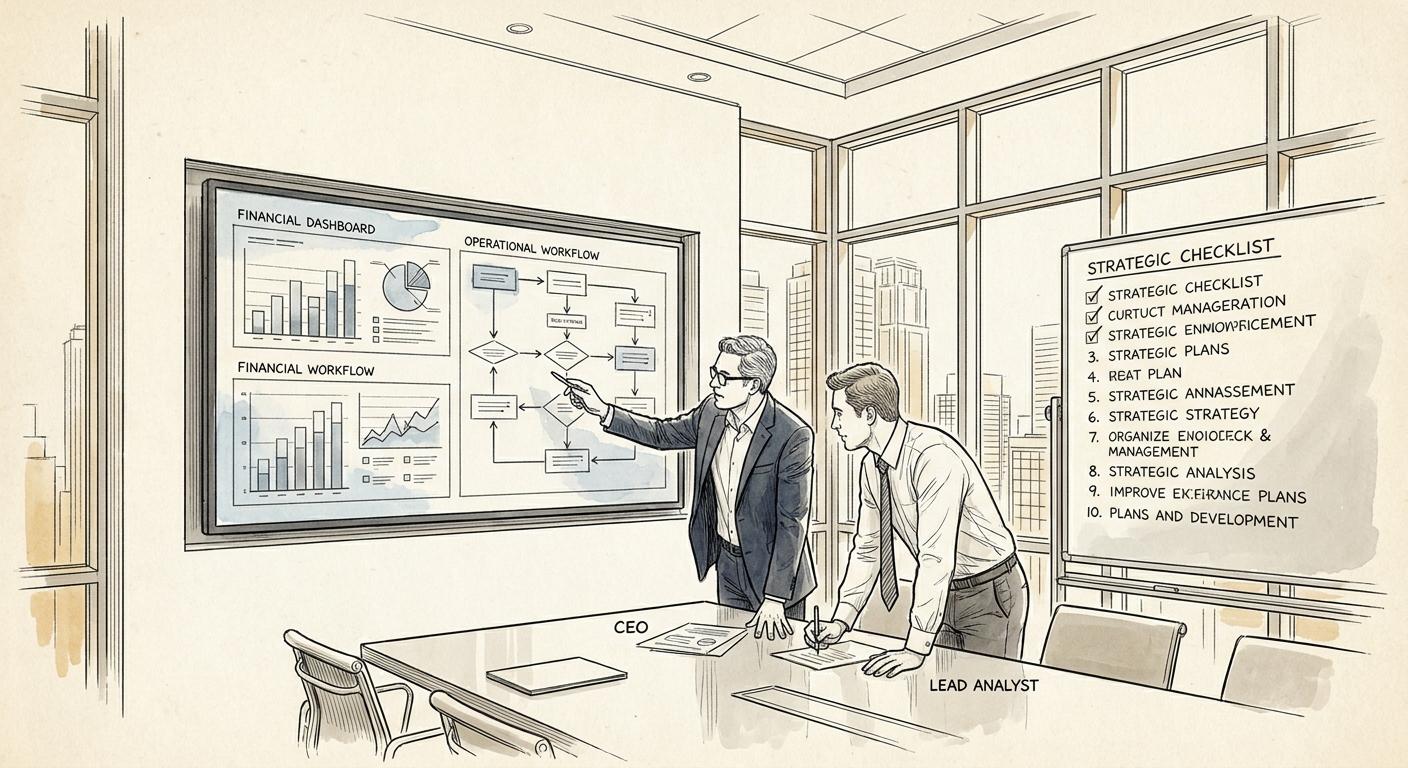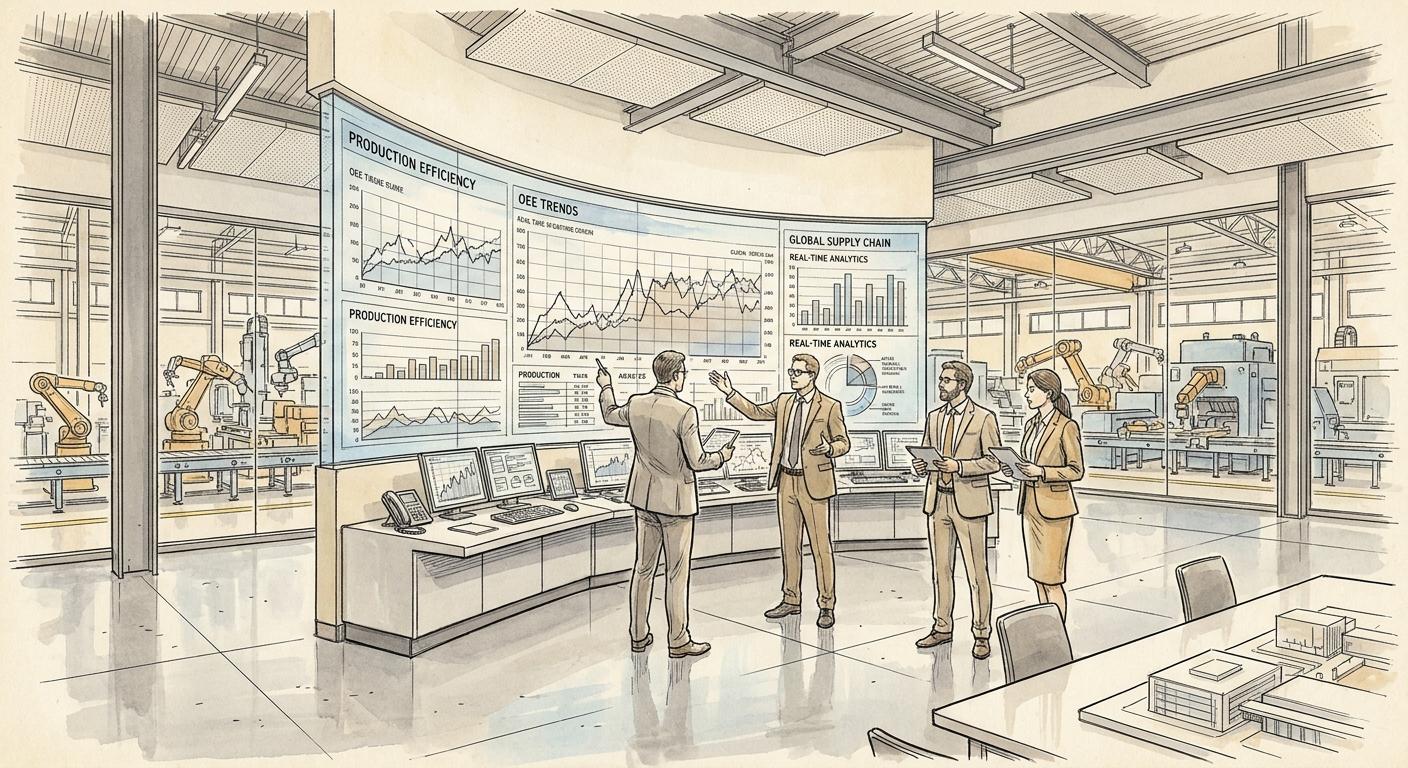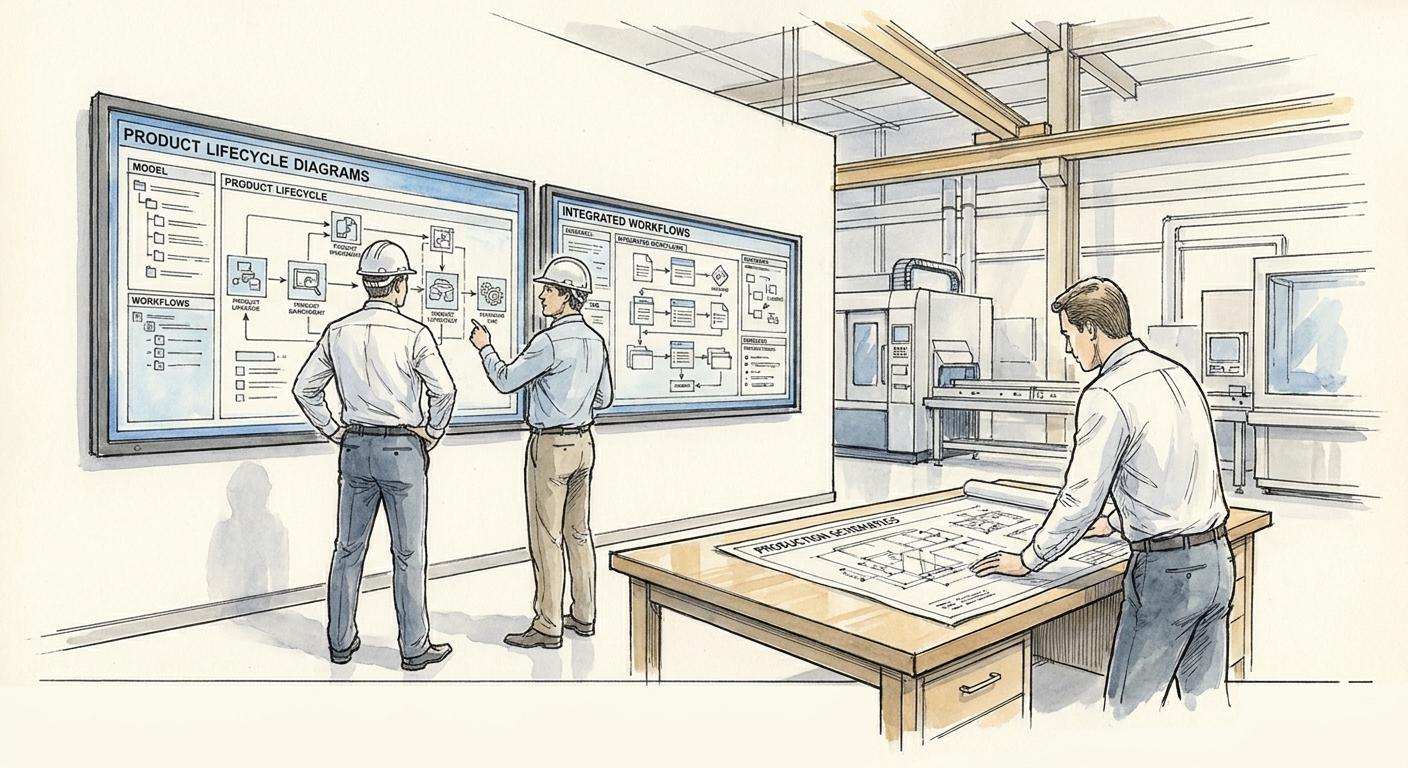


You have just closed on a mid-sized industrial manufacturer, and the clock on the investment window is ticking. LP pressure is real, the exit multiple expansion thesis depends entirely on margin expansion, and your newly appointed CEO keeps asking when the company can start using AI to optimize shop floor scheduling. Yet, looking at the plant, you find fragmented legacy software, disconnected shop floor terminals, and production planners running critical operations out of local Excel sheets. Without an structured AI readiness checklist manufacturing leaders can actually execute, your portfolio company is heading straight toward another stalled software pilot that consumes capital without improving EBITDA.
The first 100 days set the operational trajectory for the entire hold period. If you fail to establish data visibility and clear priorities early, you spend the next three years chasing localized point solutions that never scale. This guide outlines a practical, phased framework to audit plant infrastructure, fix data silos, and deploy an embedded AI playbook that accelerates value creation before your next board review.
Why the First 100 Days Determine Your Portfolio AI ROI
An industrial AI readiness audit is a structured evaluation of a manufacturing plant's IT and operational technology (OT) data infrastructure to determine whether systems like ERP and MES can reliably support machine learning models and automation.
Most private equity operating partners know the sting of a failed software rollout. A portfolio company buys a shiny tool, signs an enterprise license for Microsoft Copilot or a niche predictive maintenance platform, and watches adoption stall out at five percent within six months. The root cause is almost always premature software deployment on top of broken operational data foundations.
During the initial 100 days, the objective is not to buy more software. The goal is to establish a repeatable AI playbook that targets high-friction operational areas like estimate-versus-actual job costing, OTIF delivery misses, and margin leakage.
When you establish a baseline of AI readiness early in the hold period, you avoid the trap of spending eighteen months on infrastructure overhauls that yield no financial return. Instead, you map out a path to secure early wins, prove the operating leverage to the investment committee, and build a defensible growth story for the eventual exit.
Days 1–30: The OT and IT Data Discovery Audit
The first month of the post-acquisition window requires a rigorous audit of where operational data actually lives. In most manufacturing plants, the IT layer (Enterprise Resource Planning, CRM, financial ledgers) and the OT layer (Manufacturing Execution Systems, SCADA, programmable logic controllers, and operator clipboards) speak completely different languages.
Start by mapping the data flow from customer order entry to final shipping dock confirmation. Catalog every spreadsheet, legacy database, and siloed software instance that production supervisors use to manage daily throughput. You will likely find that scheduling decisions rely heavily on tribal knowledge rather than structured system data.
During this discovery phase, identify the exact gaps in your estimate-versus-actual tracking. If the plant quotes jobs based on historical ERP labor standards that have not been updated in a decade, any downstream AI model will simply amplify bad assumptions. Document these variances immediately so you know where data hygiene remediation must happen first.
Days 31–60: Assessing Data Hygiene, Silos, and Readiness
Once you have cataloged the data landscape, month two focuses on evaluating the quality, consistency, and completeness of that data. Having access to ten years of historical sensor data is useless if half the timestamps are missing or if operators routinely override automated logs with manual entries.
Evaluate whether your MES captures true cycle times, downtime reasons, and scrap rates, or if those metrics are aggregated at the end of a shift by hand. High AI maturity requires clean, structured inputs. If the data is messy, you must scope out a data cleaning sprint before attempting any advanced predictive modeling.
This assessment also requires evaluating internal team capabilities. Buying enterprise AI tools without investing in operational upskilling guarantees low adoption. Assess whether your plant managers and operational supervisors have the baseline data literacy needed to interpret model outputs and change their daily workflows accordingly.
Days 61–90: Identifying High-Impact, Low-Risk Use Cases
With data visibility established and hygiene gaps identified, month three is about selecting the right operating wedge to drive immediate value creation. Avoid the temptation to launch a sprawling enterprise-wide transformation. Instead, pick one high-impact, low-risk use case that targets a known margin leak.
Common quick wins in manufacturing acquisitions include automated scheduling optimization to reduce changeover times, intelligent quote validation to eliminate estimate-versus-actual variances, or targeted predictive maintenance on bottleneck CNC machines. The objective is to demonstrate tangible EBITDA improvement within a 60-to-90-day window.
Selecting the right use case builds internal momentum and proves the thesis to skeptical plant managers who have seen digital transformation initiatives come and go. When operators see an AI tool actually reducing their daily scheduling friction rather than adding administrative overhead, adoption rates climb naturally.
Days 91–100: Building the Embedded Execution Roadmap
The final phase of the 100-day window transitions the portfolio company from diagnostic mode to execution mode. This is where operating partners frequently make a costly misstep: hiring an expensive Head of AI before the company has enough operational throughput to justify a six-figure salary.
Instead of heavy internal hiring, lean on flexible execution partners who bring pre-built frameworks, specialized engineering talent, and a portfolio-wide approach. Establishing a cross-functional team consisting of plant operators, financial controllers, and external implementation specialists ensures that technical deployment stays anchored to financial outcomes.
Finalize the roadmap for the next twelve months, tying every planned AI milestone directly to the value creation plan agreed upon with the board. Ensure that the infrastructure you build can be replicated across other portfolio companies as part of a broader platform roll-up strategy.
How iForAI Accelerates the 100-Day Playbook
Deploying AI across newly acquired industrial assets does not require building an internal data science department from scratch. iForAI provides PE operating partners and manufacturing leaders with access to over 35 specialized experts for the price of a single traditional hire, turning complex data audits into production-ready deployments.
Through our fixed-scope AI Starter Package designed specifically for private equity, we help portfolio companies take their first use case live in production within 8 to 12 weeks. We combine strategic roadmap development with hands-on operational upskilling, ensuring that purchased software tools achieve high adoption and deliver measurable EBITDA improvement before your next LP report.
Frequently Asked Questions
What is an AI readiness checklist for manufacturing acquisitions?
An industrial AI readiness audit is a structured evaluation of a manufacturing plant's IT and operational technology (OT) data infrastructure to determine whether systems like ERP and MES can reliably support machine learning models and automation.
How soon can a newly acquired industrial company see ROI from AI?
Portfolio companies can achieve measurable results and have their first high-impact use case live in production within 60 to 90 days when focusing on clean data priorities and practical operational wedges.
Why do most AI pilots fail in newly acquired manufacturing plants?
Most industrial AI pilots fail due to disconnected ERP-MES data silos, poor underlying data hygiene, lack of internal workforce upskilling, and treating AI software as a standalone IT purchase rather than an operational execution strategy.
Learn about the AI Starter Package at ifor.ai/solutions/private-equity

Ira Komarova
COO at iForAI