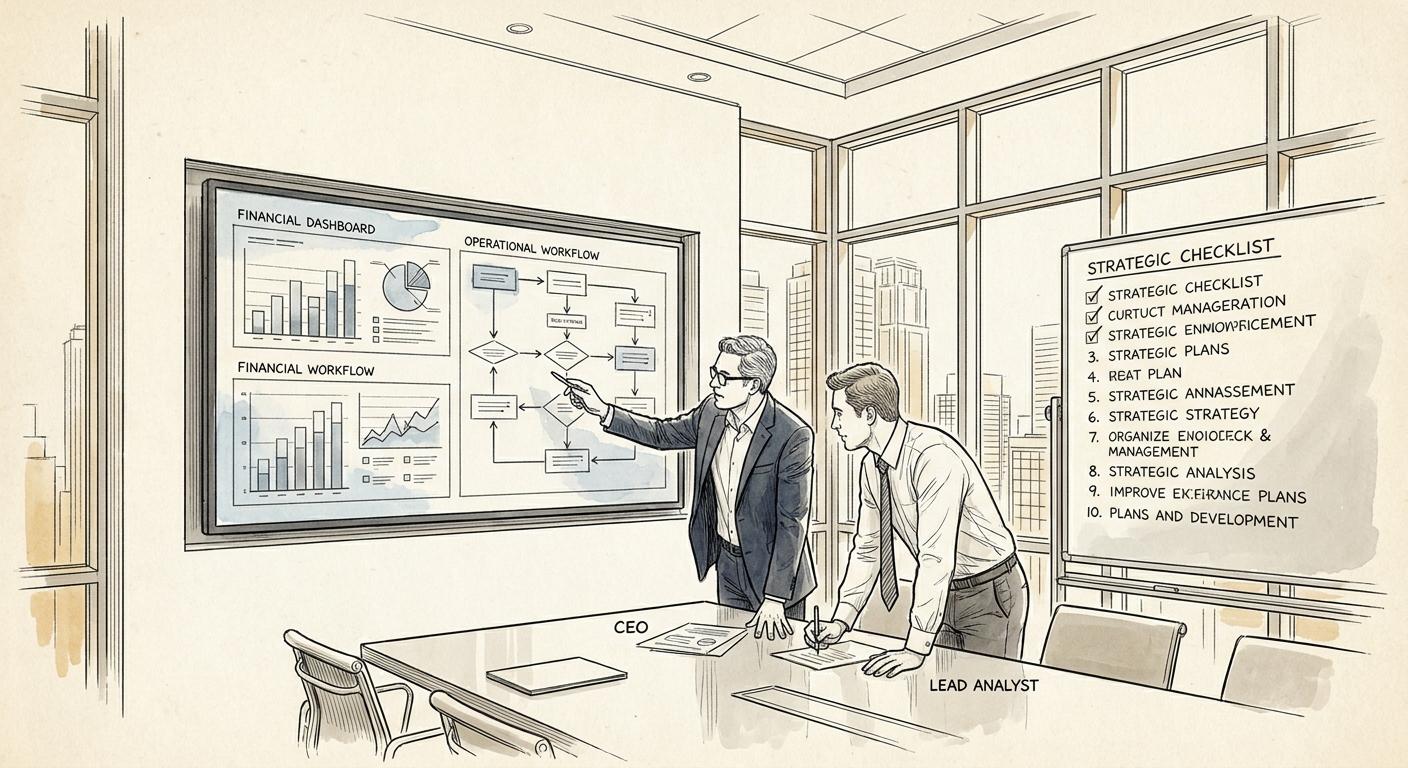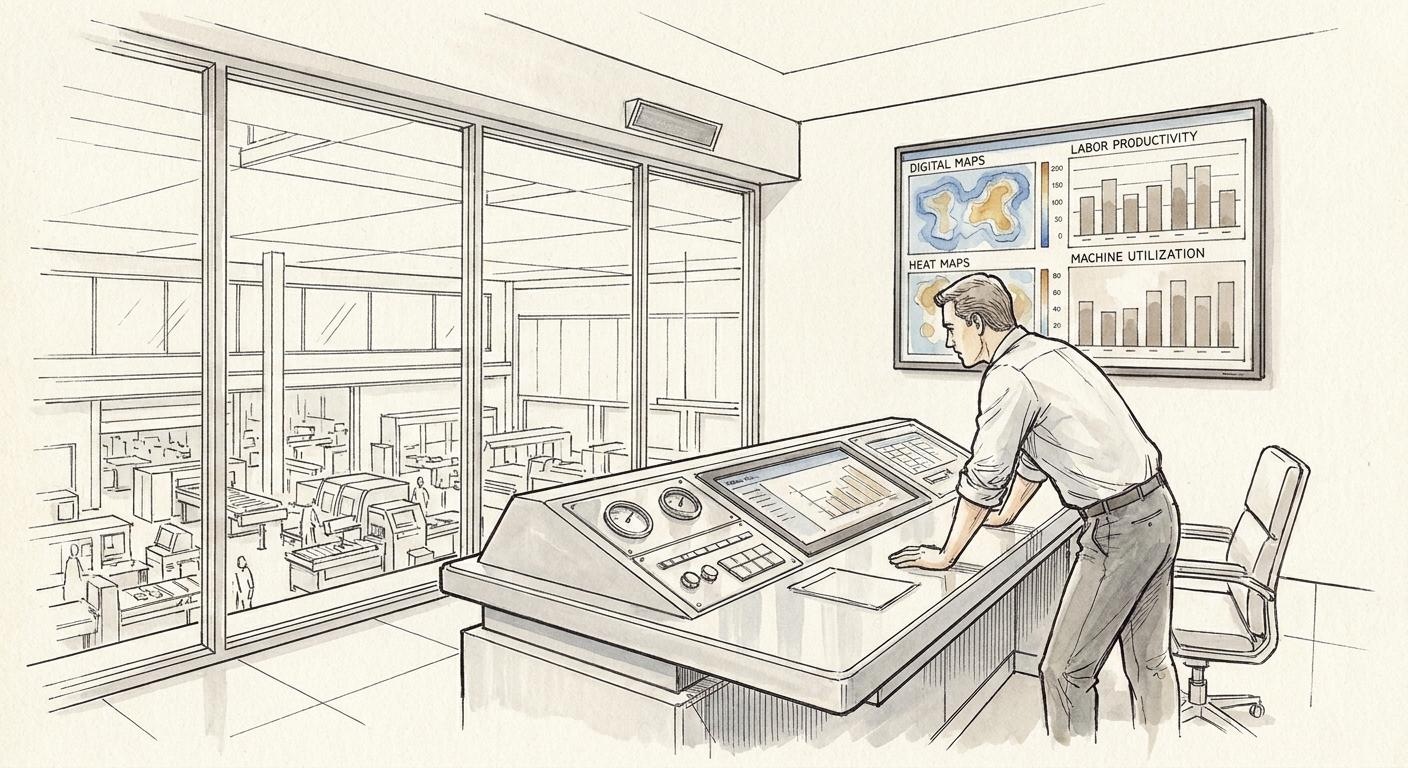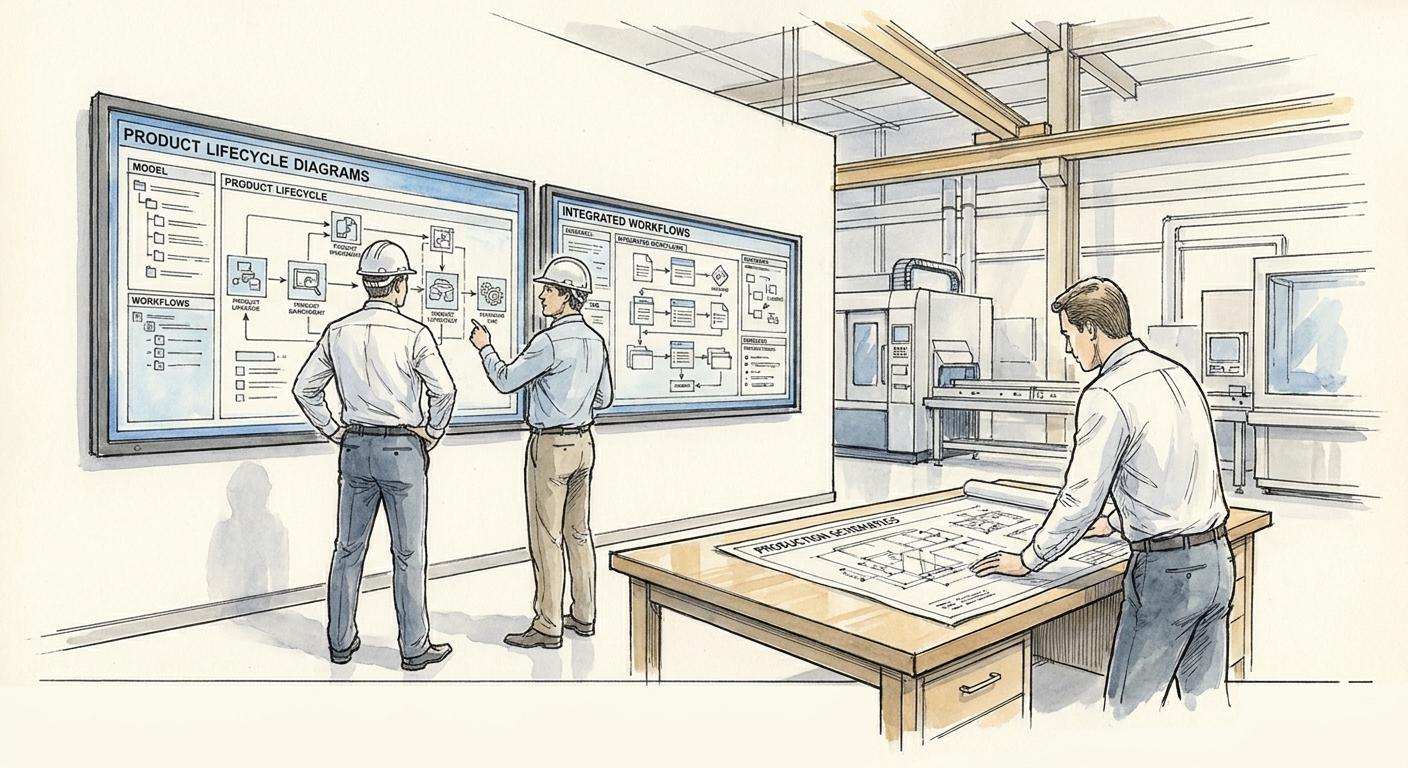


Private Equity operating partners acquiring industrial portcos routinely confront a persistent source of margin leakage: the quote desk. When raw material costs fluctuate and shop floor labor rates shift, relying on static spreadsheets or outdated cost-plus formulas guarantees that the business leaves cash on the table. In an investment window where interest rates remain elevated and multiple expansion cannot be taken for granted, pricing execution is the most direct lever for near-term EBITDA improvement. Implementing algorithmic pricing industrial portfolio companies can systematically close the gap between estimated margins and actual realized profits. This guide outlines a repeatable playbook for operating partners tasked with transforming pricing operations across industrial holdings without disrupting shop floor workflows.
The Margin Leak: Why Traditional Cost-Plus Quoting Fails Industrial Portcos
Industrial manufacturing and fabrication portcos frequently inherit legacy pricing methods built for a more stable macroeconomic environment. Sales engineers typically pull up a static price list or apply a standard markup over a historical bill of materials. This approach fails to account for real-time plant capacity, machine queue times, or the actual complexity of the job.
The result is a widening estimate-versus-actual gap. A job is quoted at a twenty percent margin based on last year's labor standards, but unexpected machine downtime and material price spikes turn the order into a margin-negative project. Portfolio companies often possess years of rich transactional data trapped inside ERP and CRM silos, yet they lack the mechanism to translate historical win-loss records and actual job costing into forward-looking pricing intelligence.
During periods of raw material volatility, waiting for quarterly catalog updates is too slow. Operating partners need a repeatable mechanism to capture value quickly, protecting the portfolio company from margin compression during the first 100 days of ownership.
What is Algorithmic Pricing and Dynamic Quoting in Manufacturing?
Algorithmic pricing in industrial manufacturing is the use of data-driven models to calculate optimal product or service prices in real-time, factoring in historical win rates, raw material costs, machine capacity, and margin targets rather than relying on static cost-plus pricing sheets.
Unlike software-as-a-service dynamic pricing that fluctuates by the minute based on demand, industrial dynamic quoting evaluates historical job performance, current shop floor bottlenecks, and customer-specific buying behavior. When a sales rep enters custom specifications into the quote generator, the system evaluates past production runs for similar parts, calculates actual labor hours and scrap rates, and suggests a price band optimized for both win probability and target EBITDA contribution.
This approach shifts the organization from reactive guessing to predictive margin management. By embedding pricing logic directly into the existing workflow, the portco establishes a governance layer that prevents sales reps from discounting below profitable thresholds without explicit managerial sign-off.
The 60-90 Day Playbook: Deploying Your First Pricing Use Case
Attempting an enterprise-wide pricing transformation across a newly acquired industrial asset usually results in stalled projects and organizational fatigue. Operating partners achieve better velocity by targeting a single product line, customer tier, or manufacturing cell for the initial deployment.
The first phase involves auditing historical ERP data, quote-to-order logs, and bill of materials variance. A specialized technical partner can ingest this data to train initial prediction models within weeks. Instead of building a custom tool from scratch, the team integrates lightweight algorithmic pricing layers into the portco's existing quoting workflow, whether that resides in an ERP system or a configure-price-quote (CPQ) tool.
The objective is to achieve first measurable results within 60 to 90 days. Proving the model on a high-volume, standard-configuration product line builds internal credibility. Sales leadership can immediately see higher realized margins on closed deals without a drop in conversion rates.
Scaling the Playbook Across Multiple Industrial Holdings
Private equity firms managing a portfolio of industrial assets cannot afford bespoke, one-off AI initiatives for every subsidiary. A repeatable AI playbook standardizes the implementation methodology while adapting to different ERP systems, data maturity levels, and shop floor ERP-MES environments.
The foundation of portfolio-wide scaling is modular architecture. Rather than forcing every portco to adopt the exact same monolithic software suite, the operating partner establishes a standard framework: data ingestion protocols, model training pipelines, and adoption scorecards. One portfolio company running Epicor may require a different integration connector than one running Infor or SAP, but the underlying pricing logic and margin optimization rules remain consistent.
Through structured execution frameworks like an AI Starter Package, firms can deploy standardized use cases across multiple holdings simultaneously. This shared service approach reduces the total cost of ownership for the AI tooling and allows the operating partner to benchmark pricing maturity and margin performance across the entire fund.
Exit Readiness: How Algorithmic Pricing Drives Multiple Expansion
Prospective buyers and private equity lenders scrutinize the quality of earnings and the predictability of revenue streams during due diligence. A portco that relies on tribal knowledge and the intuition of a few veteran sales reps carries operational risk. If a key sales director leaves, pricing discipline often collapses with them.
Systematic algorithmic pricing provides institutional buyers with confidence that margins are protected by process rather than individual heroics. When historical data shows consistent margin expansion, reduced estimate-versus-actual variance, and disciplined discounting governance, the narrative shifts from a traditional manufacturer vulnerable to cost inflation to a modern, data-driven industrial operator.
Demonstrating this operational leverage directly supports valuation multiple expansion at exit. Lenders and strategic buyers pay a premium for portcos that have decoupled revenue growth from manual administrative overhead and margin leakage.
Overcoming Sales Resistance and Ensuring Adoption That Sticks
The greatest barrier to pricing AI in industrial portcos is not the technology, but the sales team. Sales representatives accustomed to manual discounting and gut-feel negotiations often view algorithmic recommendations as a threat to their client relationships and commission structures.
Overcoming this resistance requires careful change management and transparent positioning. The pricing tool must be framed as an advisor rather than an autocrat, providing data-backed rationale for recommended price bands rather than enforcing rigid edicts. When sales reps understand that the algorithm helps them protect their commissions by identifying profitable deals and preventing underpriced bids, adoption rates rise.
Investing in internal upskilling ensures that the portco retains capability long after the implementation partner exits. Training commercial teams to interpret pricing recommendations transforms purchased tools with low adoption into active drivers of EBITDA improvement.
Frequently Asked Questions
How long does it take to implement algorithmic pricing in a manufacturing portco?
While enterprise-wide overhauls can take years, a targeted use case focusing on a specific product line or customer tier can be deployed and live in production within 60 to 90 days using an embedded execution partner model.
What data is required to start algorithmic pricing in industrial companies?
Implementations rely on historical ERP transactional data, quote-to-order history, bill of materials costs, labor hours, and win-loss records. Legacy data often requires cleaning, which is handled incrementally during the initial audit phase of the project.
How do we get sales teams to trust dynamic quoting tools?
Adoption improves when systems act as transparent advisors that explain the rationale behind price recommendations rather than acting as opaque black boxes, backed by performance incentives tied to realized margin rather than gross revenue.
To evaluate margin leakage and determine your industrial portfolio's readiness for algorithmic pricing, book a portfolio AI diagnostic at ifor.ai/solutions/private-equity.

Inna Dzhulai
Social Media Manager at iForAI