

.svg)

Beyond the Chatbot: Why Your Integration Strategy is the Real AI Moat
Many enterprise AI discussions begin with a practical question: "How much time can we save?" While efficiency is a valuable starting point, it often isn't a sustainable long-term strategy. In an environment where competitors can access similar foundational models, success will likely go to organizations that productize their proprietary expertise, rather than those that merely automate tasks.
At iForAI, we observe a consistent trend in mid-market and enterprise sectors. Companies that treat AI as an isolated tool frequently struggle to achieve a clear return on investment (ROI). Conversely, organizations that embed AI directly into their core workflows are establishing a genuine, defensible competitive advantage.
Moving from Generic Chatbots to Deep Workflows
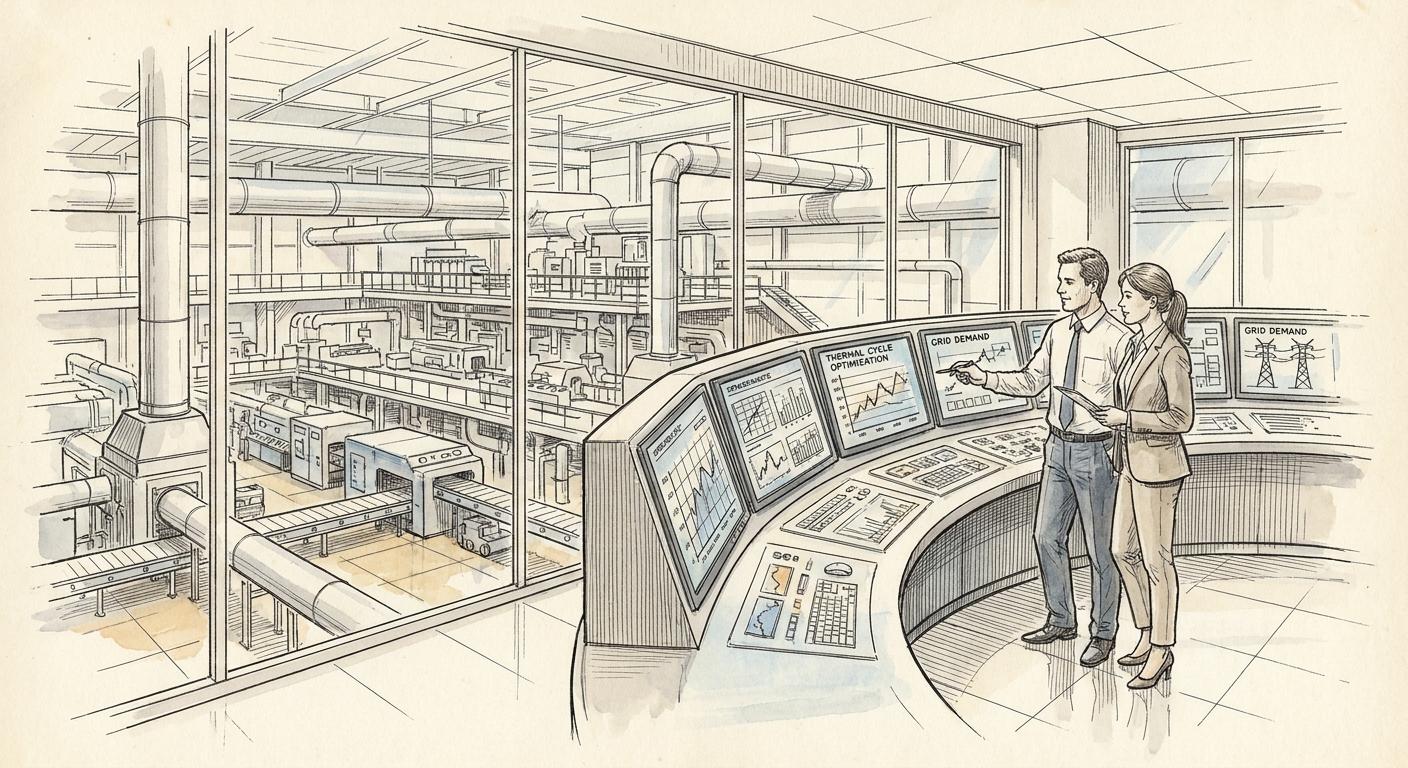
A generic chatbot is rapidly becoming a commodity. To create significant impact, AI needs to operate where the actual work occurs—within your Customer Relationship Management (CRM) system, Enterprise Resource Planning (ERP) system, and proprietary production stacks.
When AI transitions from a siloed "side project" to an integral component of daily operations, its value fundamentally changes. It evolves from an experimental novelty into an essential driver of business logic. The objective is not just to have an interface that communicates, but to have a system that acts on your data within the context of your specific business rules.
The Power of RAG: Turning Intellectual Property into a Defensible Asset
Your company's history—encompassing decades of case studies, technical specifications, and nuanced industry insights—represents a significant asset. However, this intellectual property (IP) is often stored in unstructured formats.
By leveraging Retrieval-Augmented Generation (RAG), you can ground AI models in your specific, private data. This approach is reported to significantly reduce the risk of "hallucinations" (AI generating plausible but incorrect information) and helps ensure that the output is relevant to your brand. More importantly, it creates a specialized intelligence layer that competitors cannot easily replicate by simply subscribing to a Software as a Service (SaaS) solution. This means you're not just using a Large Language Model (LLM); you are building a proprietary engine powered by your unique knowledge.
Operational Impact: From Cost Centers to Revenue Drivers
This shift toward integrated AI has tangible effects on Go-To-Market (GTM) velocity and operational efficiency. For instance, intelligent agents are being used to qualify leads in real-time, assisting sales teams in drafting highly personalized value propositions based on historical win data.
In customer success, the transformation can be even more pronounced. By applying AI-driven sentiment analysis and historical context to every interaction, support teams are evolving into what some describe as revenue protection units. They are now equipped to identify potential churn risks and upsell opportunities before a human agent even addresses a ticket.
Escaping "Pilot Purgatory"
A common challenge in enterprise AI today is "pilot purgatory"—a cycle of continuous testing without a clear path to production. To avoid this, an AI roadmap should be linked to measurable outcomes from the outset.
The technical feasibility of whether AI "works" has largely been established. The current challenge lies in integration speed: how quickly can organizations bridge the gap between a successful experiment and a functional system that provides a market advantage?
Ready to translate AI potential into measurable business performance? Explore how strategic AI integration can benefit your organization.