

Private Equity operating partners and manufacturing COOs know the exact moment an acquisition thesis hits a wall. It happens about sixty days post-close, when the integration team tries to pull a consolidated OEE report across four recently acquired plants and realizes none of them talk to each other. Harmonizing brownfield machine telemetry and MES data is the foundational step required to eliminate this operational blindness and protect your investment thesis. Without a unified data layer, margin leakage hides on the shop floor, and your value creation playbook stalls before it starts. This article explores a pragmatic, non-disruptive path to connect legacy assets, bridge ERP-MES gaps, and accelerate time-to-value across multi-plant acquisitions.
The Post-Acquisition Data Nightmare: Why Fragmented Brownfield Plants Kill Margins
When a private equity firm rolls up regional manufacturing assets, the portfolio typically inherits a patchwork of legacy equipment, disparate manufacturing execution systems, and orphaned islands of plant data. Plant A runs an on-premise MES from the early 2000s, Plant B relies on manual clipboards and Excel spreadsheets, and Plant C has modern CNC machines spitting out telemetry that never leaves the local server.
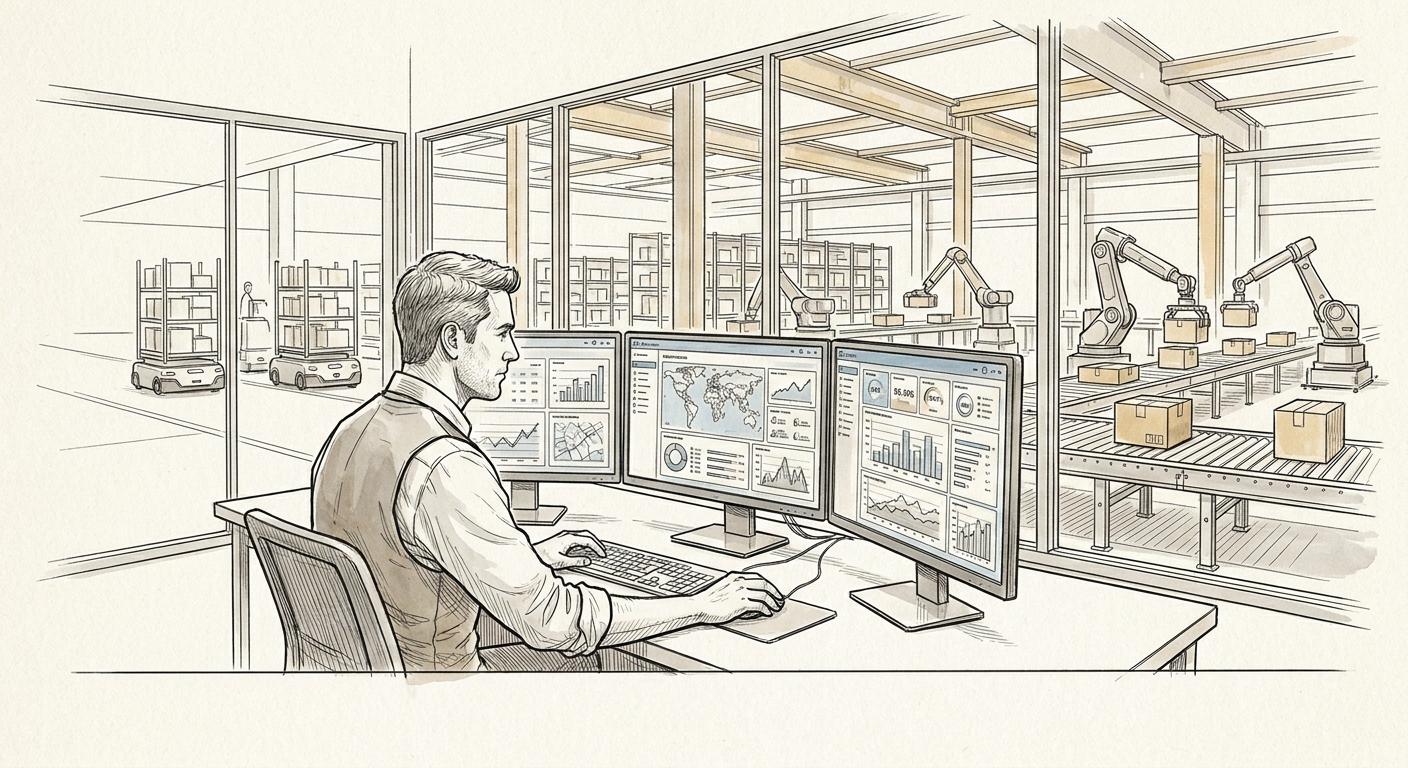
This fragmentation destroys cross-plant visibility. The operating partner cannot benchmark facilities against one another, and the portfolio company CEO lacks a single source of truth for daily production output. Margin leakage compounds quietly when leadership cannot compare actual cycle times against estimated standards.
Compounding the issue, IT and operations teams often propose massive, multi-million-dollar digital transformation projects that require ripping out legacy hardware. For a portfolio company operating on a tight investment window, a three-year ERP overhaul is a non-starter. PE sponsors demand a faster operating leverage path that yields measurable EBITDA improvement within the first 100 days.
The Cost of the ERP-MES-Telemetry Gap for COOs and Operating Partners
For a plant manager, the disconnect between enterprise resource planning software, manufacturing execution systems, and machine-level telemetry creates a daily struggle with delayed execution truth. ERP systems hold the high-level schedule, MES tracks job status, and the machine PLC knows whether the spindle is actually turning. When these systems operate in silos, a dangerous estimate-vs-actual gap emerges.
Brownfield machine telemetry refers to operational data extracted from older, legacy industrial equipment that was never designed with native digital connectivity.
When this telemetry remains trapped at the machine level, plant supervisors only discover downtime, scrap spikes, and bottlenecks after the shift ends. On-time in-full (OTIF) metrics slip, customer penalties accumulate, and the executive team is left guessing why labor efficiency numbers do not match gross margin results.
For the PE operating partner, this lack of standardized data introduces severe friction during exit preparation. Buyers perform rigorous operational due diligence. If management cannot prove consistent, cross-plant productivity gains or trace job costs accurately, valuation multiples compress. Closing the gap between factory floor reality and financial reporting is no longer a nice-to-have improvement. It is a core requirement for successful exit readiness.
A Pragmatic Architecture: Harmonizing Legacy Assets Without a Rip-and-Replace
Achieving portfolio-wide visibility does not require replacing functioning legacy machinery or installing uniform enterprise software across every acquisition. A pragmatic architecture focuses on a lightweight, edge-to-cloud integration model that respects the constraints of brownfield environments.
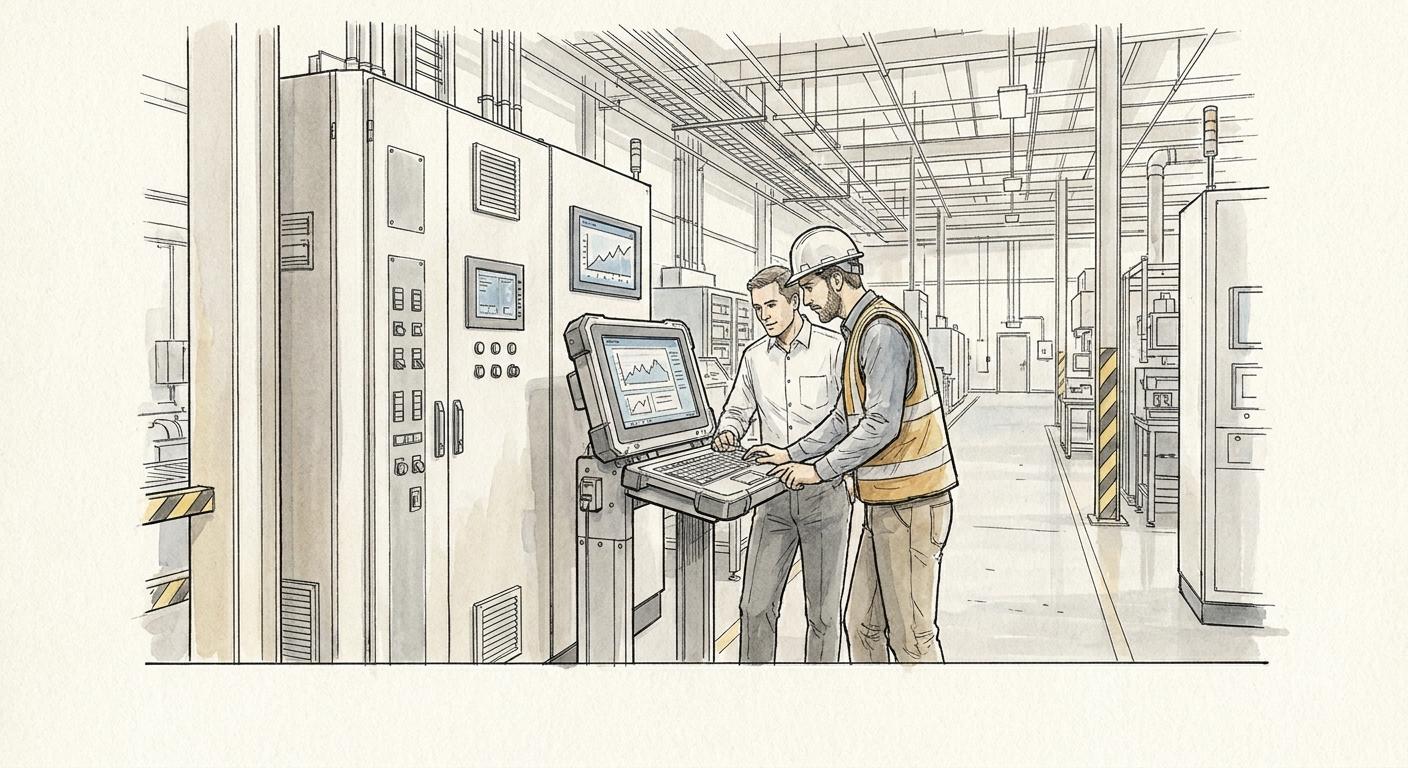
The first layer involves deploying non-invasive industrial IoT edge gateways that connect directly to legacy PLCs and sensors. These gateways use standard industrial protocols like OPC-UA or MQTT to harvest machine telemetry without altering proprietary control logic or risking downtime on mission-critical lines.
Once raw telemetry is extracted at the edge, lightweight middleware normalizes the data streams before pushing them to a centralized cloud or hybrid data lake. This standardized layer ingests data from diverse MES platforms, manual station inputs, and machine sensors, translating them into a common data dictionary.
By avoiding a full rip-and-replace strategy, portfolio companies preserve existing capital investments while establishing a modern data pipeline. This foundation enables continuous monitoring of machine availability, performance, and quality metrics without disrupting active shop-floor operations.
Deploying AI in 60-90 Days: Moving From Siloed Data to Cross-Plant OEE Benchmarking
Collecting data is only valuable if it drives operational decisions. Once a unified data pipeline is established across your manufacturing plants, the focus shifts rapidly from infrastructure to execution. This is where embedding AI transforms raw telemetry into actionable insights within a compressed 60-90 day window.
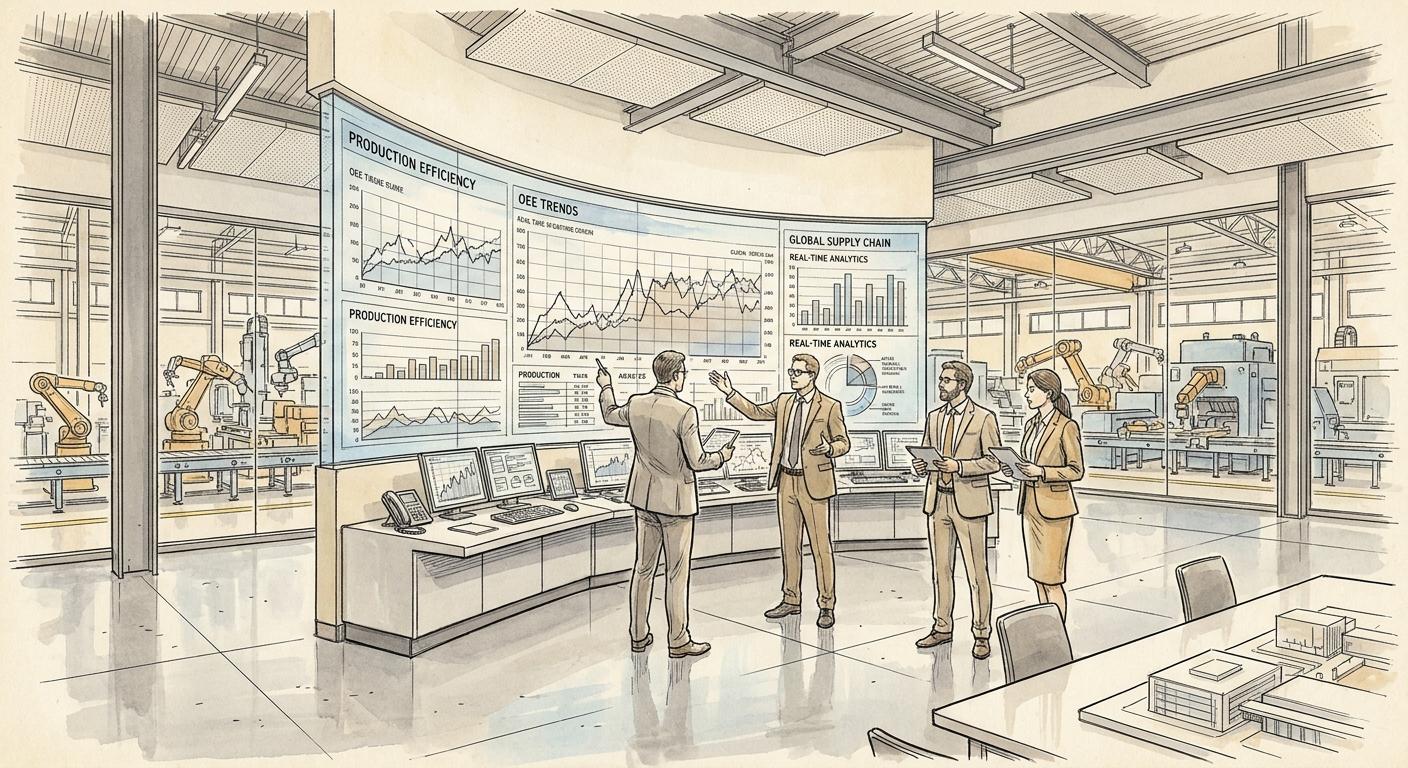
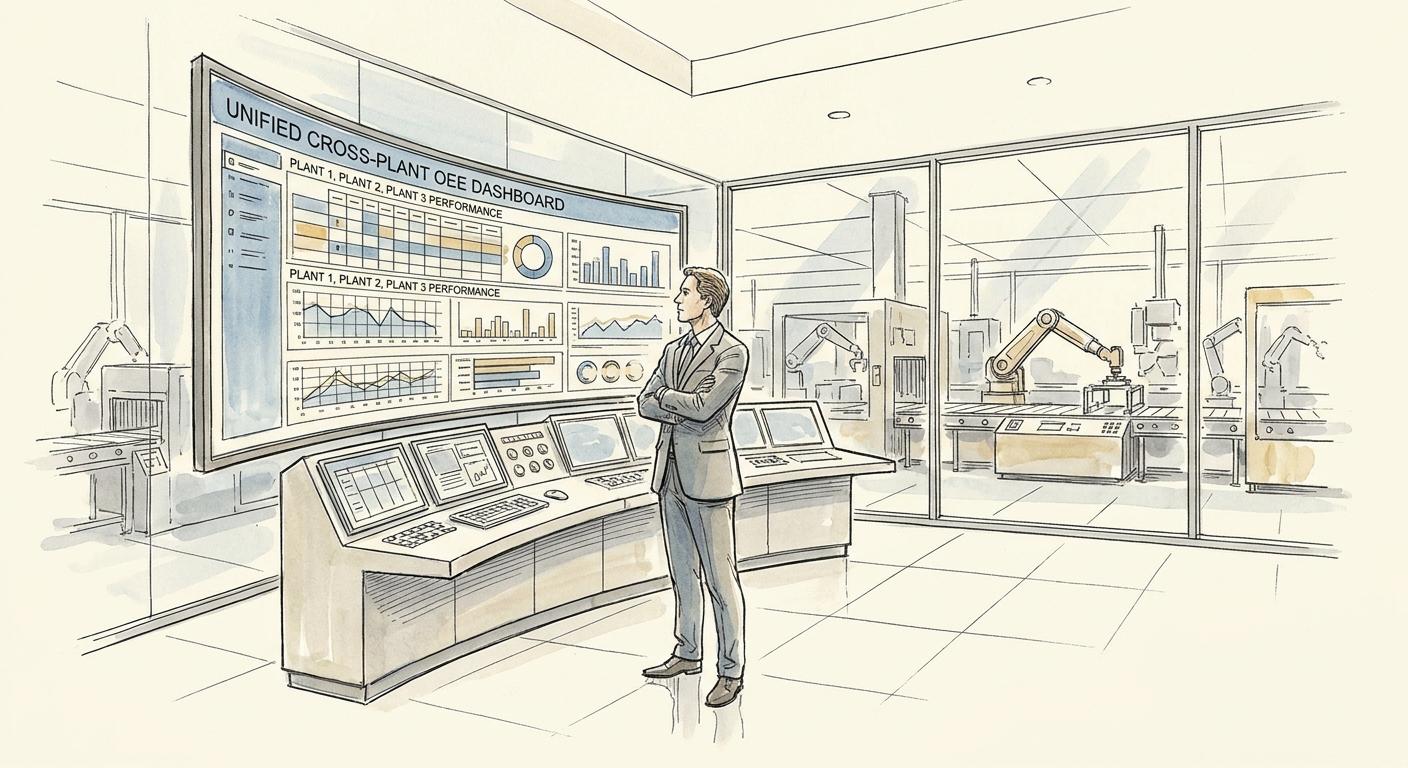
Rather than boiling the ocean with enterprise-wide predictive maintenance models, successful portfolios target a high-impact quick win. For example, deploying automated cross-plant OEE benchmarking allows leadership to instantly identify which lines across three different facilities suffer the highest micro-stoppages.
[Legacy Brownfield Machines]
       │ (OPC-UA / MQTT)
       ▼
[Edge IoT Gateways]
       │ (Lightweight Middleware)
       ▼
[Unified Data Layer]
       │ (Embedded AI Analytics)
       ▼
[Cross-Plant OEE Dashboard & EBITDA Visibility]
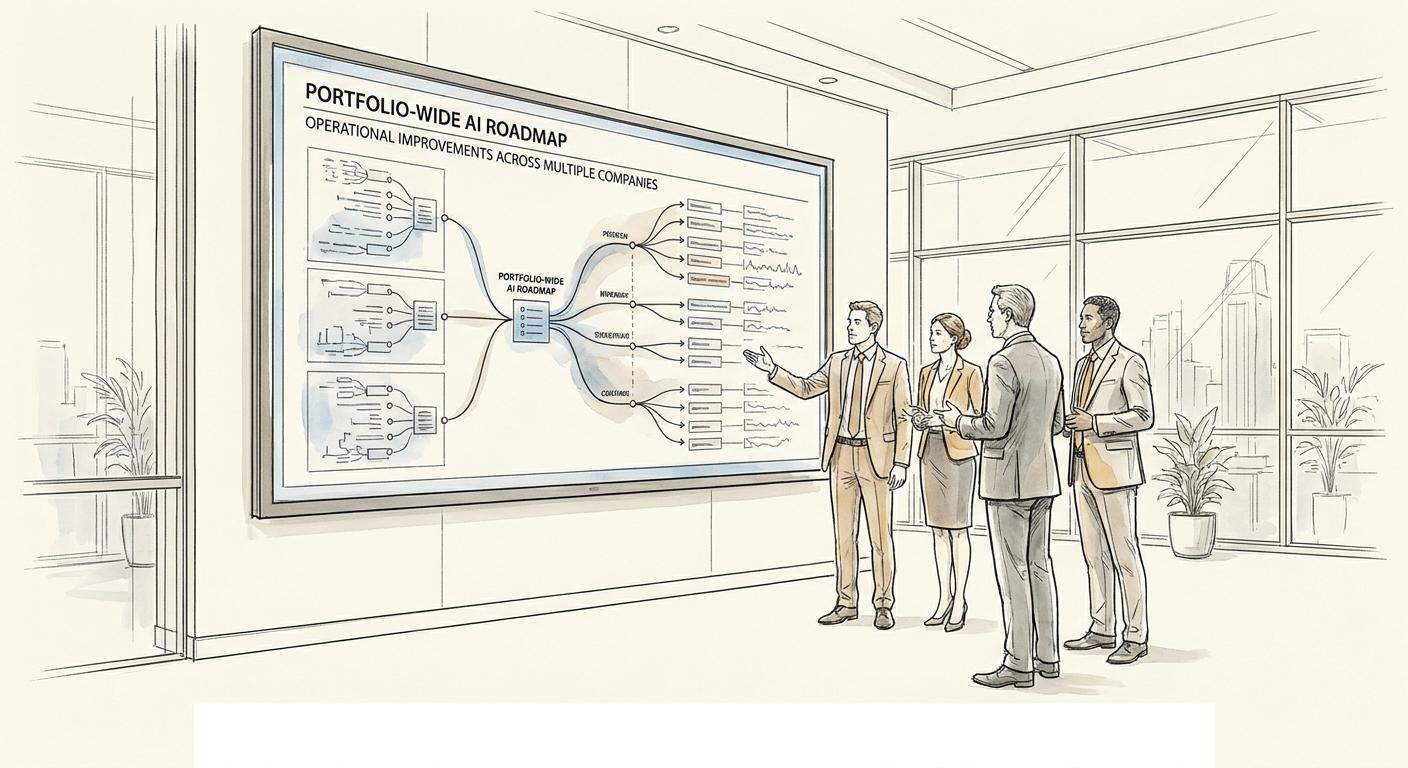
This structured approach aligns with proven deployment models where specialized technical teams integrate seamlessly alongside internal plant personnel. By focusing on targeted use cases, portfolio companies secure immediate visibility into shop-floor inefficiencies, directly supporting LP reporting and demonstrating active value creation to the board.
Upskilling Plant Leadership: Making Data Harmonization Stick Across the Portfolio
The best data architecture fails if plant managers, floor supervisors, and operators do not trust or use the newly generated insights. Technology deployments often stall because organizations purchase advanced tools but neglect the human element required for long-term adoption.
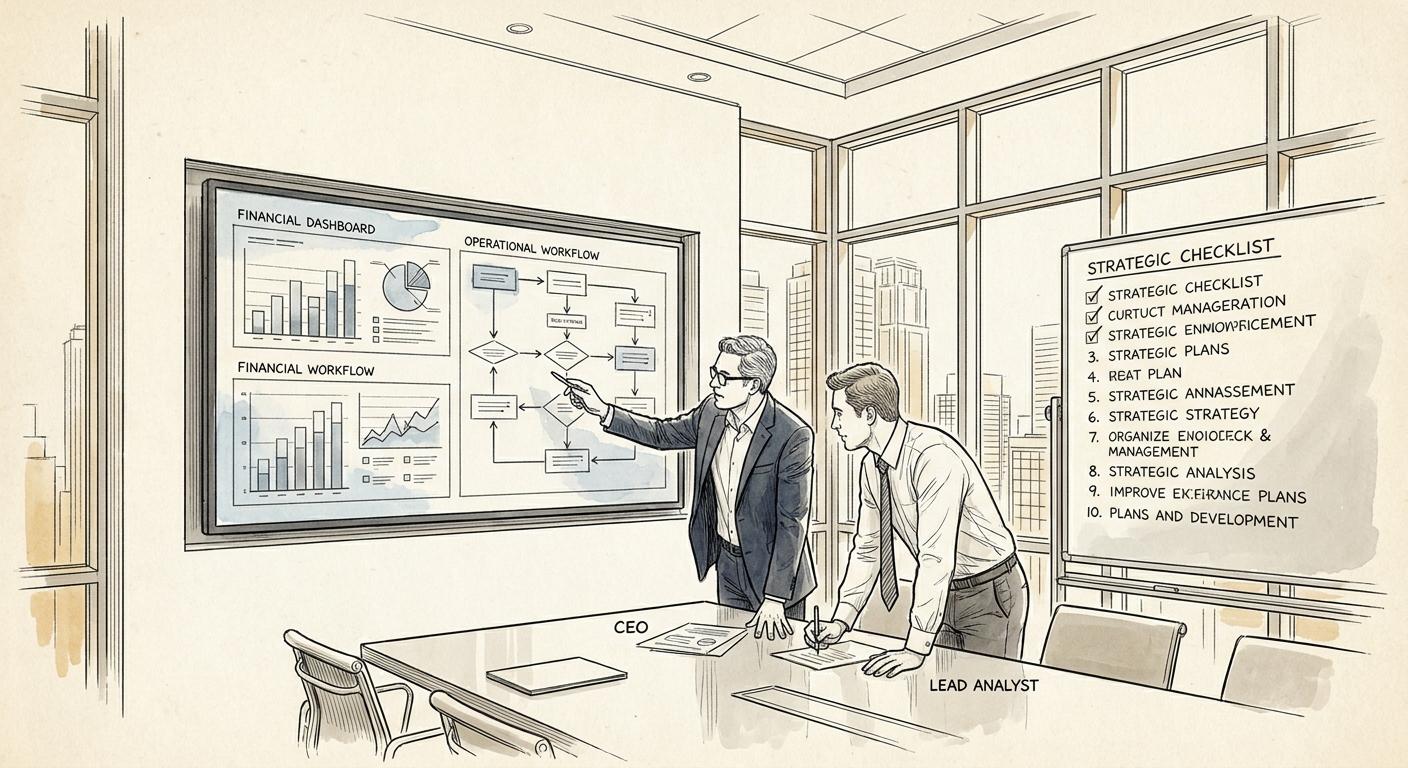
True operational leverage requires targeted upskilling. Plant leadership must understand how to interpret cross-plant benchmarks, investigate root causes behind estimate-vs-actual variances, and use AI-driven recommendations during daily stand-up meetings.
When plant supervisors see that automated data harmonization eliminates manual shift-report generation and helps them hit their daily targets, cultural resistance fades. Embedding these capabilities into daily operational routines ensures that the data architecture delivers sustained EBITDA improvement long after the initial consulting engagement concludes.
Frequently Asked Questions
How do you harmonize data from legacy brownfield machines without replacing existing hardware?
Integration teams deploy non-invasive industrial IoT edge devices that connect directly to legacy PLCs using standard protocols like OPC-UA or MQTT. This lightweight middleware extracts machine telemetry without altering proprietary control logic or risking disruption to active production lines.
What is the typical timeline to achieve visible ROI on multi-plant data harmonization?
Initial use case deployment and cross-plant OEE benchmarking typically deliver measurable operational insights within a 60-90 day window. Focusing on targeted high-impact areas accelerates time-to-value for PE operating partners.
How does data harmonization support PE exit readiness?
Standardized multi-plant telemetry and MES data provide transparent EBITDA visibility, accurate job costing, and verifiable operational metrics. This eliminates blind spots during operational due diligence and protects valuation multiples at exit.
What role does upskilling play in sustaining manufacturing data integration projects?
Upskilling bridges the gap between purchased technology and daily floor adoption by training plant managers and supervisors to interpret unified dashboards. Building internal capability ensures that operational improvements and margin gains persist across the investment holding period.
Book a Manufacturing Diagnostic at ifor.ai/solutions/manufacturing

Ofer Hermoni, Ph.D.
Founder & Chief AI Officer at iForAI