

.svg)

From Clicks to Intent: Navigating the Browser-Integrated AI Revolution
For decades, the web browser served as a passive window, a silent frame for viewing static websites. Today, this window is undergoing a fundamental transformation. With the rise of integrated AI agents like Microsoft’s Copilot, Google’s Gemini, and specialized browser-level tools, the browser is evolving into an active participant in the customer journey.
For mid-market and enterprise leaders, this shift is more than a technical upgrade; it represents a fundamental change in how value is delivered. If an AI strategy treats the browser as merely another screen, it risks overlooking the transition from destination-based browsing to intent-based execution.
From Keyword SEO to Agentic Discoverability
The digital landscape is rapidly moving beyond traditional Search Engine Optimization (SEO). For years, the primary goal was to rank for keywords to drive clicks to a landing page. In this new environment, success is increasingly defined by agentic discoverability.
When a user poses a complex question to their browser-level AI, the AI doesn't just provide a list of links; it synthesizes an answer. If an organization's data isn't structured for these agents to parse and interpret effectively, its brand may become less visible in these AI-mediated conversations. To maintain relevance, organizations must shift their focus from "link building" to "context building," ensuring their proprietary insights are accessible to the AI models powering the browsing experience.
The Rise of Headless UX
For two decades, significant effort has been invested in perfecting the art of the landing page. However, in an AI-mediated world, the traditional website can sometimes introduce friction. This marks the emergence of Headless UX.
In this model, a product or service is no longer solely a destination but rather a set of actionable capabilities. Functions such as generating a quote, checking inventory, or filing a support ticket should ideally be accessible via an AI agent directly within the browser interface. The objective is to move the "action" closer to the user’s intent, reducing the need for manual navigation through complex menus.
Escaping 'Pilot Purgatory' with Deep Integration
Many enterprises encounter "Pilot Purgatory"—a state where isolated AI experiments fail to deliver significant Return on Investment (ROI). This often occurs when AI is treated as a "bolt-on" feature, such as a standalone chatbot.
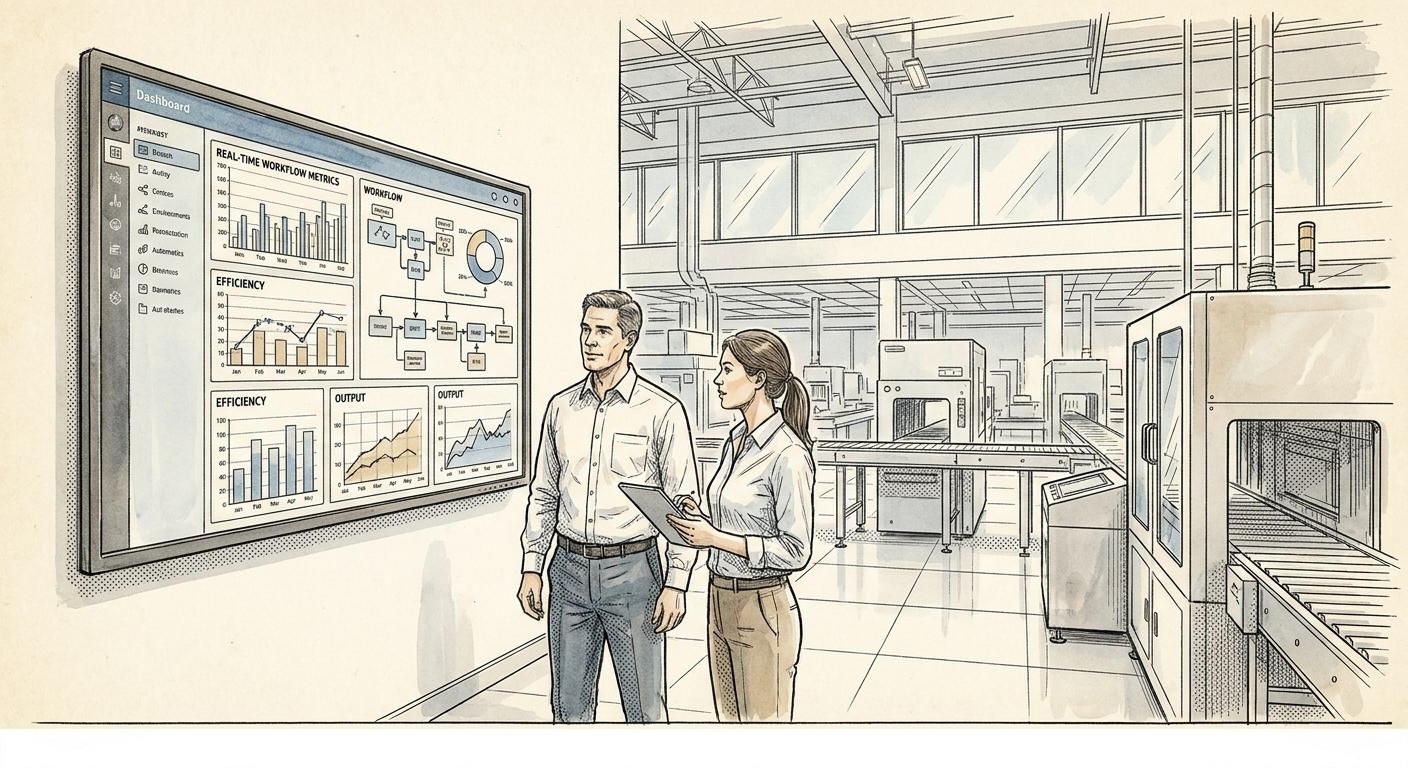
Substantial business impact materializes when AI is integrated into core workflows. By leveraging Retrieval-Augmented Generation (RAG), fueled by proprietary data, organizations can transform internal documentation and product specifications into an "always-on" expert advisor. This approach goes beyond merely answering questions; it anticipates user needs and provides contextually aware solutions before a user actively seeks them.
Building for the New Standard
AI transformation is not about chasing the latest tool; it's about achieving architectural readiness. Transitioning from a click-based model to an intent-based model requires a clear roadmap that aligns data strategy with user habits.
The Bottom Line: The browser is no longer a neutral observer. It is evolving into a primary operating system for customer interaction. Organizations building for the web of the past may find themselves at a disadvantage. The current imperative is to build for an agentic future.
To explore how your organization can define its agentic roadmap and achieve measurable outcomes with AI, consider consulting with experts in the field.