

.svg)

Mid-market manufacturing COOs and CFOs are currently trapped between two conflicting mandates: the need to maintain high OTIF (On-Time In-Full) rates and the urgent pressure to free up cash in a high-interest environment. Despite heavy investments in ERP systems, most leadership teams are still dealing with significant estimate-vs-actual gaps that lead to bloated safety stock or, conversely, production-stopping shortages. AI-driven inventory optimization offers a repeatable path to visibility, allowing firms to bridge the gap between static planning and real-time shop floor reality. This blueprint outlines how to quantify the financial impact of AI and transition from reactive stock management to a proactive operating wedge that improves liquidity.
The Silent Margin Killer: Why Traditional Inventory Management Fails Mid-Market Manufacturers
Traditional inventory management relies on historical averages and linear forecasting that cannot account for modern supply chain volatility. For many mid-market manufacturers, the ERP is a system of record, not a system of intelligence. This leads to margin leakage as firms over-order raw materials to "buffer" against uncertainty, effectively burying millions in working capital on warehouse shelves.
When demand signals are decoupled from production schedules, the result is high carrying costs and increased obsolescence. In a typical PE-backed manufacturing portfolio, this trapped cash represents a significant drag on the exit multiple. Without real-time visibility, plant managers default to manual adjustments and "gut-feel" ordering, which creates a delayed execution truth where the financial statements only reflect operational failures weeks after they occur.
Moving Beyond Lean: The Three Pillars of AI-Driven Working Capital Optimization
AI-driven inventory optimization is the use of machine learning algorithms to analyze historical demand, supply chain volatility, and production constraints to maintain minimum stock levels while maximizing OTIF rates. It moves beyond traditional Lean methodologies by introducing predictive capabilities that static spreadsheets cannot replicate.
To achieve manufacturing cash flow improvement, we focus on three pillars:
- Data Discovery: Integrating ERP data with MES and external supply signals to create a single source of truth.
- Predictive Use Cases: Applying machine learning to sense demand shifts before they impact the production line.
- Execution and Upskilling: Training the workforce to trust and act on algorithmic outputs rather than falling back on legacy manual processes.
iForAI has seen that upskilling is the critical differentiator; it is what turns purchased tools into actual ROI. In one instance, a manufacturing client reduced manual customer service effort by 60% simply by providing staff with better predictive data regarding order timelines.
Phase 1: Identifying the High-Yield Use Case (The 60-Day Window)
The most common mistake in working capital management for manufacturing is attempting a global ERP overhaul. This rarely delivers time-to-value within a standard investment window. Instead, the focus should be on a specific high-yield use case - such as a single high-value product line or a volatile raw material category - to prove the AI ROI.
By narrowing the scope, leadership can achieve a quick win that funds further expansion. The goal is to get one use case live in production within 8 to 12 weeks. This targeted approach allows the CFO to see a measurable reduction in Days Sales of Inventory (DSI) for that specific segment, providing the proof of concept needed for a portfolio-wide rollout.
Phase 2: Bridging the ERP-MES Gap with Machine Learning
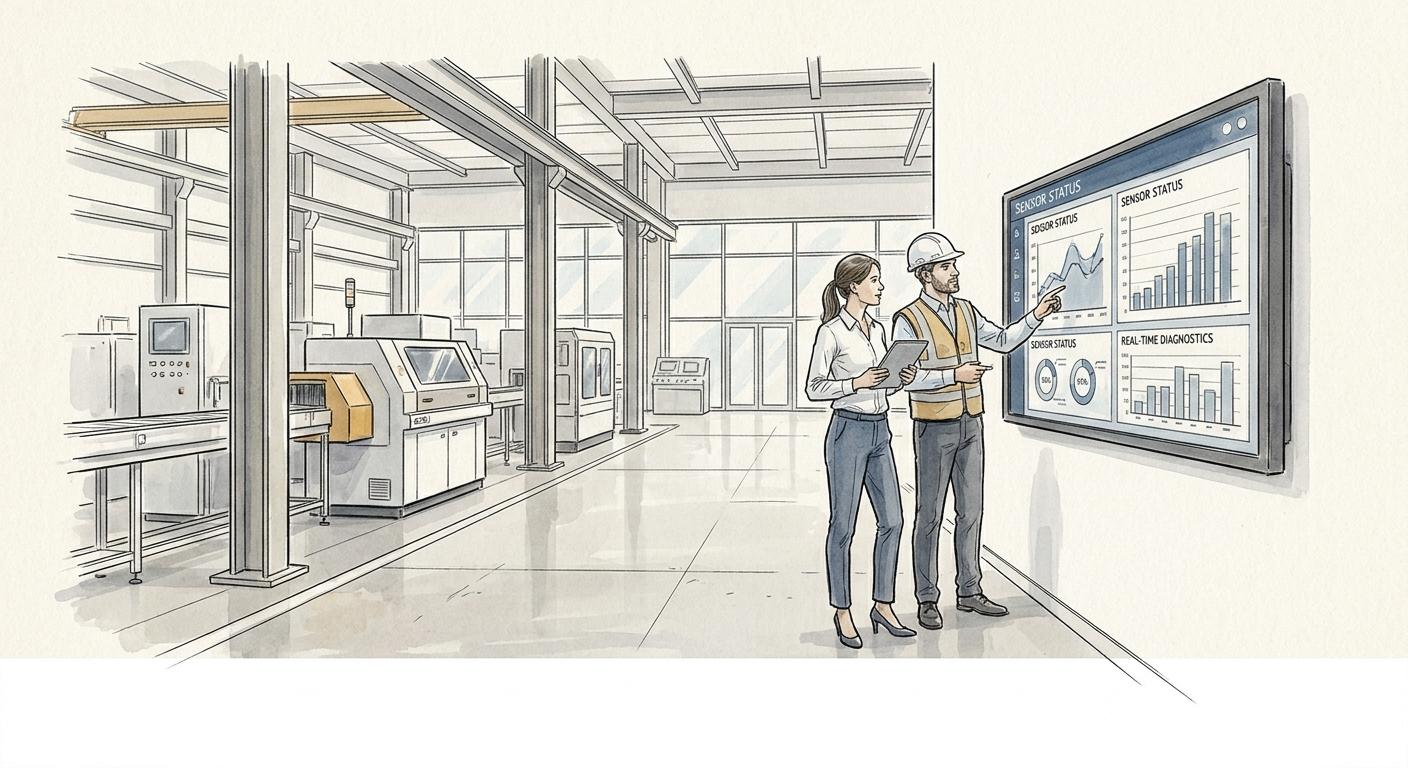
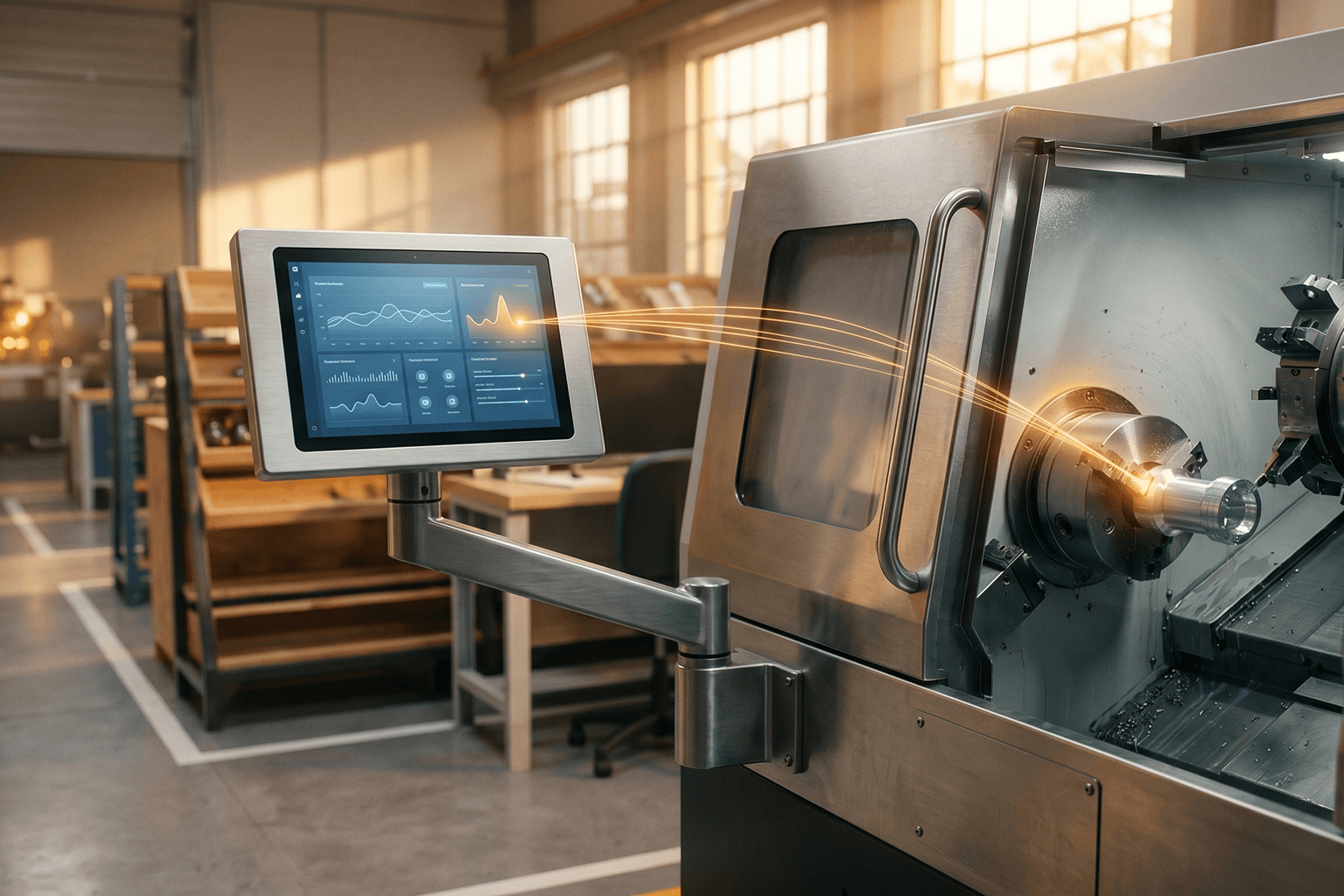
The disconnect between the front-office ERP and the shop-floor MES is where most margin leakage occurs. AI acts as an embedded AI layer that sits on top of these systems, pulling data from both to provide dynamic lead-time adjustments.
Unlike a standard ERP, which assumes a fixed lead time for a component, machine learning models analyze actual vendor performance, transit delays, and machine downtime to calculate a "true" lead time. This allows for AI-driven inventory optimization that adjusts safety stock levels daily. When these systems are synchronized, the job costing accuracy improves, as the AI accounts for the real-time cost of capital tied up in the materials used for each run.
The CFO Checklist: Hard Metrics for Quantifying AI Success
To validate the value creation of an AI initiative, the CFO must move beyond vague "efficiency" metrics and focus on hard financial indicators. The following KPIs should be tracked during the first 90 days of implementation:
- Days Sales of Inventory (DSI): A direct measure of how long cash is tied up in stock. AI interventions typically target a 10-15% reduction in DSI without impacting service levels.
- Safety Stock Variance: Measuring the difference between suggested safety stock levels and actual usage. Reduction in this variance indicates better demand forecasting accuracy.
- Stock-out Frequency vs. Inventory Value: The ultimate goal is to reduce total inventory value while simultaneously reducing the frequency of stock-outs that cause OTIF misses.
- Net Working Capital (NWC) Impact: Quantifying the total dollar amount released from the balance sheet into cash flow.
In our work with PE-backed firms, achieving these metrics often results in a significant increase in AI readiness, moving the company from "experimental" to "optimized" on the maturity scale.
From Pilot to Production: Building the Internal AI Muscle
Software alone will not solve inventory bloat. The failure of many AI projects stems from low adoption among plant managers and procurement officers who do not understand how the recommendations are generated. Building exit readiness requires building the internal "AI muscle" - the ability of the organization to maintain and evolve these models.
This is why a repeatable AI playbook must include executive training and functional upskilling. At iForAI, we have trained over 1,500 employees because we know that the best algorithm is useless if the person placing the purchase order ignores it. By combining strategy, execution, and upskilling, manufacturers can ensure that their operating leverage improves permanently, rather than seeing a temporary dip in costs followed by a return to old habits.
Frequently Asked Questions
How long does it take to see a measurable impact on cash flow from AI? With a focused execution model, first measurable results in inventory reduction and demand accuracy are typically visible within 60-90 days. By targeting a specific high-impact product line first, manufacturers can see cash flow improvements long before a full-scale rollout is complete.
Do we need to replace our current ERP to implement AI? No, you do not need to replace your ERP. AI acts as an execution layer that integrates with existing ERP and MES systems to turn dormant data into actionable insights through ERP data integration.
How does AI improve demand forecasting accuracy better than traditional methods? Traditional methods rely on simple historical trends, whereas AI incorporates hundreds of variables, including seasonal shifts, economic indicators, and real-time supply chain disruptions. This allows for dynamic adjustments that static spreadsheets cannot perform.
What is the primary driver of AI ROI in manufacturing? The primary driver is the reduction of excess inventory and the elimination of stock-outs. By optimizing these levels, companies reduce carrying costs and avoid the expensive "fire drills" associated with missing materials, directly improving EBITDA.
The path to improved liquidity starts with moving from manual estimates to data-driven execution. By quantifying the impact of AI on working capital, manufacturing leaders can secure the operating leverage needed to scale efficiently.
Book a Manufacturing Diagnostic at ifor.ai/solutions/manufacturing