

.svg)

Beyond the Keystroke: Why Your AI Strategy Needs a Workflow Overhaul
Many Chief Technology Officers (CTOs) and engineering leaders observe a common challenge: their development teams are leveraging Generative AI to accelerate coding, yet product release schedules often remain unchanged. This phenomenon highlights a critical disconnect between individual task efficiency and overall project velocity.
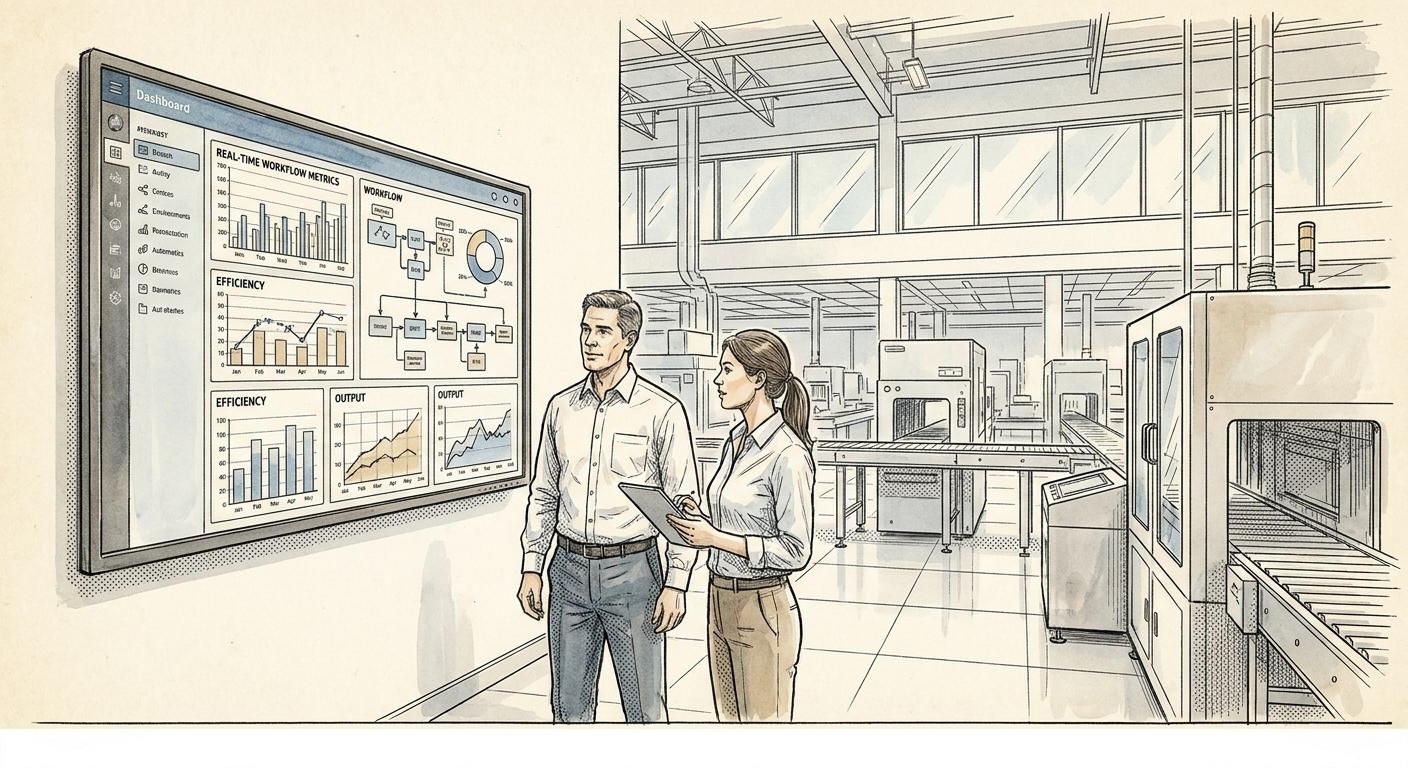
At iForAI, we refer to this as the "Turbocharger in Traffic" effect. It's akin to upgrading a car's engine to a high-performance model, only to find it still caught in the same traffic congestion caused by manual handoffs, legacy system bottlenecks, and extensive approval processes. Enhancing coding speed alone may not yield significant benefits if the path to production remains slow.
From Reactive Assistants to Proactive Agents
To achieve a measurable return on investment (ROI) from AI, organizations are moving beyond basic "AI Assistants" that primarily autocomplete code. While these tools offer convenience, they are inherently reactive, requiring human prompts to function.
The industry is evolving toward AI Agents. These are designed as proactive, goal-oriented systems that can operate much like "fractional team members." For example, instead of merely assisting a developer in writing a function, an AI agent might autonomously scan pull requests for potential security vulnerabilities or validate new code against Product Requirement Documents (PRDs) before a human reviewer intervenes. This shift is not just about performing tasks faster; it's about advancing work more independently.
Automating the "Connective Tissue"
In many enterprise environments, the primary source of delay is often not the coding itself, but rather the "connective tissue" — the transitions and handoffs between different development stages. To genuinely accelerate time-to-market, it becomes essential to automate these manual gaps where project momentum can falter.
Key areas for automation include:
- Dynamic Documentation: Automatically updating API specifications and system architecture maps as the codebase evolves ensures that documentation remains current and accurate.
- Upstream Validation: Employing AI to detect logic errors or compliance issues during the PRD phase, ideally before any code is written.
- Contextual Impact Analysis: Predicting how a seemingly minor change in one microservice could propagate effects across a complex architectural landscape.
By focusing on automating these inter-stage handoffs, the emphasis shifts from optimizing individual productivity to enhancing overall systemic velocity.
Integrating AI with Governance, Beyond Shadow AI
When development teams resort to copying and pasting code snippets into external, browser-based Large Language Models (LLMs), it often leads to "Shadow AI" practices. This can result in fragmented workflows and introduce significant security risks.
Effective AI transformation occurs when these capabilities are integrated directly into an organization's CI/CD pipelines. Embedding AI within the core technology stack ensures that automation is governed, secure, and specifically tailored to the business's unique logic and coding standards. This approach elevates AI from an experimental tool to a foundational component of the software delivery engine.
Outcome-Driven Execution
Ultimately, if AI investments are not contributing to shorter release cycles or improved code quality in production environments, the challenge likely lies in the workflow rather than the technology itself. AI should not merely help teams code; it should empower companies to ship products more effectively.
Ready to transform your AI initiatives into tangible business outcomes? Discover how a workflow audit can identify and bridge critical gaps in your delivery pipeline.