Anthropic's 'AI Extraction' Warning: Understanding Data Risk in Generative AI
Many AI initiatives face challenges not because the technology is insufficient, but because their underlying data infrastructure is unstable. A common concern among CEOs and product leaders is, "How can we leverage our proprietary data without inadvertently exposing it to the public?"
This concern is more than theoretical. Researchers, including those at Anthropic, have highlighted the risk of 'AI extraction.' This refers to the possibility that sensitive business logic or private training data could be reverse-engineered from AI models that lack adequate security. This situation underscores the need to move beyond general experimentation and focus on building robust, enterprise-grade AI infrastructure.
From General AI Exploration to Proprietary Advantage
The initial phase of Generative AI involved exploring the capabilities of public models. Today, the focus has shifted toward achieving tangible business value. Gaining a competitive edge often requires feeding models internal data, such as customer histories, supply chain logic, and intellectual property.
However, this approach can create "infrastructure debt." Deploying AI without a secure data layer can introduce liabilities. The objective is to develop systems where innovation and security are integrated, rather than being conflicting priorities.
The Role of RAG: Beyond Basic Implementations
To connect static AI models with dynamic, live data, many organizations use Retrieval-Augmented Generation (RAG). While RAG is a powerful architectural pattern, standard implementations often overlook a critical element: identity and access management.
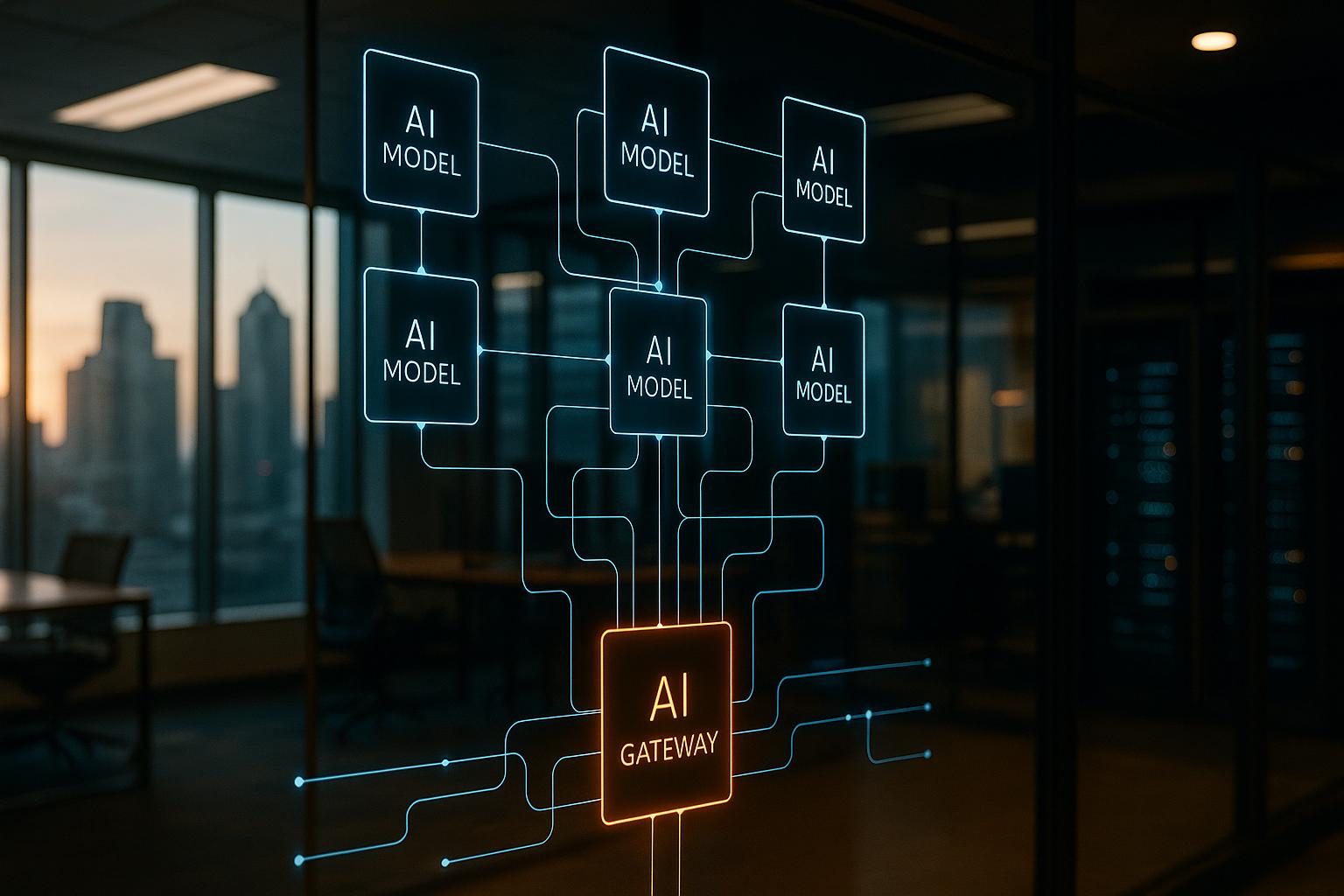
In an enterprise setting, an AI system should not have unrestricted access to all company data. A key engineering challenge involves embedding existing CRM and ERP permissions directly into the AI workflow. For example, if a junior analyst is not authorized to view executive payroll data in a database, the AI agent should be architecturally prevented from retrieving that information for them. In this context, security is a fundamental requirement, not merely a compliance checklist item.
Transforming Data Privacy into a Competitive Strength
Some organizations view security as an impediment to progress. However, a different perspective suggests that secure, specialized AI workflows can become a form of intellectual property.
By integrating robust governance from the outset, organizations can create a "value protector." While competitors may hesitate due to privacy concerns or stalled pilot projects, a secure foundation allows for confident, enterprise-wide AI scaling. Addressing the trust aspect enables organizations to convert data into measurable return on investment more quickly than others in the market.
Moving from Conceptual AI to Operational Systems
AI extraction and data leakage are real risks, but they can be managed with the appropriate architectural strategy. The distinction between an unsuccessful experiment and a transformative tool often lies in the underlying infrastructure.
Ready to bridge the gap between AI strategy and measurable impact?
Do not let infrastructure limitations hinder your innovation. We help organizations build secure roadmaps and intelligent agents that transform data into a proprietary advantage.