

.svg)

Beyond the 'Turbocharger in Traffic': Scaling ROI with Agentic Coding Loops
Many CTOs and engineering leaders are currently navigating a significant challenge: while generative AI helps developers write code faster, product release dates often remain unchanged. This phenomenon, which some refer to as the 'Turbocharger in Traffic' paradox, highlights a core issue: an upgraded individual component (the developer with AI assistance) doesn't automatically resolve systemic bottlenecks like manual handoffs, slow reviews, or outdated documentation.
To overcome this gridlock and achieve substantial business impact, leaders may consider shifting their focus from AI Assistants to AI Agents.
The Shift from Reactive to Objective-Driven
Many organizations are currently in the "AI Assistant" phase. An AI Assistant typically responds to specific prompts, such as generating a code snippet. In contrast, an AI Agent is designed to be objective-driven.
Instead of merely suggesting text, an agent aims to understand a broader goal. For example, when tasked to "audit this pull request for security gaps and synchronize the technical documentation," an agent doesn't just provide a checklist; it can execute the workflow. This transition positions AI from a reactive tool to a functional, autonomous extension of an engineering team.
Targeting the 'Connective Tissue' of DevOps
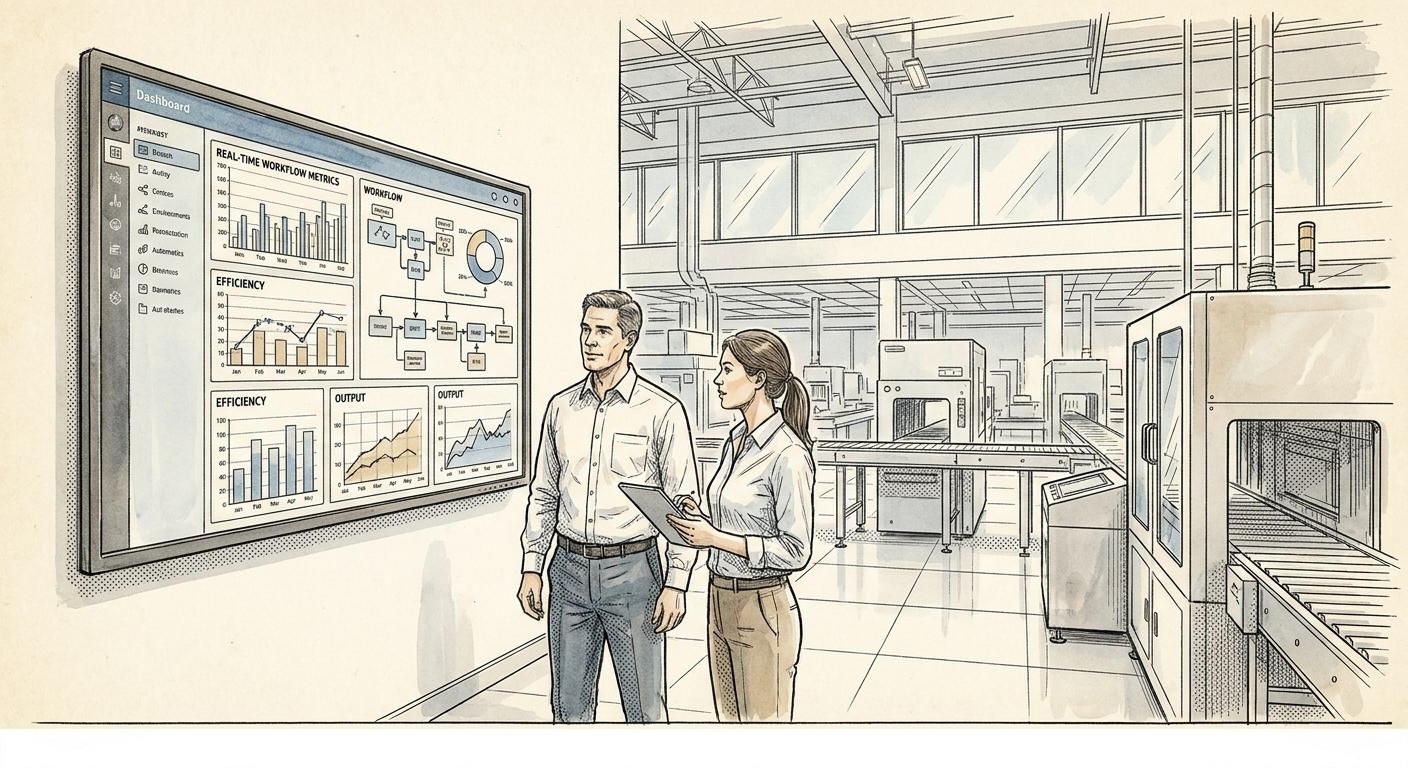
True return on investment (ROI) in AI transformation may not solely come from faster individual coding. Significant efficiency gains can often be found in the "middle-work"—the critical, high-friction processes that, according to some reports, can consume 30-40% of engineering capacity.
By implementing agentic loops, organizations can automate these essential yet time-consuming areas:
- Dynamic Documentation: Moving beyond static wikis, agentic systems can ensure that documentation, often considered the "source of truth," evolves automatically with every code change.
- Product Requirement Document (PRD) Logic Validation: Agents can identify potential edge cases and logical inconsistencies in PRDs before development begins, potentially saving significant rework later.
- Automated Alignment: These systems can identify potential integration conflicts across different workstreams in real-time, which may reduce the need for frequent status meetings and manual synchronization efforts.
Moving Beyond Shadow AI
When teams rely on unmanaged AI chat tools, the benefits may remain localized and inconsistent. This is sometimes referred to as "Shadow AI"—it can be helpful for individuals but may not provide organizational-level visibility or impact.
To scale effectively, AI could be embedded directly into core infrastructure and Continuous Integration/Continuous Deployment (CI/CD) pipelines. Rather than being a peripheral plugin, AI can become an integral part of the system that validates, documents, and helps secure deployments. This integrated approach aims to ensure that AI adoption is measurable, secure, and aligned with enterprise standards.
Driving Measurable Impact
The goal is not just to write code faster, but to remove the friction that prevents that code from reaching production efficiently. By building autonomous systems, organizations can aim to drive tangible results aligned with their business objectives.