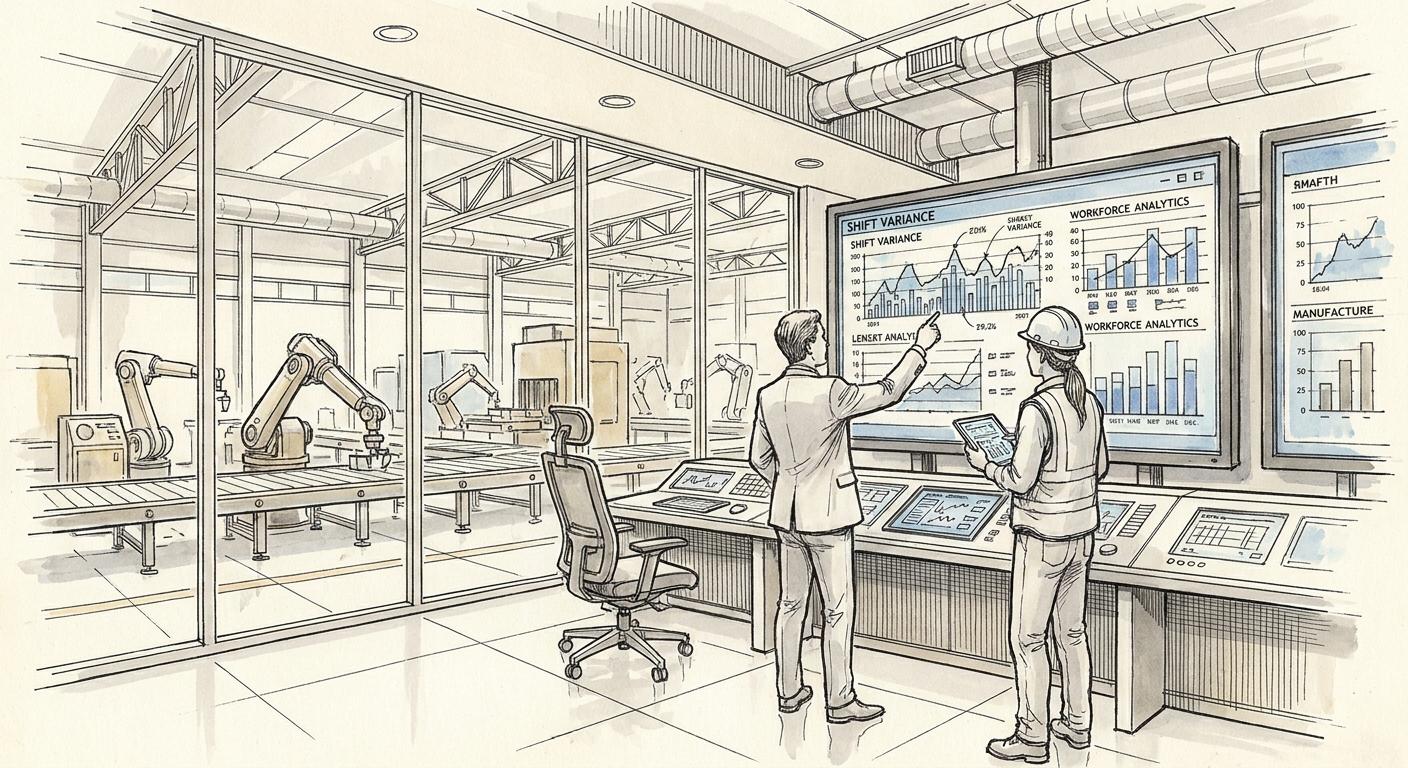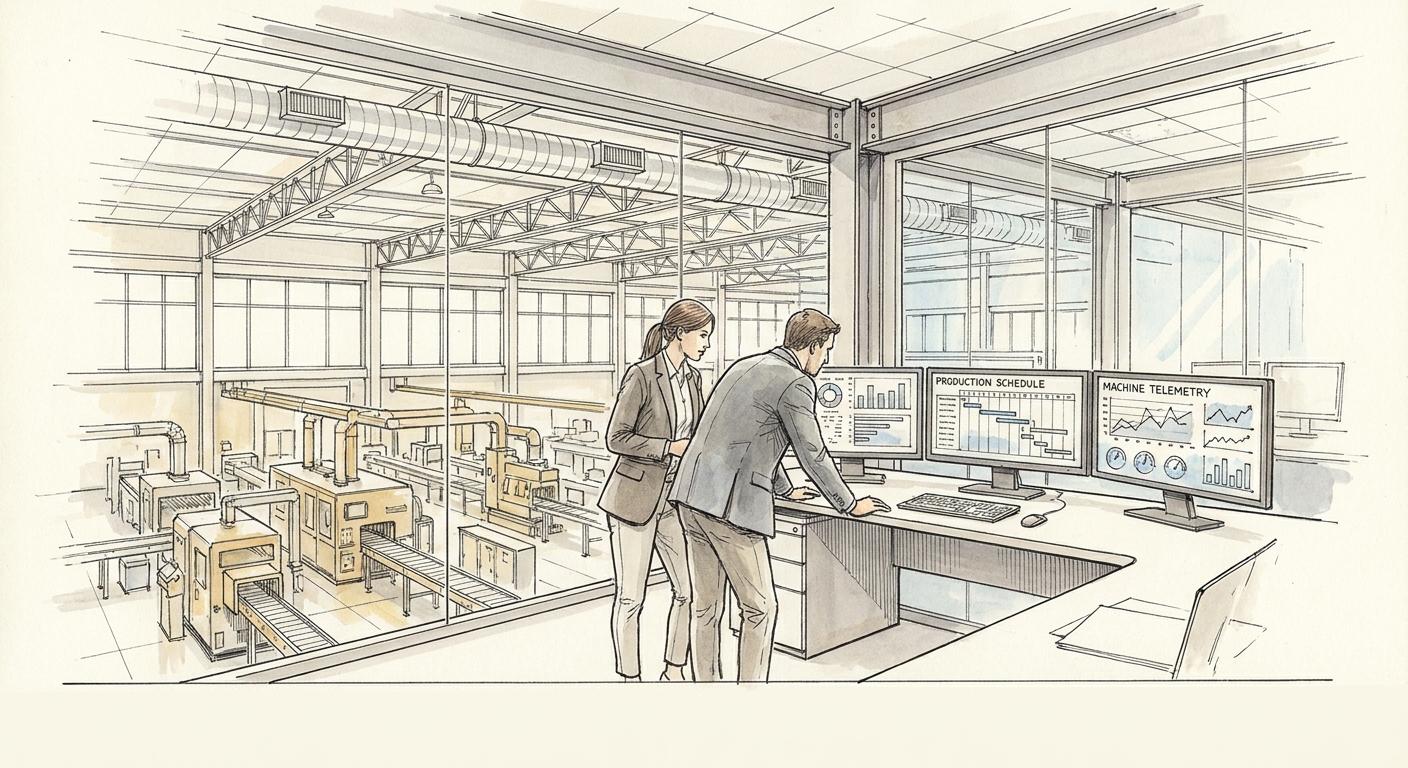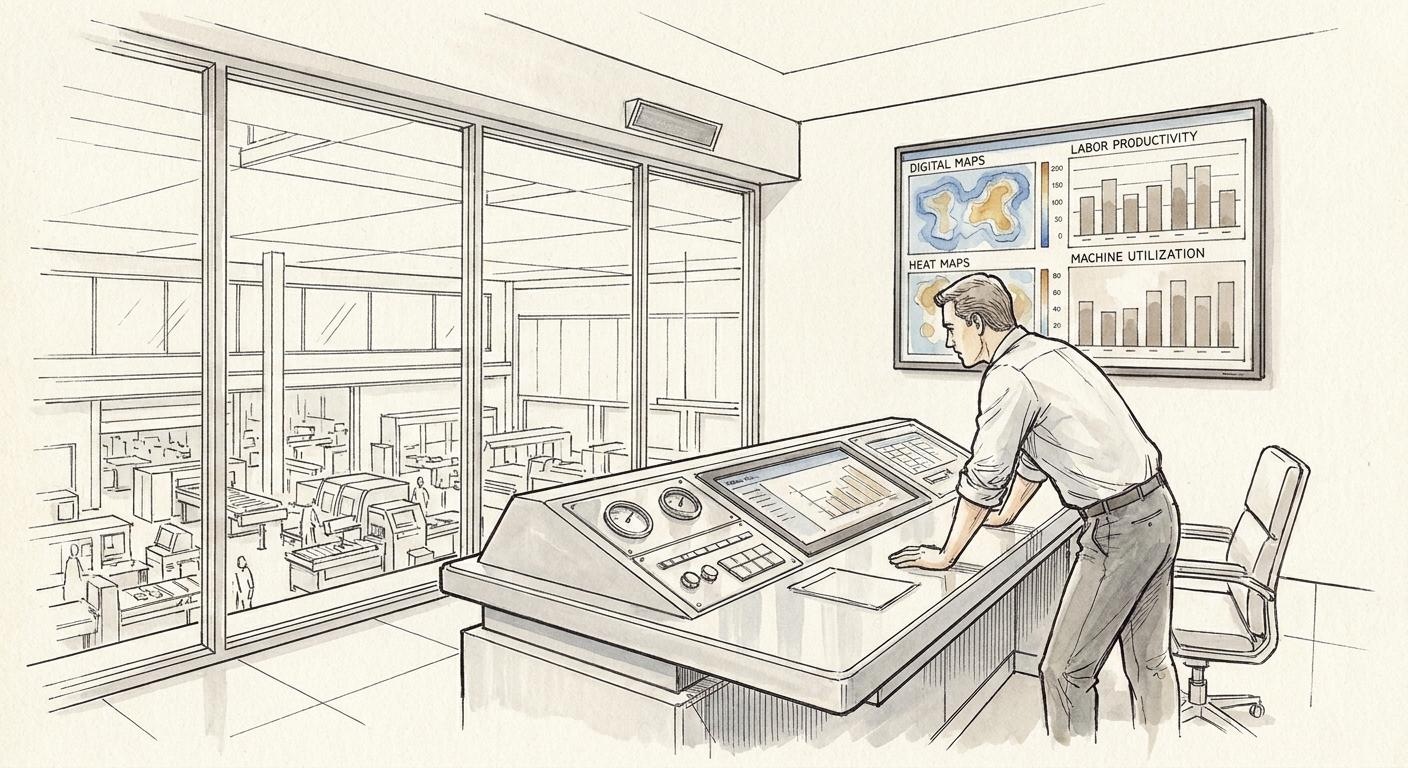


The quarterly review lands on the CFO’s desk, and the numbers confirm the ongoing margin leakage. While labor costs and raw material inputs remained stable, unit COGS ticked upward entirely driven by utility bills. On the shop floor, production supervisors kept pace with orders, but uncoordinated machine startups created utility spikes that triggered severe demand charges. For manufacturing COOs and CFOs, peak demand energy management manufacturing represents a persistent blind spot that directly erodes product margins. Traditional plant scheduling assumes power is a flat, infinite resource, ignoring the punitive rate structures levied by utilities during high-consumption intervals. This guide examines how algorithmic energy optimization stops margin erosion by flattening demand curves without sacrificing plant throughput or OTIF performance.
The Margin Leak: Why Utility Peak Demand Charges Destroy Unit Economics
Industrial utility bills rarely reflect only kilowatt-hours consumed. Instead, a significant portion of the monthly invoice relies on demand charges calculated from the single highest 15-minute power consumption peak during the billing cycle. When a plant initiates simultaneous heavy machine startups, HVAC systems, and thermal processing units, the facility creates a massive electrical spike.
This momentary spike dictates the rate for the entire month, disproportionately inflating the cost per unit during low-volume production runs. CFOs often scrutinize scrap rates and direct labor variances while overlooking these utility spikes embedded in overhead allocations. When multiple production lines ramp up concurrently without central coordination, the resulting demand charge transforms an otherwise profitable production run into a margin-negative batch.
The ERP-MES Energy Blind Spot: Why Static Schedules Fail
Most manufacturing facilities run on enterprise resource planning and manufacturing execution systems designed to track labor, material flow, and machine status. Yet, standard ERP-MES setups operate as energy islands. They schedule jobs based on due dates and tool availability, remaining entirely blind to real-time grid pricing tiers and facility demand thresholds.
Plant managers rely on static operating procedures to manually stagger shifts, but manual intervention cannot keep pace with dynamic utility rate structures. If an operator pushes a heat-treat furnace online during a regional grid peak, the system registers the action long after the financial damage is done. Closing this operational gap requires moving beyond static scheduling into automated, real-time energy visibility.
Algorithmic Peak Shaving: How Machine Learning Predicts and Controls Load
Algorithmic peak-demand energy management is the use of machine learning models to dynamically forecast, schedule, and throttle industrial equipment operations to prevent costly utility demand spikes without impacting overall throughput.
Instead of reacting to a rising load, machine learning models analyze historical consumption data, active production queues, and utility rate tariffs to predict when a demand threshold is imminent. The AI model evaluates the production schedule and identifies non-critical energy loads, such as pre-heating cycles, auxiliary pumps, or secondary machining, that can be micro-shifted by minutes or hours.
By staggering these energy-intensive cycles automatically, the system flattens the facility load profile. The plant maintains its required output while avoiding the high-tariff bands that utilities charge during peak grid hours.
Case Study: Dropping COGS Within 90 Days of Execution
A mid-sized automotive components manufacturer faced mounting pressure from utility providers as regional grid demands drove up industrial tariffs. Their operations team had attempted manual load shedding, but operator friction and scheduling complexity led to missed delivery windows and constant OTIF anxiety.
Partnering with an execution-focused team, the plant deployed sensor-to-cloud monitoring across its primary stamping and welding cells within an 8-week implementation window. The system ingested real-time power meter data alongside the existing MES queue, establishing automated dispatch rules for non-critical thermal loads.
Within 90 days of going live, the facility eliminated its monthly peak demand penalties, resulting in a measurable drop in unit COGS and stabilizing gross margins without a single delayed shipment.
Building an Operational Playbook for Plant-Wide Energy AI
Implementing energy AI across a manufacturing plant requires a structured approach that prioritizes operational stability over theoretical optimization. COOs and CFOs can follow a phased framework to deploy algorithmic energy management successfully.
Phase 1: Metering and Baseline Discovery
The initiative begins with high-frequency sub-metering on major energy consumers to establish an accurate estimate-vs-actual baseline for power draw. Understanding the exact energy signature of every capital asset exposes the primary drivers of past demand spikes.
Phase 2: Open-Loop Pilot Testing
Before granting control to automated systems, the AI model operates in advisory mode. Supervisors receive real-time alerts and suggested load-shifting actions, validating that algorithmic recommendations do not disrupt shop floor workflows or delay outgoing orders.
Phase 3: Closed-Loop Automation and Scaling
Once plant leadership confirms that micro-shifting preserves OTIF targets, the system transitions to closed-loop control. Automated dispatch rules govern non-critical assets in real-time, locking in sustained unit COGS improvements and preparing the operational model for deployment across multi-plant portfolios.
Frequently Asked Questions
How does peak demand management directly impact unit COGS?
Utility bills include demand charges based on the single highest 15-minute power consumption peak, which disproportionately inflates the cost per unit during low-volume production runs. Flattening these spikes removes volatile overhead costs from individual product batches.
Will algorithmic energy management disrupt shop floor schedules or OTIF?
AI optimization works within existing delivery deadlines and MES constraints, micro-shifting non-critical energy loads by minutes or hours rather than delaying shipments. The goal is to protect output while smoothing power consumption.
How quickly can a manufacturing facility see ROI from AI energy optimization?
With a targeted, hands-on execution partner, initial load profiling and first automated dispatch rules can be live in production within 60 to 90 days, capturing immediate utility bill savings.
Conclusion
Controlling unit COGS requires moving beyond static shop floor schedules to address the hidden financial drain of unoptimized utility demand spikes. By deploying algorithmic energy management, manufacturers protect their margins and eliminate unpredictable overhead costs without disrupting delivery timelines.
Book a Manufacturing Diagnostic at ifor.ai/solutions/manufacturing

Ofer Hermoni, Ph.D.
Founder & Chief AI Officer at iForAI