

.svg)

How to move from random AI experiments to measurable business value
Most product and engineering leaders do not struggle with accessing artificial intelligence tools. The real challenge lies in converting scattered, ad-hoc pilots into measurable business outcomes.
In mid-market organizations, AI adoption typically starts organically. Marketing teams experiment with prompt engineering for content creation, developers adopt AI-assisted code completion, and customer operations teams test automated ticket triage. While each team may resolve an immediate, isolated friction point, systemic progress stalls. Within two or three quarters, executive leadership asks for a clear return on investment (ROI), yet cross-functional data is rarely available. Disconnected experiments consume engineering attention, scatter operational focus, and seldom affect bottom-line business metrics.
Bridging the gap between novelty and measurable impact requires shifting focus away from model capabilities and toward the operational bottlenecks within everyday business workflows.
Anchor initiatives to operational bottlenecks
High-leverage enterprise AI initiatives rarely begin with the question, "What can we build with this new model?" Instead, they evaluate where teams lose predictable hours to repetitive, manual coordination.
- Audit high-friction workflows: Focus on processes defined by structured rules and recurring administrative overhead. Examples include incoming document verification during onboarding, multi-tier support routing, and structured data extraction from unstructured forms. Augmenting or automating these handoffs provides immediate, verifiable efficiency gains.
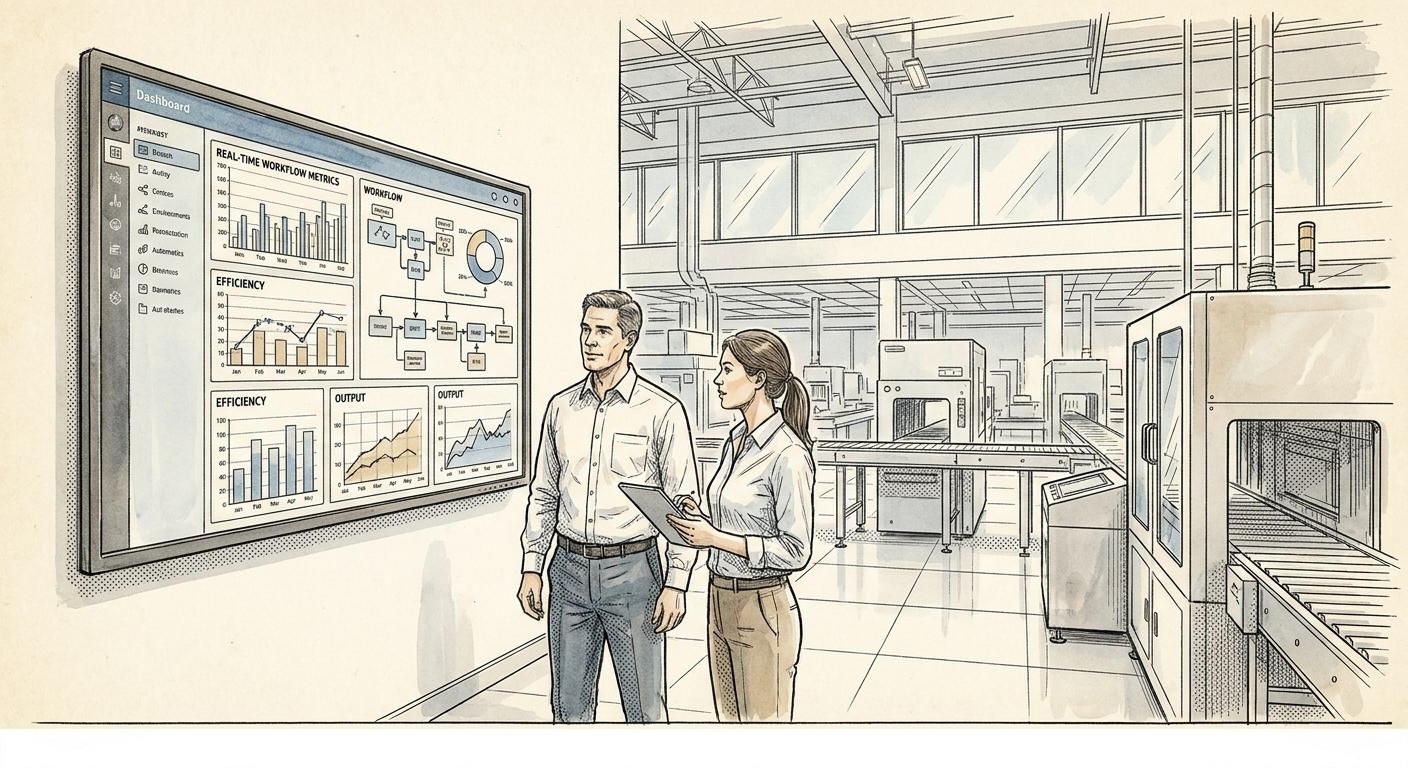
- Establish clear operational baselines early: Define measurable metrics before deploying an internal tool or automated pipeline. Decide whether success means reducing support ticket resolution times, lowering customer intake processing hours, or reducing error rates in document parsing. Without a documented baseline before launch, assessing post-implementation value remains difficult.
- Validate workflows before committing core development sprints: Deploy lightweight proofs-of-concept to evaluate both model reliability and team adoption. Committing dedicated engineering cycles or training custom infrastructure is best reserved for workflows that demonstrate consistent internal demand and verifiable accuracy during initial testing.
Moving toward structured AI maturity
Sustainable AI integration is not determined by how quickly an enterprise adopts new foundational model releases. Rather, it relies on disciplined operational execution: systematically identifying where automation removes human latency, confirming accuracy on real-world edge cases, and scaling solutions with verified utility.
Organizations that transition successfully treat artificial intelligence as core infrastructure rather than an exploratory side project. By anchoring technical investments to measurable business metrics, companies turn uncoordinated experiments into reliable enterprise value.
If your organization is ready to transition from scattered pilots to an outcome-driven delivery roadmap, connect with the iForAI team to review our AI maturity framework or schedule a strategic planning session.

Ira Komarova
COO at iForAI