

.svg)

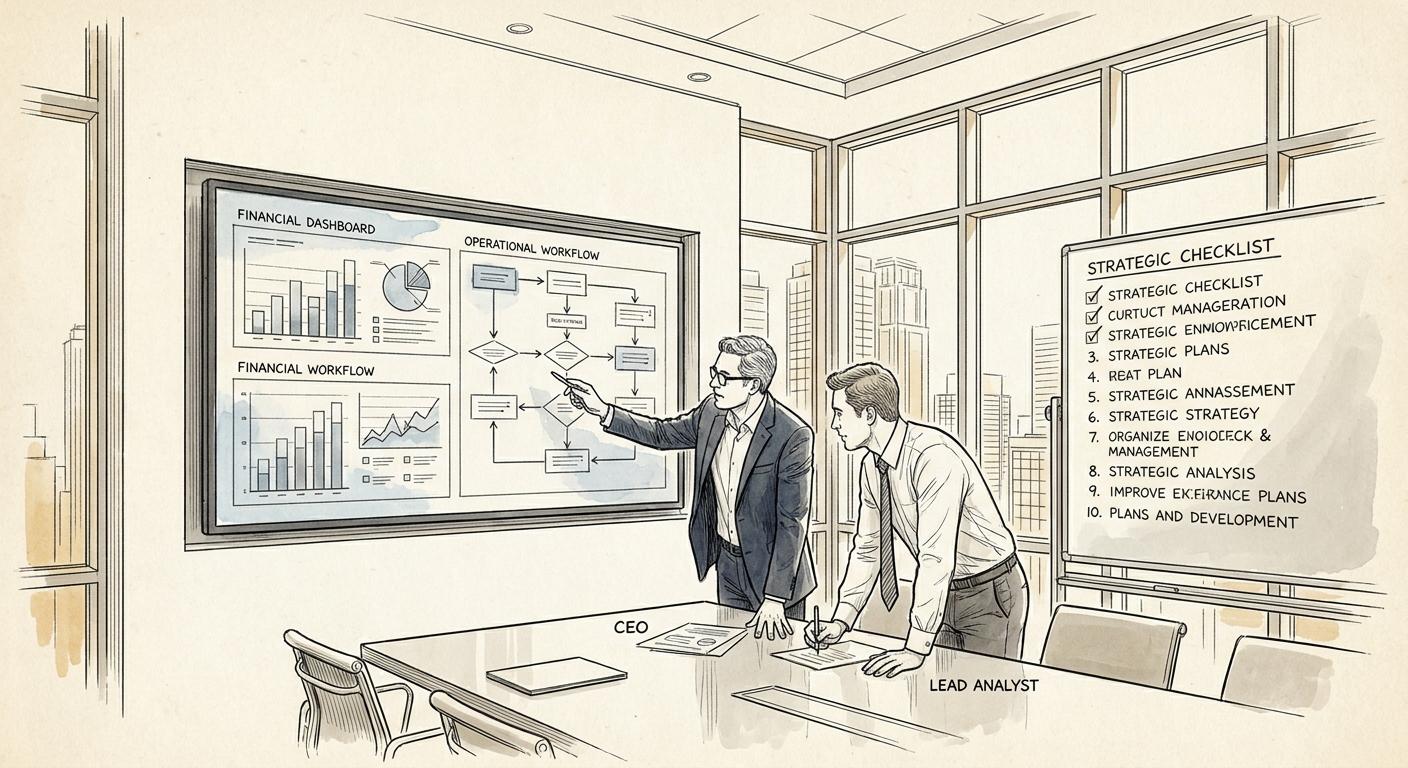
Operating Partners frequently inherit portfolio companies that are "data rich but insight poor," where the legacy ERP serves as a glorified accounting ledger rather than a strategic asset. AI for ERP data extraction transforms these stagnant systems into predictive engines that identify margin leakage in real-time. Instead of waiting for month-end reports to realize OTIF (On-Time, In-Full) targets were missed, firms can now use embedded AI to forecast bottlenecks before they hit the P&L. This article explores how to bridge the ERP-MES gap and leverage existing data to drive a 2-3% EBITDA uplift within the first 100 days post-acquisition.
The ERP Data Paradox: Why $1M+ Systems Produce Zero Predictive Value
Most mid-market manufacturing and distribution assets have invested millions into SAP, Oracle, or NetSuite, yet their leadership teams still manage the business via fragmented Excel trackers. This is the ERP Data Paradox: the system captures every transaction, but the data is trapped in silos that require manual cleaning to become useful. For a Private Equity firm, this lack of visibility is a primary driver of margin erosion.
AI-Driven ERP Optimization is the process of using machine learning algorithms to analyze historical ERP data - such as orders, inventory levels, and production schedules - to predict future outcomes and automate decision-making, directly impacting operational margins. By layering AI over these systems, firms can move beyond descriptive reporting and start answering "what will happen" rather than just "what happened."
Operating Partners often find that portco teams are paralyzed by "data debt." They believe they need a full ERP migration before they can innovate. In reality, modern AI tools can ingest messy, unstructured data from legacy databases, performing ERP data silo integration without a multi-year, high-risk software overhaul. This allows the firm to maintain its investment window while achieving sophisticated operational visibility.
The 2-3% EBITDA Lever: Moving from Descriptive to Predictive AI
Value creation in the current high-interest-rate environment requires more than just cost-cutting; it requires operating leverage. AI provides this by targeting specific line items that traditionally suffer from human estimation errors. When AI is applied to demand forecasting, for instance, a 15-20% improvement in accuracy often translates to a direct reduction in inventory carrying costs and emergency freight spend.
The EBITDA value creation AI playbook focuses on three specific levers:
- Inventory Optimization: Reducing safety stock by identifying slow-moving SKUs and predictive demand spikes, freeing up working capital.
- Dynamic Pricing: Analyzing historical transaction data and market signals to adjust quotes in real-time, capturing margin that is typically lost to static price lists.
- Labor Efficiency: Aligning shift schedules with predicted order volumes to eliminate unnecessary overtime or underutilized headcount.
iForAI has seen this transition move validation times for complex payments from 3 minutes down to 20 seconds, illustrating how reducing manual friction directly impacts the bottom line. By focusing on these high-probability use cases, Operating Partners can deliver measurable results to LPs within the first two quarters of ownership.
Bridging the ERP-MES Gap: Real-Time Operational Intelligence
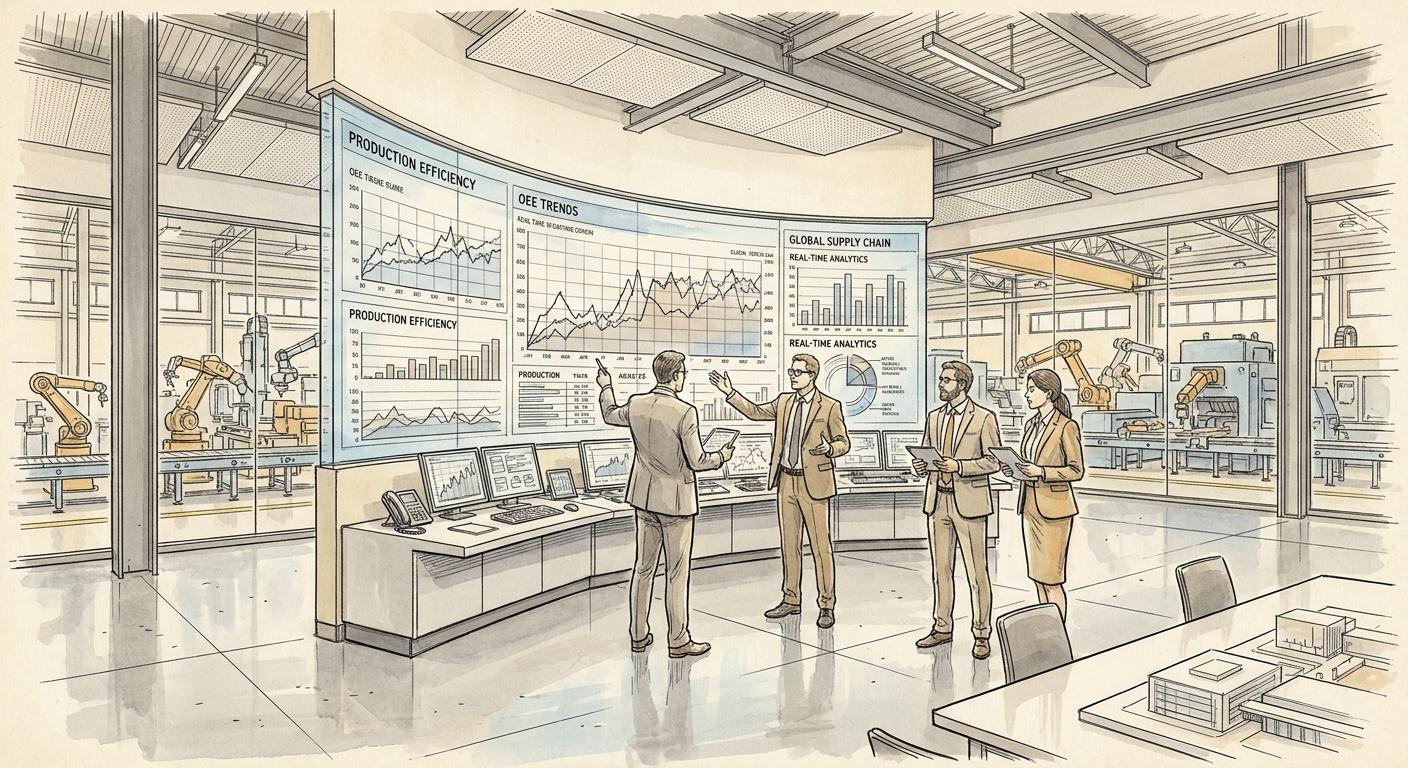
For manufacturing assets, the most significant "blind spot" exists between the shop floor (MES) and the front office (ERP). This gap leads to inaccurate job costing and estimate-vs-actual variances that kill margins. When these systems don't talk, the plant manager sees a machine breakdown, but the CFO doesn't see the impact on OTIF until the customer complains.
Predictive maintenance manufacturing ERP integration allows the plant to move from reactive repairs to scheduled interventions. By analyzing sensor data alongside production schedules, AI predicts when a critical asset will fail and prompts the ERP to adjust the production timeline and procurement of spare parts automatically.
This level of portfolio company operational excellence ensures that the "truth" of the factory floor is reflected in the financial forecasts. It eliminates the "delayed execution truth" that plagues quarterly reviews, allowing the Operating Partner to intervene before a production lag turns into a missed covenant.
The 60-90 Day Execution Roadmap: From Silos to Production
The traditional approach to AI - hiring a Head of AI and building a team - often fails because it lacks the speed required for a PE lifecycle. A more effective model is the repeatable AI playbook, which prioritizes speed to production over R&D. The goal is to have one functional use case live and generating ROI within 8 to 12 weeks.
The iForAI methodology focuses on a three-pronged approach:
- Strategy: Identifying the single use case with the highest EBITDA impact (e.g., reducing scrap rates or optimizing logistics).
- Execution: Using a specialized team of 35+ experts to build the embedded AI layer without disrupting existing workflows.
- Upskilling: Training the portco staff - over 1,500 employees have been trained by iForAI to date - to ensure the tool is actually adopted.
Low adoption is the silent killer of AI projects. If a Plant Manager doesn't trust the AI’s production schedule, they will revert to their whiteboards. Success requires proving the "operating wedge" by showing the team exactly how the AI reduces their manual workload.
Evaluating Exit Readiness: Data Maturity as a Multiple Expander
As a portco approaches the end of the investment window, exit readiness becomes the priority. A buyer today isn't just looking at the EBITDA; they are looking at the quality and scalability of the earnings. A company that possesses a "clean" AI-augmented data layer is viewed as a much lower risk than one relying on tribal knowledge and manual spreadsheets.
Demonstrating a high level of AI maturity serves as a multiple expander. It proves to prospective buyers that the business has a scalable "operating system" capable of maintaining margins even as it grows. A documented history of AI-driven OTIF improvements and inventory turns provides a credible narrative for future growth, making the asset more attractive during the due diligence process.
By implementing these systems early in the holding period, PE firms not only capture the EBITDA uplift during their ownership but also set the stage for a premium exit multiple by de-risking the operational infrastructure.
Frequently Asked Questions
Do we need to upgrade our ERP before implementing AI for ERP data extraction? No. Modern AI layers are designed to sit on top of existing legacy systems, extracting and cleaning data via APIs or direct database connections. This avoids the cost and risk of a full ERP migration while still providing predictive insights.
How quickly can an AI use case impact EBITDA? Measurable results in production typically occur within 8-12 weeks. By focusing on high-impact areas like dynamic pricing, demand forecasting, or inventory churn reduction, firms can see realized margin improvements within the first two quarters.
What is a repeatable AI playbook for Private Equity? A repeatable AI playbook is a standardized framework for identifying, deploying, and scaling AI use cases across a portfolio. It ensures that every portco follows a proven path from data extraction to production, minimizing the risk of failed pilots and inconsistent adoption.
How does AI in manufacturing specifically improve OTIF? AI improves OTIF by integrating shop-floor constraints with ERP order data to create realistic, optimized production schedules. It identifies potential delays caused by machine health, labor shortages, or supply chain disruptions before they result in a missed shipment.
Exit-ready companies don't just have data; they have an automated engine that converts that data into margin. By prioritizing AI-driven ERP optimization, Operating Partners can bridge the gap between financial reporting and operational reality.
Learn about the AI Starter Package at ifor.ai/solutions/private-equity