

Beyond the API key: Why AI infrastructure is now a systems problem
For the past several years, adopting generative AI often looked like standard SaaS procurement: open an account, generate an API key, send a prompt, and parse the output. Recent industry shifts and enterprise adoption trends show that this introductory phase is largely maturing. As raw model access becomes more accessible and standardized, the primary enterprise battleground has shifted from model selection to systems integration.
When organizations transition from an internal pilot to scaling AI across a live commercial platform, model intelligence alone is rarely the main bottleneck. The real engineering friction occurs at the boundaries of existing enterprise technology stacks. Common challenges include managing deterministic latency, controlling context costs, ensuring state persistence, and executing permission-aware data retrieval across legacy databases. A third-party API endpoint cannot inherently resolve tenant isolation, data lineage, or fine-grained access control policies. That requires disciplined architecture.
The hidden cost of integration debt
Under pressure to deliver visible AI initiatives quickly, many engineering teams choose the fastest path available: stitching together custom wrappers around vendor APIs. Within a few quarters, this short-term approach often compounds into significant integration debt.
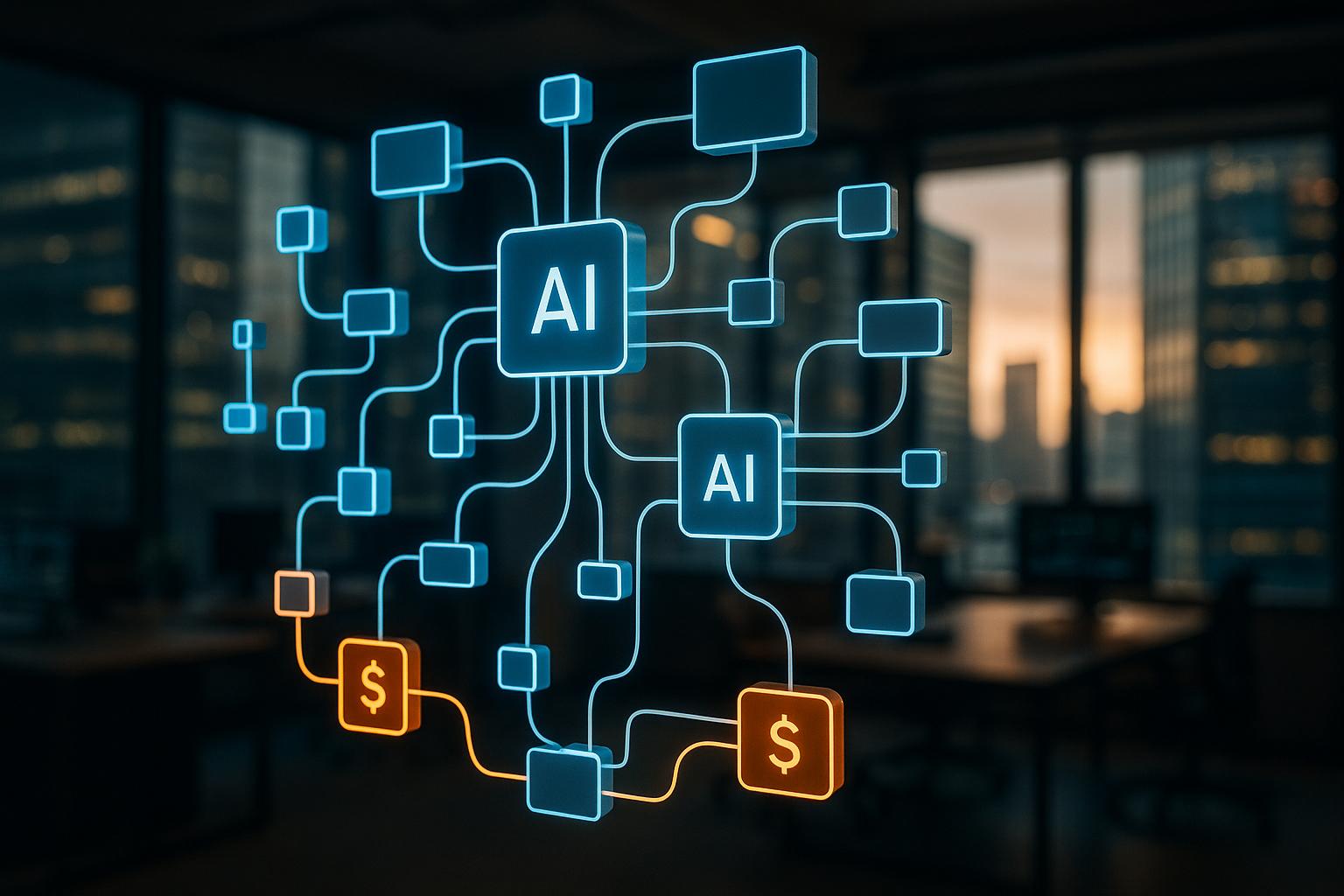
Workflows can become brittle as upstream model providers update parameters, change pricing models, or deprecate older versions. Token costs can escalate without granular attribution, and core business logic frequently ends up tightly coupled with vendor-specific prompting conventions. Chasing incremental benchmark gains on public leaderboards does not resolve these structural issues. Instead, sustainable systems rely on a modular, decoupled integration layer that protects proprietary logic regardless of which foundation model runs underneath.
Building for operational autonomy
Sustainable AI architecture requires maintaining operational control over core systems and data. Foundation models will continue to evolve, consolidate, and vary in cost. Underlying data pipelines, security controls, and workflow orchestration must be resilient enough to withstand these shifts without requiring a complete system rewrite every six months.
This architectural distinction shapes how production AI is approached at iForAI. Rather than delivering theoretical roadmaps, engineering teams work directly within your environment to deploy production-ready AI infrastructure. This collaborative approach ensures internal development teams understand every failure mode, pipeline trade-off, and deployment hook.
When external support concludes, the capability remains embedded within your organization. Routine tasks are automated, critical decision-making remains under human oversight, and your engineering team retains ownership of a durable, scalable system built for long-term growth.

Ira Komarova
COO at iForAI