
.svg)


4
min read

September 21, 2026
Why Edge LLMs Are Shifting Your Product Stack
Relying exclusively on centralized, cloud-hosted large language models (LLMs) presents distinct operational and economic bottlenecks at scale. As active user volumes grow, centralized API-dependent architectures often introduce three friction points: escalating cloud compute expenses, variable network latency, and continuous data governance challenges. For technical leaders, unmonitored compute costs can quickly erode the unit economics of AI-driven products.
Recent advances in model compression are shifting how teams approach inference—the process where a trained model processes inputs and generates outputs. Optimization methods have matured beyond basic post-training quantization (reducing the precision of model weights to save memory) into advanced knowledge distillation and structural pruning (removing redundant parameters). Emerging tools and model compression frameworks, such as those pioneered by specialized optimization platforms like PrismML, allow compact, capable models to execute directly on consumer and enterprise hardware. Standard laptops, modern smartphones, and edge gateways can now process specialized workloads while maintaining production-grade accuracy.
What Changes for Your Product Strategy?
Decentralizing inference workloads from cloud clusters directly to local client hardware provides several measurable product and operational advantages:
- Lower marginal compute overhead: Workloads execute using on-device silicon (such as integrated NPUs and GPUs) rather than metered cloud instances. Offloading routine queries to the client side fundamentally reduces recurring infrastructure and API expenses.
- Deterministic, real-time responsiveness: Edge inference bypasses round-trip network transit and cloud queue congestion. This enables consistent, low-latency UI feedback and ensures core model capabilities remain available in offline or bandwidth-constrained environments.
- Privacy and regulatory compliance by design: Sensitive user inputs remain confined to the local execution environment. Keeping personal identifiers and proprietary corporate records on-device simplifies risk management under data security frameworks such as GDPR, HIPAA, and SOC 2.
Designing for Distributed AI
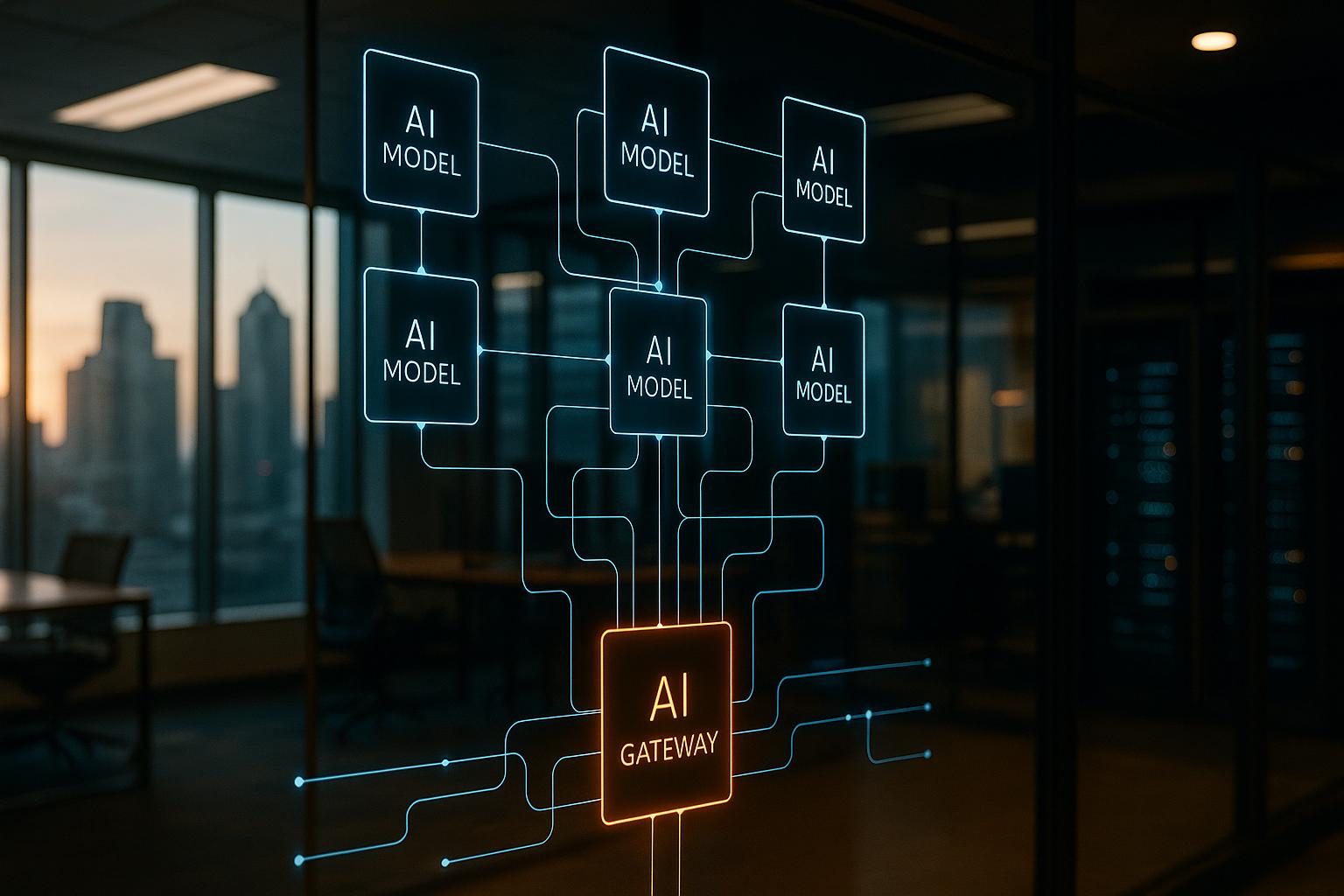
Deploying intelligence to the edge does not necessitate retiring centralized cloud models. Instead, modern technical teams are adopting a hybrid, distributed AI architecture. Under this paradigm, high-frequency, privacy-sensitive, or latency-critical interactions run on-device, while resource-intensive multi-step reasoning, massive multimodal tasks, and global context orchestration route to centralized cloud models.
Treating AI generation solely as an external cloud API call can introduce vulnerabilities in system reliability and long-term operating margins. A resilient product roadmap leverages distributed compute to optimize infrastructure costs, reduce latency, and preserve data sovereignty.
At iForAI, we assist engineering and product teams in evaluating, designing, and implementing balanced hybrid AI architectures tailored to sustainable growth.
To assess your infrastructure and determine where local models fit into your workflow, connect with our architecture advisory team for an edge-readiness evaluation.

Ofer Hermoni, Ph.D.
Founder & Chief AI Officer at iForAI