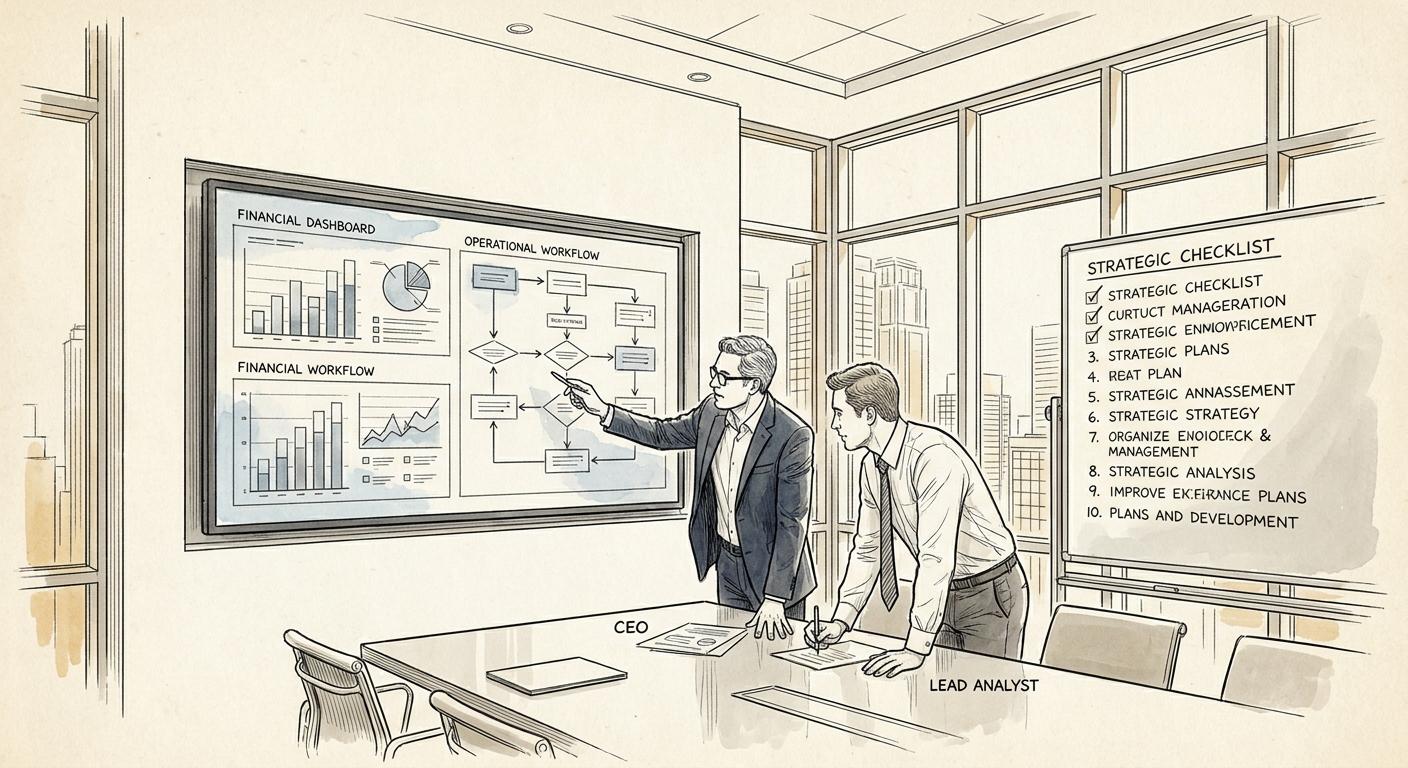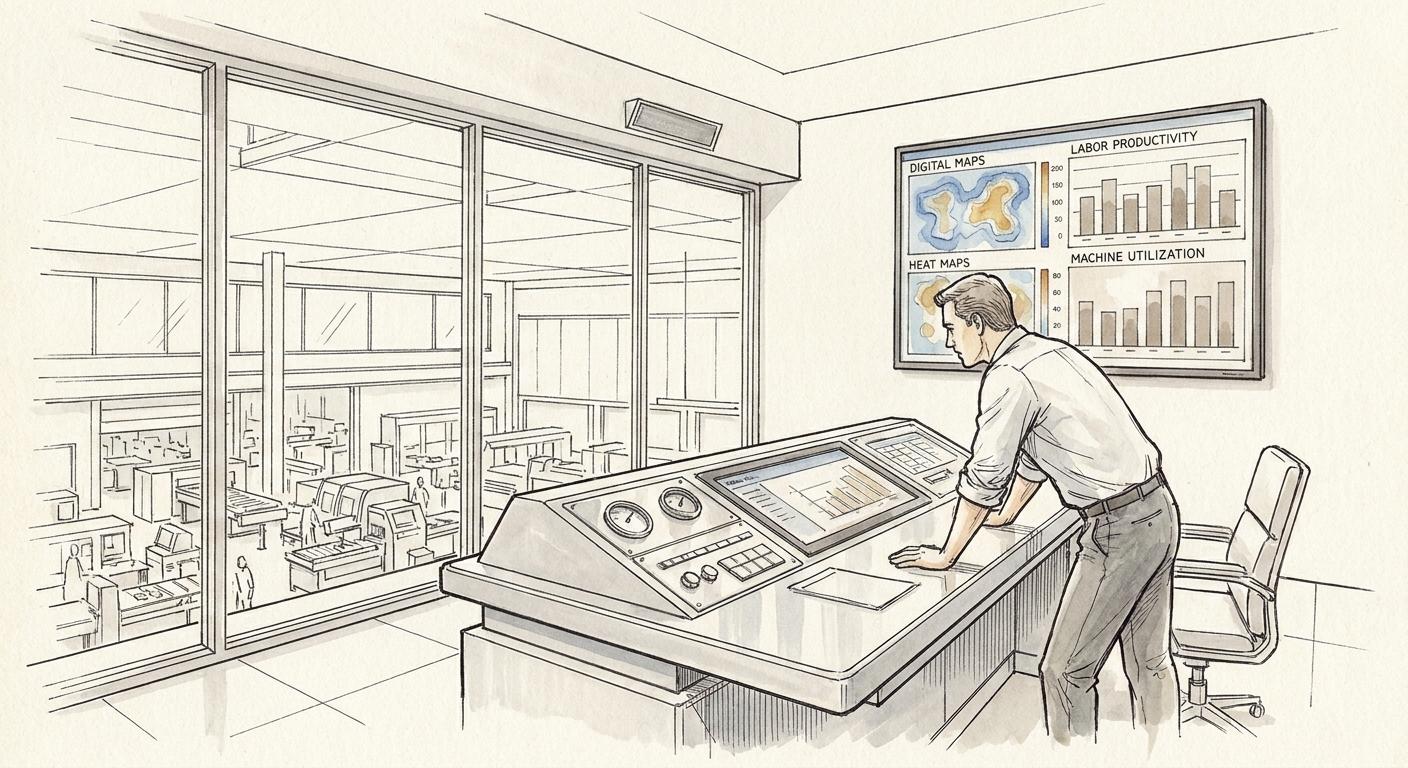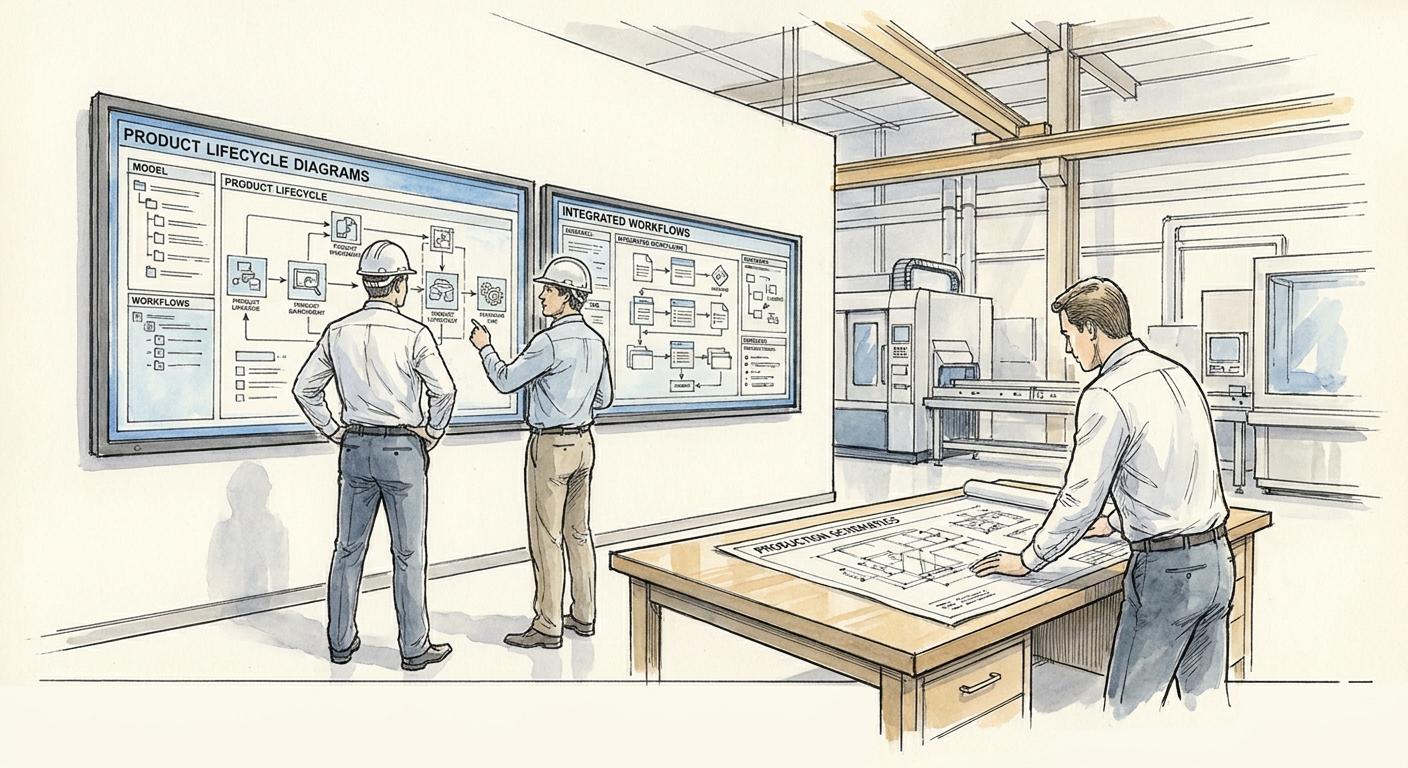
Operating Partners and COOs are increasingly frustrated by "pilot purgatory," where AI projects show technical promise but fail to impact the P&L. Without clear AI pilot success metrics, these initiatives remain expensive science projects rather than drivers of operating leverage. To secure buy-in for a full-scale rollout, leadership needs a scorecard that translates algorithmic performance into EBITDA improvement and exit readiness. This guide outlines the specific metrics required to bridge the gap from a successful test to a repeatable value creation playbook.
An AI Pilot Framework is a structured methodology used by private equity firms and manufacturers to test a specific AI use case against measurable KPIs before committing to a full-scale operational rollout. It focuses on validating time-to-value, financial impact, and organizational adoption to ensure the investment aligns with the broader value creation plan. The Gap Between 'Cool Tech' and Value Creation Most AI pilots fail not because the technology is broken, but because the measurement is wrong. A technical team might celebrate a 95% accuracy rate in a predictive maintenance model, but if that accuracy doesn't reduce OTIF misses or stop margin leakage, it is irrelevant to the board.
In a PE-backed environment, every initiative must contribute to the exit multiple. If an AI tool cannot demonstrate a clear path to margin expansion within a single budget cycle, it risks losing internal funding. Moving from a demo to production requires a shift in focus from technical feasibility to operational reality.
- Time-to-Production (The 60-Day Benchmark) In the high-pressure window of the first 100 days post-acquisition, velocity is the only metric that matters. A pilot that drags on for six months is a failure of execution, regardless of the output. We advocate for a "60-day sprint" to move from data ingestion to a live production environment.
Measuring time-to-value ensures that the portfolio company AI implementation is agile enough to adapt to market shifts. For example, iForAI recently reduced payment validation time from 3 minutes to 20 seconds for a client, showing measurable results in under 90 days. If the pilot cannot reach production readiness in this window, the complexity of the data or the use case is likely too high for the current AI maturity of the organization.
- Process Cycle Time Reduction (The OTIF Driver) For a COO, the most tangible metric is how much faster a specialized task is completed. Whether it is processing an invoice or generating a manufacturing quote, AI must compress the cycle. This isn't just about speed; it is about capacity. By reducing manual customer service effort by 60%, as seen in previous iForAI deployments, a company can scale revenue without a linear increase in headcount.
In manufacturing, this metric directly impacts OTIF (On-Time, In-Full) rates. When AI handles the heavy lifting of scheduling or logistics documentation, human operators can focus on clearing floor bottlenecks. Shortening the cycle time at the pilot phase provides the "operating wedge" needed to justify a broader rollout.
- The 'Shadow AI' Adoption Rate (Upskilling Validation) A tool that no one uses has an ROI of zero. We focus on the AI readiness of the workforce as a lead indicator of success. If employees are bypassing the official AI tool to use manual spreadsheets (the "shadow" workflow), the pilot is failing.
Tracking the daily active usage (DAU) among the pilot group validates the upskilling pillar of the project. Effective implementation requires more than just software; it requires training. At iForAI, we have trained over 1,500 employees because we know that adoption is what turns a purchased tool into a quick win. If adoption rates stay below 80% during the pilot, the software interface or the training protocol must be re-evaluated before scaling.
- Cost per Unit of Output (Margin Expansion) This is the primary needle-mover for the CFO and Operating Partner. By quantifying the reduction in human touch-points or material waste, the pilot creates a direct link to EBITDA improvement.
In a PE-backed manufacturing context, this might look like reducing the cost of quality inspections or lowering the energy spend per batch through AI-driven precision. When you can prove that AI reduces the cost to produce a single unit or serve a single customer, the "scale" argument makes itself. It moves the conversation from "what does this cost?" to "how much margin are we leaving on the table by not rolling this out?"
- Data Debt Reduction (The Exit Readiness Signal) One often-overlooked metric is how the AI pilot forces a cleanup of legacy systems. An AI project is effectively a stress test for your ERP-MES gaps. Identifying and fixing messy data during a pilot is a massive win for exit readiness.
A company with clean, structured data and an embedded AI layer commands a higher exit multiple. It signals to the next buyer that the organization is scalable and technologically modern. If a pilot successfully integrates siloed data sets, it has already created value by reducing "data debt," even before the first algorithm runs.
- Predictability Improvement (Estimate-vs-Actual Gap) For manufacturers, the internal "truth" is often hidden in the estimate-vs-actual gap. AI pilot success should be measured by how much it narrows this variance. Higher predictability in production timelines and job costing leads to more accurate quotes and protected margins.
When a pilot can demonstrate a 15-20% improvement in forecasting accuracy, it stabilizes the entire supply chain. This predictability is a powerful narrative for LPs, as it suggests a de-risked operation that is less susceptible to market volatility or internal execution errors. From Pilot to Portfolio: The iForAI Starter Package To move from these six metrics to a repeatable AI playbook, PE firms need a standardized entry point. The iForAI Starter Package is an 8-12 week fixed-scope engagement designed to get one use case live in production.
Instead of an open-ended consulting contract, this framework focuses on delivering a quick win that proves the ROI to the board and provides a roadmap for the rest of the portfolio. We combine strategy, execution, and upskilling to ensure that the metrics tracked during the pilot are sustained through the full-scale rollout. FAQ How long should an AI pilot take before moving to rollout? A focused AI pilot should produce measurable results within 60-90 days. Anything longer risks losing stakeholder momentum and ROI alignment with the investment window.
What is the most important KPI for AI in manufacturing? While OTIF is critical, the estimate-vs-actual gap reduction often provides the most immediate impact on EBITDA and margin protection.
How do you justify AI rollout for manufacturing COOs? The most effective justification is demonstrating a reduction in "human-in-the-loop" time for repetitive tasks, which allows the existing workforce to handle higher production volumes without increasing labor costs.
What is the best way to measure AI impact in PE-backed companies? Focus on the operating wedge: the gap between revenue growth and the cost of goods sold (COGS) or SG&A, driven specifically by AI-enabled efficiencies.
Successful AI pilots are measured by their contribution to the bottom line and their ability to be scaled across a portfolio. By focusing on these six metrics, Operating Partners can transform AI from an experimental cost center into a core pillar of their value creation playbook.
Learn about the AI Starter Package at ifor.ai/solutions/private-equity