

.svg)

Beyond the Assistant: Why AI Agents Are the New Engine of Software Delivery
Many technology leaders believe they have addressed AI integration because their engineering teams use tools like GitHub Copilot. While autocompleting code lines can enhance individual productivity, for CTOs, CIOs, or Product Leads in mid-market enterprises, keystroke savings may not be the primary challenge.
Common bottlenecks often stem from structural issues: accumulating architectural debt, outdated documentation, and the persistent friction encountered when translating a Product Requirement Document (PRD) into technical tasks.
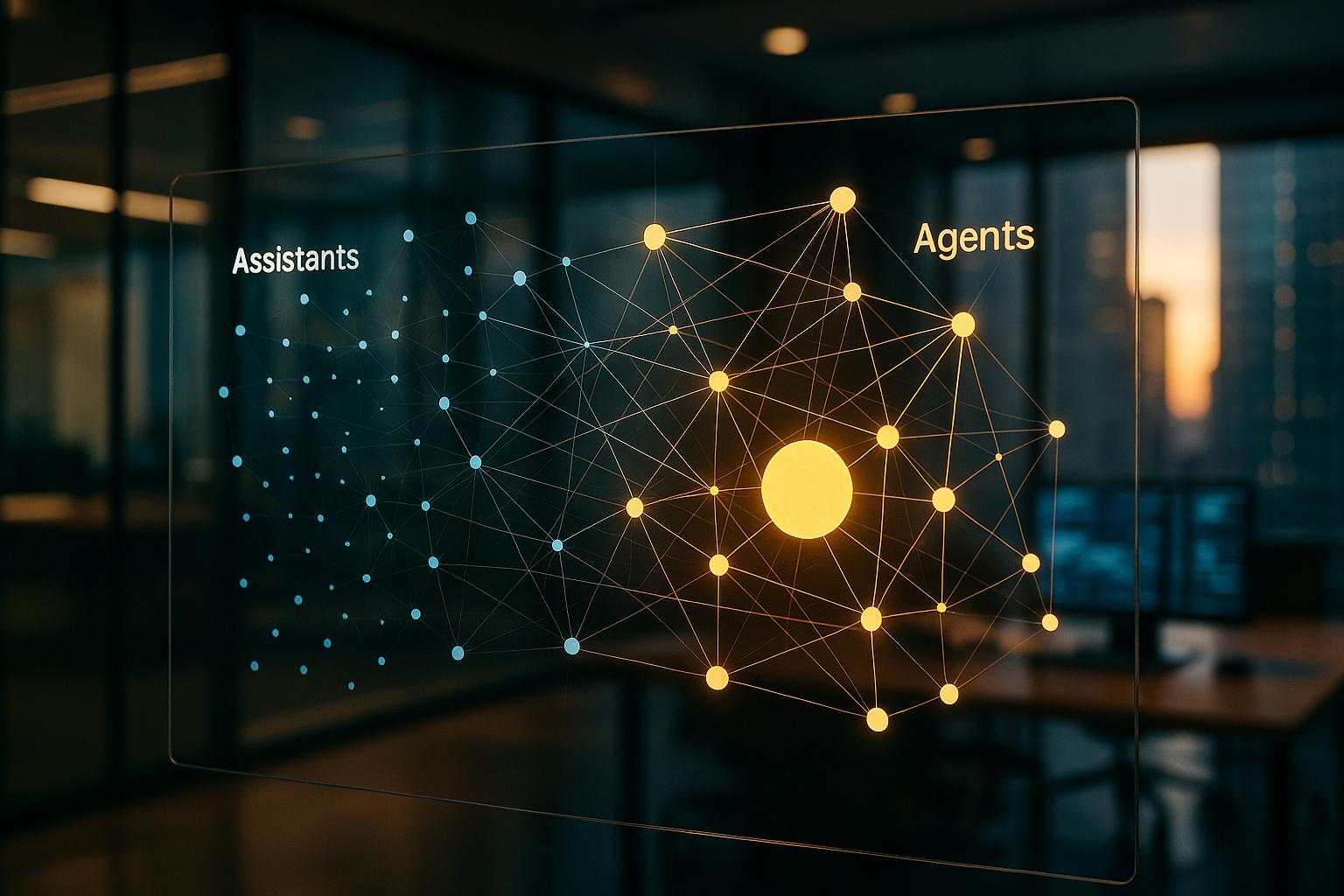
To overcome these challenges, shifting focus from AI Assistants to AI Agents can be beneficial.
From Suggesting to Executing
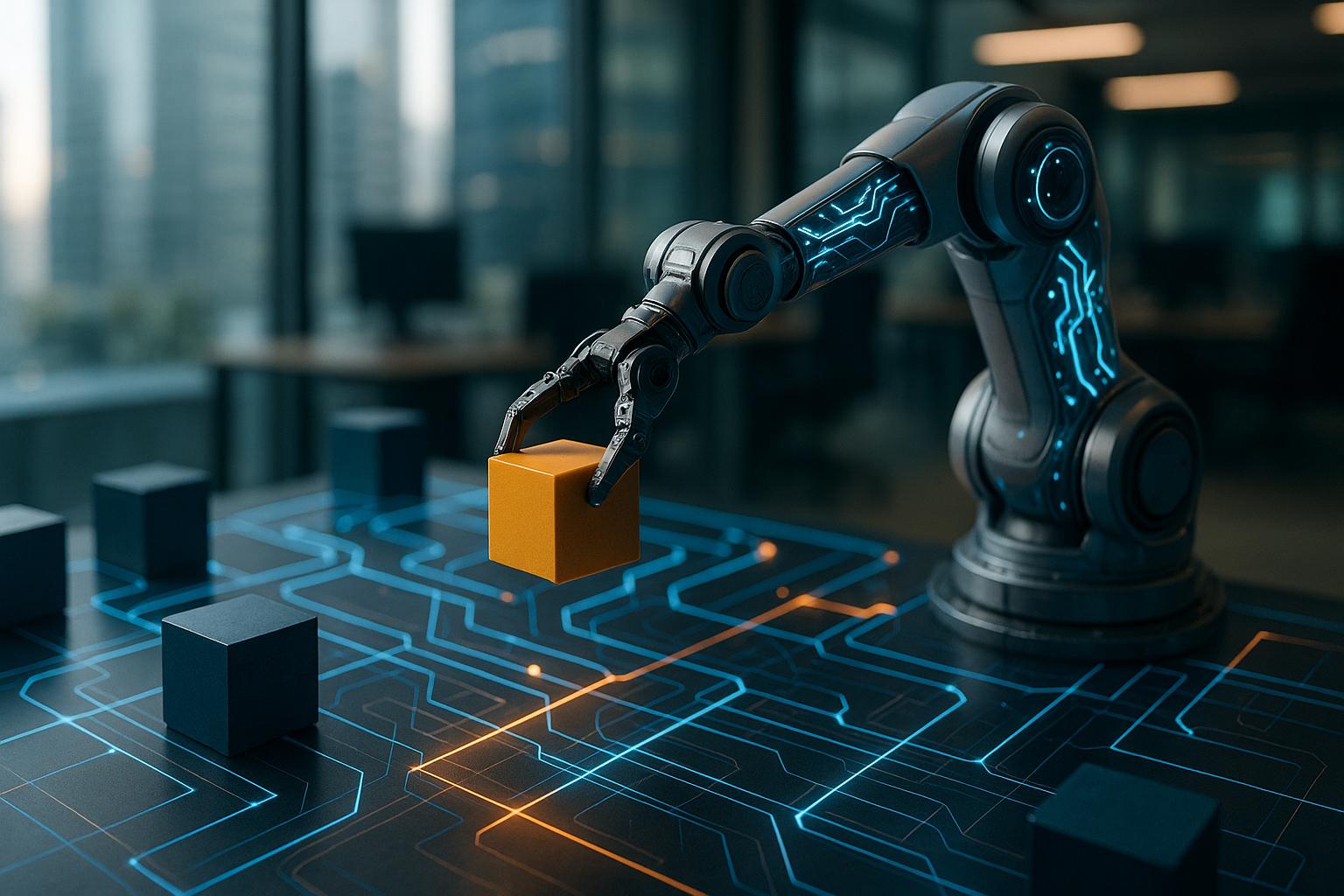
The distinction between AI assistants and AI agents is significant. An assistant typically responds to a prompt with a suggestion. In contrast, an agent interprets a high-level goal and independently executes a multi-step workflow to achieve it. This transition can transform the Software Development Lifecycle (SDLC) from a manual process into a more streamlined, automated pipeline.
Autonomous agents are currently demonstrating measurable returns on investment (ROI) for organizations in several ways:
1. Addressing Documentation Debt
It is common for code to advance rapidly while technical documentation lags. This "documentation debt" can hinder engineering velocity, making onboarding new team members and scaling operations more difficult. AI agents can mitigate this by integrating into the Continuous Integration/Continuous Delivery (CI/CD) pipeline. When a Pull Request (PR) is merged, an agent can automatically update technical documentation, READMEs, and API schemas. This approach makes documentation a consistent output of the development process rather than a neglected task.
2. Streamlining High-Value Code Reviews
Senior developers represent valuable intellectual capital. Their time is better spent on complex problem-solving rather than routine checks. AI agents can serve as an initial review layer, performing pre-reviews that identify security vulnerabilities, compliance issues, and logical inconsistencies. This allows human reviewers to concentrate on higher-level concerns such as system architecture and long-term scalability, as the routine checks have already been performed.
3. Bridging the Gap Between Product and Engineering
Misalignment between product vision and technical execution can lead to wasted resources. AI agents can help bridge this gap by assisting product owners in breaking down complex PRDs into granular, actionable technical tasks. This process helps ensure that the developed code aligns with business objectives, potentially reducing the need for costly mid-sprint adjustments or reworks.
Moving from "Shadow AI" to Enterprise Infrastructure
Many organizations currently experience "Shadow AI," where individual developers use fragmented scripts or personal tools to automate specific tasks. While these individual efforts can be helpful, they often do not scale effectively. They can create silos where efficiency relies on individual knowledge rather than integrated organizational processes.
By adopting a formal, integrated AI agent strategy, these isolated experiments can evolve into a resilient, scalable delivery system. This approach moves beyond merely "coding faster" to establishing a sophisticated infrastructure that supports its own operational health and clarity.
The Bottom Line: If an AI strategy focuses solely on enhancing individual productivity, organizations might overlook more significant gains. The potential ROI of generative AI lies in automating the interconnected processes of the entire development lifecycle.
At iForAI, we specialize in helping organizations transition from theoretical AI concepts to measurable delivery impact. To explore how autonomous agents could integrate with your specific technology stack, consider booking a consultation with our team.