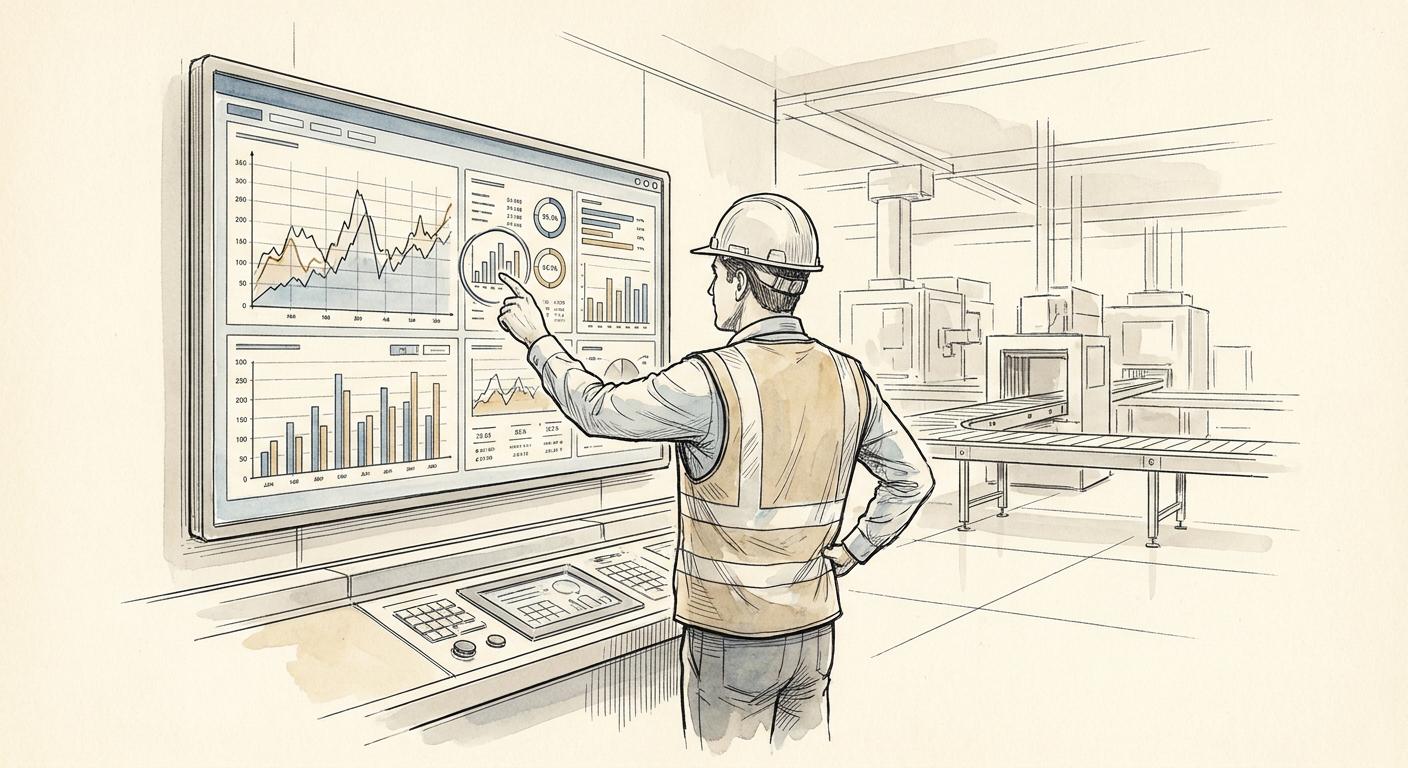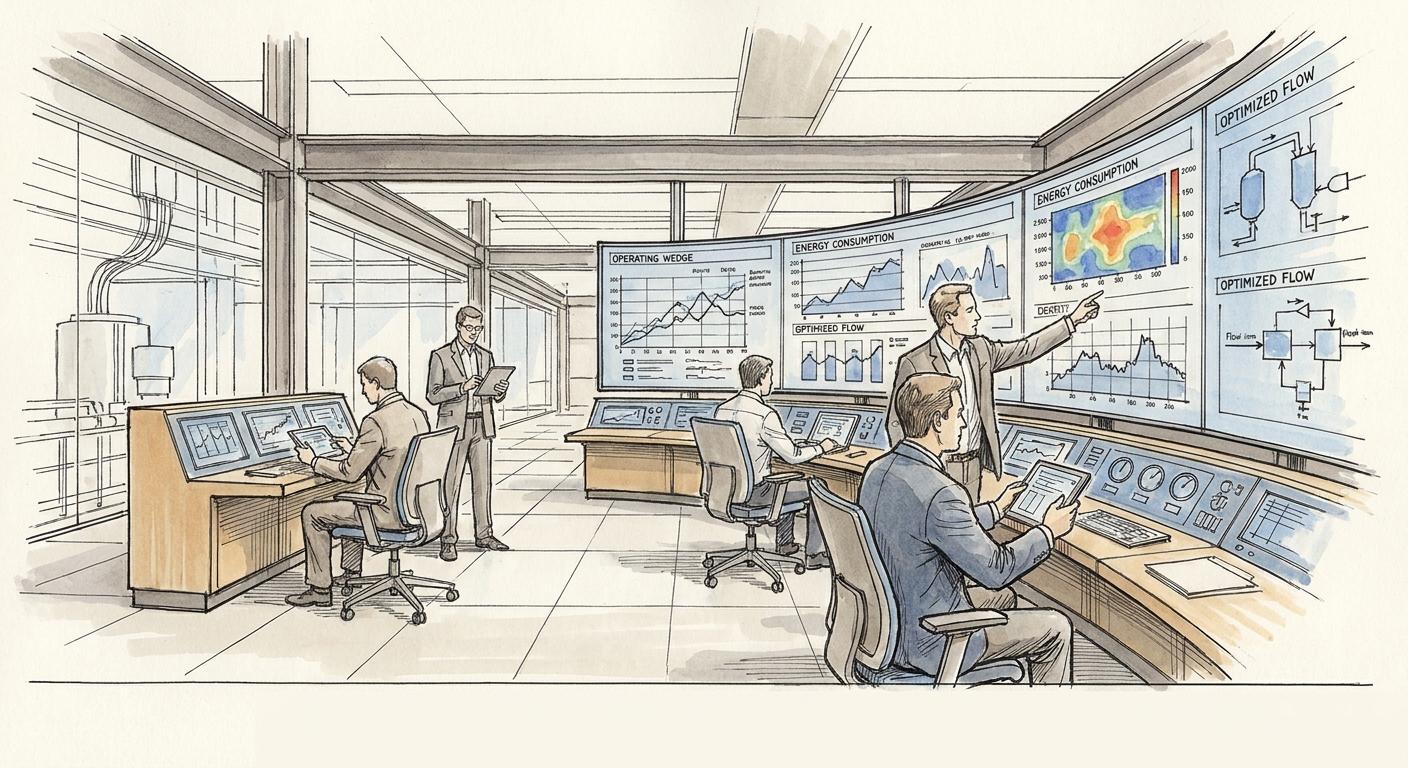
Plant managers and COOs often find themselves trapped in a cycle of reactive firefighting because their legacy ERP systems only report what happened yesterday, not what is coming tomorrow. AI ERP enhancement changes this dynamic by transforming static data into a predictive toolset that identifies margin leakage before it hits the P&L. For Private Equity Operating Partners, this shift is the shortest path to creating an operating wedge, driving measurable EBITDA improvement within tight investment windows. This guide outlines the specific integration points required to move from manual data entries to automated, high-margin decision-making.
AI ERP enhancement is the targeted application of machine learning and large language models (LLMs) to legacy Enterprise Resource Planning data to automate complex decision-making. Unlike a standard ERP rollout, this process focuses on extracting hidden patterns from existing records to uncover non-obvious operational efficiency gains and improve job costing accuracy. The EBITDA Case for AI ERP Enhancement: Beyond Standard Reporting Traditional ERP systems are excellent at record-keeping but poor at optimization. Most mid-market manufacturers suffer from a "data graveyard" where years of transactional history sit dormant. For a PE-backed manufacturer, the goal isn't just better reporting; it is value creation. AI acts as a layer that sits atop your existing system, whether it’s NetSuite, SAP, or Epicor, to identify systemic inefficiencies that a human controller might miss.
An operating wedge is created when revenue grows while operating costs remain flat or decrease through automation. By implementing AI-driven estimate-vs-actual analysis, firms can identify which product lines are consistently underpriced. For example, a 150-employee precision machining shop in the Midwest used these insights to adjust pricing on high-complexity parts, resulting in a 3% margin lift in a single quarter. This is the delayed execution truth - most companies have the data to be more profitable, but they lack the tools to act on it in real-time. Phase 1: The Data Hygiene & Extraction Checklist Before any AI model can deliver a quick win, the underlying data must be assessed for AI readiness. Most COOs fear a massive data cleaning project, but the focus should be on "fit-for-purpose" data rather than total perfection.
Inventory Unstructured Data: Identify where PDF quotes, email threads, and shop floor notes reside. AI can ingest these to provide context that structured ERP tables lack. Silo Mapping: Determine if your ERP, CRM, and MES share a common language. ERP data orchestration ensures that a change in material lead times in the supply chain module automatically updates the production schedule. Frequency Audit: Move from monthly batch processing to real-time or daily data ingestion. AI thrives on high-frequency signals.
By focusing on these extraction points, organizations avoid the trap of "garbage in, garbage out" and build a foundation for predictive analytics integration. Phase 2: High-Yield Integration Points for Manufacturing & Supply Chain The most effective AI integration for manufacturing ERP focuses on three specific areas where manual calculation fails at scale.
Dynamic Demand Forecasting: Standard ERPs use moving averages. AI uses multi-variable analysis - including seasonal shifts and customer sentiment - to reduce safety stock levels. This directly impacts working capital and reduces inventory carrying costs.
Automated Job Costing: AI compares real-time labor inputs and material scrap rates against original estimates. If a job is trending toward a margin miss, the COO receives an alert while the job is still on the floor, not weeks later during month-end closing.
Predictive Maintenance (PdM): By linking machine telemetry data back to the ERP maintenance module, plants can schedule downtime based on actual wear rather than arbitrary calendar dates. This improves OTIF (On-Time In-Full) rates by preventing unplanned outages during peak production runs. Phase 3: The COO’s Operational Efficiency Scorecard To ensure the investment translates to the bottom line, leadership must track specific metrics that reflect operational excellence.
Labor Variance Reduction: Track the gap between estimated and actual labor hours. AI-driven scheduling should narrow this gap by 10-15% within the first six months. Inventory Turns: Integrated AI systems should increase velocity by aligning procurement more closely with actual shop floor consumption. Time-to-Value: A successful AI enhancement should provide its first actionable insight within 30 days.
For an Operating Partner, these metrics are the primary drivers of private equity value creation. A 5% gain in shop floor efficiency often translates to a significantly higher increase in exit multiple, especially in high-capex industries. Overcoming the 'Consultancy Trap': Moving from Strategy to a 4-Week Win The "Consultancy Trap" occurs when a firm spends six months on a "digital transformation roadmap" without moving a single metric. In the mid-market manufacturing AI space, speed is a competitive advantage. The operating partner AI playbook for portfolio companies prioritizes embedded AI solutions that can be deployed as a "sidecar" to existing infrastructure.
Execution partners focus on specific workflows - like automating the ingestion of customer POs or optimizing the work-order queue - rather than attempting a "big bang" implementation. This approach ensures a quick win that builds internal buy-in and demonstrates ROI early in the deployment cycle. FAQ: AI ERP Enhancement and ROI Do we need to replace our current ERP to implement AI? No. Replacing an ERP is a high-risk, multi-year process. AI functions as an enhancement layer (the operating wedge) that extracts, analyzes, and feeds data back into your existing systems to unlock latent value without the disruption of a full migration.
How quickly can an AI ERP enhancement show ROI? By focusing on a single high-impact workflow, such as demand forecasting or job costing, a measurable win can typically be achieved within 4 to 8 weeks. This rapid time-to-value is critical for PE-backed firms operating on a 3-year exit clock.
What is the "Operating Wedge" in the context of AI? The operating wedge refers to the widening gap between revenue growth and operating expenses. AI creates this by automating the complex coordination of labor, materials, and machine time, allowing a plant to scale production without a linear increase in overhead.
How does AI improve OTIF (On-Time In-Full) rates? AI improves OTIF by identifying potential bottlenecks - such as a delayed raw material shipment or a machine nearing failure - before they impact the production schedule. It allows for dynamic rescheduling that keeps orders on track despite floor-level disruptions.
Implementing an AI-driven enhancement layer allows manufacturers to transition from retrospective reporting to proactive, margin-focused operations. By following this phased checklist, COOs and Operating Partners can secure the 5% efficiency gains required to drive significant EBITDA growth.
Book a Manufacturing Diagnostic at ifor.ai/solutions/manufacturing to identify your highest-impact AI integration points.