.svg)

Middle-market portfolio CEOs and Operating Partners often watch post-acquisition synergy capture stall due to fragmented ERP data and manual spreadsheet consolidation. When multiple entities merge, procurement visibility usually takes 12 to 18 months to stabilize, leading to significant margin leakage during the critical first year of ownership. This guide details how to bypass technical debt and use an operating wedge to realize procurement savings in 4 to 8 weeks. We will cover automated data taxonomy, identifying price variances, and embedding spend intelligence into the monthly operating review (MOR).
Post-acquisition synergy capture is the process of realizing the combined value and cost-efficiencies anticipated during the M&A due diligence phase. It involves identifying and eliminating operational overlaps, consolidating procurement scale, and optimizing the cost structure of the combined entities to drive EBITDA improvement. The Synergy Leakage Gap: Why Traditional Procurement Integration Fails Traditional procurement integration often fails because it relies on manual data cleansing from disparate legacy systems. In a typical 200-employee manufacturing roll-up, the finance team may spend 60 days just trying to normalize vendor names across three different ERPs. By the time the data is clean, the investment window has already shrunk, and the opportunity for a quick win has passed.
This delayed execution truth creates friction between the Operating Partner and the Portfolio CEO. Without a unified view of spend, the firm cannot leverage its combined volume to renegotiate terms or prune redundant tail-spend. The result is "synergy leakage," where forecasted savings remain theoretical while the actual operating expenses continue to erode the original investment thesis. Phase 1: Deploying the AI Operating Wedge for Data Visibility To accelerate value creation, PE firms are now utilizing an operating wedge - a non-invasive AI layer that sits above existing ERPs. This approach extracts raw transactional data without requiring a full ERP migration. Embedded AI algorithms then categorize spend into a unified taxonomy, identifying that "Fastenal," "FASTENAL CORP," and "Fastenal Co." are the same entity across different subsidiaries.
For a portfolio company in the industrial space, this automated categorization happens in under 4 weeks. Instead of hiring consultants for a six-month audit, the CEO receives a delayed execution truth report that highlights exactly where the operating leverage resides. This phase focuses entirely on AI readiness, ensuring the data is structured enough to support aggressive procurement negotiations by the end of the first month. Phase 2: Identifying ‘Quick-Win’ Procurement Synergies Once the data is unified, the focus shifts to identifying estimate-vs-actual discrepancies in procurement pricing. AI-powered spend analytics can scan thousands of line items to find pricing variances for the same SKU across different plants. For example, a Michigan-based plant might be paying 12% more for steel coils than an Ohio-based plant under the same parent company.
Other quick wins include:
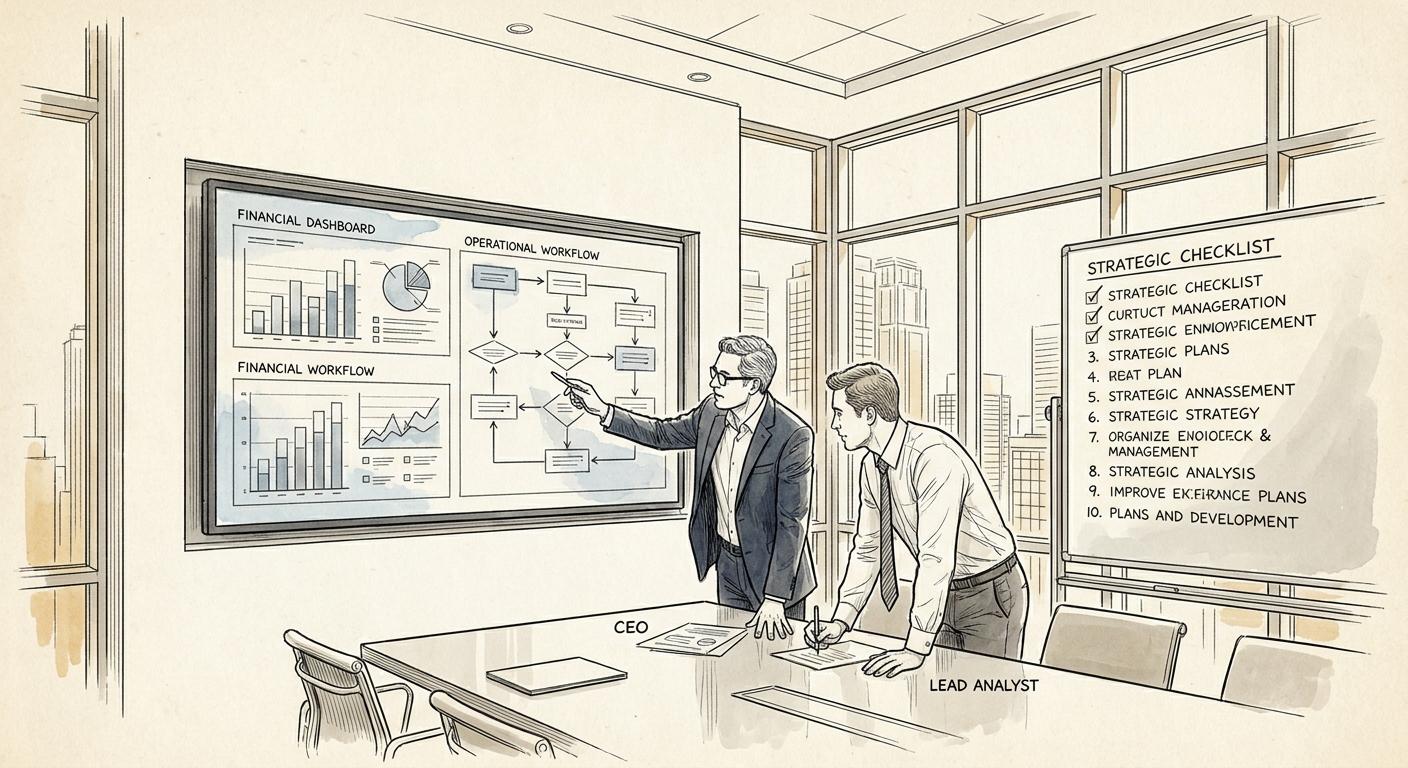
Tail-spend consolidation: Identifying dozens of small, unmanaged vendors that can be rolled into a single national contract. Payment term alignment: Moving all vendors to a standard Net-60 or Net-90 window to improve cash flow. Contract leakage: Spotting instances where a vendor is charging "off-contract" prices despite an existing master service agreement. Phase 3: Embedding AI Spend Insights into Monthly Operating Reviews Data only drives EBITDA improvement if it is operationalized. The most effective Portfolio CEOs integrate these spend insights directly into their Monthly Operating Reviews (MOR). Instead of vague discussions about "cost-cutting initiatives," the conversation becomes data-driven, holding functional leads accountable for specific OTIF (On-Time, In-Full) and job costing targets.
When procurement leads know the CEO has real-time visibility into margin leakage, the speed of execution increases. This creates a culture of accountability where the operating wedge serves as the "single source of truth." If the AI identifies a $200k savings opportunity in MRO (Maintenance, Repair, and Operations) spend, that figure is tracked against the P&L until the value is fully captured in the bottom line. Measuring Success: Beyond the First 8 Weeks The primary KPI for a Portfolio CEO is the time-to-value. In an 18–36 month investment window, every month of delayed synergy is a month of lost EBITDA multiple. Success is measured by the delta between the synergy targets identified during due diligence and the actual realized savings reflected in the trailing-twelve-month (TTM) EBITDA.
Secondary metrics include the reduction in "unmanaged spend" as a percentage of total OpEx and the improvement in gross margin through synchronized job costing. By the eight-week mark, the AI should have identified at least 5-7% in addressable spend savings, providing a clear path to the exit multiple targets set by the PE firm. Frequently Asked Questions How quickly can AI-powered spend analytics show ROI? Most portfolio companies see the first actionable "quick wins" within 4 to 8 weeks. By identifying immediate pricing variances and vendor overlaps, the platform often pays for itself through the first round of contract renegotiations.
Does this require a complete ERP migration? No, the AI operates as a wedge that extracts and cleans data from your existing legacy systems. This allows for rapid post-acquisition synergy capture without the risk, cost, or 12-month timeline of a consolidated ERP rollout.
How does automated spend categorization for PE firms differ from standard accounting? Standard accounting focuses on general ledger codes (GL), which are often too broad for procurement. AI spend categorization drills down to the line-item level, providing the granularity needed to consolidate vendors and negotiate volume discounts.
What is the impact of AI in procurement for private equity portfolio companies? It acts as an accelerator for the operating wedge strategy, allowing firms to shorten the time between acquisition and EBITDA growth by automating the "heavy lifting" of data normalization and opportunity identification.
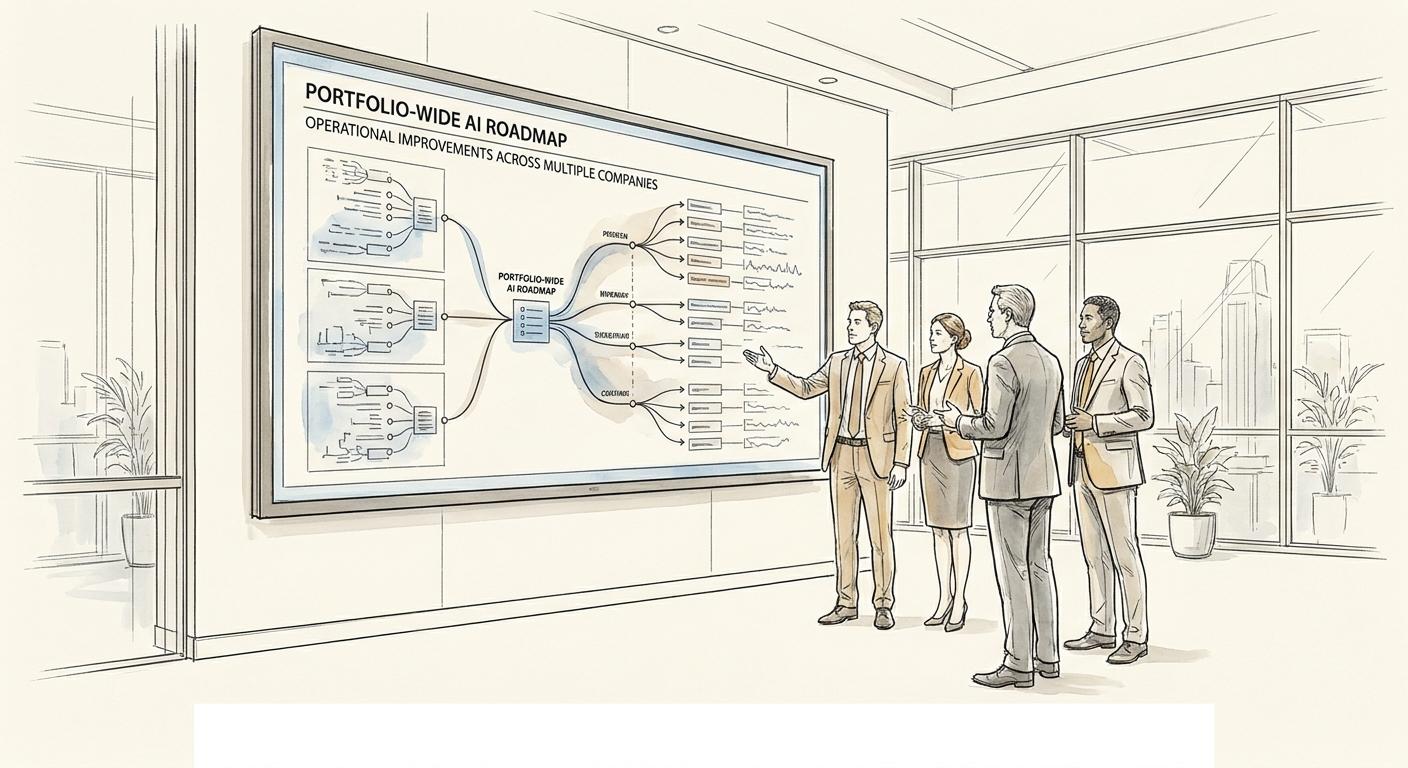
The integration of AI into procurement allows PE-backed firms to capture synergies at a pace that manual processes cannot match.
Transform your portfolio's procurement data into a lever for EBITDA growth. Book a Manufacturing Diagnostic at ifor.ai/solutions/private-equity