.svg)

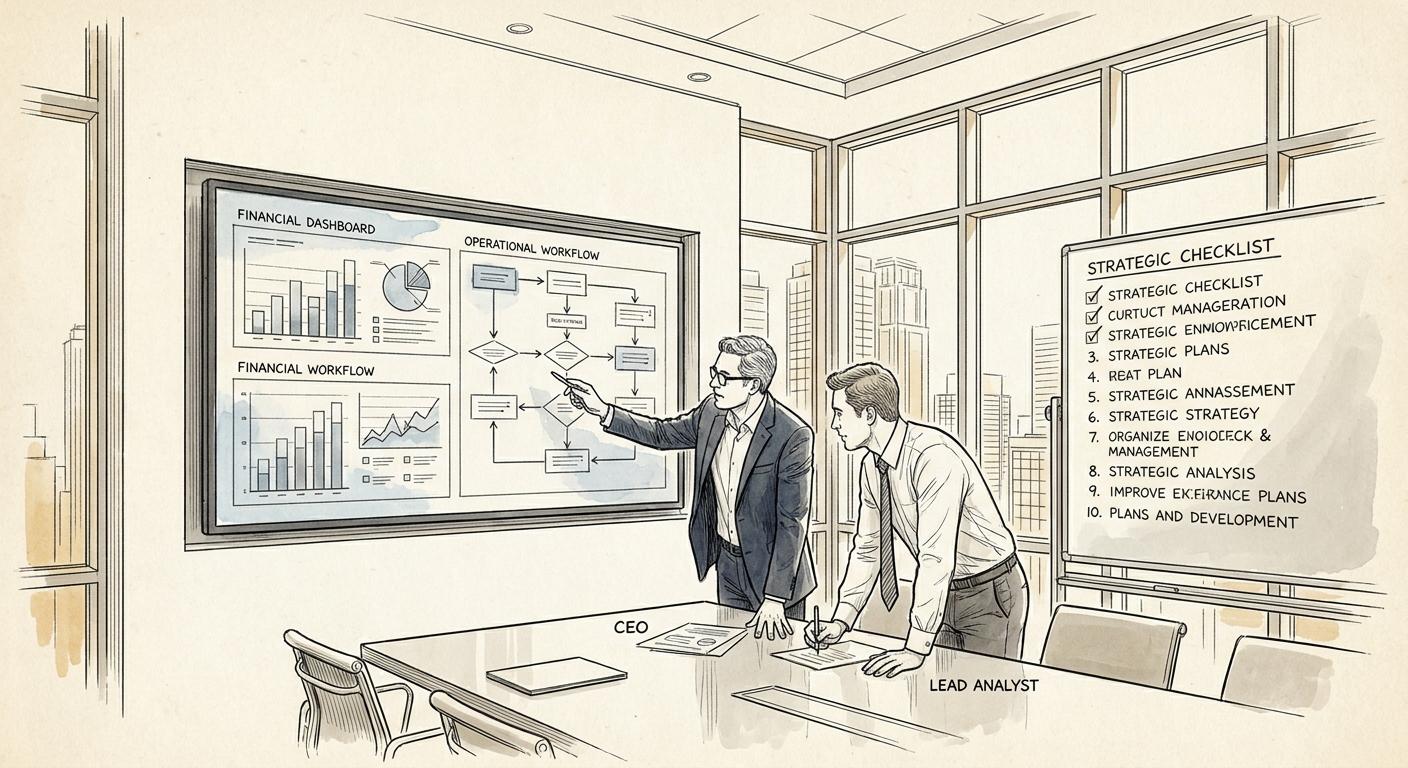
The traditional 100-day plan often stalls when legacy ERP systems refuse to talk to each other, causing immediate post-merger operational efficiency to plummet. Operating partners and COOs frequently face delayed execution truth, where manual data reconciliation hides margin leakage for months after a deal closes. To accelerate value creation, leadership must move past spreadsheets and deploy embedded AI that identifies friction points in weeks, not quarters. This guide outlines how to bridge the gap between acquisition and EBITDA improvement using a targeted AI roadmap.
Post-merger operational efficiency is the systematic optimization of business processes, data flows, and resource utilization following an acquisition to eliminate redundancies and accelerate the value creation plan. In a manufacturing context, it focuses on synchronizing disparate shop-floor data to maximize operating leverage and realize planned synergies.
The Post-Merger Bottleneck: Why Traditional Integration Fails Modern Manufacturing
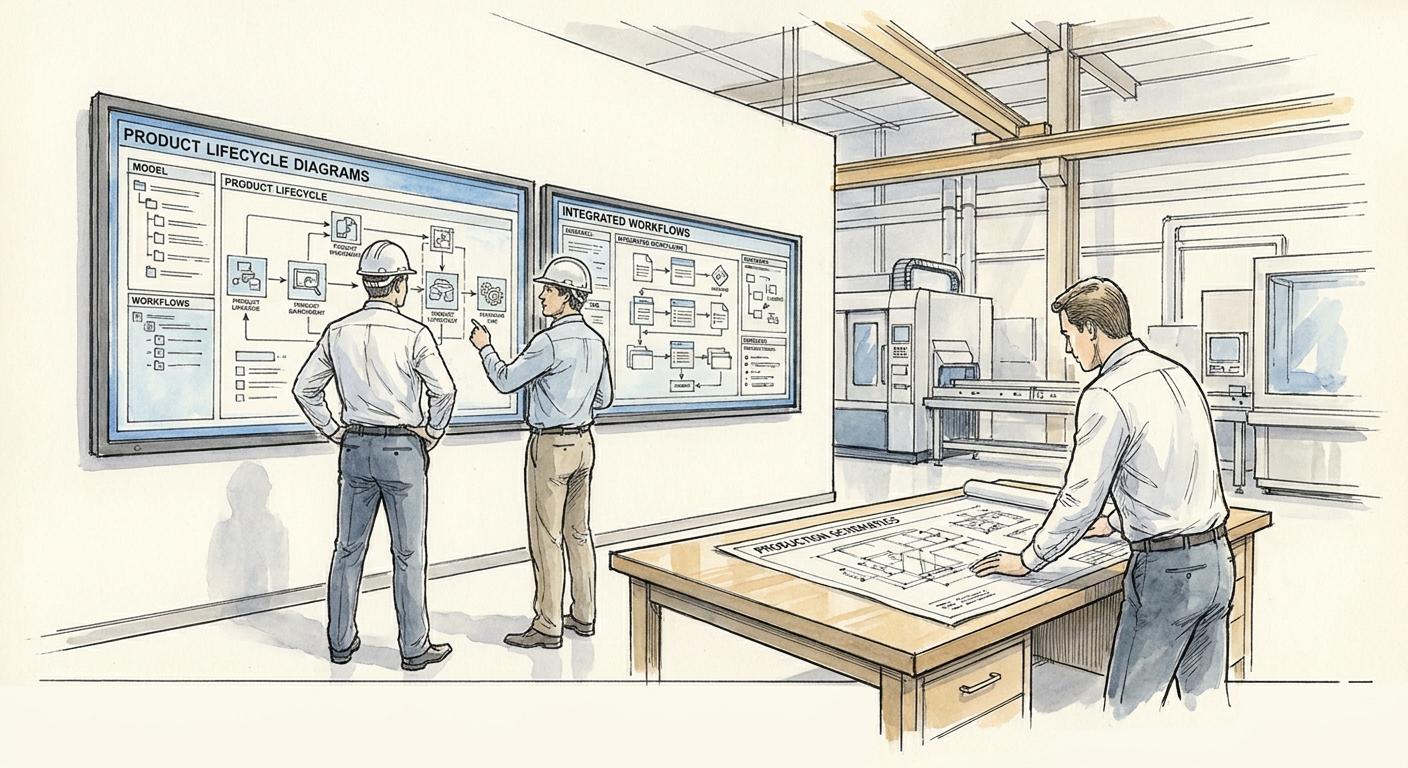
Most integration failures aren't due to poor strategy; they are caused by data fragmentation. When a Private Equity firm acquires a mid-market manufacturer, they often inherit a "Frankenstein" tech stack. One plant might run on a legacy AS/400 system while another uses a semi-modern ERP, creating a massive visibility gap.
Without a unified data layer, the operating wedge - the gap between revenue growth and cost scaling - remains thin. Manual reporting leads to OTIF (On-Time, In-Full) misses because the procurement team is working off data that is 72 hours old. Traditional consulting firms spend six months building a roadmap, but in an 18–36 month investment window, that timeline is unacceptable. The bottleneck is the human speed of data processing, which cannot keep pace with the aggressive targets of a portfolio company optimization strategy.
The 'Operating Wedge': Achieving Measurable AI Wins in 4-8 Weeks
Strategic AI deployment isn't about a multi-year "digital transformation." It is about finding quick wins that widen the operating wedge by reducing overhead while volume increases. For a 250-employee precision machining group, this might mean using embedded AI to automate job costing analysis across three different sites.
The goal is to reach a time-to-value of 4 to 8 weeks. Instead of replacing the ERP, AI layers on top of existing systems to perform "narrow" tasks, such as flagging estimate-vs-actual variances in real-time. This immediate visibility allows plant managers to correct production flows before the month-end close, directly protecting the margin. For the Operating Partner, this provides a "single version of truth" that validates the investment thesis early in the holding period.
High-Value AI Use Cases for Mid-Market COOs
To drive EBITDA expansion, COOs should focus on specific operational friction points rather than vague "innovation." Practical applications include:
AI-Driven OEE and Predictive Maintenance
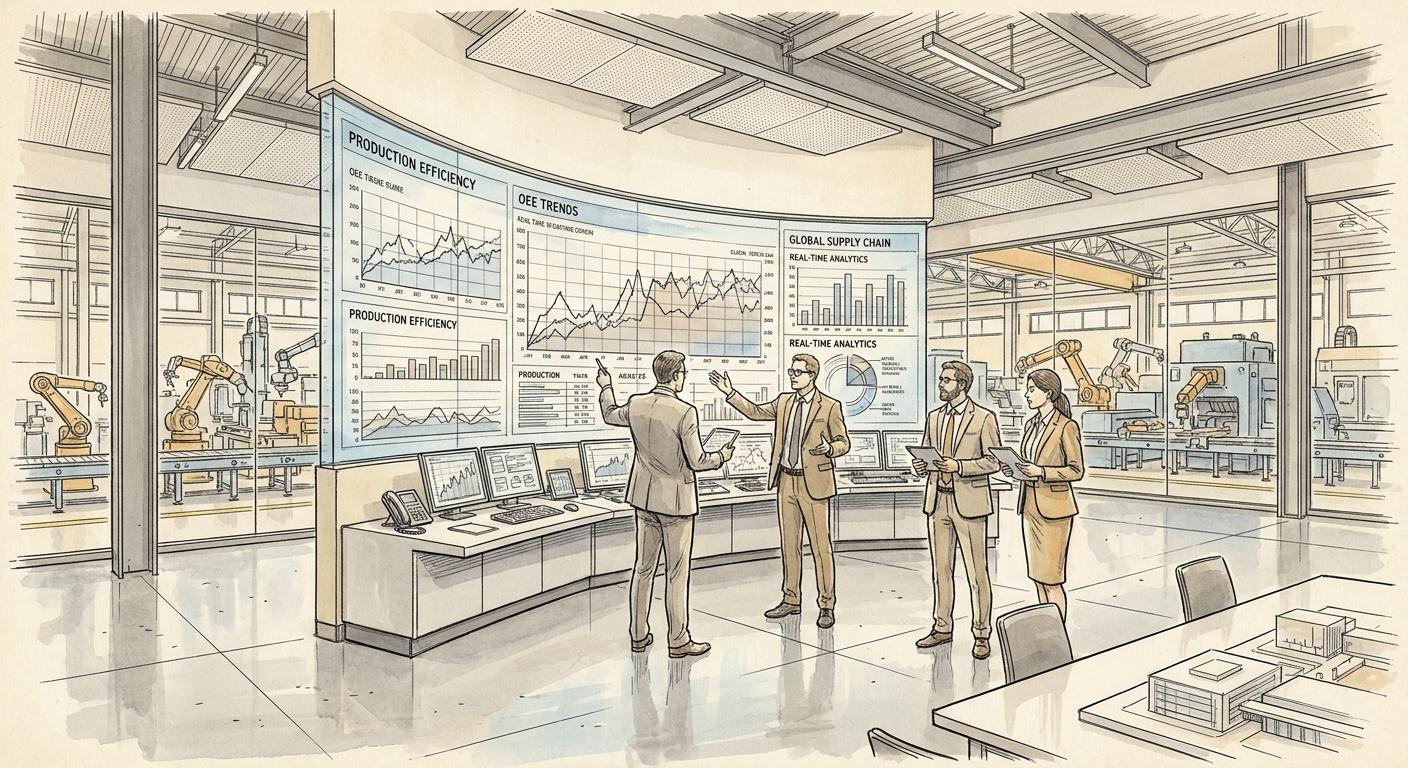
In a high-volume injection molding facility, a 5% increase in Overall Equipment Effectiveness (OEE) can be the difference between hitting and missing quarterly covenants. AI models can analyze vibration and heat sensor data to predict tool failure. This moves the maintenance team from a reactive "break-fix" mentality to a proactive schedule, reducing unplanned downtime.
Automated Supply Chain Reconciliation
Mergers often result in overlapping supplier lists with different pricing tiers. AI can ingest thousands of invoices and purchase orders to identify margin leakage where the combined entity is not receiving the best negotiated price. This is a pure EBITDA improvement play that requires zero changes to shop floor behavior.
Inventory and Demand Forecasting
Using AI to correlate historical sales data with external market indicators allows for tighter inventory levels. Reducing "dead stock" frees up working capital, improving the cash flow profile of the PortCo ahead of a future exit.
Beyond the Hype: Building a Scalable AI Infrastructure for PortCos
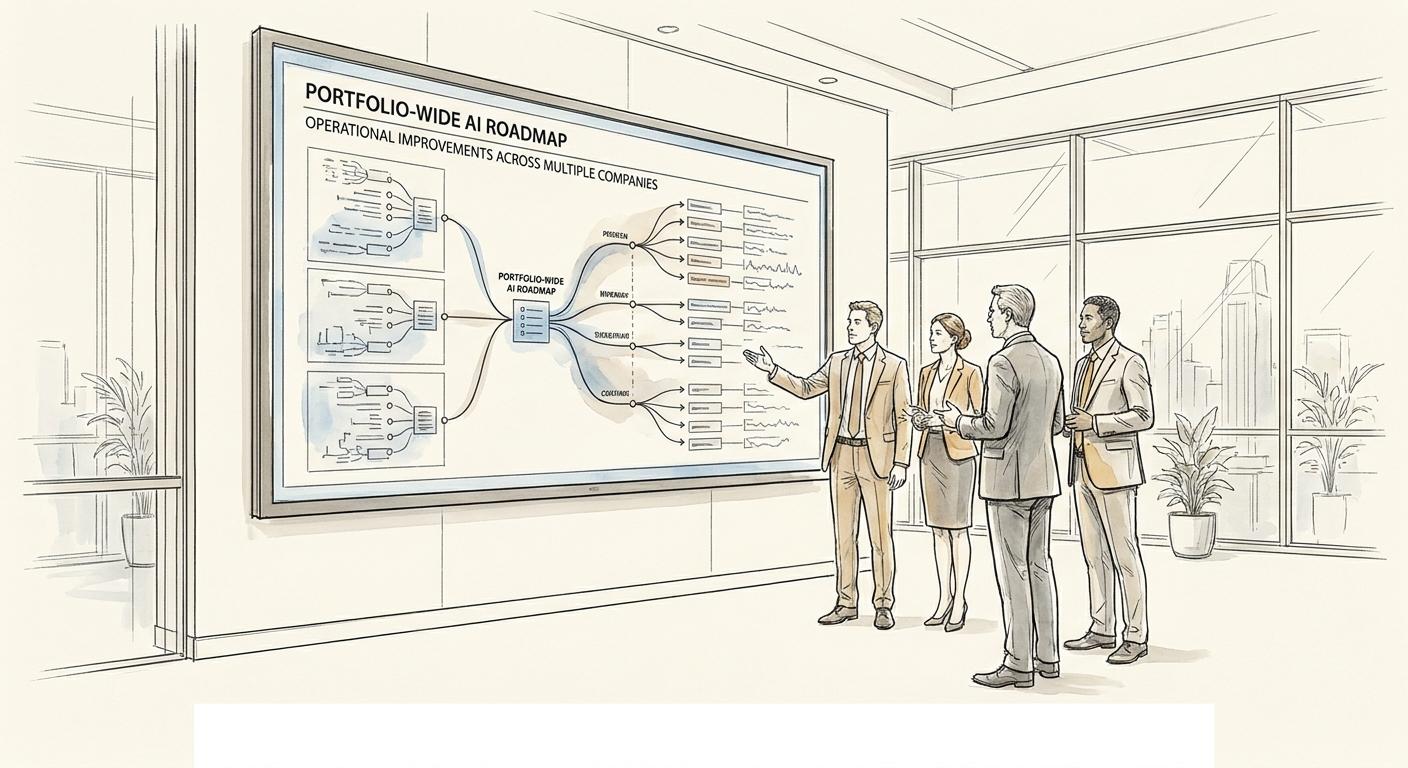
For a Private Equity firm, an AI tool is only as valuable as its contribution to the exit multiple. If an AI solution is built as a siloed "science project," it adds no value creation. Operating Partners must ensure that enterprise AI execution is foundational.
This means prioritizing AI readiness by cleaning data at the source and ensuring all new tools can export clean, structured data to a centralized data lake. When it comes time to sell, a business that can demonstrate an AI-optimized supply chain and automated financial reporting commands a higher multiple because the "operational heavy lifting" is already documented and repeatable for the next buyer.
Mitigating Risk: Secure Data Governance in Manufacturing Transitions
Security is the primary concern when integrating AI into shop floor operations. Manufacturing IP - blueprints, proprietary formulations, and customer lists - must be protected. A secure AI implementation roadmap utilizes "private" instances of Large Language Models where data never leaves the company’s secure cloud environment.
Data integrity is equally vital. If the underlying ERP data is "garbage," the AI output will be "garbage." Effective governance involves setting strict protocols for how data is entered at the machine level to ensure the AI provides an accurate delayed execution truth. Neutral attribution of data points ensures that the "human in the loop" (the plant manager or foreman) trusts the AI’s recommendations.
Frequently Asked Questions
How long does it take to see ROI from AI in a post-merger environment?
With an embedded partner focusing on narrow use cases, initial operational wins are typically realized within 4 to 8 weeks. These localized improvements, such as reduced scrap rates or optimized labor scheduling, begin impacting EBITDA within the first full quarter of deployment.
Is AI integration too complex for mid-market manufacturing firms?
No, complexity is managed by avoiding total system overhauls. By focusing on "narrow AI" that solves specific friction points - like job costing or invoice reconciliation - mid-market firms can achieve significant gains without the cost or risk of a multi-year ERP migration.
How does AI help with Private Equity value creation?
AI accelerates value creation by widening the operating wedge, allowing companies to scale production without a linear increase in headcount. It also improves the quality of earnings by providing real-time data transparency, which reduces risk for future buyers and supports a higher exit multiple.
Key Takeaways: Successful post-merger integration requires moving from manual data processing to AI-driven execution to capture synergies within the first 100 days. Focusing on specific, high-impact use cases like OEE and supply chain reconciliation provides the fastest path to EBITDA expansion.
Evaluate your portfolio's AI readiness and identify margin leakage by booking a Manufacturing Diagnostic at ifor.ai/solutions/manufacturing.