.svg)

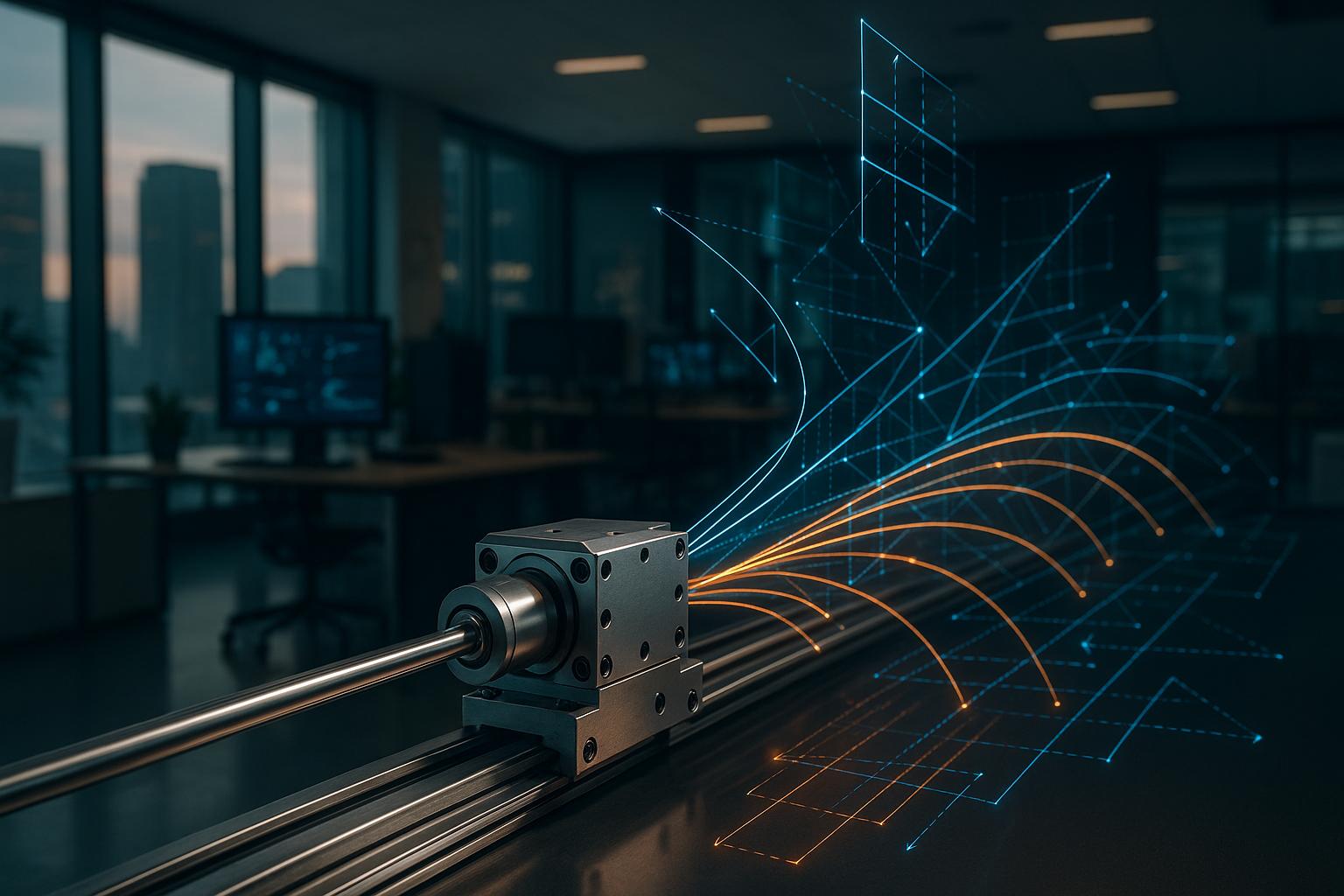
COOs and Plant Managers rarely fear technology; they fear the 18-month deployment cycle that fails to deliver. When legacy SAP or Oracle systems struggle with volatile demand, the typical answer is a costly upgrade or a "digital transformation" that kills productivity. Integrating AI modules for SAP Oracle ERP offers a faster path to operational stability. This approach creates an operating wedge - a targeted AI layer that extracts data from legacy systems to fix OTIF misses and margin leakage without requiring a full system overhaul.
An Operational AI Wedge is a specialized, modular software layer integrated into existing legacy systems (like ERPs) to solve a specific operational friction point, such as demand forecasting or machine scheduling, within a 60-to-90-day window. Unlike a full ERP migration, it targets a singular business process to deliver a quick win and immediate EBITDA improvement.
The AI Integration Reality Gap: Modernizing SAP and Oracle Without Re-implementation
The "rip and replace" mentality is the primary cause of delayed execution truth in manufacturing. Many firms believe that to get better demand forecasting, they must first migrate from SAP ECC to S/4HANA or move to Oracle Cloud. While these migrations have their place, they often act as a massive distraction from immediate value creation.
For a Private Equity Operating Partner, a two-year ERP migration represents a significant portion of the typical investment window. Instead, an AI module acts as a "wrapper" around the current ERP. It pulls historical sales and production data, runs sophisticated models externally, and pushes optimized schedules back into the system of record. This allows teams to bridge the operating wedge between current capacity and actual demand without the risk of a core system failure.
Phase 1: The Technical Audit (Data Hygiene over Data Volume)
Most manufacturing firms have plenty of data; the problem is their AI readiness. Before deploying AI modules for SAP or Oracle, you must conduct a focused audit that prioritizes data quality over sheer volume. AI doesn't need ten years of history; it needs twelve to twenty-four months of clean, correlated data.
The COO's Data Readiness Checklist:
SKU Mapping: Are your BOMs (Bills of Materials) consistent across different plants?
Transaction Logs: Does the system capture the difference between "requested date" and "actual ship date"?
API/Flat File Capability: Can your SAP/Oracle instance export tables (like MARC or EKPO) via API or scheduled CSV drops?
The "Dirty Data" Filter: Identify gaps where manual overrides are common. If your planners regularly ignore ERP suggestions and use "tribal knowledge" in Excel, that is where your margin leakage is likely occurring.
Phase 2: Defining the 8-Week Wedge for Demand Forecasting
To avoid the "pilot purgatory" trap, you must narrow the scope. Select one specific product line or a high-volume plant that suffers from inventory bloat or frequent stockouts. This is your quick win site.
For example, a 300-employee plastic injection molder in Michigan focused its AI deployment specifically on "high-volatility automotive components." By isolating this segment, they avoided the complexity of the entire catalog and reduced their estimate-vs-actual variance by 14% in under two months. The goal is to prove that the AI module can predict demand more accurately than the standard SAP MRP (Material Requirements Planning) logic.
Phase 3: Integration Mechanics & Resource Allocation
Once the data is validated, the focus shifts to supply chain resource allocation AI. This is where the AI moves from a "suggestive" tool to an "active" one. In a traditional Oracle environment, scheduling is often static - assuming fixed lead times and labor availability.
Technical Integration Checklist:
Read-Only Integration: Sync ERP data to the AI module to train models without risking data corruption in the system of record.
Constraint Mapping: Feed real-world constraints - labor shifts, machine maintenance, and raw material arrival - into the AI engine.
Dynamic Scheduling: The AI generates an optimized production plan based on the new demand forecast.
Write-Back Capability: Once the team trusts the output, the AI pushes the optimized "Firm Planned Orders" back into SAP/Oracle.
This shift results in job costing accuracy that reflects reality, not a theoretical estimate. It allows the CFO to see exactly how labor and machine time are being converted into revenue in real-time.
Measuring the Win: KPIs for Post-ERP AI Integration
For Private Equity firms, the success of an AI integration is measured by its impact on the exit multiple and operating leverage. For the COO, it is about day-to-day sanity.
Inventory Turnover: A reduction in safety stock requirements due to higher forecast confidence.
OTIF (On-Time In-Full): Direct correlation between AI-driven scheduling and customer satisfaction.
Resource Idle Time: Moving from "waiting for material" to active production through better allocation.
Margin Leakage Reduction: Identifying and cutting low-margin rush orders caused by poor planning.
By focusing on these metrics, the AI transition becomes an ROI-driven operational upgrade rather than a speculative IT expense.
Frequently Asked Questions
Do we need to upgrade to S/4HANA before integrating AI? No. Modern AI modules can act as a "wedge" on older instances like SAP ECC through middleware or simple data pipelines. You can achieve better forecasting and resource optimization without the multi-year cost of a full S/4HANA migration.
How long does it take to see improved forecasting accuracy? When using a focused AI wedge on a specific product line, initial models trained on historical data typically yield measurable improvements in accuracy within 4 to 8 weeks. This rapid time-to-value is essential for maintaining momentum in a standard investment window.
What is the primary risk of integrating AI with legacy ERPs? The biggest risk is poor data hygiene, specifically around manual workarounds. If your team manages "real" production in offline spreadsheets, the AI will be training on incomplete data. Identifying these manual gaps is the first step of an AI readiness assessment.
How does AI improve job costing compared to standard ERP modules? Standard ERPs use static averages for labor and overhead. AI modules analyze actual machine logs and timestamped production data to provide an estimate-vs-actual view that captures the true cost of production, highlighting where margins are being eroded by inefficiencies.
AI integration is no longer a multi-year roadmap item; it is an operational necessity that can be deployed in weeks, not years. By targeting a specific operating wedge, manufacturers can stabilize their supply chain and drive significant EBITDA growth.
Book a Manufacturing Diagnostic at ifor.ai/solutions/manufacturing to identify your quickest path to AI-driven value.