

.svg)

Operating Partners managing a fresh acquisition face a binary choice that dictates the next three years of value creation: do you force the new asset into a platform integration to capture scale, or do you run it as a high-performance standalone to maximize immediate cash flow? AI in M&A has changed the calculus for both paths. While traditional integration takes 12 to 18 months to yield results, embedded AI can now extract EBITDA improvement within the first 100 days by bypassing the typical bottlenecks of legacy ERP consolidation. This article analyzes the strategic trade-offs between leveraging AI for synergistic integration versus standalone performance uplift, providing a repeatable AI readiness framework for the private equity lifecycle.
The Post-Acquisition AI Crossroads: Synergy vs. Standalone
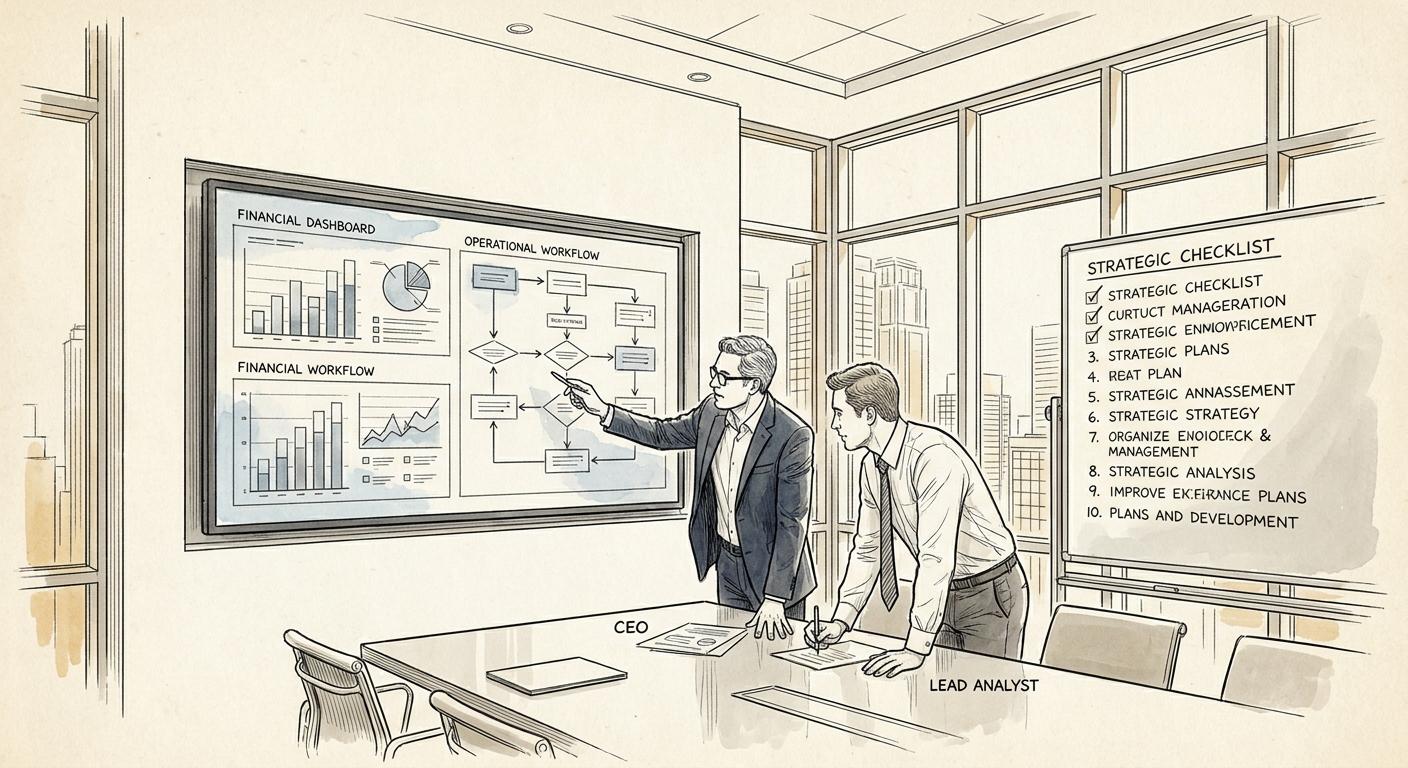
During the first 100 days post-close, the Operating Partner must identify the operating wedge that will drive the highest internal rate of return (IRR). If the investment thesis relies on a "buy-and-build" strategy, the focus shifts toward post-merger integration AI - using technology to bridge the gap between two distinct corporate cultures and data structures. This path prioritizes shared service automation and cross-portfolio sales intelligence.
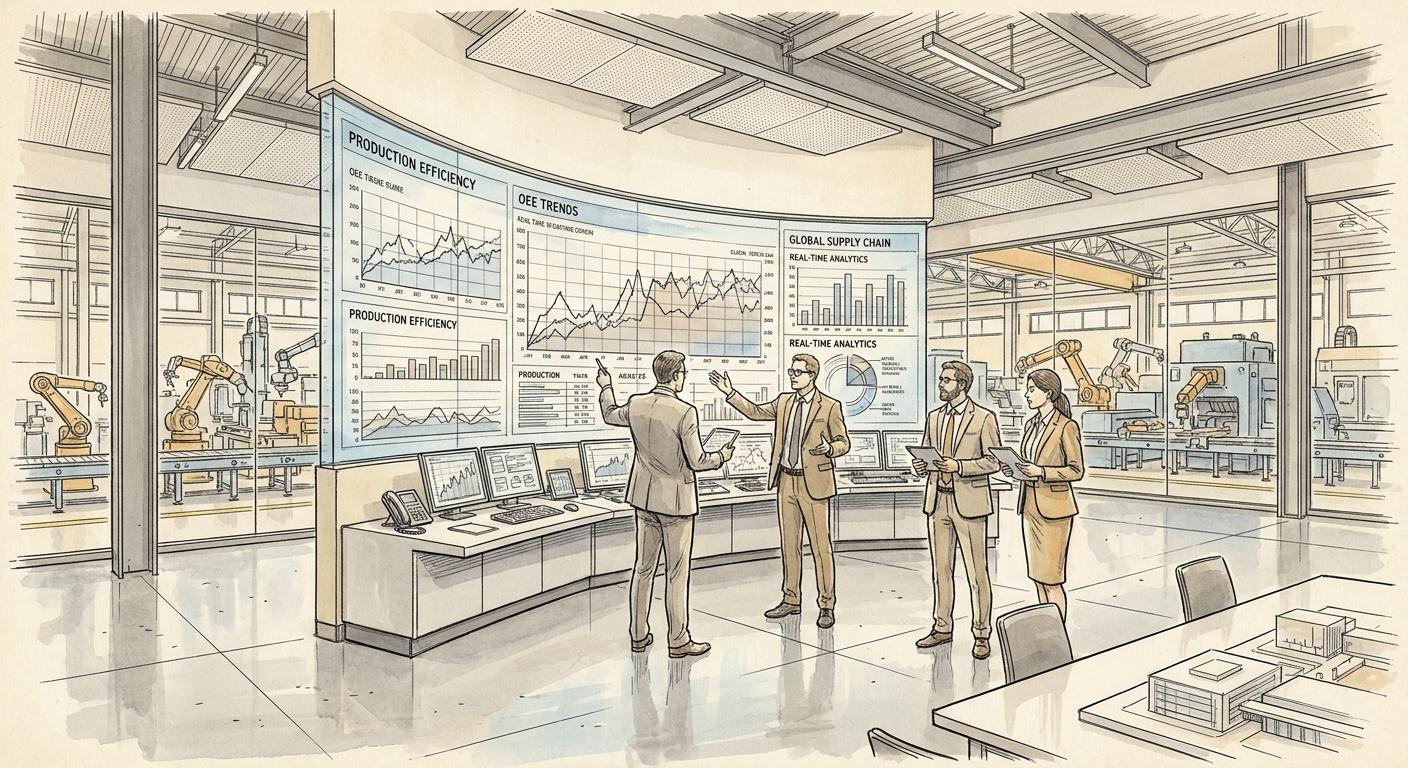
Conversely, if the asset is a standalone manufacturing play with significant margin leakage, the focus shifts to internal operational health. Here, the priority is fixing OTIF (On-Time, In-Full) misses and closing the estimate-vs-actual gap. In this scenario, deploying a quick win AI use case within a single plant often yields a faster time-to-value than a multi-company integration project. The decision rests on whether the value creation plan (VCP) requires horizontal scale or vertical optimization.
AI in M&A refers to the strategic application of machine learning and generative models to accelerate post-merger integration (PMI) and enhance the value creation plan (VCP) by automating operational workflows and uncovering hidden margins within portfolio companies. This approach allows PE firms to move beyond high-level operational due diligence into tangible production environments.
Path 1: Driving Synergistic Integration with AI
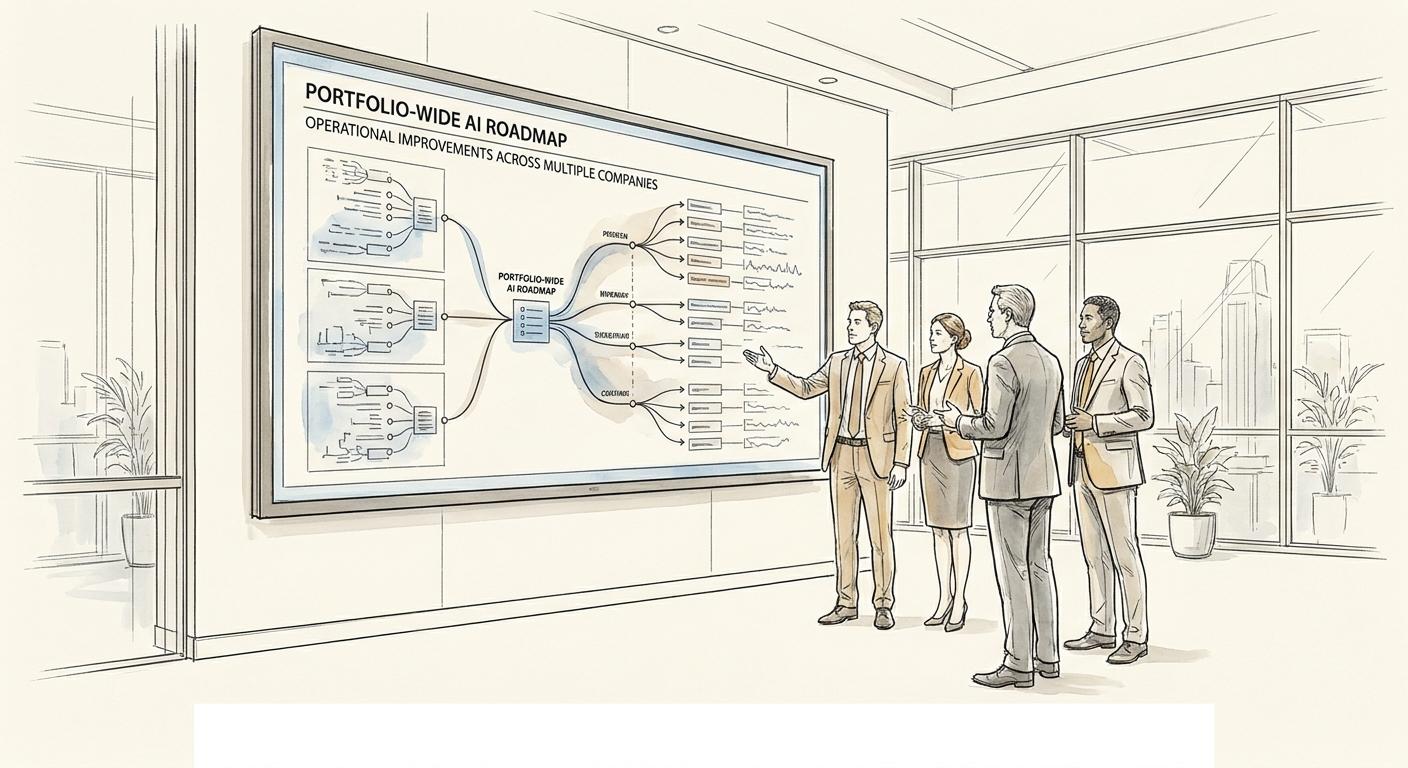
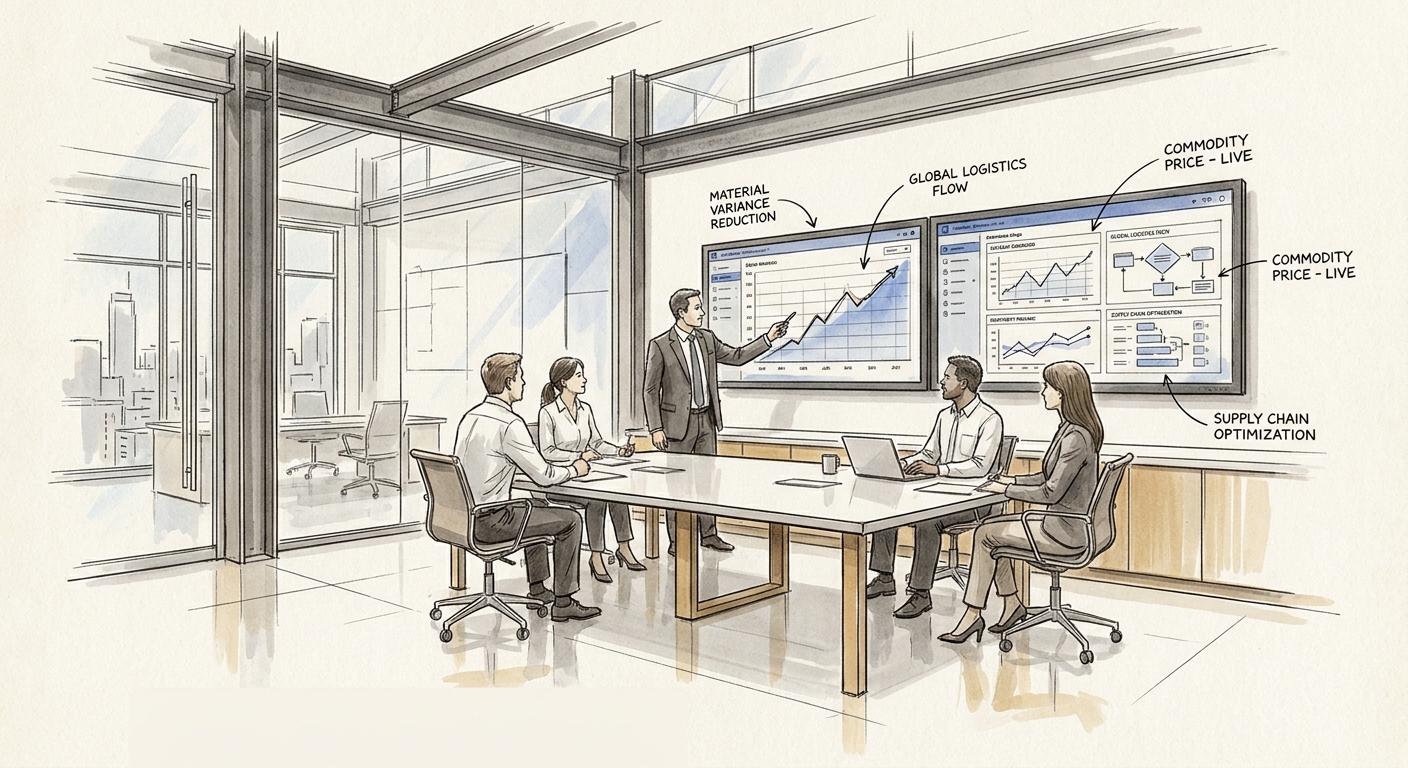
The "merger tax" - the loss of productivity and increased overhead that follows an acquisition - is the primary enemy of EBITDA expansion. AI mitigates this by acting as a translation layer between disparate systems. Instead of a multi-million dollar ERP migration that lasts two years, PE firms are now using AI to map disparate data schemas in weeks. This allows for a unified view of customer sentiment and procurement spend across the entire portfolio.
For example, when a PE-backed hospitality group acquires a regional competitor, AI can consolidate fragmented guest data to identify cross-sell opportunities immediately. By automating the "back-office tax," firms can reduce manual validation time - in some cases, moving from 3 minutes to 20 seconds per record. This provides the operating leverage needed to scale the platform without a linear increase in headcount.
Path 2: Standalone Performance Uplift (The 90-Day Sprint)
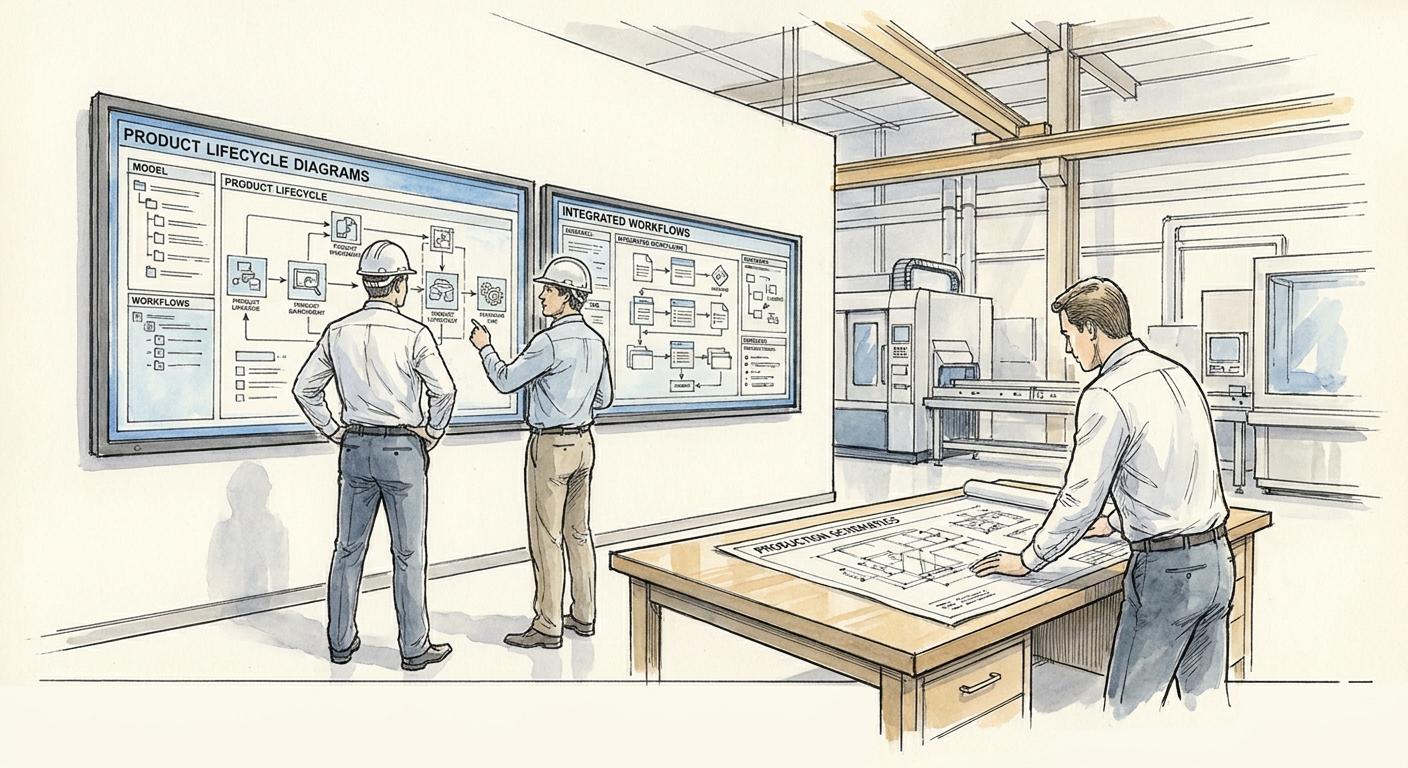
For manufacturing COOs, the pain is rarely about portfolio synergy; it is about the delayed execution truth. When the shop floor is disconnected from the finance department, margin leakage occurs because jobs are priced based on outdated assumptions. AI strategies for manufacturing COOs post-acquisition focus on embedding intelligence directly into existing workflows to solve these specific gaps.
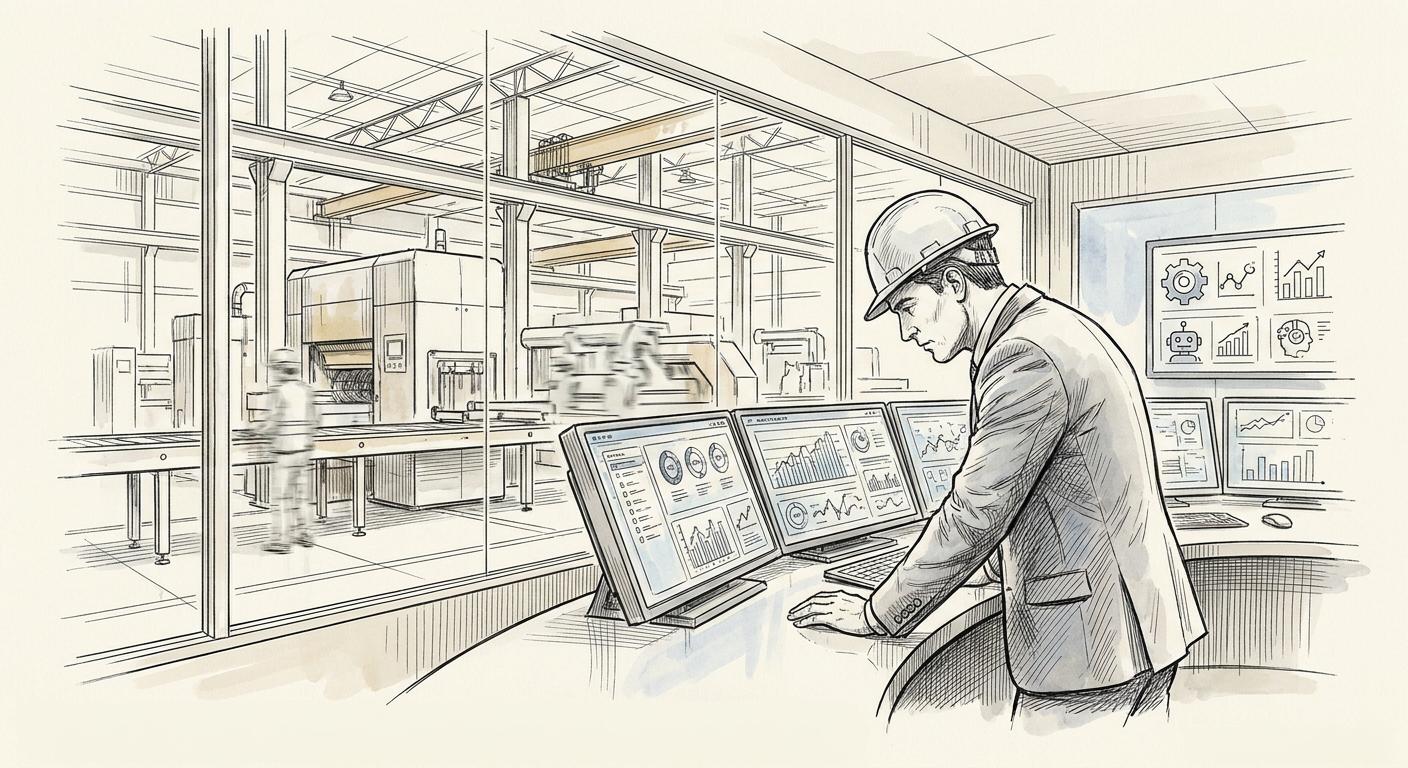
By focusing on a single, high-impact use case - such as predictive maintenance or automated job costing - a portfolio company can see measurable results in 60 to 90 days. We have seen this approach reduce manual customer service effort by 60%, allowing the existing team to focus on production bottlenecks rather than administrative firefighting. This standalone performance uplift is essential for companies nearing their exit window, where every basis point of EBITDA contributes to a higher exit multiple.
Comparative Analysis: Time-to-Value, Risk, and ROI
Choosing between synergy and standalone plays requires a cold assessment of AI maturity. Synergy-focused AI projects typically offer a higher long-term ROI by creating a repeatable AI playbook that can be applied to future add-ons. However, they carry higher execution risk due to the complexity of multi-stakeholder alignment and data governance.
Standalone plays are lower risk and offer the fastest time-to-value. For an Operating Partner under LP pressure to show immediate momentum, these "sprints" provide the necessary proof points to justify further investment. At iForAI, our AI Starter Package for PE is designed to deliver one production-ready use case in 8-12 weeks, providing a low-risk entry point regardless of the chosen path. The goal is to move from a pilot to a live environment where the impact on the P&L is indisputable.
The 'Hidden' Variable: Why Upskilling is the Deciding Factor
The most common reason for failed AI initiatives in PE-backed firms is not the technology, but the lack of adoption. Purchased tools like Microsoft Copilot often sit idle because the workforce lacks the specific training to apply them to their daily tasks. AI readiness is a human problem as much as a technical one.
This is why upskilling is the fundamental requirement for any portfolio company transformation. Whether you are integrating two companies or optimizing one, the middle management and shop floor operators must know how to interact with AI-driven insights. iForAI has trained over 1,500 employees, ensuring that when a tool is deployed, it is actually utilized to drive EBITDA improvement. Strategy without execution is a hallucination; execution without upselling is a waste of capital.
The 100-Day AI Playbook for PE Firms
To maximize exit readiness, Operating Partners should follow a structured sequence during the first 100 days post-acquisition:
- Operational Due Diligence (Days 1-20): Identify the largest sources of margin erosion or integration friction.
- Use Case Selection (Days 21-35): Choose one high-impact, low-complexity use case - such as automating payment validation or customer service triage.
- Deployment & Upskilling (Days 36-80): Build and ship the production model while simultaneously training the core team on its usage.
- Value Validation (Days 81-100): Measure the impact on EBITDA and document the results for LP reporting.
This repeatable process ensures that AI is not a speculative expense, but a core component of the value creation engine. By treating AI as an operating wedge, PE firms can significantly compress the time it takes to reach their investment thesis targets.
Frequently Asked Questions
How quickly can AI impact EBITDA in a new acquisition? Measurable results can be seen in 60-90 days by focusing on one high-impact production use case rather than broad experimentation. This targeted approach ensures that the technology addresses a specific bottleneck, such as reducing manual labor in back-office operations or improving pricing accuracy.
Should we prioritize portfolio-wide AI tools or company-specific solutions? What scales is the approach and methodology (the playbook), not necessarily the same tool, as manufacturing and service portcos have vastly different data maturity. A repeatable framework for assessment and deployment is more valuable than a one-size-fits-all software license.
How does AI improve exit readiness for a portfolio company? AI enhances exit readiness by providing a clear history of margin improvement and operational efficiency that can be defended during due diligence. It demonstrates to potential buyers that the company has a modern, scalable infrastructure capable of sustained growth.
What is the primary risk of using AI for synergistic integration? The primary risk is data fragmentation, where AI models are fed poor-quality information from legacy systems. This is why a structured 100-day playbook includes a rigorous data assessment phase before any production models are built.
Modern private equity firms must decide between broad portfolio synergy and targeted standalone performance to drive the next generation of value. By focusing on execution and upskilling in the first 100 days, Operating Partners can turn AI from a buzzword into a tangible EBITDA driver.
Learn about the AI Starter Package at ifor.ai/solutions/private-equity