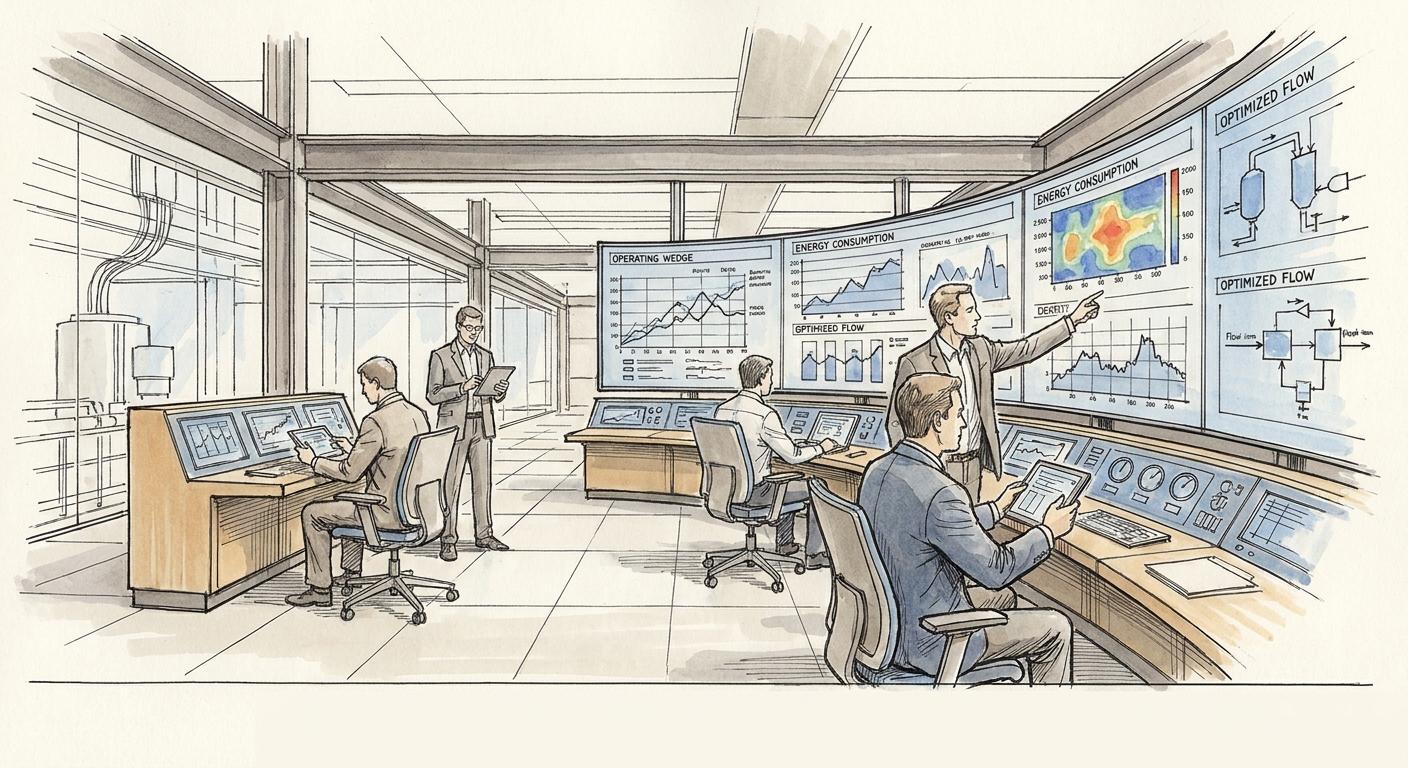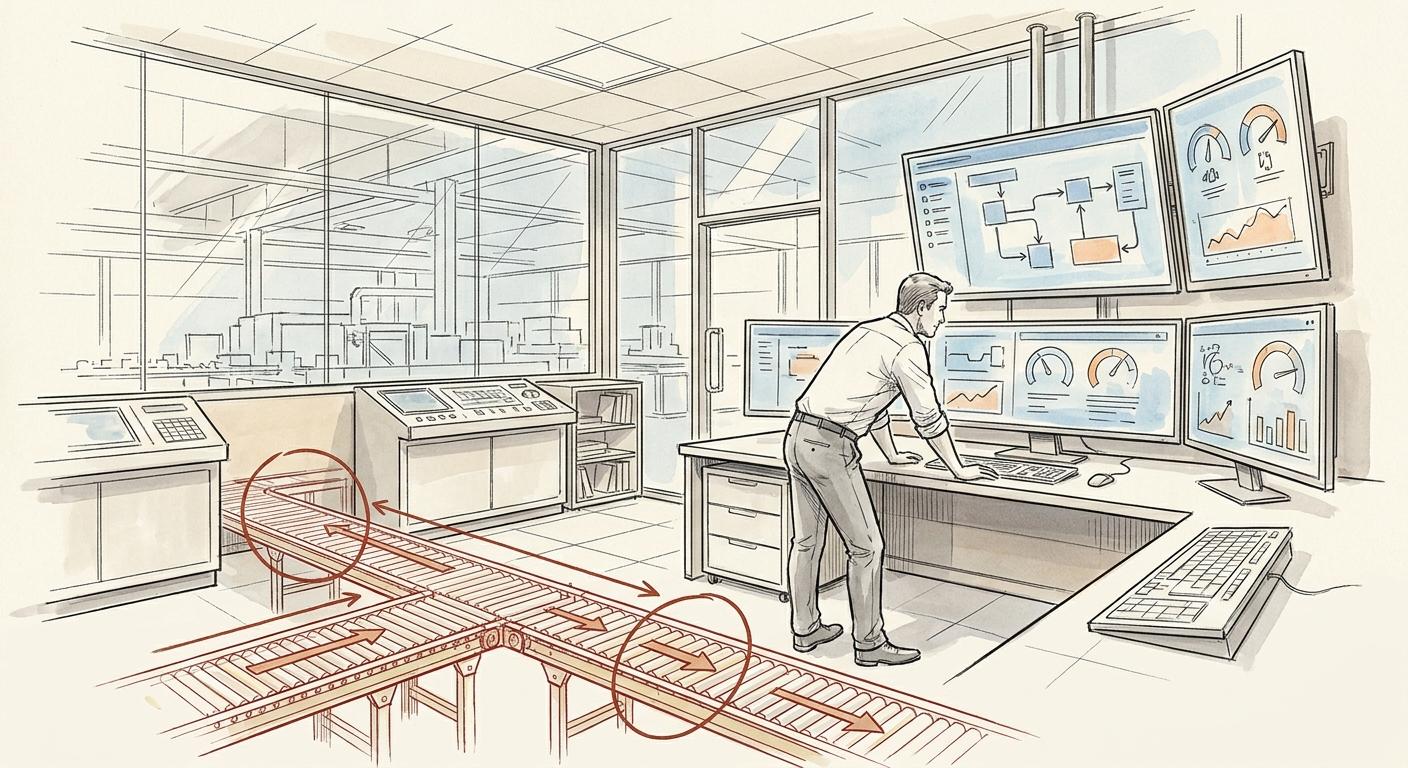
Plant managers frequently operate in a state of delayed execution truth, relying on shift-end reports that arrive eight hours too late to fix high scrap rates or machine downtime. These information silos lead to significant margin leakage as minor floor issues snowball into late shipments. Finding the right AI tools for plant managers bridges this gap, transforming reactive firefighting into proactive oversight. This guide examines how embedded intelligence provides real-time shop floor visibility and identifies anomalies before they erode your EBITDA. The Visibility Gap: Why Traditional ERPs Fail the Modern Plant Manager Most legacy ERPs and basic Manufacturing Execution Systems (MES) act as systems of record, not systems of action. They excel at documenting what happened yesterday but offer little insight into why a specific spindle is overheating right now. For a mid-market job shop, this lack of real-time production visibility means that OTIF (On-Time In-Full) targets are often missed because of invisible bottlenecks that weren't flagged until the weekly production meeting.
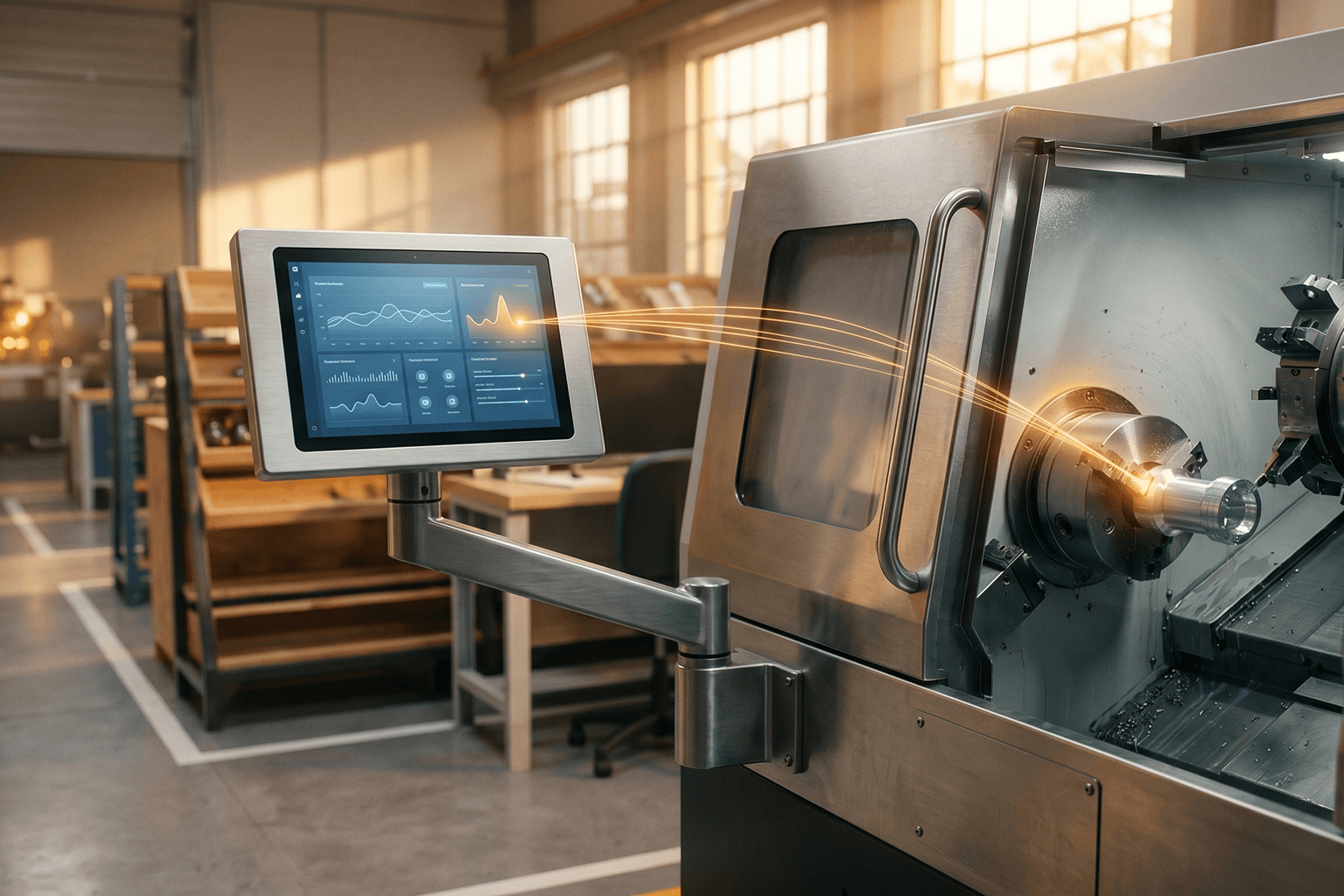
Traditional systems require manual data entry, which is prone to "fat-finger" errors and lag. When a 150-employee Tier 2 automotive supplier relies on manual logs, they are essentially managing by looking in the rearview mirror. AI tools for plant managers automate data capture directly from the machine's PLC (Programmable Logic Controller), ensuring the data reflects the current reality of the floor, not a sanitized version submitted at the end of a shift.
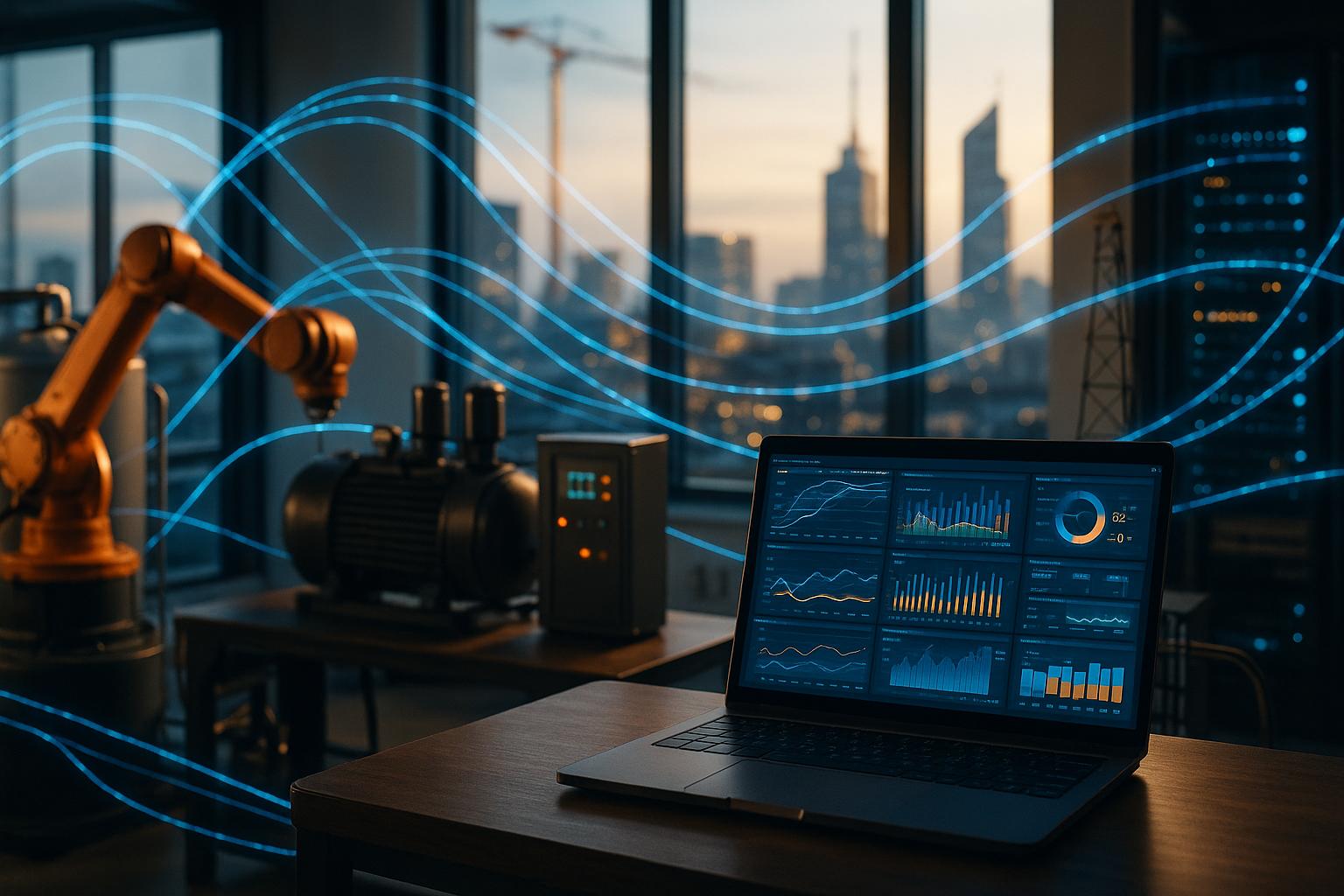
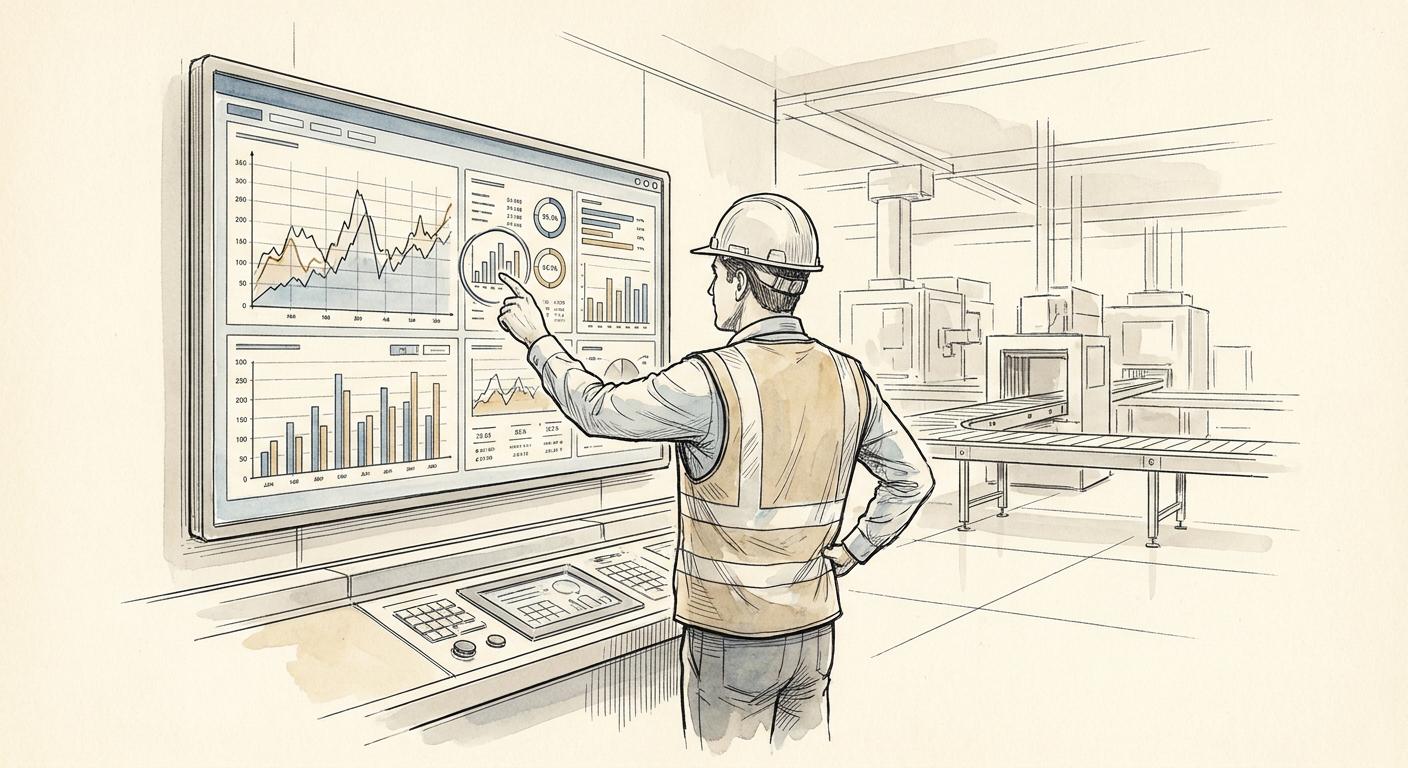
Production Visibility is the ability to track, analyze, and optimize manufacturing processes in real-time using synced data streams to eliminate operational blind spots. It allows operators to move from "feeling" that a line is slow to knowing exactly which machine is underperforming and why. Top AI Tools for Real-Time Production Monitoring Achieving a "single pane of glass" view requires tools that can ingest disparate data streams - from vibration sensors to power consumption meters - and normalize them. Leading industrial AI applications focus on ease of integration with existing hardware to ensure a short time-to-value.
Sight Machine: This platform creates a digital twin of the entire production process. It excels at multi-plant environments where a COO needs to compare estimate-vs-actual performance across different geographies. Tulip Interfaces: Known for "Frontline Operations," it uses embedded AI to guide workers through complex assemblies, capturing cycle time data automatically to highlight hidden bottlenecks. Samsara: While often associated with fleet management, their industrial sensors provide immediate proactive anomaly detection for ambient conditions like temperature and humidity that affect sensitive chemical or food production. MachineMetrics: A plug-and-play platform that connects to CNC machines. A 50-machine shop in Illinois reported identifying $50,000 in annual savings per machine simply by highlighting "micro-stoppages" that were previously unrecorded. Plex Systems: Now part of Rockwell Automation, this offers a cloud-native smart manufacturing platform that integrates AI for real-time shop floor visibility with financial reporting. Leveraging AI for Automated Anomaly Detection and Quality Control Manual quality checks are a bottleneck that creates an operating wedge - a gap between theoretical capacity and actual output. AI-driven anomaly detection tools for manufacturing utilize computer vision and high-frequency sensor data to spot deviations in milliseconds.
For example, a high-speed bottling line may produce 500 units per minute. A human inspector cannot catch a hairline fracture in a glass bottle at those speeds, but a camera system using specialized vision models can. By identifying the defect at the source, the system can trigger an automated sort, preventing an entire batch from being scrapped later.
Beyond visual defects, predictive maintenance for plant managers relies on detecting acoustic or thermal anomalies. If a motor begins to vibrate at a frequency outside its "healthy" baseline, the AI alerts the maintenance lead. This shift from scheduled maintenance to condition-based intervention directly improves operating leverage by reducing unplanned downtime and extending the life of capital assets. The iForAI 'Operating Wedge': From Data Overload to ROI in 8 Weeks Large-scale digital transformations often fail because they are too broad and lack a specific value driver. At iForAI, we focus on the quick win. We implement a localized operating wedge - a targeted AI deployment that solves one specific visibility or quality problem - to prove the value creation case within an 18-to-36-month investment window.
For Private Equity operating partners, this approach is critical for EBITDA improvement. Instead of a multi-year ERP overhaul, an AI-layer can be wrapped around existing machinery. We have seen mid-market manufacturers achieve a measurable job costing accuracy improvement within 8 weeks by simply automating the tracking of "setup vs. run" times. This data allows for more accurate bidding on future contracts, directly plugging margin leakage. Selection Criteria: How COOs Should Evaluate AI Tooling When selecting AI tools for plant managers, the focus must remain on operational utility rather than technical novelty. COOs should evaluate potential vendors based on three specific criteria:
Interoperability: Does the tool speak MTConnect, OPC-UA, or Modbus? If it cannot pull data from your 20-year-old press without a $100k retrofitting project, the time-to-value is too long. AI Readiness: Does the tool require perfectly clean data to start, or can it handle the "noisy" environment of a typical shop floor? Look for tools that offer embedded AI capable of filtering data at the edge. Scalability: Can you deploy this on one work cell this month and the entire plant by next quarter?
Investment in visibility is an investment in the bottom line. By eliminating the disconnect between the floor and the C-suite, manufacturers can finally achieve the delayed execution truth necessary to stay competitive in high-variance environments. FAQ: AI Visibility and Anomaly Detection Do I need to replace my existing MES to use AI visibility tools? No, modern AI tools act as an overlay that sits on top of your existing data layers. They ingest data from your current MES or ERP to provide immediate, actionable insights without the need for a costly "rip and replace" strategy.
How long does it take to see results from anomaly detection? With an embedded partner focusing on a specific use case, initial patterns and ROI can typically be identified within 4 to 8 weeks. This rapid deployment provides the "quick win" necessary to justify broader shop-floor digital initiatives.
What is the primary benefit of AI for real-time shop floor visibility? The primary benefit is the reduction of unplanned downtime and scrap by identifying deviations in process or machine health instantly. This allows plant managers to intervene before a minor issue compromises a customer's OTIF delivery.
Can AI tools help with job costing? Yes, by providing an accurate estimate-vs-actual breakdown of machine time and material usage, AI tools eliminate the guesswork in job costing. This ensures that every quote sent to a customer is backed by historical performance data, protecting your margins.
Effective implementation of AI tools transforms production data from a passive record into a strategic asset for EBITDA growth. Start small with a high-impact work cell to demonstrate immediate value before scaling across the enterprise.
To identify the highest-impact AI opportunities on your shop floor, book a Manufacturing Diagnostic at ifor.ai/solutions/manufacturing.