For those tracking the AI landscape, a recent headline likely stood out: Anthropic has introduced a specialized tool designed to modernize COBOL code.
COBOL, often perceived as a legacy programming language from the 1960s, remains a critical foundation for many of the world’s largest financial institutions, insurance providers, and government agencies. Anthropic’s announcement garnered significant attention, even reportedly influencing IBM’s stock performance. This development signals a pivotal moment for enterprise leaders: the era of intractable technical debt may be drawing to a close.
From Generalist AI to Specialized Agents
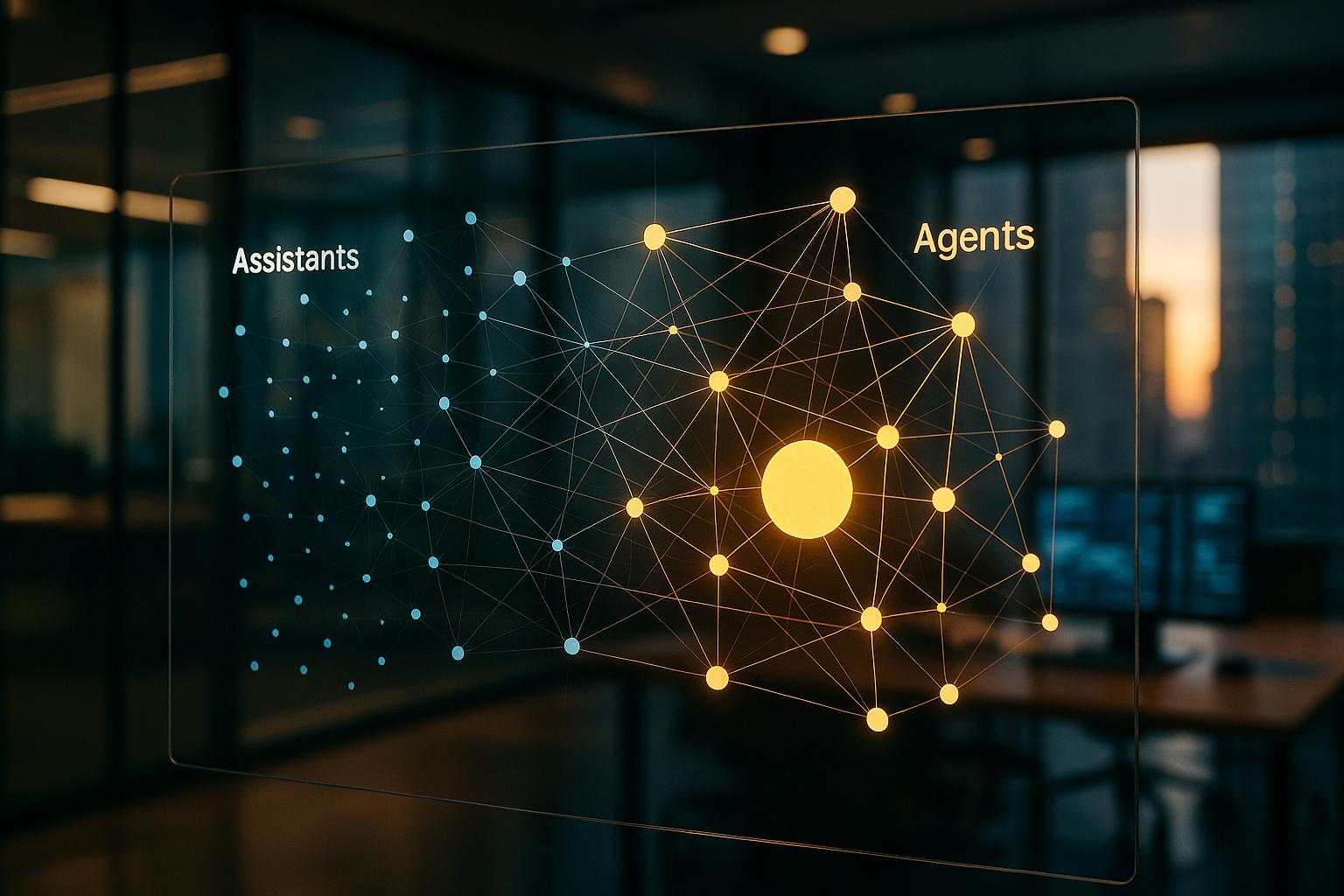
The early narrative around Generative AI (GenAI) largely focused on broad productivity applications, such as drafting emails, summarizing meetings, or assisting with basic scripting. Anthropic’s strategic move into COBOL modernization, however, highlights a shift toward Specialized AI Agents.
This evolution suggests a move away from large language models (LLMs) that perform many tasks reasonably well, toward AI systems engineered to solve specific, high-value, and complex problems with precision. In this context, the problem is the translation of mission-critical legacy code into modern, maintainable languages like Java. This is more than a technical upgrade; it represents the potential to unlock significant capital currently tied up in outdated systems.
Strategic Implications for Mid-Market Enterprises
Many organizations grapple with constraints imposed by legacy systems. Even if your operations don't involve 50-year-old mainframe scripts, you might recognize similar challenges:
Entrenched Databases: Core systems that are too vital to modify but too rigid to scale effectively.
Undocumented Knowledge: Essential business logic often resides with a few long-tenured employees, posing a risk as they approach retirement.
Fragmented Workflows: Operational processes that struggle to integrate with modern APIs or AI-driven tools.
Anthropic’s initiative demonstrates AI’s growing capability to manage high-stakes complexity. If an AI agent can safely refactor the core banking systems that underpin global finance, it suggests a broader applicability for automating and integrating various siloed operational workflows across industries.
Transforming Technical Debt into Innovation
A primary hurdle to AI transformation is often the existing technical debt that complicates the integration of new tools. Many leaders hesitate to modernize due to the perceived risk of a "big bang" failure—a complete system collapse during a manual rewrite.
Anthropic’s approach indicates a fundamental shift in this risk profile. AI-driven modernization can enable a more surgical and iterative strategy:
Reduced Maintenance Costs: Lower the expenses associated with maintaining aging technology stacks and the need for specialized, often scarce, talent.
Enhanced Agility: Modernized codebases can enable development teams to deploy internal AI features and customer-facing updates in shorter cycles, accelerating innovation.
De-risked Evolution: Automated refactoring, especially when combined with rigorous AI-driven testing, can offer a more secure pathway for migration compared to traditional manual methods.
The Bottom Line
The development of a "COBOL tool" is a significant indicator. It underscores that generative AI is maturing into a practical, industrial-grade operational asset. For CEOs focused on return on investment or CTOs managing technology roadmaps, the objective remains clear: reallocate talent from maintaining legacy systems to driving future innovation.
At iForAI, we specialize in bridging the gap between existing infrastructure and AI-driven potential. We help organizations transform their legacy systems into a competitive advantage.