.svg)

High maintenance spend and unexpected downtime are often hidden killers of EBITDA expansion in mid-market manufacturing portcos. For an Operating Partner, a sudden $250k repair bill or a three-day line stoppage isn't just an operational headache - it is a direct hit to the exit multiple and a sign of poor asset uptime optimization. Implementing an AI predictive maintenance implementation strategy allows leadership to shift from expensive, reactive "firefighting" to a proactive model that preserves margins. This article provides a repeatable playbook for deploying industrial AI to reduce MRO costs and stabilize shop floor performance within the first 100 days of an investment.
AI predictive maintenance (PdM) is a data-driven strategy that uses machine learning algorithms to analyze sensor data, such as vibration, temperature, and pressure, to forecast equipment failures before they happen. Unlike traditional preventative maintenance, which relies on rigid schedules, AI-led PdM enables targeted repairs only when necessary, minimizing unplanned downtime and reducing unnecessary spend on spare parts. The EBITDA Impact: Why Operating Partners are Prioritizing Predictive Maintenance Maintenance is frequently viewed as an unavoidable cost of doing business, but in a private equity context, it is a significant lever for value creation. Every 1% reduction in maintenance costs often translates to a disproportionate increase in operating leverage because it simultaneously reduces direct expenses and increases production throughput. When a portfolio company moves from reactive to predictive maintenance, the impact on exit readiness is twofold: the P&L reflects higher margins, and the operational risk profile decreases for the next buyer.
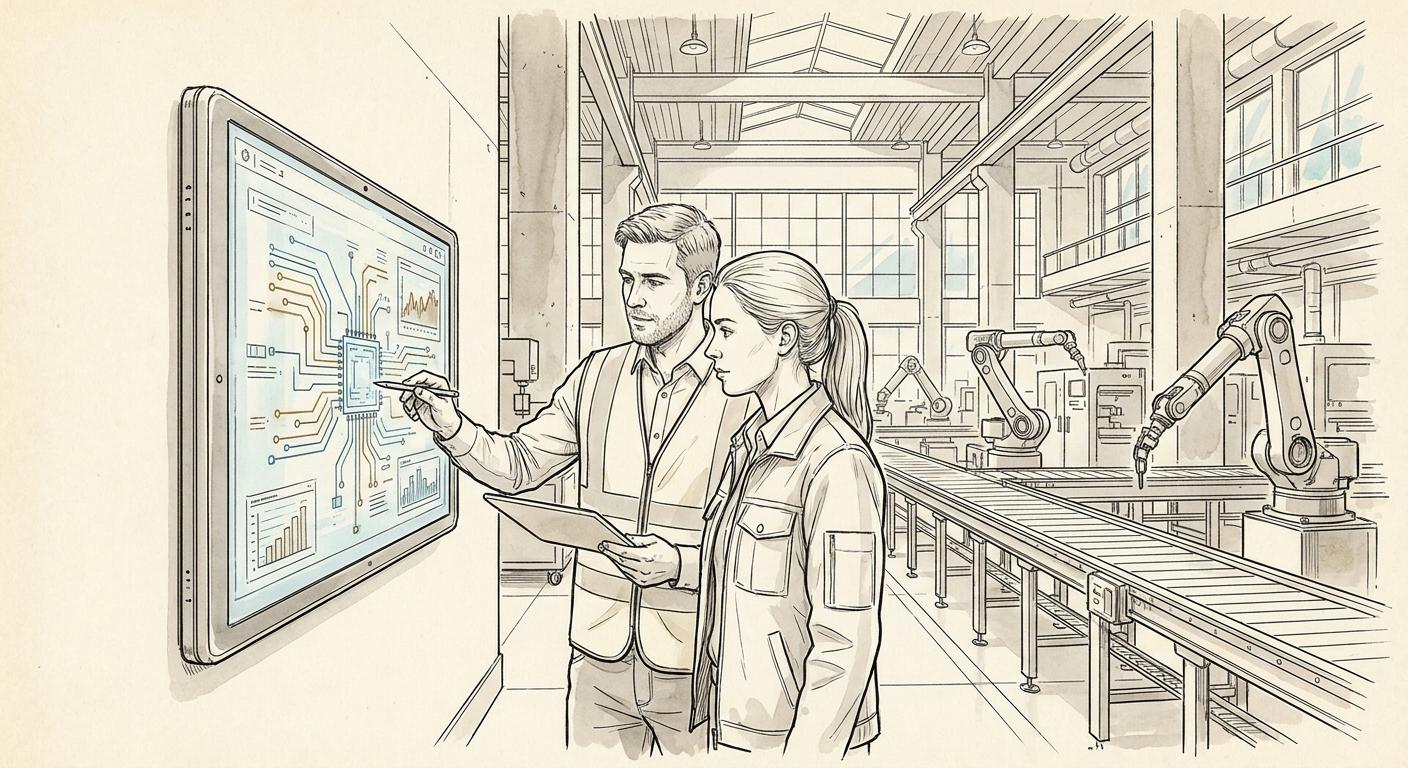
Capturing these gains requires moving beyond the "replace on a schedule" mentality. Traditional maintenance often leads to over-servicing machine parts that are still perfectly functional, which leaks cash. Alternatively, under-servicing leads to OTIF misses and customer dissatisfaction. Bridging this gap through an embedded AI strategy ensures that maintenance spend is an investment in reliability rather than a sunk cost. Step 1: The 'Data Readiness' Audit (Beyond the ERP) Success does not require a complete digital overhaul or a "rip and replace" of the existing ERP. Most mid-market manufacturers already sit on a mountain of dark data within PLCs (Programmable Logic Controllers) and existing CMMS (Computerized Maintenance Management Systems). The first step in an AI predictive maintenance implementation is assessing the quality and accessibility of this data.
Operating Partners should look for three specific indicators of AI readiness: sensor density on critical lines, the consistency of historical work order tagging, and the frequency of data logging. If a portco is still using paper-based logs or has "dirty" data in its CMMS, the focus should be on a high-velocity data ingestion layer rather than a multi-year IT project. iForAI’s experience across 150+ projects shows that most firms can reach a point of "actionable data" within 3 to 4 weeks by focusing on specific high-value assets rather than the entire plant. Step 2: Prioritizing High-Gravity Assets for 90-Day Wins The most frequent mistake in industrial AI deployment is trying to boil the ocean. To secure a quick win and demonstrate ROI to the board, focus on "High-Gravity Assets" - the equipment where a failure would cause a total production bottleneck.
Selecting the right first use case involves mapping two variables: the cost of unplanned downtime and the availability of failure history. By narrowing the scope to a single critical line or a cluster of similar machines (e.g., CNC spindles or hydraulic presses), the team can move from pilot to production in 8-12 weeks. This speed to results is vital for maintaining momentum across the portfolio and meeting the compressed 3-to-5-year investment window. Step 3: The Execution Gap - Why Most AI Maintenance Pilots Fail Many PE firms attempt to solve the AI gap by hiring a single "Head of AI" or a specialized data scientist. These hires often fail because they lack the domain expertise to translate code into a shop-floor workflow, or they become overwhelmed by the sheer breadth of the technology stack. This is the delayed execution truth: a single hire cannot replace a cross-functional team of data engineers, ML specialists, and industrial strategists.
iForAI provides 35+ specialists for the price of a single hire, ensuring that the AI predictive maintenance implementation isn't just a science experiment but a scalable piece of software integrated into daily operations. This model eliminates the "pilot purgatory" where AI models are built but never actually used by the maintenance crew on the floor. The Operations Checklist: From Pilot to Portfolio-Wide Scale For the COO or Plant Manager, the true test of AI is how it changes the Wednesday morning production meeting. To turn predictive insights into EBITDA improvement, the organization must follow a specific operational checklist:
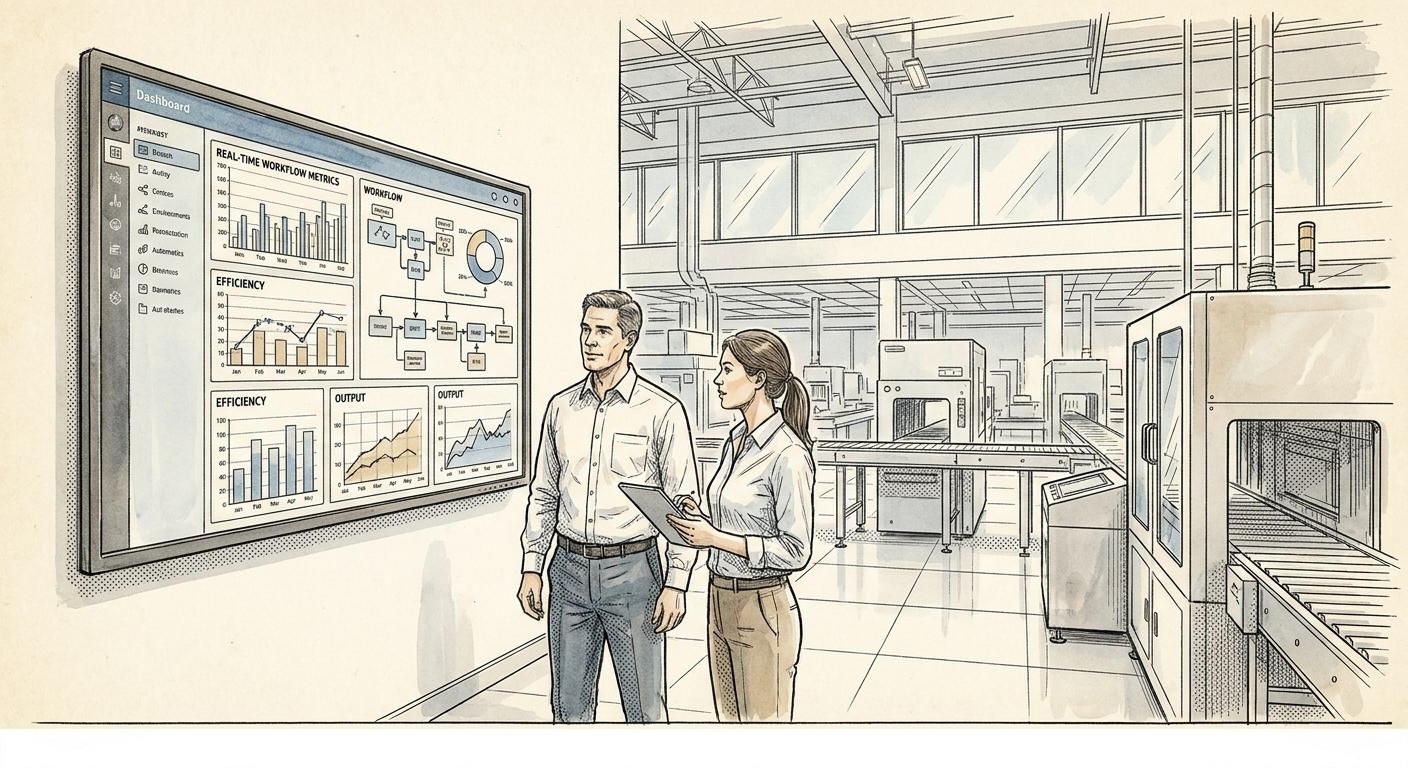
Workflow Integration: AI alerts must be automatically pushed as work orders into the existing CMMS. If a technician has to log into a separate "AI dashboard," adoption will fail. Sensor Validation: Confirm that telemetry data (vibration, heat, acoustics) is being captured at a frequency that allows for early anomaly detection. KPI Alignment: Shift the plant's performance metrics from "Mean Time to Repair" (MTTR) to "Mean Time Between Failures" (MTBF) and MRO cost reduction. Estimate-vs-Actual: Regularly audit how many AI-predicted failures were verified by physical inspections to build trust with the frontline staff. Institutionalizing the Gains: Upskilling the Maintenance Team Software alone does not create a repeatable AI playbook. The final stage of implementation is upskilling the existing workforce so they can interpret AI outputs and act on them. This shifts the maintenance team's role from manual laborers to asset analysts.
Training is what turns a purchased tool into a permanent operating wedge. In past implementations, training has driven a 56% average increase in AI readiness across staff. When the maintenance team understands the "why" behind an AI alert, they become the biggest advocates for the technology, ensuring the value persists long after the initial implementation phase and well into the exit window. FAQ How long does it take to see a reduction in MRO costs? With iForAI’s methodology, a pilot can be live in 8-12 weeks, with measurable reductions in emergency parts spend and overtime labor visible within the first two quarters. The fastest impact is typically found in reducing "rush shipping" fees for critical components.
Do we need to replace our current ERP or CMMS? No. Effective AI implementation acts as an embedded layer that sits on top of existing data. It fills the gaps between the ERP and the shop floor without a costly "rip and replace" approach.
How do we identify AI predictive maintenance for private equity portfolio companies? Look for portcos characterized by high capital intensity, aging assets, or margin leakage attributed to "unplanned events." A high ratio of emergency work orders to scheduled maintenance is the strongest indicator of potential ROI.
What is the best way to start an operational excellence AI checklist for manufacturing? Start with an AI diagnostic to map your existing data assets against your highest-cost maintenance centers. This ensures the implementation is focused on EBITDA impact rather than technology for technology's sake.
AI predictive maintenance transforms maintenance from a volatile expense into a controllable driver of enterprise value. By following a structured 90-day implementation plan, PE-backed manufacturers can lock in margin improvements and improve exit readiness across the portfolio.
Book a portfolio AI diagnostic at ifor.ai/solutions/private-equity