.svg)

Mid-market manufacturers often lose 3% to 6% of their annual revenue to rework and scrap, a leak that directly erodes EBITDA. While manual inspection is slow and prone to fatigue, traditional vision systems often fail because they cannot handle the high variability of modern production lines. Integrating Generative AI for automated quality control allows plant managers to move beyond rigid, rule-based checks to an adaptable system that identifies defects in real-time. This guide outlines how to deploy an AI-driven quality strategy to capture an operating wedge that reduces rework by 15% or more within a single quarter.
Generative AI for Automated Quality Control is an industrial application of neural networks that identifies production defects by comparing real-time shop floor data against learned patterns of "good" products. Unlike legacy systems, it can simulate rare failure modes through synthetic data, allowing the system to detect anomalies it has never seen before with high accuracy.
The Financial Burden of Manual QC: Why the COO and CFO Must Align
For a $50M manufacturer, a 2% reduction in scrap isn't just a technical metric; it is a $1M addition to the bottom line. Most COOs struggle with margin leakage caused by late-stage defect detection, where the cost of the raw materials, labor, and energy has already been "baked" into a part that must now be scrapped. This creates a delayed execution truth where the leadership team only realizes a margin miss weeks after the production run ended.
CFOs and Private Equity partners view quality control through the lens of operating leverage. By replacing manual sampling with 100% automated inspection, a firm can scale production volume without a linear increase in quality headcount. This transition shifts QC from a reactive overhead cost to a proactive value creation lever, shortening the cash-to-cash cycle and improving OTIF (On-Time In-Full) performance.
How Generative AI Differs from Traditional Computer Vision
Traditional industrial defect detection software relies on "golden image" comparison or hard-coded rules. If a scratch is 2mm long, it’s a fail; if it’s 1.9mm, it’s a pass. These systems struggle with "edge cases" - subtle variations in lighting, texture, or part orientation that do not fit a neat rule. This leads to high false-reject rates, forcing human operators to double-check the machine's work, which defeats the purpose of automation.
Generative AI for automated quality control uses a different architecture. It understands the "essence" of a conforming part. Because it can generate synthetic examples of potential defects, it requires 80% less physical training data than legacy systems. For a job shop in Indiana running 50 different SKUs, this means the system can be trained on a new product in hours rather than weeks, providing a much faster time-to-value.
Phase 1: Identifying the High-Impact Wedge (Weeks 1-2)
The most common mistake is trying to automate every inspection point at once. Instead, identify a "wedge" - a specific process or SKU with the highest estimate-vs-actual variance. Focus on the station where rework costs are most punishing, typically just before a high-value adding step like heat-treat or final assembly.
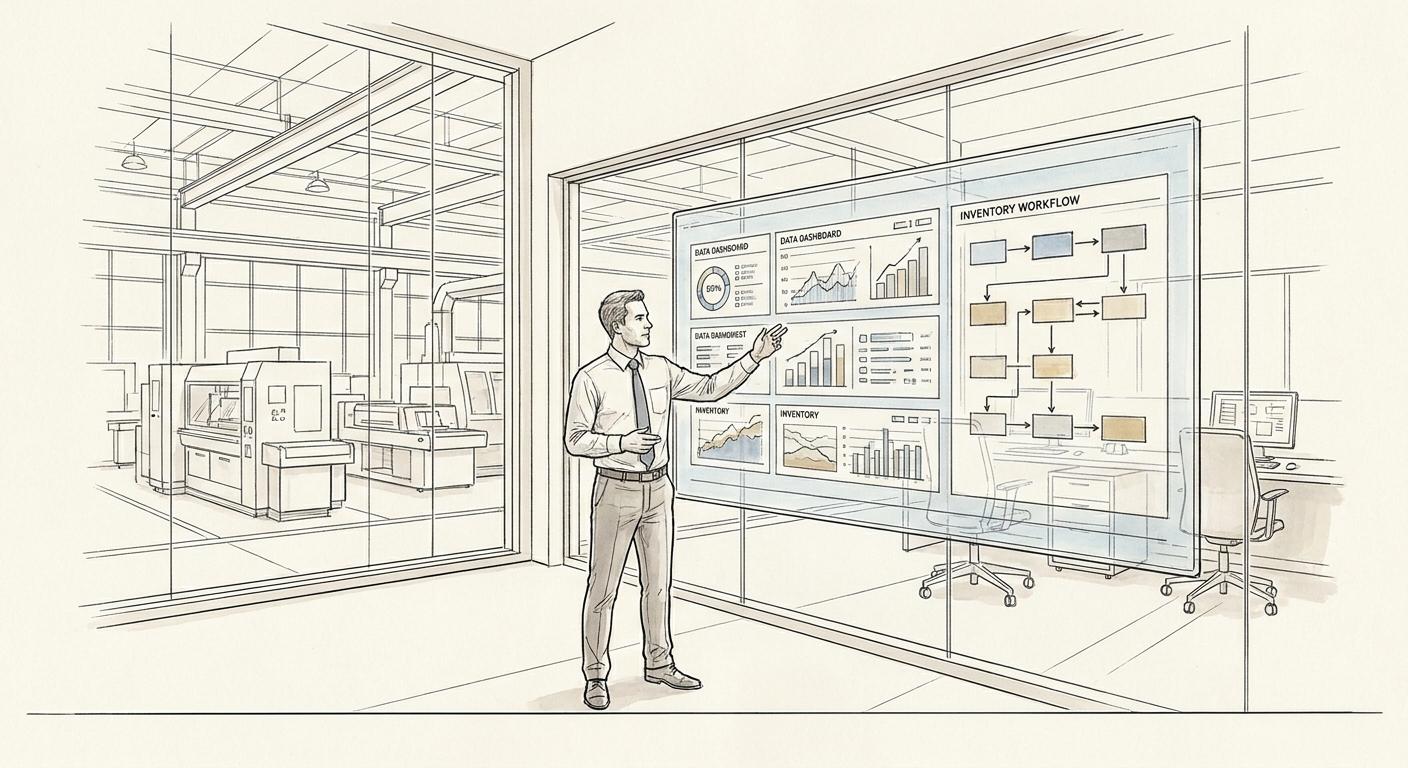
Audit your production logs for the last six months. Look for the "Top 3" defect types that account for 70% of your scrap costs. By narrowing the scope to one high-impact area, a mid-market manufacturer can demonstrate a quick win to stakeholders, proving the ROI before scaling the technology across the entire facility.
Phase 2: Data Capture and Model Embedding (Weeks 3-6)
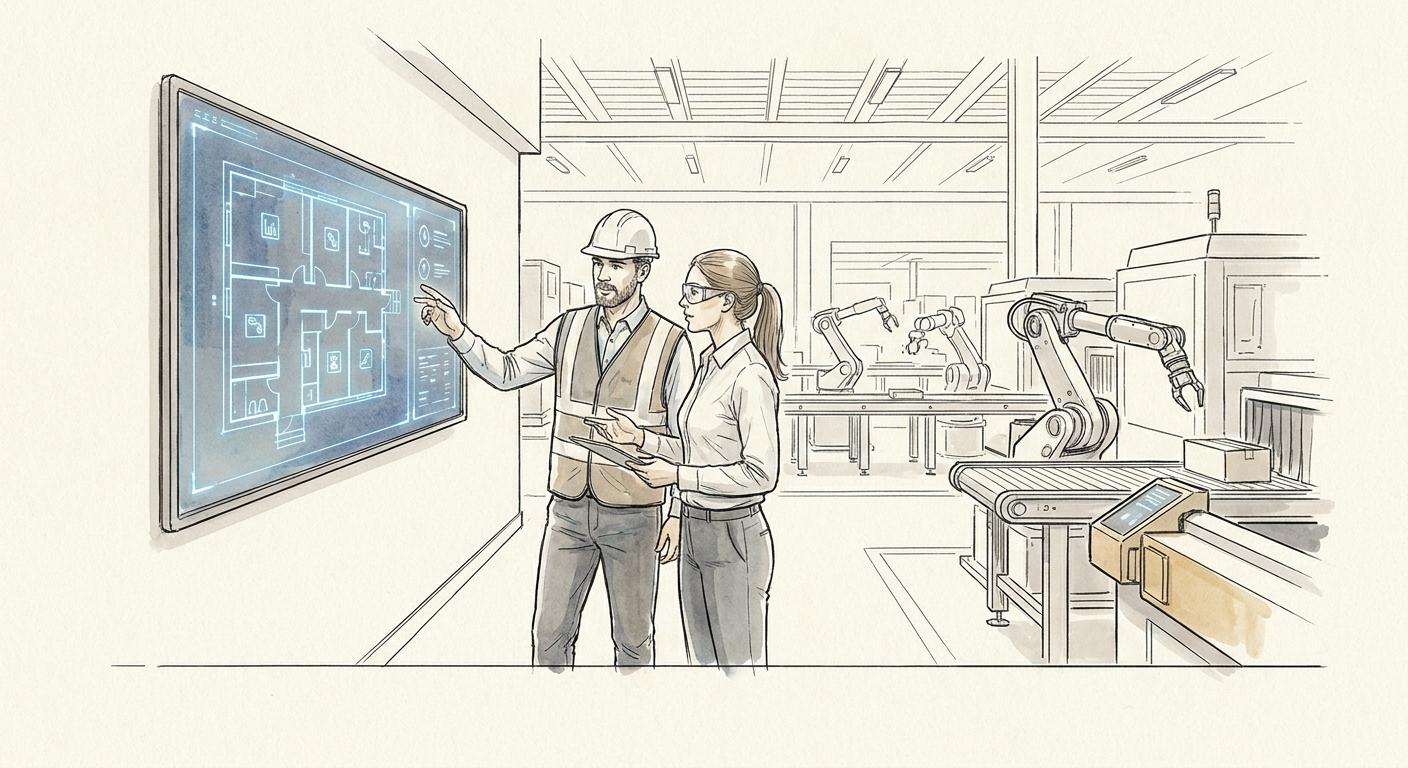
You do not need to replace every camera on the line. Most automated visual inspection systems can ingest feeds from existing high-resolution IP cameras or PLC data. The goal of this phase is to "embed" the AI into the existing data stream. During these four weeks, the system captures images of both conforming and non-conforming parts to build a baseline.
If the defect rate is low (e.g., 500 ppm), you won't have enough physical "bad" examples to train a standard model. This is where GenAI excels. It uses the few examples you have to create thousands of synthetic variations of those defects. This accelerates AI readiness by ensuring the model is prepared for "black swan" quality events before they happen on the live line.
Phase 3: Closing the Loop on the Shop Floor (Weeks 7-8)
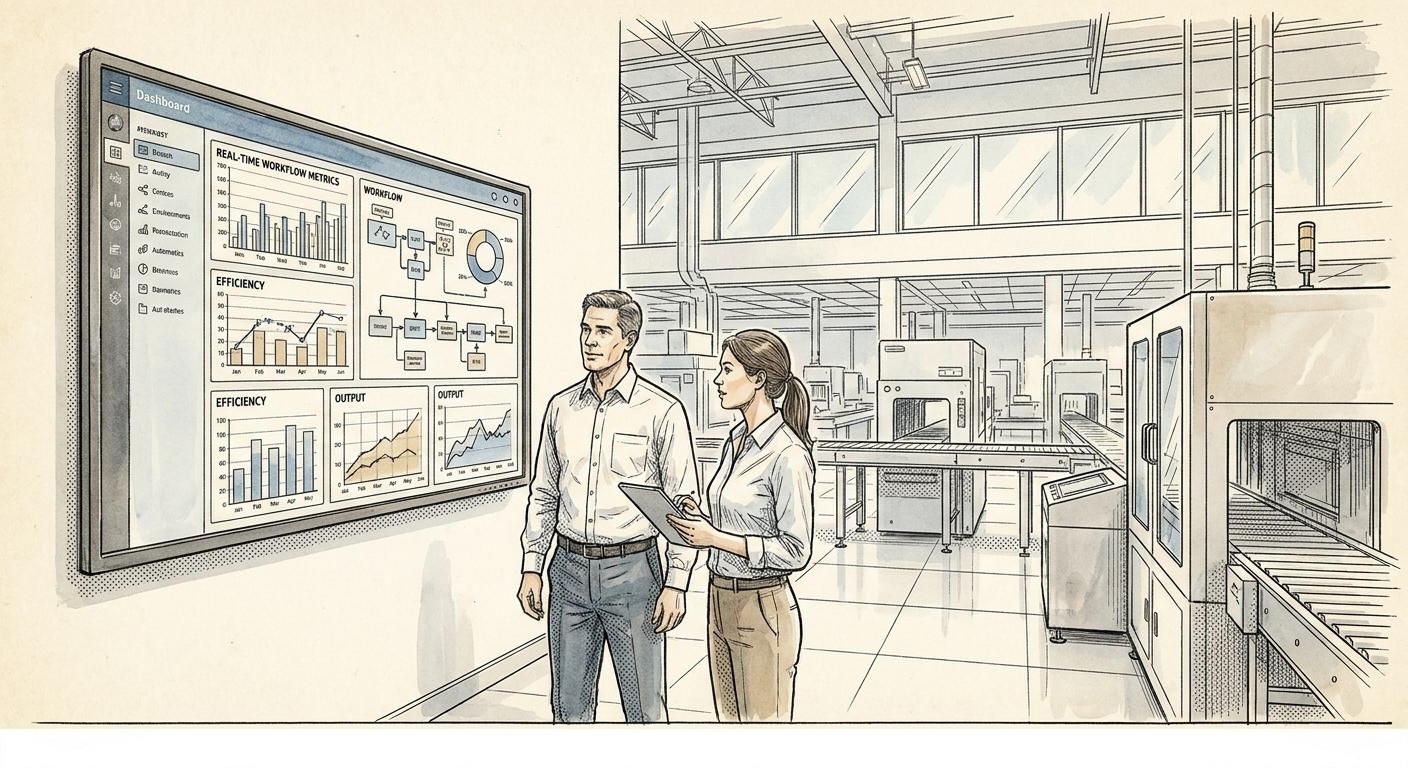
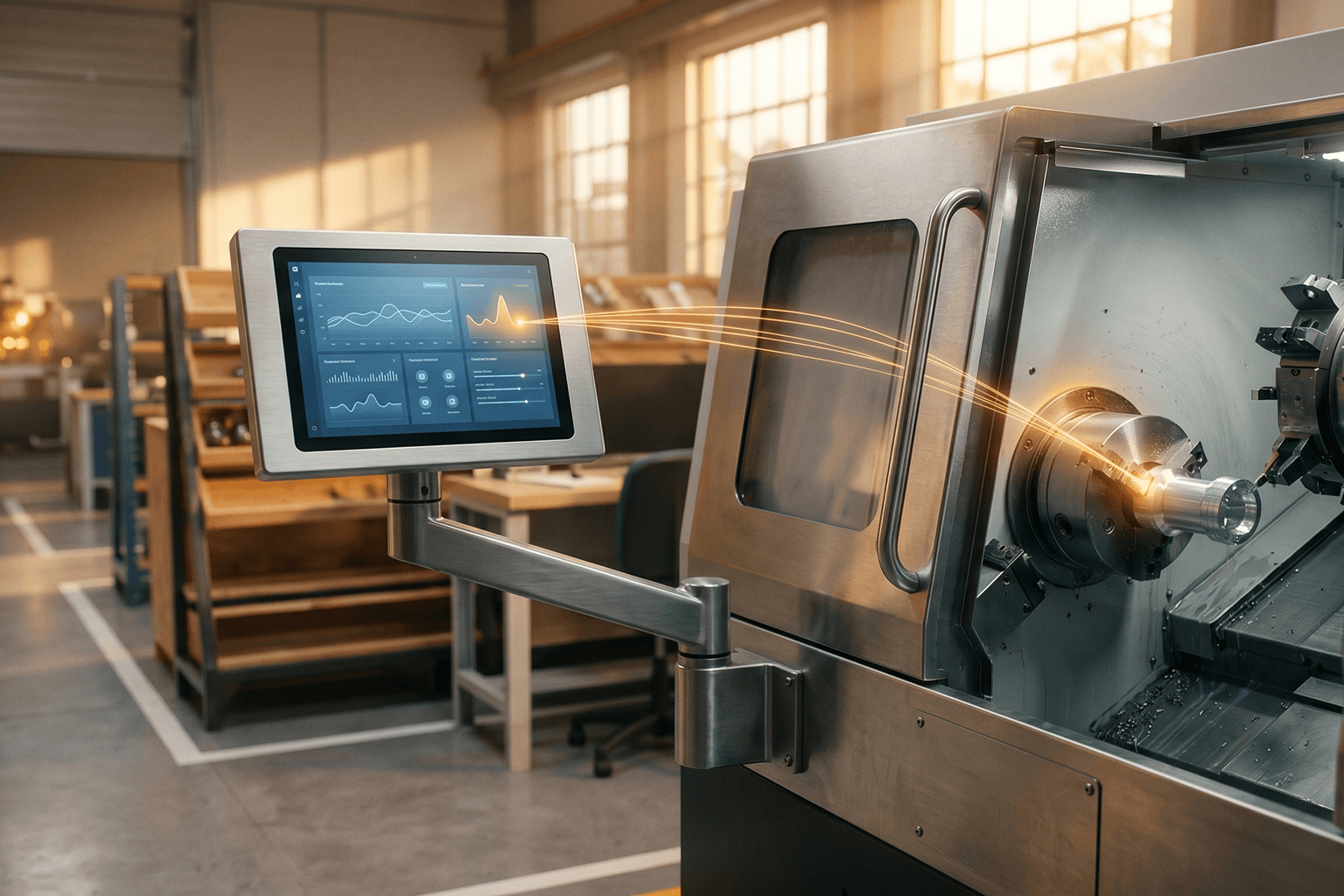
An AI model that only generates a weekly report is useless for margin preservation. In the final two weeks, the system must be integrated into the shop floor workflow. This means setting up real-time triggers: if the AI detects a 98% probability of a surface crack, it triggers a PLC signal to divert the part or alerts the operator via a tablet.
Closing the loop ensures that job costing remains accurate. When an operator can stop a machine the moment a tool starts producing out-of-spec parts, you prevent an entire shift's worth of scrap. This real-time feedback loop is the difference between a successful digital transformation and a failed "science project."
Measuring the Win: NPV and ROI for the Mid-Market Manufacturer
When presenting the results to a board or a PE Operating Partner, move away from technical accuracy percentages. Focus on the EBITDA improvement and the payback period. A typical implementation for a $20M plant might see a payback period of less than 9 months when accounting for:
Reduced Material Scrap: The direct cost of wasted raw materials.
Recovered Labor Hours: The time spent on rework that could have been spent on new production.
Lower Warranty Reserves: Fewer defects reaching the customer reduces the need for "rainy day" capital.
By calculating the Net Present Value (NPV) of these savings over a 36-month investment window, the investment moves from a "nice-to-have" tech upgrade to a core component of the firm's value creation plan.
FAQ: AI Quality Control and Rework
Does AI quality control require a total overhaul of our existing cameras? No, most modern AI platforms are hardware-agnostic. Professional integration teams can overlay GenAI software onto existing high-resolution cameras and sensors, avoiding massive CapEx for a "rip and replace" strategy.
How long until we see a reduction in rework fees? When using an embedded strategy, initial measurable improvements are typically visible within the first 60 days. The first 30 days focus on data baselining, while the subsequent 30 days focus on real-time operator alerts and process adjustment.
What is the "operating wedge" in AI quality control? The operating wedge is the gap created between stagnant labor costs and decreasing defect costs. As the AI takes over inspection, your cost-per-unit drops even as production volume increases, driving higher margins.
How many data samples do I need to start? Generative models can begin to show value with as few as 50–100 images of "good" parts and a handful of defect examples. The system then uses synthetic data generation to fill in the gaps for training.
Implementing AI-driven quality control transforms rework from an inevitable "cost of doing business" into a controllable variable. By following an 8-week pilot structure, manufacturers can secure an immediate EBITDA lift while building the foundation for mid-market scale.
Book a Manufacturing Diagnostic at ifor.ai/solutions/manufacturing