Operating Partners and COOs are currently battling a relentless margin squeeze driven by labor volatility and fluctuating freight costs. Traditional cost-cutting measures have reached a point of diminishing returns, leaving ROI of autonomous operations as the primary lever for meaningful EBITDA improvement. This shift moves beyond simple task automation toward a system where predictive logistics and robotics integration manage the complexities of the factory floor and supply chain. This article analyzes the technical path to implementing these systems and the specific financial impact they have on portfolio company valuations.
Beyond the Hype: Defining Autonomous Operations for the Mid-Market
For a mid-market manufacturing firm, autonomous operations are not about building a "lights-out" factory overnight. Instead, Autonomous Operations in manufacturing refers to the integration of AI-driven predictive logistics and robotics to create self-optimizing supply chains and production lines that require minimal manual intervention, directly improving EBITDA and operational resilience. It is the transition from reactive firefighting to a state where the system anticipates disruptions before they hit the P&L.
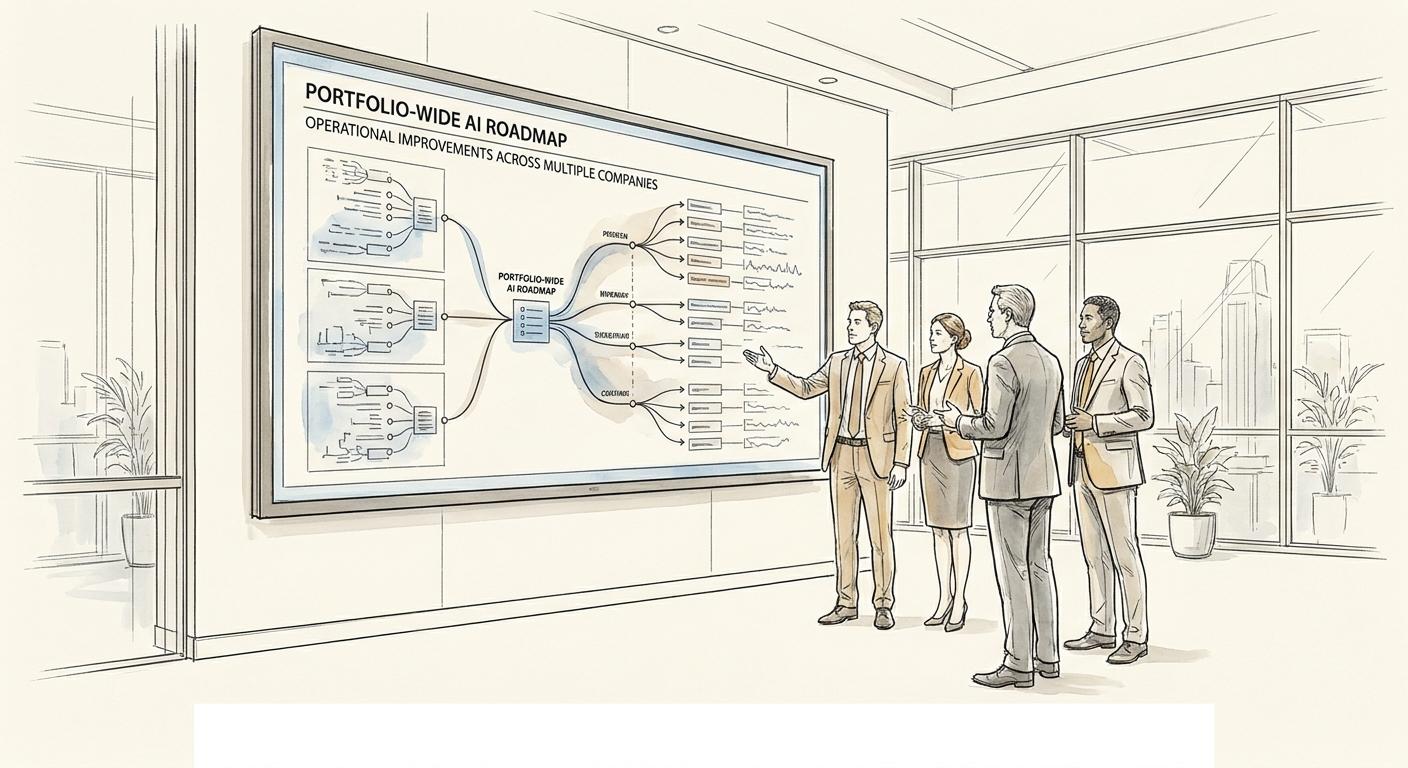
The focus for Private Equity (PE) firms is on creating an operating wedge - using technology to grow output without a linear increase in headcount. While large-scale R&D might be out of reach for a $150M revenue portfolio company, modular autonomous systems in warehouse management and predictive maintenance offer a direct path to margin expansion within the standard three-to-five-year investment window.
The P&L Impact: How Predictive Logistics Drives Margin Expansion
Predictive logistics AI targets the most volatile line items in a manufacturing P&L: inbound freight, inventory carrying costs, and expedited shipping fees. When a plant manager misses an OTIF (On-Time In-Full) target, the root cause is often a lack of visibility into the upstream supply chain. By layering predictive models over existing ERP data, firms can identify "delayed execution truth" weeks before a shipment is late.
The financial results of these implementations are quantifiable. For example, iForAI has seen manual customer service and logistics coordination efforts reduced by 60% through automated validation and tracking systems. This directly impacts operational leverage. When AI handles freight auditing and route optimization, the company reduces waste in "deadhead" miles and avoids the high costs of last-minute logistics brokerage. These savings drop straight to the bottom line, providing a repeatable value creation lever that can be applied across a portfolio.
Integrating Robotics Without the R&D Risk
The primary fear for many COOs is the "failed pilot" - a million-dollar robotics installation that sits idle because it cannot communicate with the legacy ERP. Successful robotics integration strategy focuses on the data-ready infrastructure rather than just the hardware. The goal is to close the ERP-MES gap, ensuring that the physical robot on the floor is fed real-time instructions based on the current production schedule.
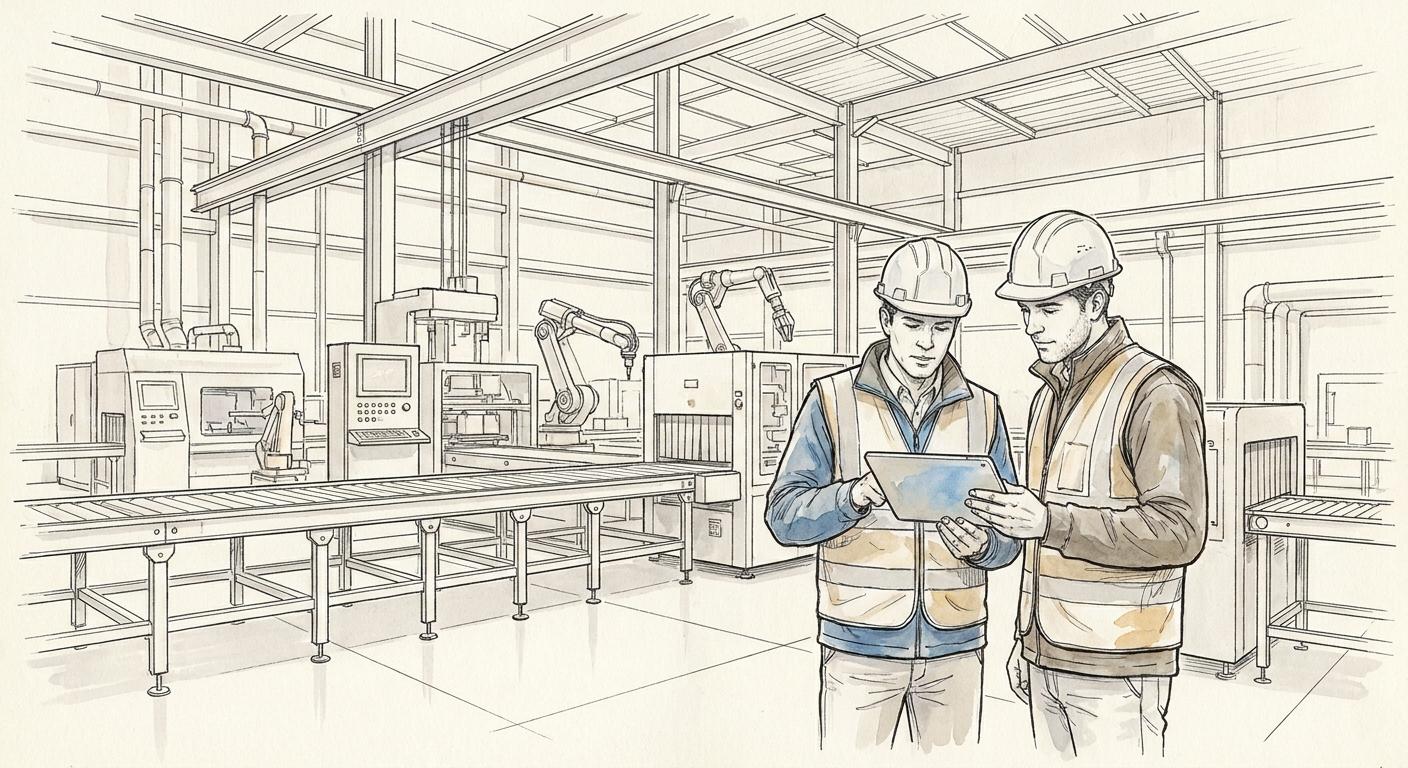
To mitigate risk, mid-market firms should prioritize modular robotics that solve specific bottlenecks, such as end-of-line palletizing or autonomous mobile robots (AMRs) for material movement. By focusing on these high-utility areas, firms avoid the "R&D trap" and focus on time-to-value. At iForAI, we emphasize that upskilling the existing workforce is what turns these purchased tools into actual ROI; without a team that knows how to manage the new tech stack, adoption will stall, and the investment will be written off.
The PE Value Creation Playbook: Exit Readiness via Automation
From a Private Equity perspective, autonomous operations are a powerful tool for exit readiness. A company that relies on the "heroics" of a few key employees to manage a chaotic shop floor is a risk for a buyer. Conversely, a company with embedded AI and autonomous workflows represents a scalable, institutionalized asset.
This institutionalization increases the exit multiple. Buyers pay a premium for businesses that have solved the labor dependency problem and can demonstrate high AI maturity. By implementing a repeatable AI playbook across a portfolio, PE firms can report consistent improvements in EBITDA growth to their LPs, proving that the value created is structural rather than just a result of market timing.
The 60-90 Day Implementation Roadmap
The path to supply chain automation ROI does not require a multi-year overhaul. The iForAI methodology focuses on a 60-90 day window to move a single high-impact use case into production. This "quick win" approach validates the tech stack and builds internal buy-in.
- Phase 1 (Days 1-30): AI Diagnostic and Data Audit. Identify the margin leakage points in the current logistics or production flow.
- Phase 2 (Days 31-60): Pilot implementation of a specific autonomous agent or predictive model, such as an automated freight auditing tool.
- Phase 3 (Days 61-90): Integration with the "single source of truth" (ERP/MES) and staff upskilling.
This phased approach ensures that the PE firm sees a measurable return before committing to a portfolio-wide rollout. By starting with one live use case, the firm moves from theoretical AI potential to realized EBITDA improvement.
FAQ
What is the typical payback period for autonomous operations in manufacturing? Most targeted AI implementations in logistics or robotics see an ROI within 12-18 months. While the full system takes time to mature, initial operational wins - such as reduced manual labor in customer service or freight auditing - are typically visible within 60-90 days.
How do you integrate robotics with legacy ERP systems? Rather than a full ERP overhaul, focus on mid-layer API integration and data ETL (Extract, Transform, Load) pipelines. This creates a "single source of truth" where the robotics controllers and the ERP share real-time data without requiring a costly rip-and-replace of core infrastructure.
How does AI for predictive logistics in manufacturing impact OTIF rates? AI models analyze historical lead times, weather patterns, and carrier performance to predict delays before they happen. This allows plant managers to adjust production schedules or switch carriers proactively, significantly reducing missed delivery windows and late-delivery penalties.
Is autonomous operations for mid-market portfolio companies feasible given their smaller budgets? Yes, by focusing on modular "off-the-shelf" AI agents and targeted robotics rather than custom-built R&D projects. The goal is to find high-impact use cases that provide a quick operating wedge without the overhead of a massive internal tech team.
Autonomous operations turn volatile manufacturing variables into predictable inputs, creating a defensible margin that persists through market cycles. By prioritizing execution over experimentation, PE firms and operators can secure a significant competitive advantage.
Take the free AI Maturity Assessment at ifor.ai