
Google recently introduced its Gemini 2.0 Flash experimental model, marking a significant shift in AI capabilities. While new AI versions are frequent, this update is particularly noteworthy for professionals involved in product development and innovation. It signals a move from high-speed pattern matching to what Google describes as "Deep Reasoning," which could redefine how AI tackles complex challenges.
For product leads and innovation managers, this development isn't just about faster responses. It's about AI models processing nuanced, multi-step logic that traditionally required a human expert to oversee.
Beyond Simple Patterns: What is ‘Deep Reasoning’?
To understand Deep Reasoning, consider how traditional large language models (LLMs) operate. They often generate fluent and convincing text by predicting the next probable word or phrase based on vast datasets. While effective for many tasks, this can sometimes be compared to an actor reciting a script without fully grasping the underlying plot.
Reasoning models, such as Gemini 2.0 Flash, utilize a "Chain of Thought" process. Instead of directly jumping to a conclusion, the model breaks a problem into logical segments, evaluates its own steps in real-time, and then synthesizes an answer. This approach allows the AI to develop a more robust understanding of the problem.
In a practical application, this could mean the difference between an AI generating a generic email and one capable of debugging a complex code repository or identifying specific inconsistencies across an extensive document like a 50-page audit. It's less about generating text and more about solving intricate problems.
Practical Implications for Your Product Roadmap
Many organizations, especially in the enterprise sector, have encountered challenges when trying to scale AI solutions due to reliability concerns in high-stakes environments. Gemini’s reasoning capabilities are designed to address these common points of friction:
Minimized Hallucinations: By processing logic sequentially before generating an output, the model aims to reduce the likelihood of fabricating information. This is particularly important for industries such as fintech and healthtech, where accuracy is paramount.
Complex Logic Handling: These models are designed to manage interdependent data points, which can be crucial for tasks like optimizing supply chain variables or generating intricate software architectures. Traditional models often struggle with such complexity.
Economical Intelligence: Historically, advanced "reasoning" in AI could be resource-intensive. The "Flash" designation indicates Google's focus on combining high-level logic with low latency, making deep reasoning more viable for high-volume, cost-sensitive applications.
From Strategy to Execution: Integrating Advanced AI
While the underlying technology represents a significant advancement, the main challenge for organizations of all sizes is successful integration. To truly benefit from these capabilities, companies need to move beyond experimental phases and develop a strategy that translates reasoning capabilities into measurable business outcomes.
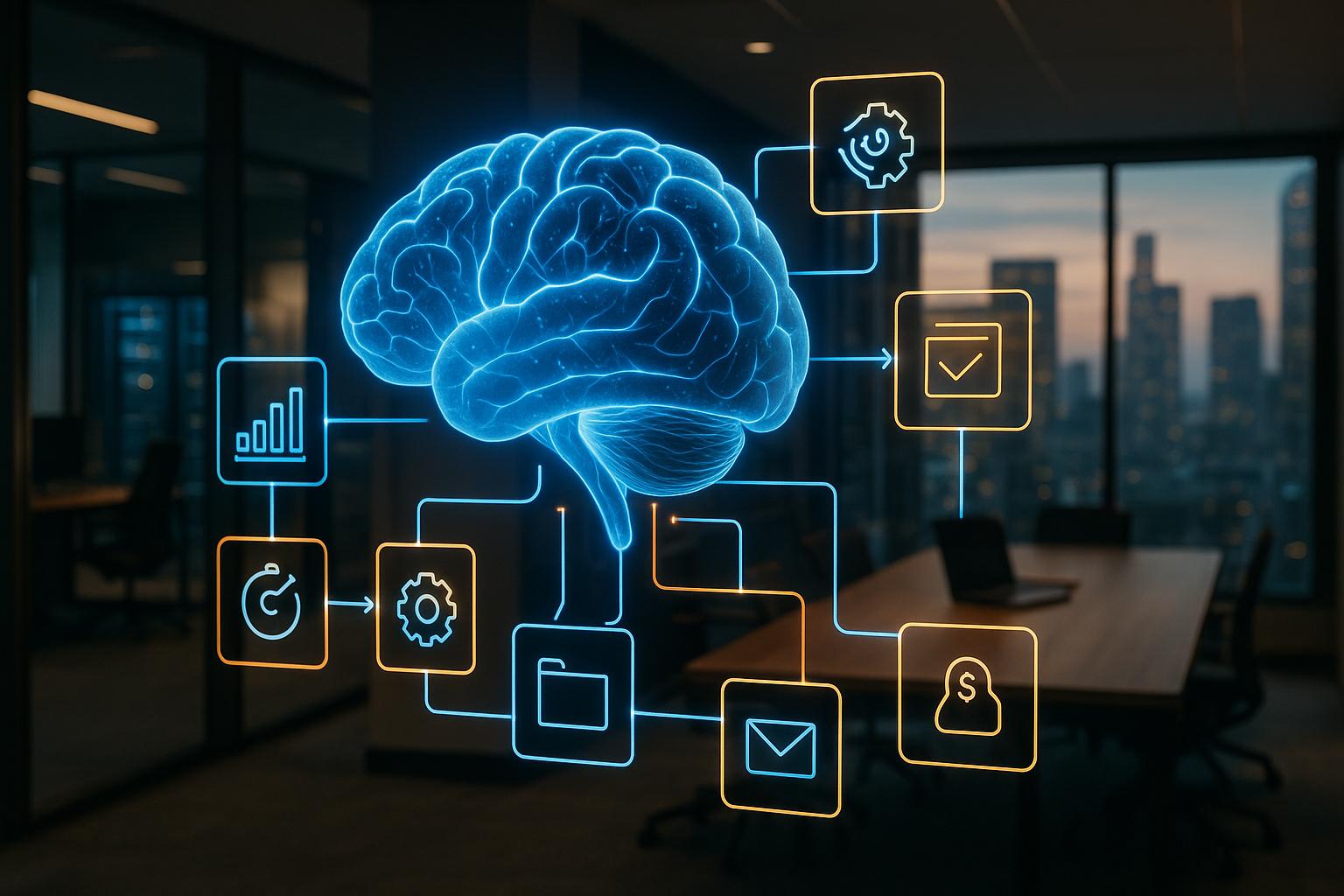
The key question is no longer whether to use AI, but where to strategically deploy it as a core logic layer within existing operations. If your product roadmap includes tools that manage regulatory compliance, perform precise financial calculations, or automate technical workflows, integrating deep reasoning could offer a new competitive advantage.
The Bottom Line: Innovation should enhance operations, not distract from them. The objective is to evolve AI from a standalone feature to a reliable engine that powers essential business functions.
Understanding how reasoning models can integrate with your specific tech stack can help bridge the gap between AI potential and operational reality. Consider how these advancements might align with your strategic goals.



.png)


















.png)