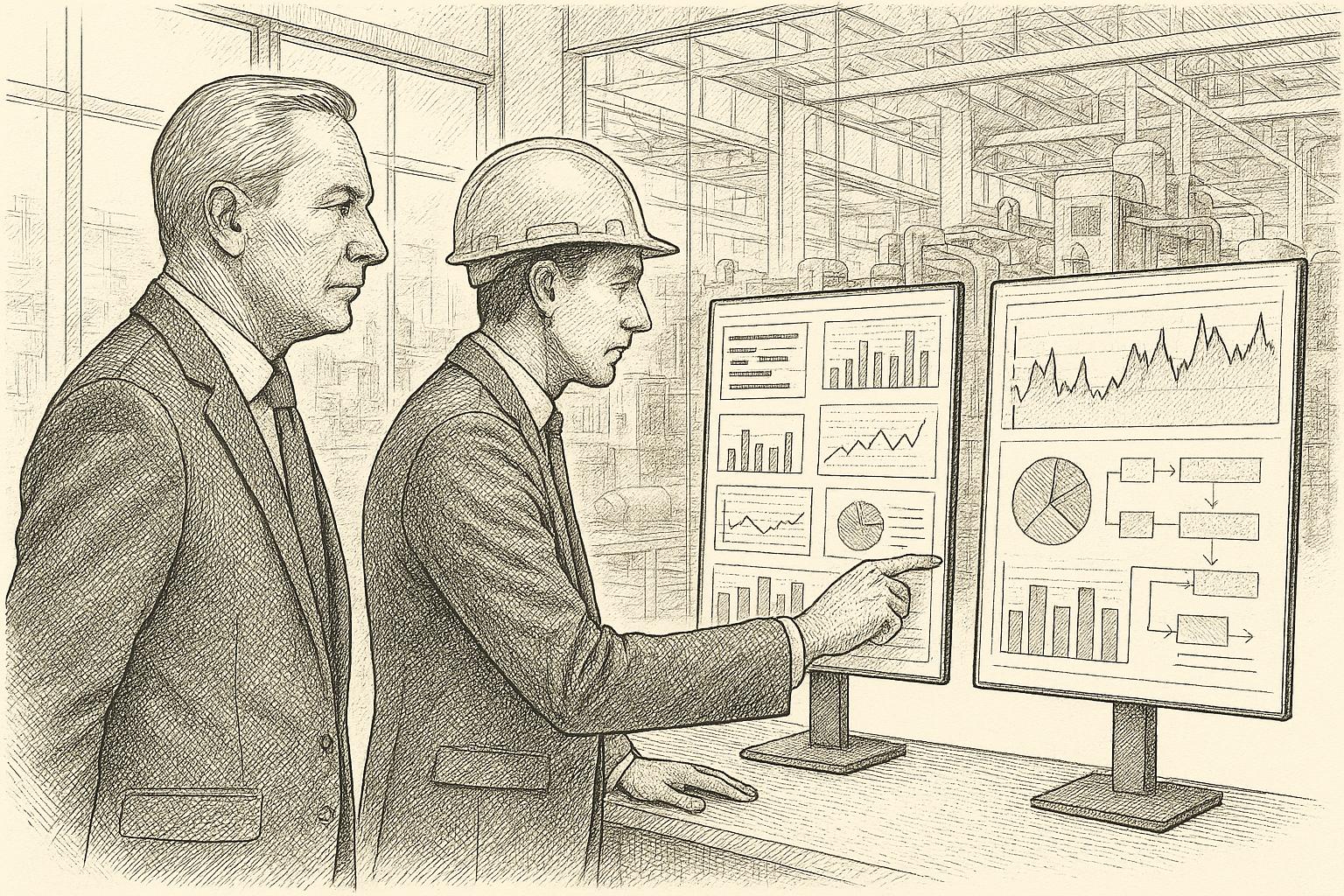
Manufacturers are currently trapped between a mandate for lean operations and the rising cost of global volatility. When on-time in-full (OTIF) misses lead to margin erosion and bloated safety stock, traditional ERP systems struggle to provide the necessary foresight. Calculating AI supply chain resilience ROI requires moving beyond simple efficiency gains to a framework that accounts for risk mitigation and cost avoidance. This article provides a financial blueprint for COOs and CFOs to quantify how AI protects EBITDA by closing the gap between estimated and actual operational performance. The CFO’s Dilemma: Why 'Resilience' Often Fails the Capital Allocation Test For years, supply chain resilience was treated as a vague insurance policy - a necessary but unquantifiable cost center. In a private equity-backed manufacturing environment, capital is rarely allocated to "just in case" scenarios. The friction lies in the contradiction between the lean manufacturing principles of the last two decades and the current reality of erratic lead times.
True resilience is not a warehouse full of excess inventory; it is a measurable financial hedge. Supply Chain Resilience ROI is the financial measurement of an organization’s ability to minimize margin erosion during disruption through AI-driven predictive modeling and automated response. It is calculated by identifying the delta between unmanaged risk exposure and the reduced costs associated with avoided expedited freight fees, late delivery penalties, and preserved production uptime. The 3 Pillars of AI Value in Global Supply Operations To move from a defensive posture to embedded AI value creation, leadership must categorize AI impact into three distinct financial pillars:
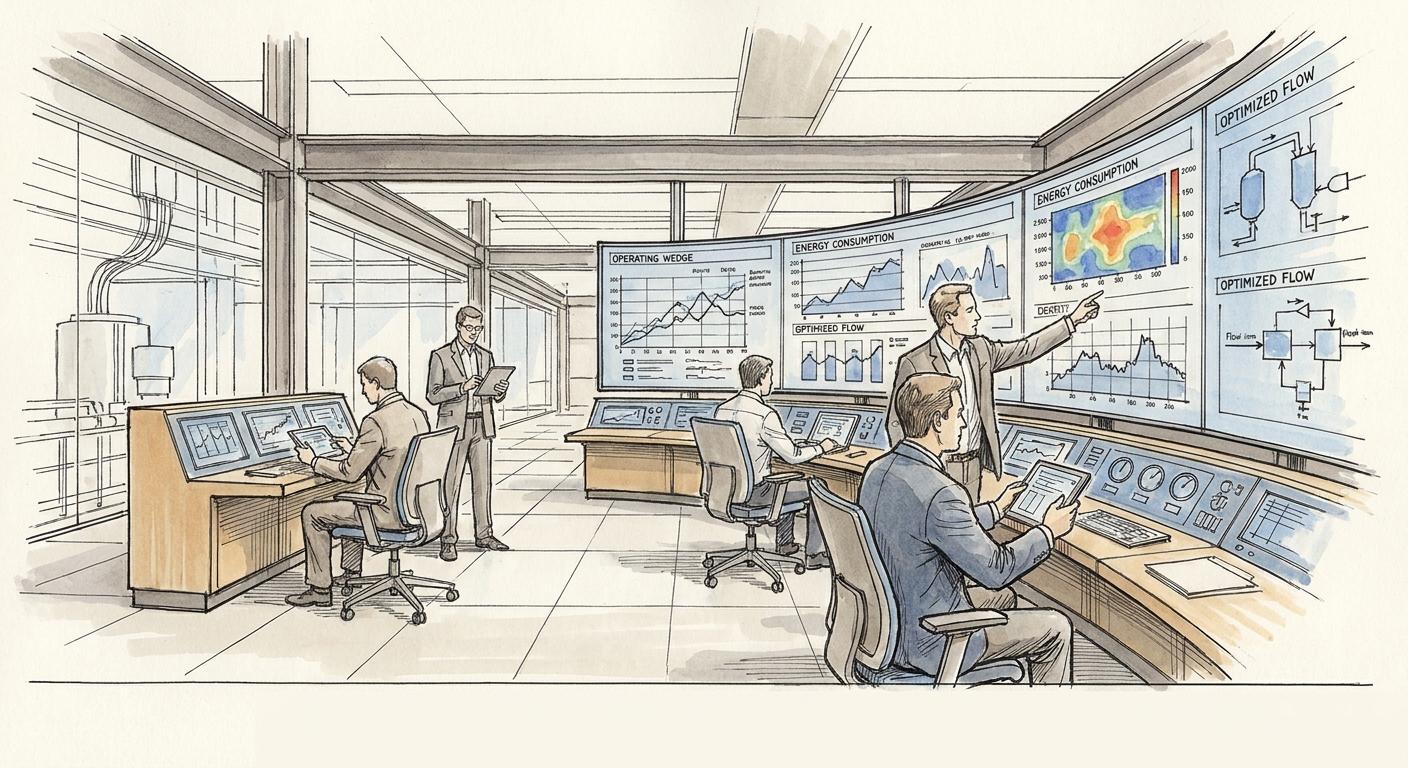
Predictive Risk Identification: Standard systems flag a delay when a shipment is already late. AI models analyze external signals - port congestion data, weather patterns, and geopolitical shifts - to predict lead time volatility before it hits the P&L. iForAI has seen validation times for complex logistics data drop from 3 minutes to 20 seconds using these predictive layers. Dynamic Inventory Optimization: Traditional reorder points are static and reactive. AI-driven demand forecasting adjusts inventory levels in real-time based on shifting consumption patterns. This reduces the operating wedge - the gap between capital tied up in slow-moving SKUs and the stockouts occurring in high-margin products. Automated Exception Handling: When a disruption occurs, the cost is often buried in manual labor. Modern operations can see a 60% reduction in manual customer service and coordination effort by using AI to reroute shipments and update production schedules automatically. The Cost Avoidance Model: Moving Beyond NPV A traditional Net Present Value (NPV) calculation often misses the true value of supply chain AI because it ignores the "Cost of Inaction." To accurately measure quantifying AI contribution to supply chain resilience, firms must use an Expected Value (EV) model.
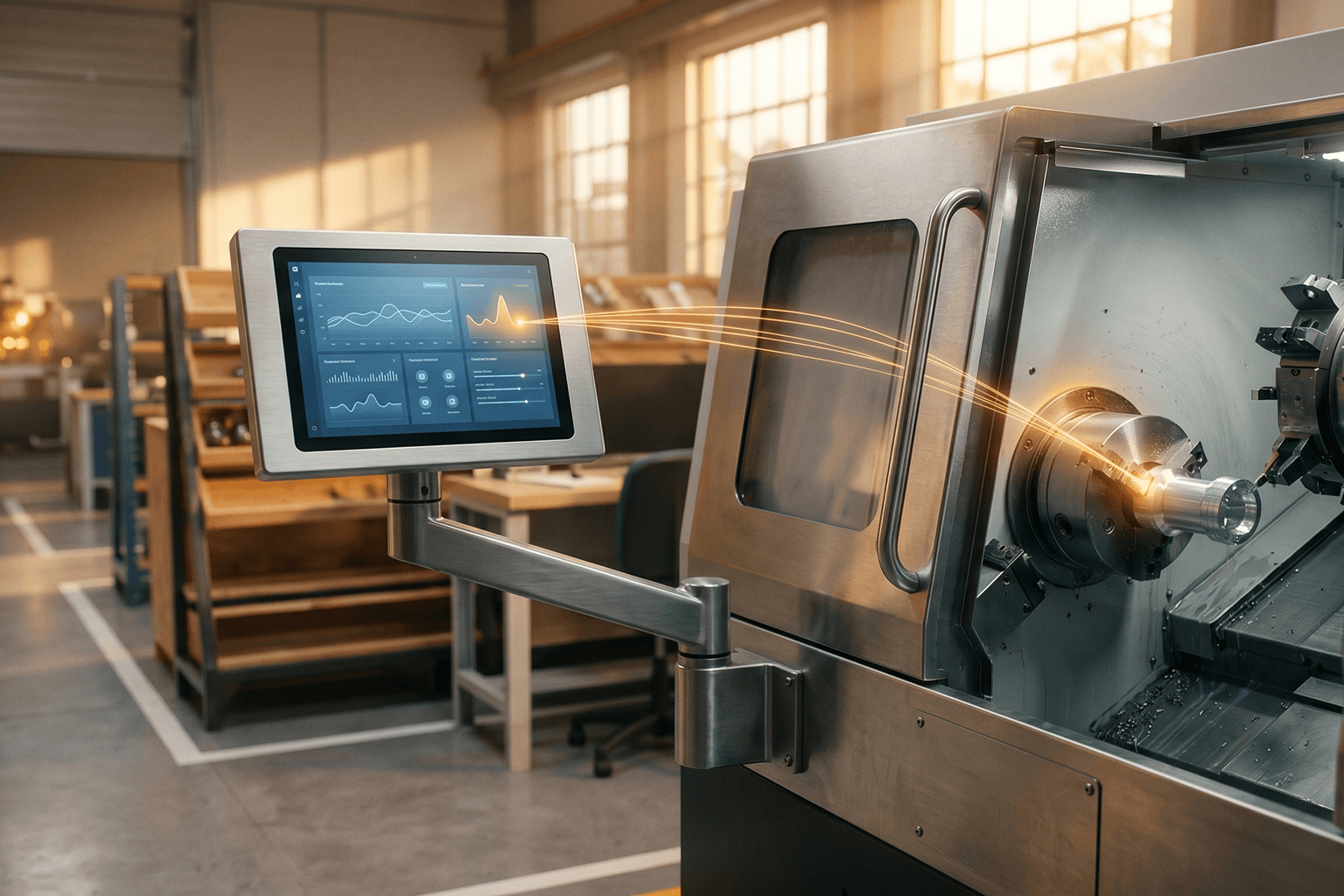
Take, for example, a manufacturer facing frequent OTIF penalties from a major retailer. If AI can predict a Tier 2 supplier failure and allow for a 48-hour head start on alternative sourcing, the "ROI" is the avoided 5% gross margin penalty on that entire contract. We look at the financial impact of AI on manufacturing risk by auditing the last 24 months of expedited shipping costs and production downtime. By back-testing AI models against those specific events, we can prove a repeatable quick win through direct cost avoidance. Operationalizing the Data: Closing the ERP-MES Information Gap The primary reason AI pilots fail in manufacturing is the "delayed execution truth." ERP systems often operate on a 24-hour sync, while the shop floor (MES) operates in seconds. This information gap leads to estimate-vs-actual discrepancies that drain EBITDA.
iForAI focuses on bridging these disconnected software systems to feed AI models with high-fidelity, real-time data. Without this integration, an AI tool is just another isolated dashboard with low adoption. By upskilling the workforce to trust and use these data signals, we move the organization toward a higher level of AI maturity. In our experience across 150+ projects, the technology is rarely the bottleneck; the lack of a repeatable AI playbook that connects production data to financial outcomes is what holds companies back. Beyond the Pilot: A 90-Day Roadmap for Supply Chain AI Execution Large-scale enterprise software deployments that take years to show results are no longer viable for PE-backed firms under a 3-year exit window. Value creation must be aggressive and visible. The iForAI Starter Package is designed to bypass "pilot purgatory" by moving one high-impact use case - such as freight cost optimization or demand-driven procurement - into production within 8 to 12 weeks.
In the first 30 days, we identify the specific points of margin leakage within the supply chain. By day 60, the AI model is integrated into existing workflows. By day 90, the organization has its first measurable results to report to the Board or LPs. This accelerated timeline ensures that AI becomes an operating lever rather than a speculative R&D project. FAQ How do you calculate ROI on AI for supply chain risks that haven't happened yet? We use historical back-testing to demonstrate how AI-driven signals would have mitigated previous disruptions, such as the 2021 shipping crises. By applying that delta to current risk exposure and potential OTIF penalties, we can assign a dollar value to risk reduction.
How do COOs measure AI supply chain success? Success is measured through three core metrics: a reduction in expedited freight spend, an increase in OTIF percentages, and a decrease in safety stock levels without a corresponding drop in service levels. These improvements contribute directly to EBITDA and improve the exit multiple.
What is the typical implementation timeline for manufacturing AI? While legacy ERP upgrades take 12-18 months, iForAI delivers "First Value" in 60-90 days. We focus on a narrow, high-impact production use case to prove the financial framework before scaling across the entire operation.
Manufacturing leaders who fail to bridge the gap between their ERP data and AI insights will continue to see margins eroded by preventable disruptions. Transitioning to an AI-driven resilience model is the only way to protect the value creation plan in a volatile global market.
Book a Manufacturing Diagnostic at ifor.ai/solutions/manufacturing