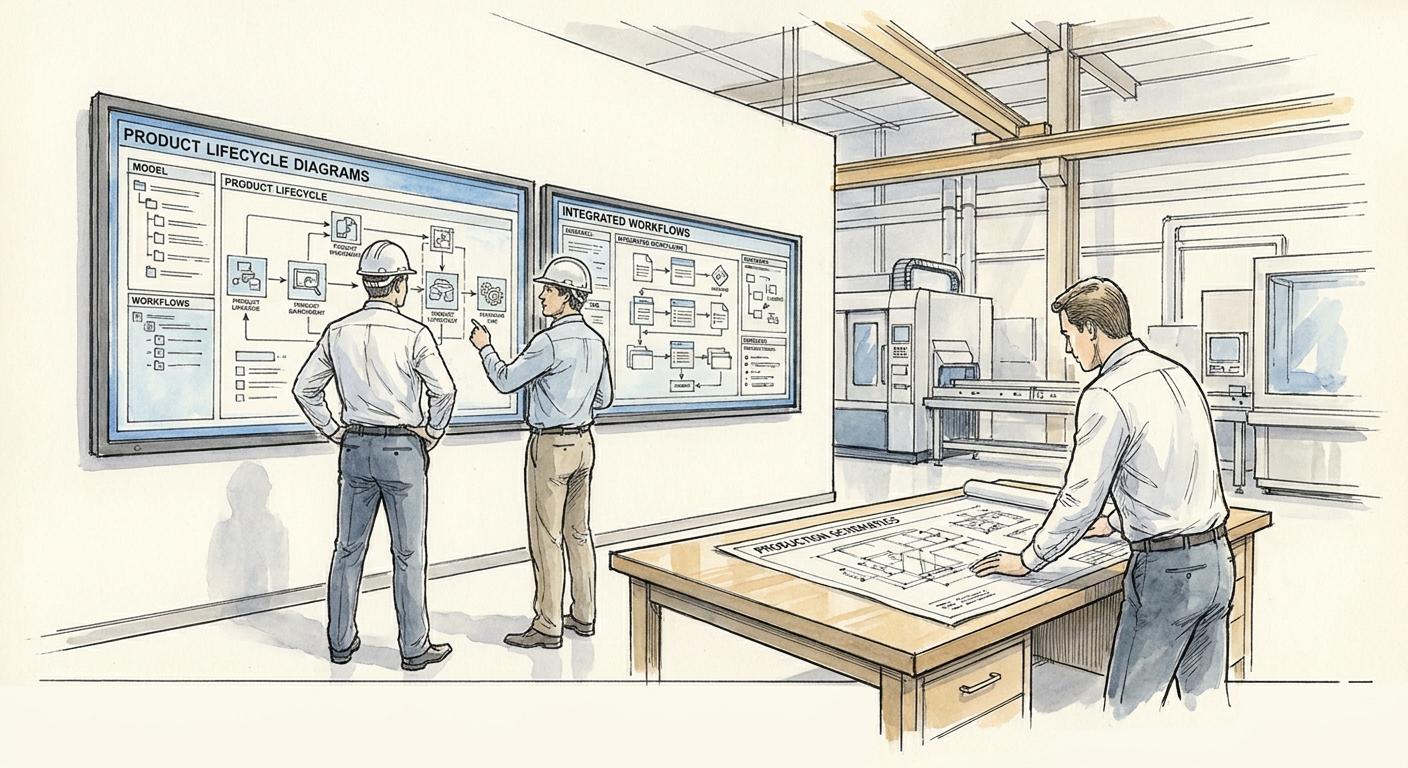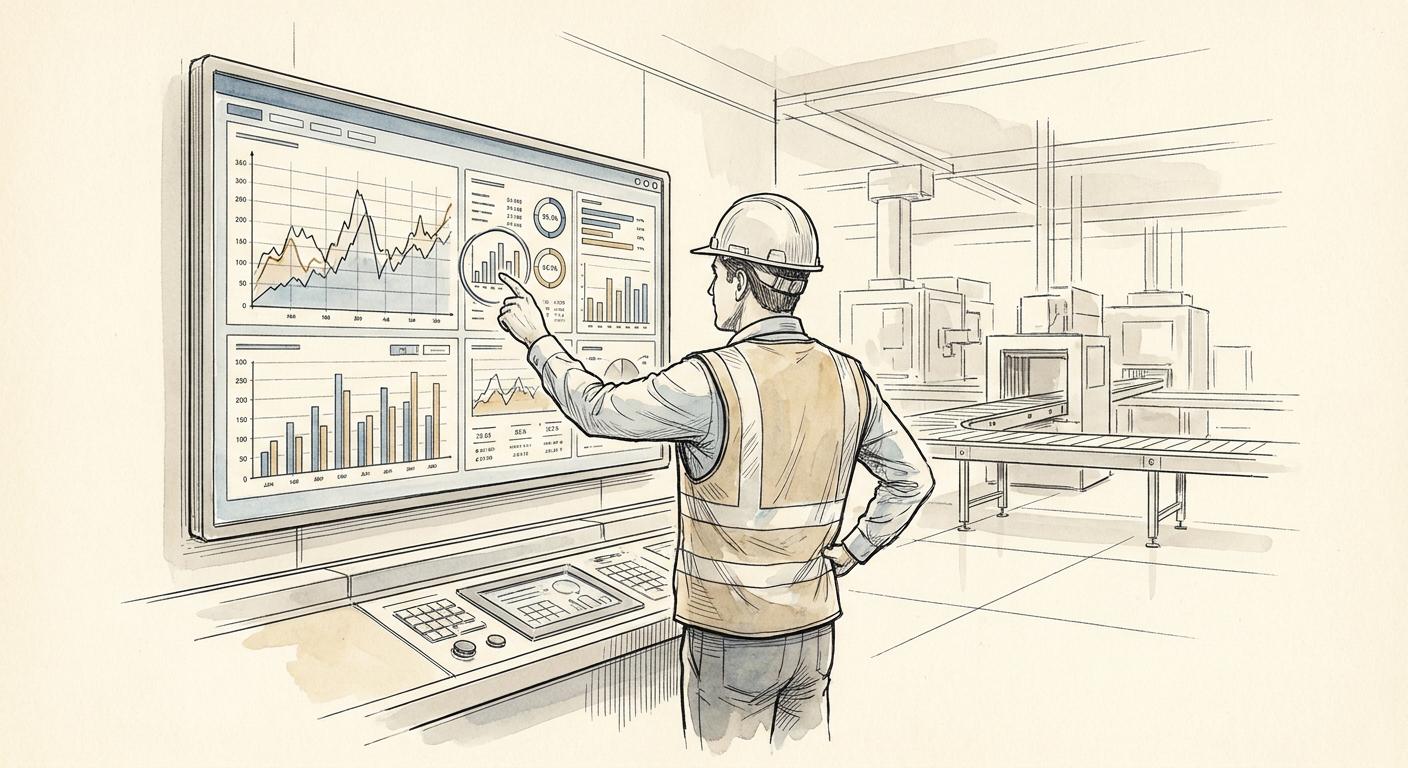
Operating Partners evaluating mid-market manufacturing deals often find themselves staring at the same stubborn operational bottlenecks: erratic OTIF (On-Time, In-Full) rates, margin leakage in material procurement, and a chronic gap between estimated and actual job costs. Traditional operational due diligence identifies these symptoms but rarely provides a repeatable mechanism to fix them post-closing. Integrating AI in pre-acquisition due diligence allows investment teams to look past historical financial statements to identify "at-source" operational efficiencies. By surfacing latent data within a target’s ERP and MES systems, firms can quantify exactly where embedded AI will drive EBITDA improvement during the first 100 days.
Beyond the Balance Sheet: Why Traditional Manufacturing Diligence Misses AI Alpha
Standard audits are retrospective, focusing on what happened rather than why the operation failed to scale. They capture the "delayed execution truth" - the gap between when a problem occurs on the plant floor and when it finally hits the CFO’s desk. AI Operational Due Diligence is the systematic evaluation of a target company’s data infrastructure, process automation potential, and workforce readiness to implement artificial intelligence for the purpose of margin expansion and value creation.
When an Operating Partner identifies AI readiness early, they are looking for "latent data" - information that is currently being collected but not utilized. For example, many mid-market manufacturers have years of unstructured maintenance logs or quality control images that are ignored. During diligence, we assess if this data can be weaponized into an operating wedge to reduce machine downtime or scrap rates immediately upon takeover. This transition from retrospective reporting to predictive execution is where the hidden alpha lies in modern manufacturing deals.
Quantifying the 'AI Gap' in Manufacturing Floor Operations
The "AI Gap" is the measurable distance between a target’s current manual processes and a state of automated efficiency. In manufacturing, this gap is most visible in the estimate-vs-actual delta. If a target is manually estimating job costs using spreadsheets while their floor sensors capture real-time material usage, there is a massive opportunity for EBITDA expansion.
During the confirmatory diligence phase, PE firms should look for signs of high manual intervention in high-frequency tasks. We often see mid-market firms where payment validation takes minutes instead of seconds, or where production scheduling is still done by a single plant manager's "gut feeling." iForAI has demonstrated that moving these processes into production-grade AI tools can reduce manual effort by up to 60%. If a target has a high volume of these "rework" loops, it represents a significant value creation lever that can be pulled shortly after the deal closes.
Identifying Hidden Synergies: Supply Chain and Workforce Upskilling
For PE firms pursuing an add-on strategy or a roll-up, identifying operational synergies is critical to justifying the entry multiple. However, the biggest hurdle is usually the fragmented tech stack across different locations. One PortCo might use an outdated ERP while another relies on a modern cloud-based system. AI provides a "translation layer" that can standardize reporting and operational metrics across the portfolio without requiring a multi-year, multi-million dollar ERP consolidation.
Furthermore, the value creation playbook must account for the workforce. A target might have aging equipment and a workforce nearing retirement, creating a massive risk. We evaluate the potential for workforce upskilling via AI tools that capture the institutional knowledge of veteran operators. In previous engagements, we have seen that training even 1,500+ employees on specific AI workflows can reduce marketing execution time by 70% and streamline customer service, allowing the existing staff to focus on high-margin production tasks rather than administrative friction.
The 90-Day Production Roadmap: From Diligence to Execution
A common mistake in the post-acquisition phase is spending 12 months on a "data strategy" that produces no tangible ROI. To satisfy LP pressure and improve the exit multiple, the AI roadmap must focus on speed-to-value. The goal should be to identify one high-impact use case during diligence - such as automated job costing or predictive maintenance for a bottleneck machine - and have it live in production within 60 to 90 days.
This approach, exemplified by the iForAI Starter Package, focuses on an 8-12 week window to get one use case shipped. By identifying this "quick win" before the LOI, the Operating Partner can enter the first 100 days with a clear mandate. This replaces the vague "AI potential" with a concrete delivery schedule that directly impacts the bottom line. Reducing a payment validation time from 3 minutes to 20 seconds, for instance, isn't just a tech upgrade; it’s an operating leverage play that frees up working capital.
De-risking the Investment: Evaluating AI Technical Debt and Talent
Many manufacturing targets claim to be "AI-powered" or boast about ongoing "AI pilots." Diligence must separate the marketing smoke from the scalable reality. Most of these pilots fail because they lack the "last mile" of integration - they exist in a vacuum without connecting to the actual manufacturing execution system (MES).
Operating Partners must evaluate:
- Technical Debt: Is the target’s data trapped in silos that require expensive API refactoring?
- Adoption Risk: Have they purchased expensive tools (like Microsoft Copilot) that have low adoption because the staff hasn't been upskilled?
- Talent Gap: Is the company trying to hire a $300k "Head of AI" when they actually need 35+ specialized experts for the price of one hire to get projects across the finish line?
By identifying these risks during the AI in pre-acquisition due diligence phase, the PE firm can adjust the valuation or include the necessary upskilling costs in the initial value creation budget.
Frequently Asked Questions
Can AI truly impact EBITDA within the first year of acquisition? Yes. By targeting high-frequency, manual tasks like pricing estimates, supply chain routing, or maintenance scheduling, we consistently see measurable ROI in under 90 days. These shifts create immediate operating leverage by reducing the manual customer service effort and labor-intensive data entry that plague mid-market manufacturers.
Does AI diligence require access to the target's proprietary code? No. Effective AI diligence focuses on data maturity, process bottlenecks, and the delta between the current tech stack's capability and AI-enabled efficiency. It is about identifying the "AI readiness" of the organization’s data and people, rather than auditing line-by-line of existing software code.
What are the primary indicators of a manufacturer's AI readiness? The key indicators are the cleanliness and frequency of their ERP/MES data, the presence of manual "work-arounds" in their standard operating procedures, and the willingness of the management team to undergo upskilling. A high degree of manual rework in job costing or OTIF reporting is usually a sign of high latent AI potential.
How does AI help with exit readiness? A portfolio company with an embedded AI playbook and a history of repeatable AI wins commands a higher multiple at exit. It demonstrates to the next buyer that the company has a modern, scalable operational core and is not reliant on manual, tribal knowledge that walks out the door with the staff.
The transition from traditional diligence to an AI-informed approach is the difference between buying a company for what it is and buying it for what it can efficiently become.
Take the free AI Maturity Assessment at ifor.ai