.svg)

ServiceNow's Banking AI Investment: Navigating the Shift to Intelligent Automation
ServiceNow's recent expansion into specialized banking AI signals a significant shift in the financial industry. For leaders in FinTech, SaaS, and financial services, the critical question is no longer if to adopt AI, but whether existing infrastructures can adapt from manual, legacy processes to autonomous, intelligent workflows.
Many organizations currently experience what can be termed an “Accidental Productivity Tax.” This occurs when advanced, high-reasoning AI models, such as GPT-4o, are used for basic tasks like summarizing internal emails or extracting data from standard forms. While effective, this approach can be inefficient, akin to using a high-performance vehicle for a simple errand.
To transition from isolated experiments to enterprise-wide impact, a robust AI strategy is essential. Here’s how organizations can bridge the gap between pilot programs and tangible return on investment (ROI).
1. The Evolution from Legacy to Intelligent Workflows
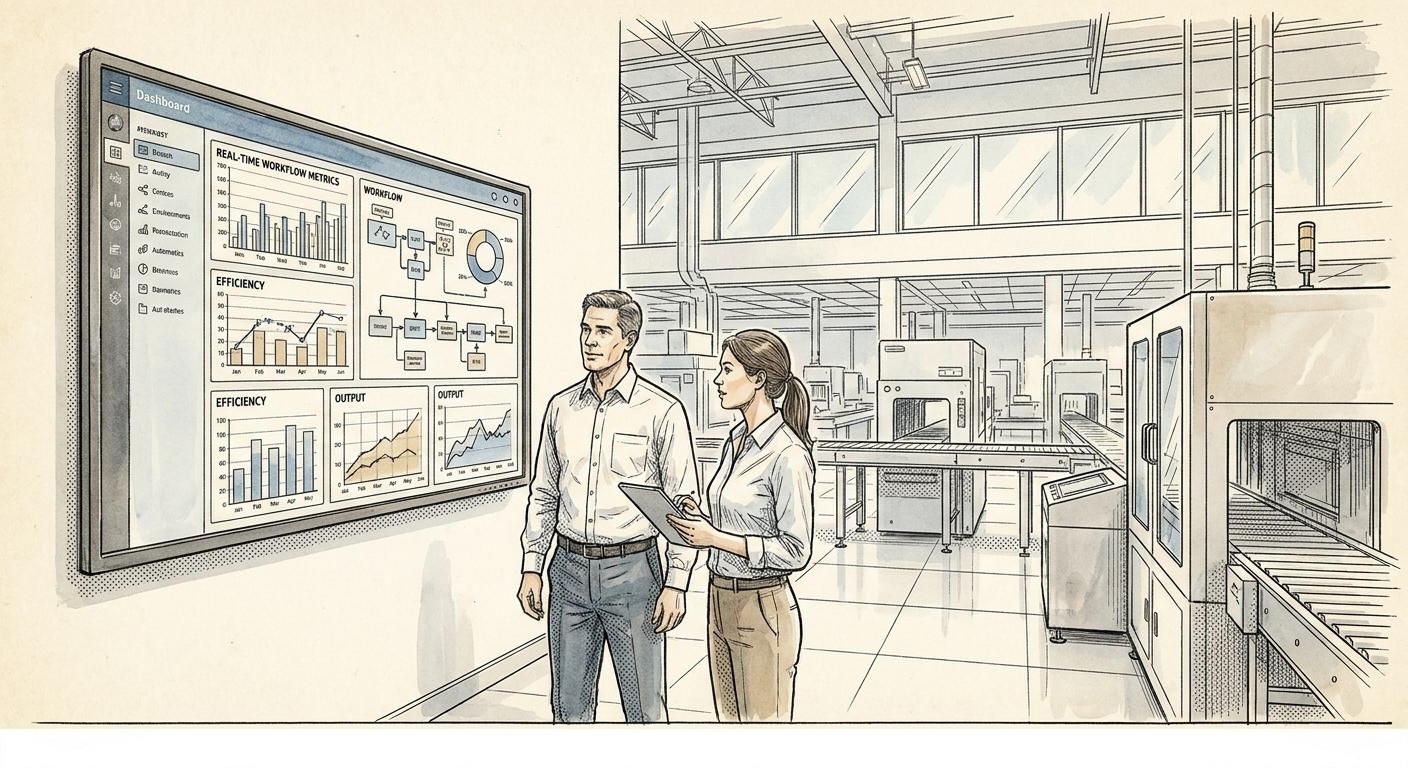
Traditional workflows are often characterized by rigidity, reliance on manual hand-offs, and susceptibility to bottlenecks. In contrast, intelligent workflows are designed to be self-optimizing. By integrating AI directly into operational stacks—rather than treating it as a supplementary tool—the focus shifts from merely completing tasks to achieving desired outcomes. The objective for modern enterprises is to create "agentic systems" capable of navigating complex processes like banking compliance, customer onboarding, and data reconciliation with minimal manual intervention.
2. Right-Sizing Intelligence: Optimizing AI Model Usage
A "one-size-fits-all" approach is often inefficient in the realm of Large Language Models (LLMs). Strategic Model Tiering involves routing high-volume, repetitive tasks to specialized Small Language Models (SLMs) while reserving more powerful, high-reasoning models for complex decision-making.
This architectural approach can lead to substantial operational cost reductions, with some reports indicating savings of 60% to 90%, alongside decreased latency. In fast-paced financial environments, these efficiencies can accumulate into a significant competitive advantage.
3. Prioritizing Security: Mitigating "Shadow AI" with Gateways
For many firms, a significant risk isn't the absence of AI adoption, but the emergence of "Shadow AI." This refers to employees using unvetted consumer AI tools, which can inadvertently expose sensitive Personally Identifiable Information (PII) to public training datasets.
Implementing AI Gateways addresses this risk by acting as a secure control layer. These platforms can automatically mask sensitive data and enforce strict budget and token limits. This approach allows teams the flexibility to innovate while ensuring compliance and data security.
4. Future-Proofing with Model-Agnostic Architecture
The AI landscape is evolving rapidly, meaning today's leading models may soon be surpassed. Building an entire infrastructure around a single vendor’s API can create dependencies and limit future flexibility.
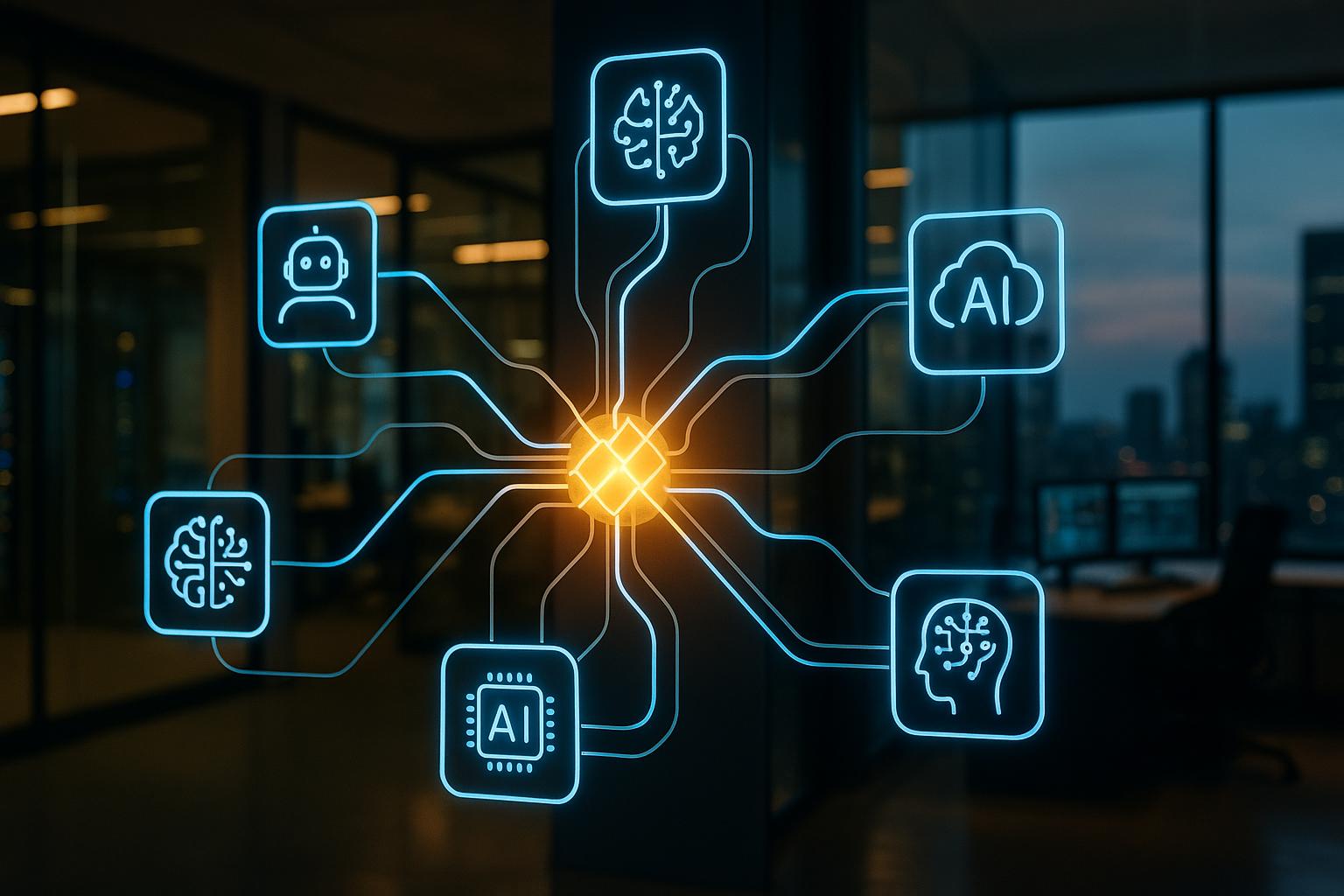
A Model-Agnostic Architecture offers agility by decoupling application logic from the underlying AI model. This design allows organizations to integrate the most efficient, cost-effective, or secure models as they become available, preventing vendor lock-in and ensuring that AI transformation remains a strategic asset.
Conclusion: Driving Measurable ROI with AI
ServiceNow’s investment in banking AI underscores that the era of isolated AI pilots is evolving. Industrializing AI means moving beyond initial experimentation to build secure, scalable, and profitable systems that deliver measurable business outcomes.
For organizations seeking to move from AI concepts to tangible business impact, focusing on strategic implementation and robust architecture is key. This approach helps clarify roadmaps and build momentum, positioning businesses to lead in an AI-driven economy.