
.svg)


6
min read

June 23, 2026
For many COOs, utility costs are viewed as a fixed overhead burden rather than a controllable variable. Volatile energy rates and peak demand surcharges represent significant margin leakage, yet production schedules are typically built in a vacuum, ignoring real-time energy prices. Implementing AI energy optimization manufacturing strategies allows operators to synchronize shop floor execution with grid data, turning energy from a static line item into a strategic operating wedge. This article outlines how to bridge the gap between Smart Grid signals and your Manufacturing Execution System (MES) to drive immediate EBITDA improvement.
AI energy optimization manufacturing is the application of machine learning algorithms to synchronize production schedules with real-time utility pricing and electrical grid demand signals. By integrating these external data points with internal shop floor status, manufacturers can automate load balancing to minimize high-cost energy consumption without sacrificing throughput or OTIF performance. The Margin Leak: Why Traditional Energy Management Fails Modern COOs Static energy management relies on historic bills - looking in the rearview mirror to understand why costs spiked last month. While many plants have installed "smart" meters, these devices are often passive observers that lack a connection to the production floor's real-time needs. Without a closed-loop system, your plant likely suffers from estimate-vs-actual gaps where energy intensity for a specific job exceeds the initial quote, eroding the gross margin on every unit produced.
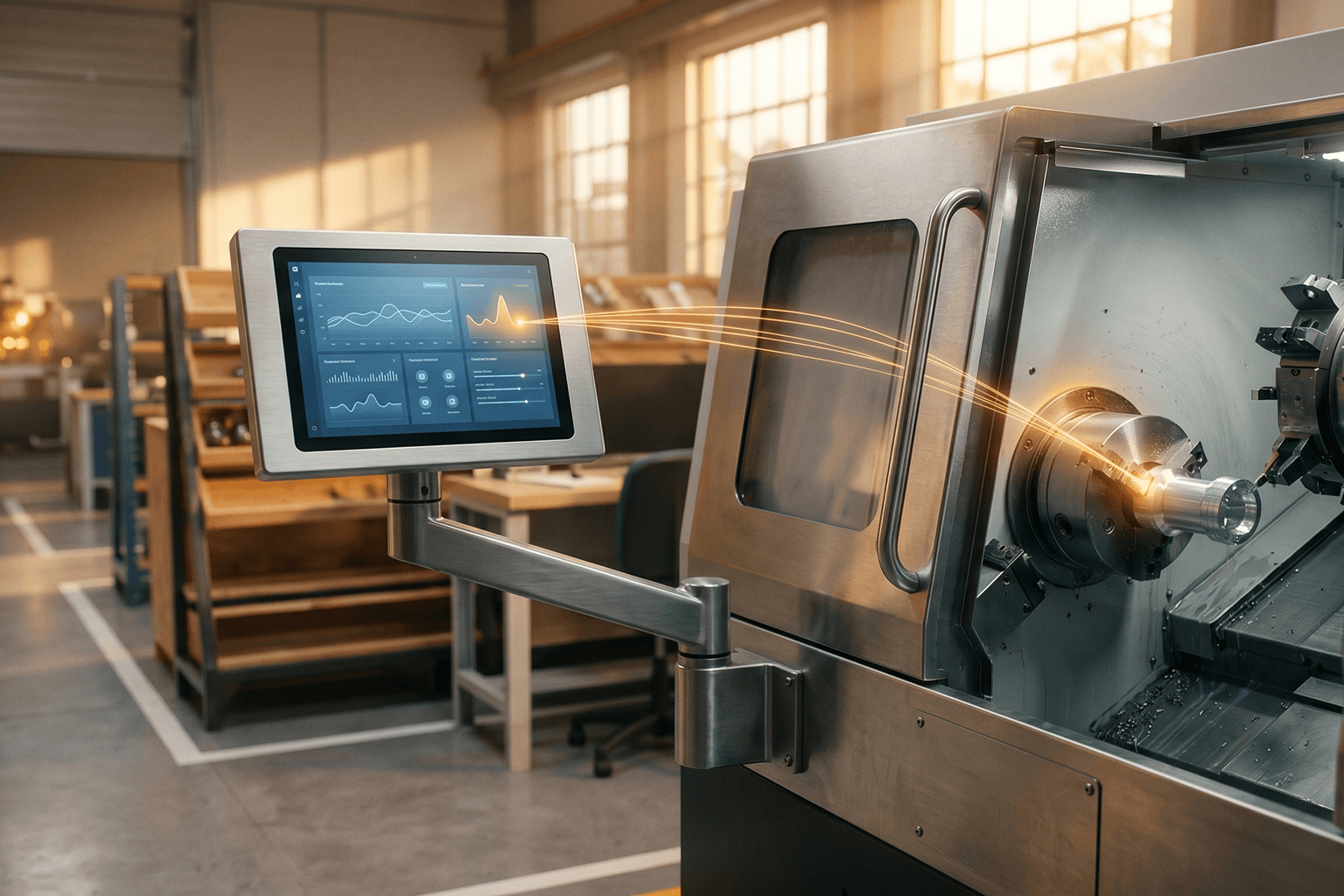
Traditional scheduling software prioritizes machine availability and labor, but it remains blind to the "red zone" of peak demand charges. For a high-volume manufacturer, running a heavy-draw heat treatment furnace or a series of CNC machines during a 2:00 PM grid peak can result in a demand charge that wipes out the profit for that entire shift. Relying on manual intervention to "shave the peak" is unsustainable and prone to human error, making an automated AI approach necessary for consistent value creation. The Infrastructure: Bridging the Gap Between Smart Grid Data and the MES To move beyond passive monitoring, organizations must create a technical bridge between smart grid data integration and the MES energy management system. The goal is to ingest external pricing signals and carbon intensity data directly into the decision-making engine of the plant. This does not require a "rip and replace" of your existing infrastructure; rather, it requires an orchestration layer that speaks both languages.
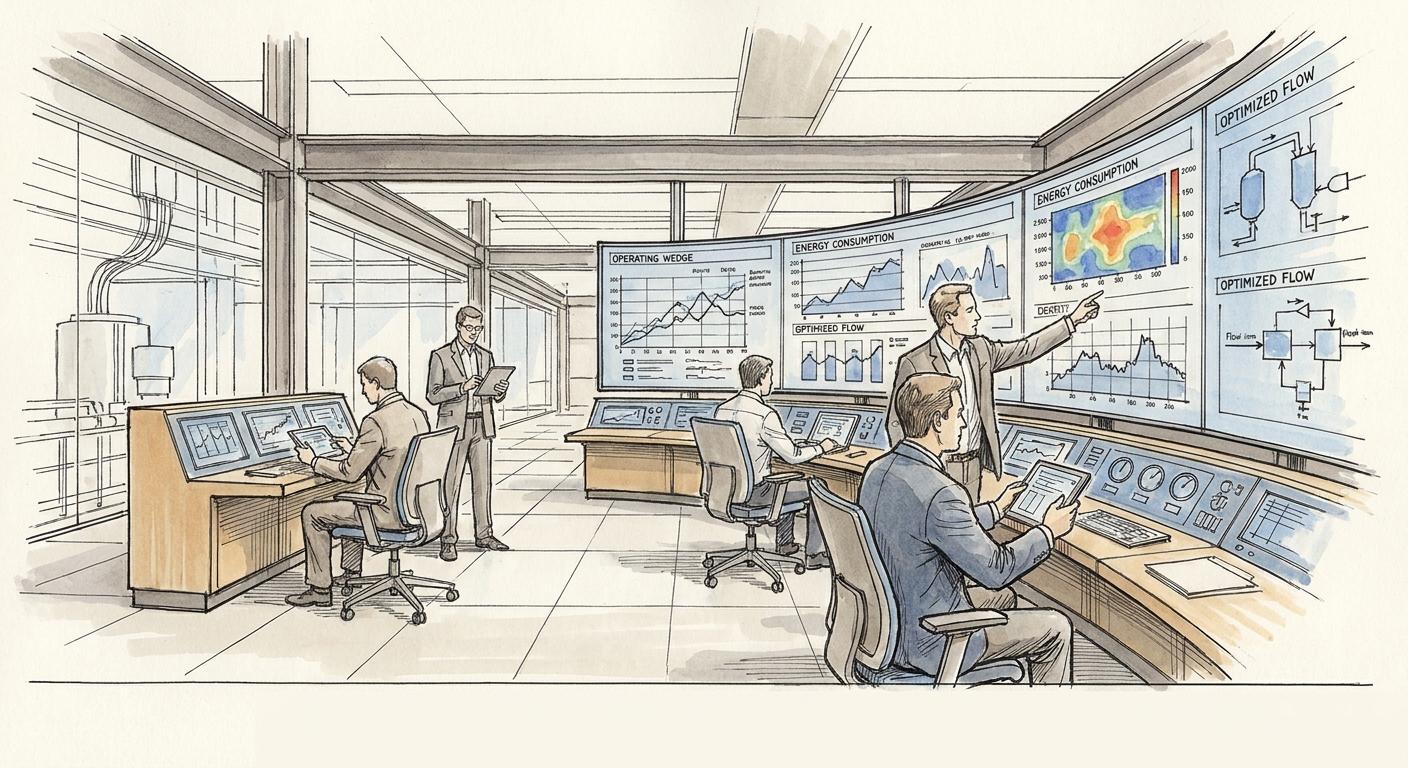
The MES provides the "What" and "When" (job orders, machine status, cycle times), while the Smart Grid provides the "How Much" (real-time kilowatt-hour pricing and demand response signals). By feeding both into an embedded AI model, the system can identify "energy-hungry" jobs and recommend rescheduling them to lower-cost windows. This integration ensures that the production floor is aware of the grid's constraints, preventing the "delayed execution truth" that often haunts CFOs at the end of the fiscal quarter. The 3-Step Execution Framework for Energy-Aware Scheduling Achieving a repeatable AI playbook for energy begins with a structured 3-step framework:
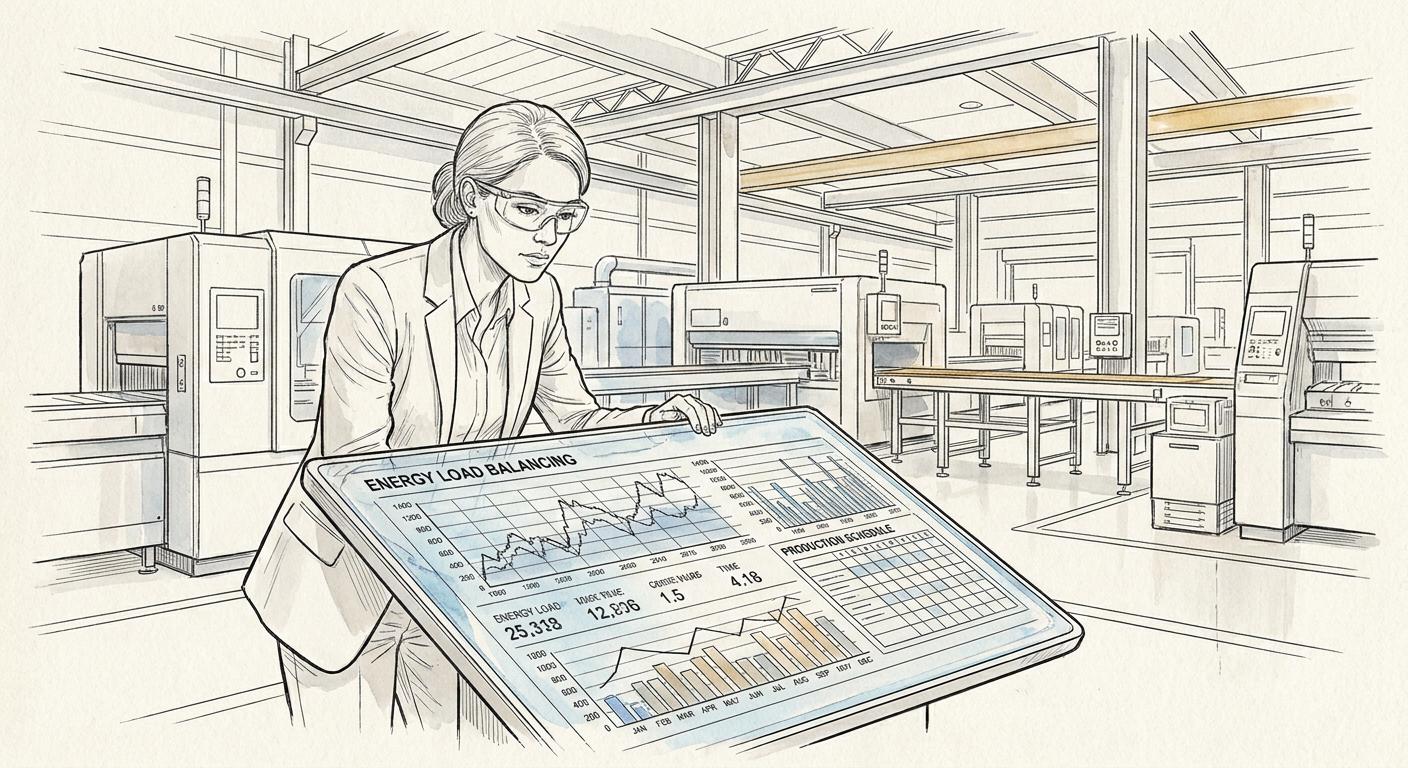
Data Ingestion and Alignment: Connect your MES or ERP data (via API or flat-file exports) with regional utility pricing feeds. This creates a unified view of your industrial energy load balancing potential by mapping kilowatt-hour consumption to specific work orders. Predictive Load Modeling: Use predictive energy analytics to forecast your energy consumption for the next 24 to 48 hours based on the current production backlog. The AI identifies periods where planned production coincides with peak utility pricing. Closed-loop Shop Floor Feedback: The system provides actionable alerts or automated schedule adjustments to the plant manager. For example, if a high-cost energy period is forecasted, the system suggests moving a maintenance window forward or shifting a power-intensive assembly process by two hours to avoid a six-figure demand surcharge. From Pilot to Production: Achieving 7-10% Savings in 90 Days For Private Equity Operating Partners looking for quick wins post-acquisition, energy optimization provides a clear path to EBITDA improvement. At iForAI, we utilize an AI Starter Package that focuses on a single high-energy production line to prove the ROI before scaling portfolio-wide. In our experience, initial optimizations - specifically around peak demand shaving - often show results within the first two billing cycles.
By targeting the most energy-intensive 20% of your equipment, you can often capture 80% of the available savings. This focused approach reduces the time-to-value and builds the internal AI maturity needed for more complex use cases. We’ve seen mid-market manufacturers reduce their manual energy monitoring effort by over 60%, allowing plant managers to focus on throughput rather than spreadsheets. Beyond Cost: How AI Optimization Enhances ESG Reporting and Exit Value While cost reduction is the primary driver, the data generated by AI energy optimization is an asset for exit readiness. When a PE firm prepares to sell a portfolio company, having a granular, verifiable record of energy efficiency and carbon reduction significantly improves the value creation story for ESG-conscious buyers.
This level of operational transparency proves that the management team has a handle on their margin leakage and is using sophisticated tools to maintain operating leverage. Demonstrating a repeatable AI playbook across multiple facilities increases the exit multiple by proving that the business is resilient to volatile utility markets and regulatory pressures.
Frequently Asked Questions Can we implement AI energy optimization without upgrading our existing MES? Yes, AI can act as a lightweight orchestration layer that sits on top of legacy MES or ERP systems. By using APIs or standard data exports, the AI can ingest production schedules and machine data without requiring a full software overhaul.
How soon will we see a decrease in utility bills? Most manufacturers see a measurable impact on their utility bills within 60 to 90 days. The fastest savings typically come from automated peak demand shaving and optimizing the timing of high-load production runs to avoid surcharge periods.
What is the difference between a standard energy monitor and AI optimization? A monitor tells you how much energy you used yesterday; AI optimization tells you how to use less energy tomorrow. AI uses predictive models to align your future production schedule with fluctuating grid prices, providing actionable decisions rather than just data visualization.
How do we ensure that energy optimization doesn't impact our OTIF (On-Time In-Full) delivery? The AI models are built with production constraints as the priority. If a job must be completed to meet a shipping deadline, the system will not delay it for energy savings; instead, it identifies smaller, non-critical shifts in the schedule that aggregate to significant savings without risking delivery performance.
Modern manufacturing requires a shift from reactive energy consumption to proactive load management to protect margins. By integrating Smart Grid data with the production floor, COOs can eliminate one of the most persistent forms of margin leakage while simultaneously improving operational transparency.
Book a Manufacturing Diagnostic at ifor.ai/solutions/manufacturing