

.svg)

Beyond the Keystroke: Why Your AI Strategy Needs a Workflow Overhaul
Many Chief Technology Officers (CTOs) face a common challenge: their development teams are coding faster with Generative AI, yet product release dates remain unchanged. This phenomenon, sometimes called the "Turbocharger in Traffic" effect, highlights a critical issue. A high-performance engine offers little advantage if the development path is obstructed by manual handoffs, legacy bottlenecks, and fragmented processes.
If an AI strategy focuses solely on coding assistance, it may only accelerate a single step in a complex journey rather than transforming the entire business. To achieve a tangible return on investment (ROI), the focus needs to shift from individual coding tasks to the entire Software Development Life Cycle (SDLC).
From AI Assistants to AI Agents
A key step in optimizing the development workflow involves transitioning from AI Assistants to AI Agents.
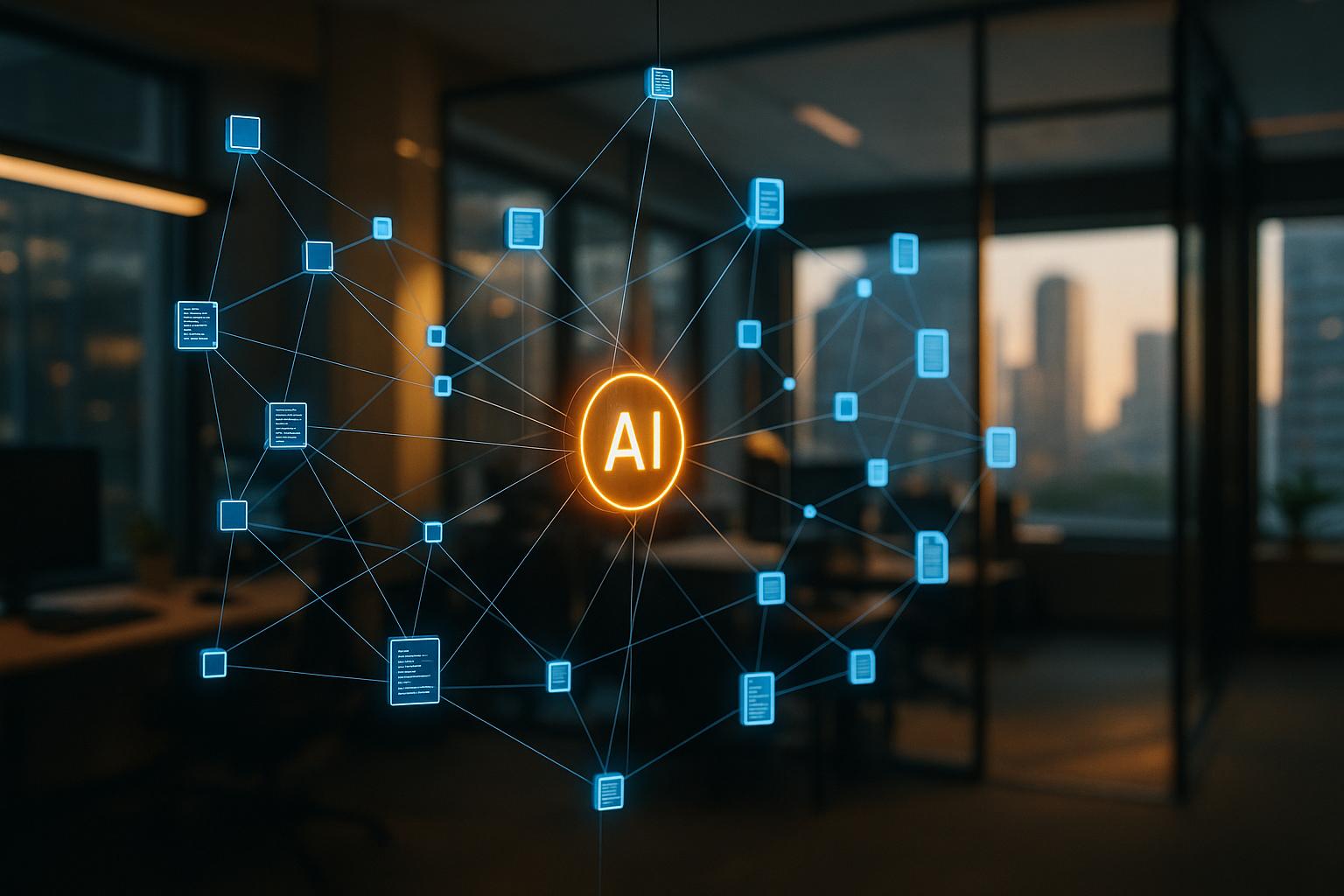
An AI assistant typically responds to prompts, offering suggestions or correcting syntax errors. In contrast, an AI agent is goal-oriented and proactive. It can support the broader organization, not just individual coders. For example, an agent might autonomously scan pull requests for security vulnerabilities or validate new code against Product Requirement Documents (PRDs) before a human reviewer intervenes. By embracing this shift toward autonomy, organizations can leverage AI as a "fractional team member" rather than merely a helpful tool.
Automating the "Connective Tissue"
Experience with mid-market and enterprise engineering teams suggests that development delays often stem not from coding speed but from the "connective tissue" between development stages—the manual gaps where momentum can be lost. Automating these interstitial spaces can significantly accelerate time-to-market:
- Dynamic Documentation: AI-driven systems can ensure that Application Programming Interfaces (APIs) and technical specifications are updated in sync with code changes, helping to mitigate the issue of outdated documentation, which is a common form of technical debt.
- Automated PRD Validation: Identifying logical inconsistencies or unmet requirements early, before code is written, can prevent costly rework later in the development cycle.
- System-Wide Contextual Reviews: Utilizing AI to predict how a localized code change might affect a complex microservices architecture can help prevent outages rather than merely reacting to them.
Moving Beyond "Shadow AI"
For AI to scale effectively within an enterprise, its use must extend beyond isolated instances. When teams rely on "Shadow AI"—such as pasting sensitive code into external Large Language Models (LLMs)—governance, security, and the preservation of institutional knowledge can be compromised.
True transformation occurs when AI is integrated directly into Continuous Integration/Continuous Delivery (CI/CD) pipelines and internal data stacks. This approach helps ensure that every model used is governed, every output is secure, and every automation is tailored to the organization's specific codebase and business logic. This integration not only enhances security but also creates a unified, scalable system of intelligence.
Outcome-Driven Execution
Organizations often move from experimental AI pilots to integrated, high-impact systems. If AI investments are not leading to shorter release cycles or measurable business outcomes, the issue may lie with the workflow rather than the technology itself.
Optimizing for the entire delivery process, rather than just individual coding tasks, can unlock the full potential of AI.
To explore how to translate your AI vision into measurable growth, consider how strategic workflow enhancements can bridge the gap between strategy and execution.