

.svg)

Operating Partners frequently watch AI pilot programs for private equity stall because they prioritize technical novelty over margin expansion. When a portfolio company (portco) launches a pilot without a clear link to the investment thesis, it becomes an expensive science project rather than a value driver. Successful AI deployment requires an operating wedge - a specific, high-impact application that solves a bottleneck and creates a repeatable blueprint for the rest of the fund. This guide outlines how to move from a proof-of-concept (PoC) to realized EBITDA improvement within a standard 18-36 month investment window.
An AI Pilot Program in Private Equity is a time-bound, narrow-scope deployment of artificial intelligence designed to validate a specific value creation hypothesis and establish a repeatable framework for EBITDA growth across portfolio companies. These programs focus on measurable operational wins, such as reducing margin leakage or improving throughput, rather than broad digital transformation.
The AI Pilot Paradox: Why Most PE Initiatives Stall at PoC
The "pilot purgatory" stage is a common failure point in mid-market manufacturing portcos. Often, the issue isn't the technology, but the delayed execution truth: companies spend months cleaning data for a broad use case only to find the window for a meaningful ROI has closed.
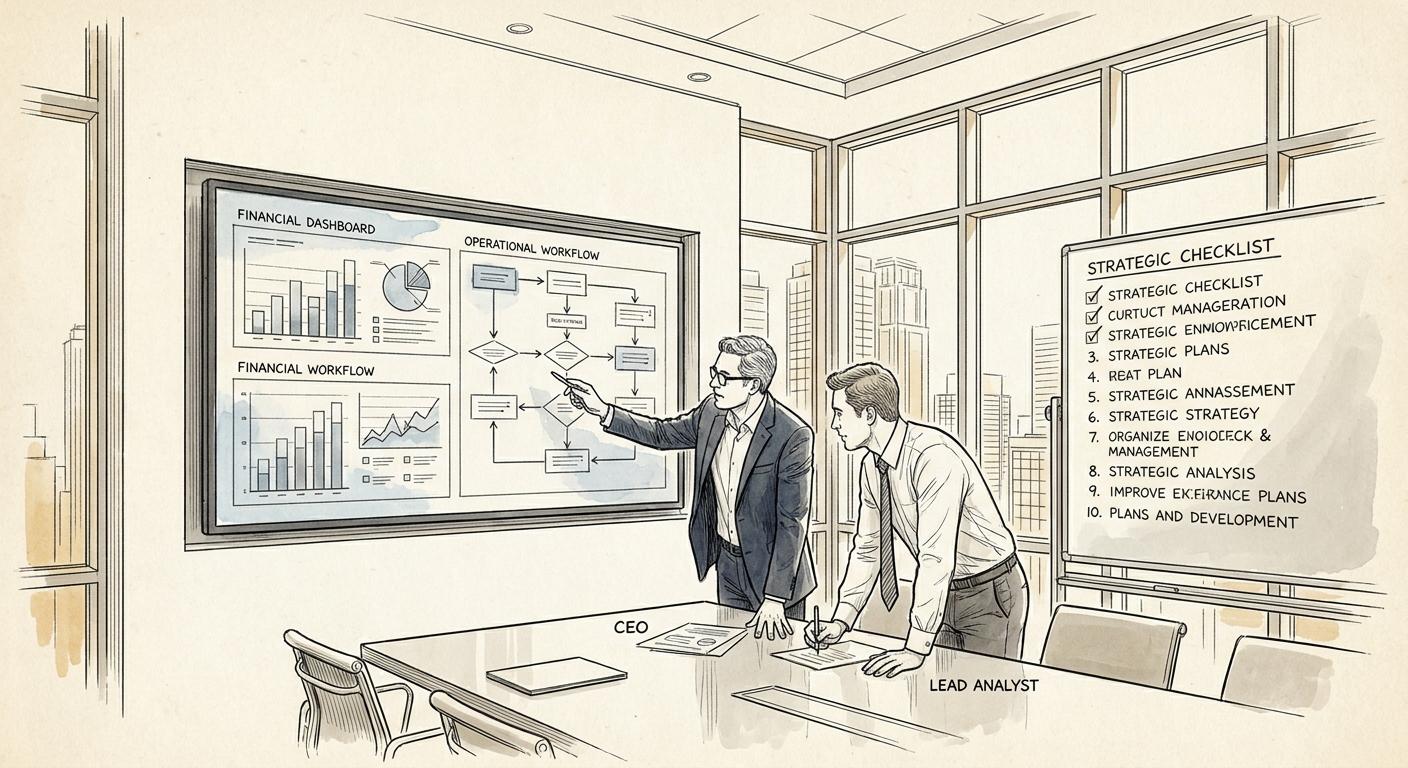
Operating Partners often fall into the trap of aimless experimentation. They test AI for "general efficiency" without pinning it to a line item on the P&L. Without a direct connection to EBITDA improvement, the pilot lacks the internal buy-in needed from the portco C-suite. To avoid this, the pilot must address a specific operational friction point - such as estimate-vs-actual variances in a 300-employee machine shop - where the financial impact of narrowing the gap is immediate and undeniable.
Phase 1: Selecting the 'Operating Wedge' (The 4-8 Week Win)
The key to a successful AI pilot program for private equity is selecting the right "operating wedge." This is a project with high data availability, low integration friction, and a direct impact on operating leverage. If a project requires a two-year ERP overhaul before it can start, it is not a pilot; it is a liability.
Criteria for a high-velocity pilot include:
Data Readiness: Use systems that already capture clean transactional or sensor data (e.g., MES or modern ERP).
Narrow Scope: Instead of "optimizing the supply chain," focus on "predicting material scrap rates on line five."
Time-to-Value: The technical build should be completed in 4 weeks, with another 4 weeks for measurement.
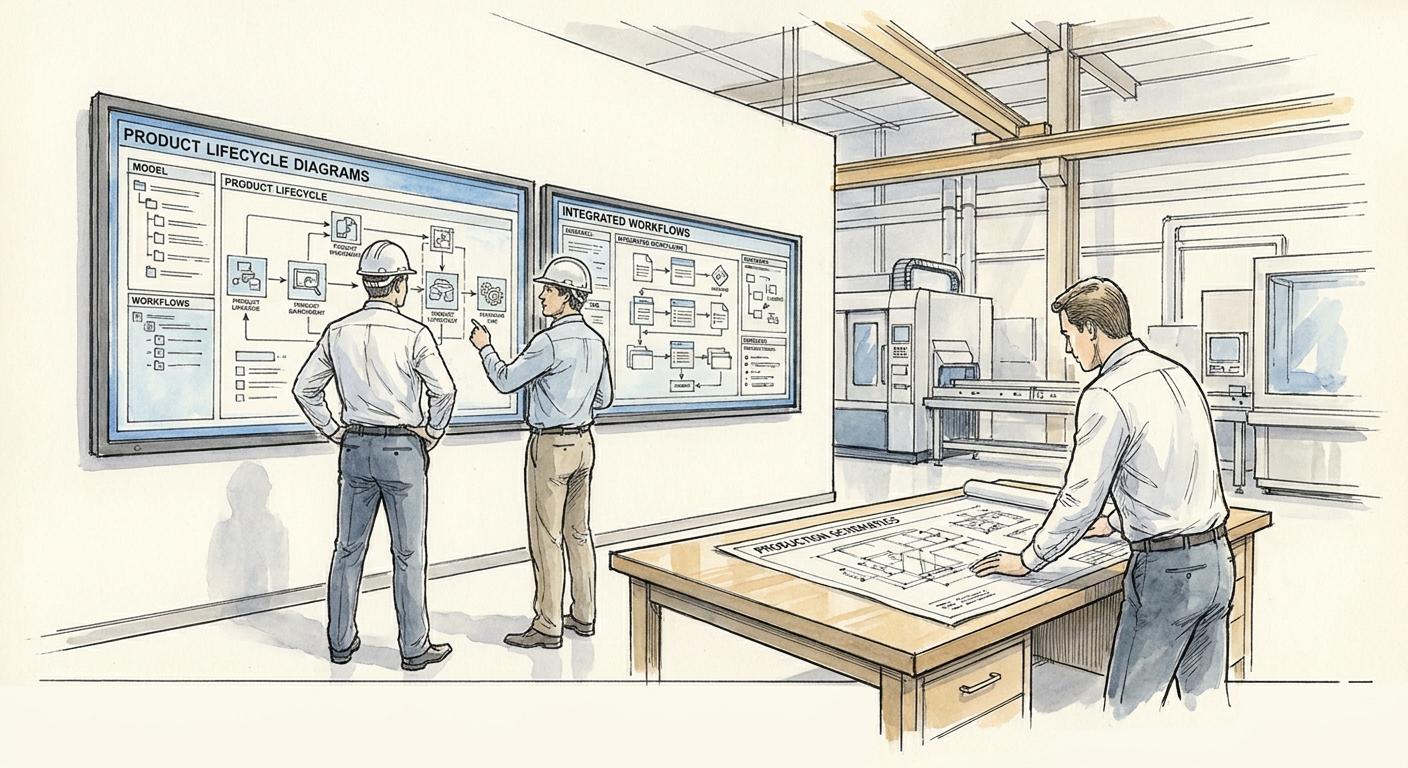
For a mid-market manufacturer, a quick win often lies in job costing accuracy. By using embedded AI to analyze historical performance against current labor and material costs, a portco can identify margin leakage before a job even hits the floor.
Architecting for Scale: Building the Portco Blueprint
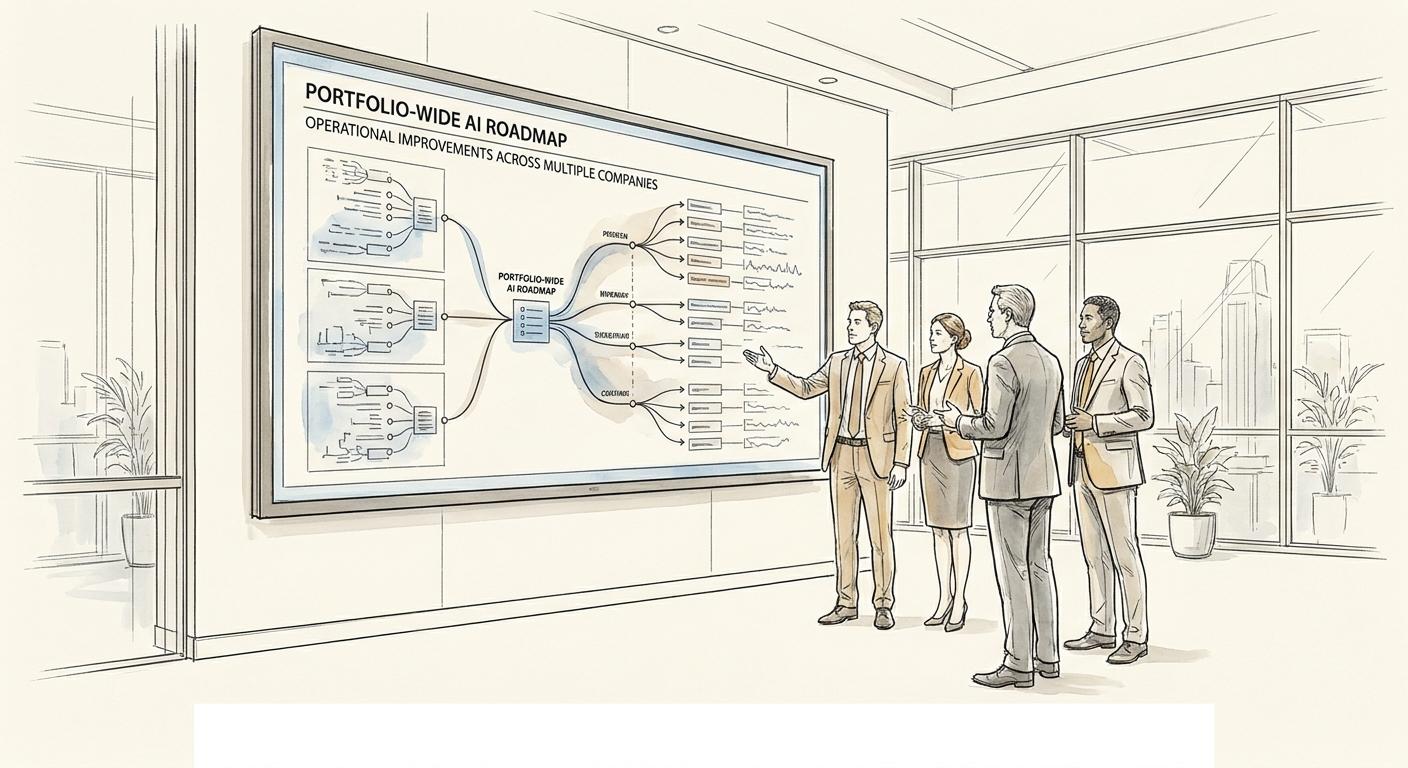
A pilot should never be a one-off. For the PE firm, the real value lies in the portfolio company value creation that comes from repeatability. The first pilot must be treated as a "Golden Image" - a standardized deployment model that includes the data schema, the model architecture, and the change management protocols.
When a pilot succeeds at a Tier 1 automotive supplier in the portfolio, the Operating Partner should be able to hand that blueprint to a medical device manufacturer in the same fund. This scalable AI infrastructure reduces the cost of subsequent deployments and accelerates the path to a higher exit multiple. The goal is to build an institutional capability within the PE firm to deploy AI as a standard part of the 100-day plan.
The ROI Scorecard: KPIs for Operating Partners
Technical accuracy (e.g., "The model is 95% accurate") is a vanity metric for most CFOs. To prove AI proof of concept ROI, Operating Partners must track operational KPIs that translate directly to the balance sheet.
Labor Productivity: Reduction in man-hours per unit of output through automated scheduling or predictive maintenance.
OTIF (On-Time In-Full): Improving delivery reliability, which directly impacts customer retention and contract pricing power.
Inventory Carry: Using AI to tighten replenishment cycles, freeing up working capital.
Scrap and Rework: A 10% reduction in scrap for a high-volume job shop can lead to a 2–3% immediate lift in EBITDA.
Embedding the Execution: Moving Beyond Consultancy
The traditional consultancy model - delivering a 100-page slide deck and a set of recommendations - fails in the manufacturing environment. Mid-market portcos don't need more advice; they need delayed execution truth solved through hands-on implementation.
This is where the iForAI model differs. We act as an embedded partner, working alongside plant managers to integrate AI into existing workflows. Unlike general software vendors who sell "black box" solutions, an embedded partner focuses on AI readiness and sustainable adoption. This approach ensures that the "operating wedge" stays driven into the business long after the initial pilot concludes, securing the long-term value creation required for a successful exit.
FAQ
How long should an AI pilot take to show ROI in a PE context? A well-architected pilot should demonstrate measurable value within 4 to 8 weeks. This timeline prevents momentum loss and provides the necessary data to justify a portco-wide rollout or further investment.
What is the biggest roadblock to scaling AI across a portfolio? The primary hurdle is data siloed in legacy ERP systems. Successful strategies prioritize pilot programs that utilize accessible, high-impact data streams first, rather than waiting for a complete digital overhaul.
How do you measure success in manufacturing portco AI pilots? Success is measured by improvements in OTIF rates, reduction in margin leakage via better job costing, and measurable decreases in waste or downtime, all of which contribute to EBITDA growth.
Architecting an AI pilot with a focus on a specific operating wedge ensures rapid ROI and creates a repeatable blueprint for the entire portfolio. By prioritizing execution over theory, Operating Partners can transform AI from a buzzword into a tangible lever for value creation.
Book a Private Equity Value Creation Diagnostic at ifor.ai/solutions/private-equity