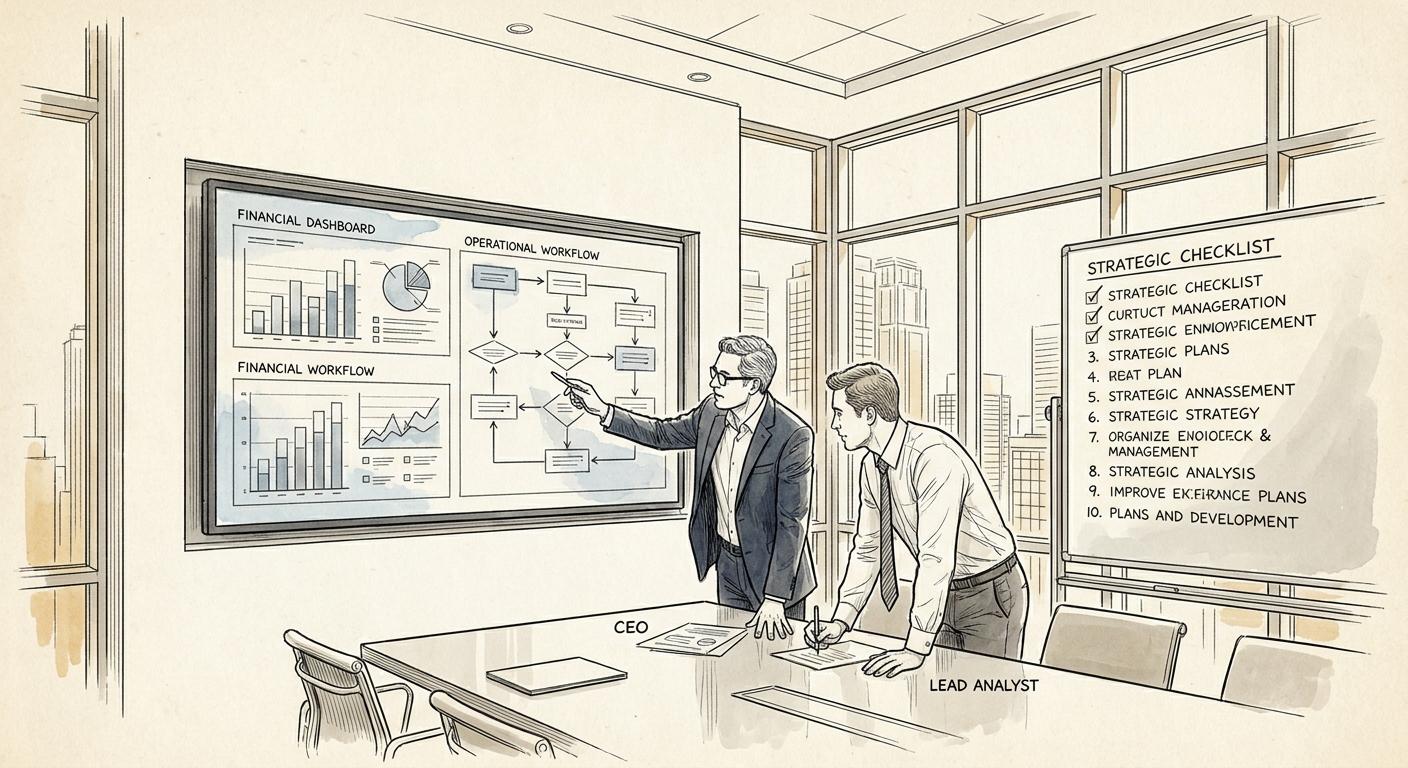
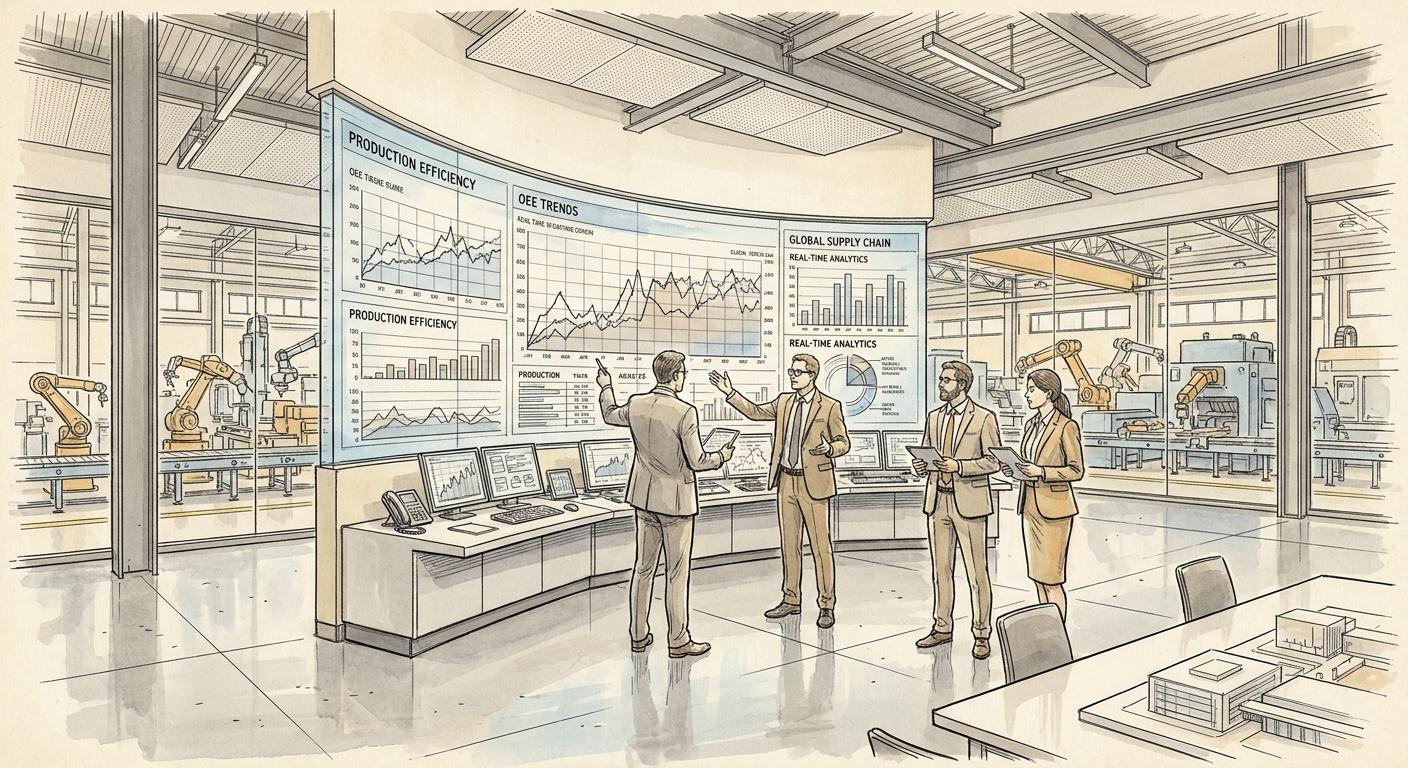
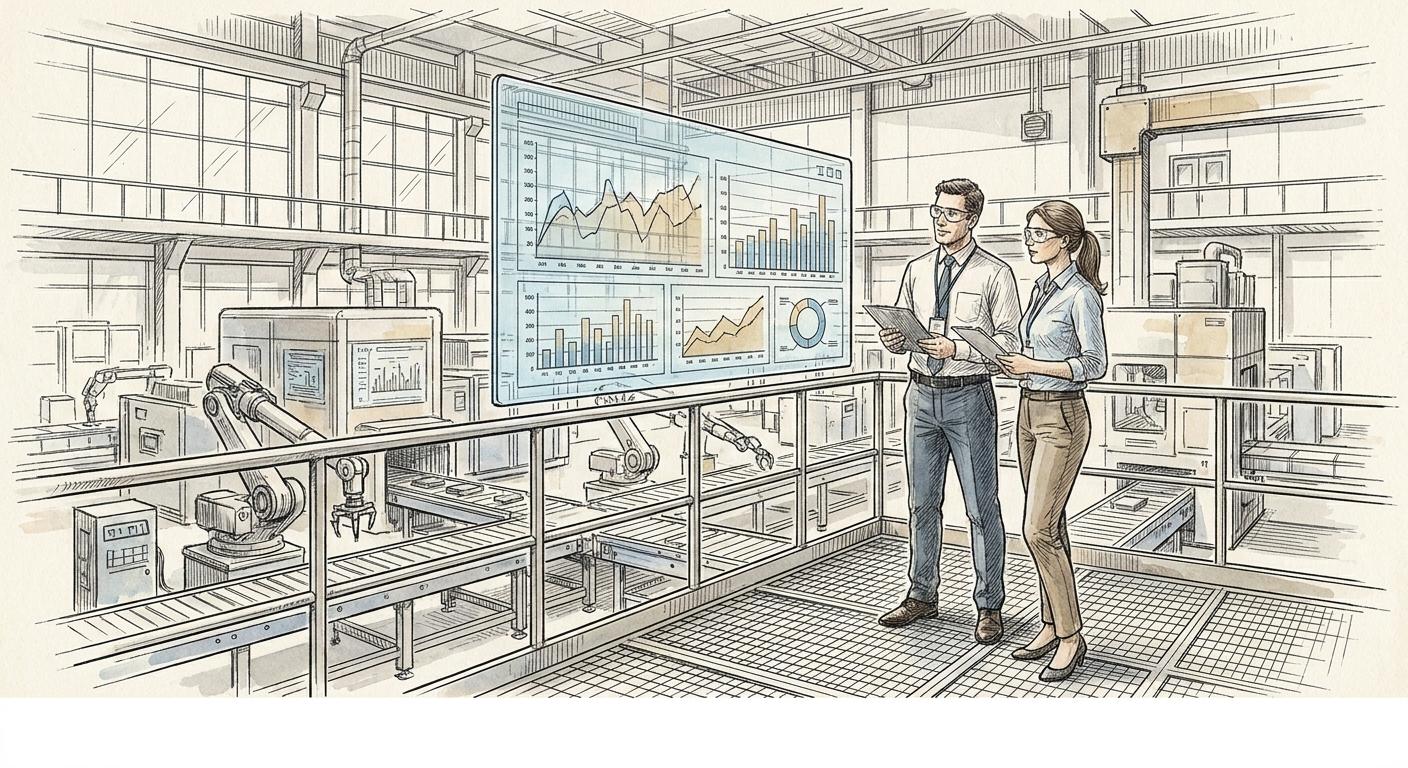
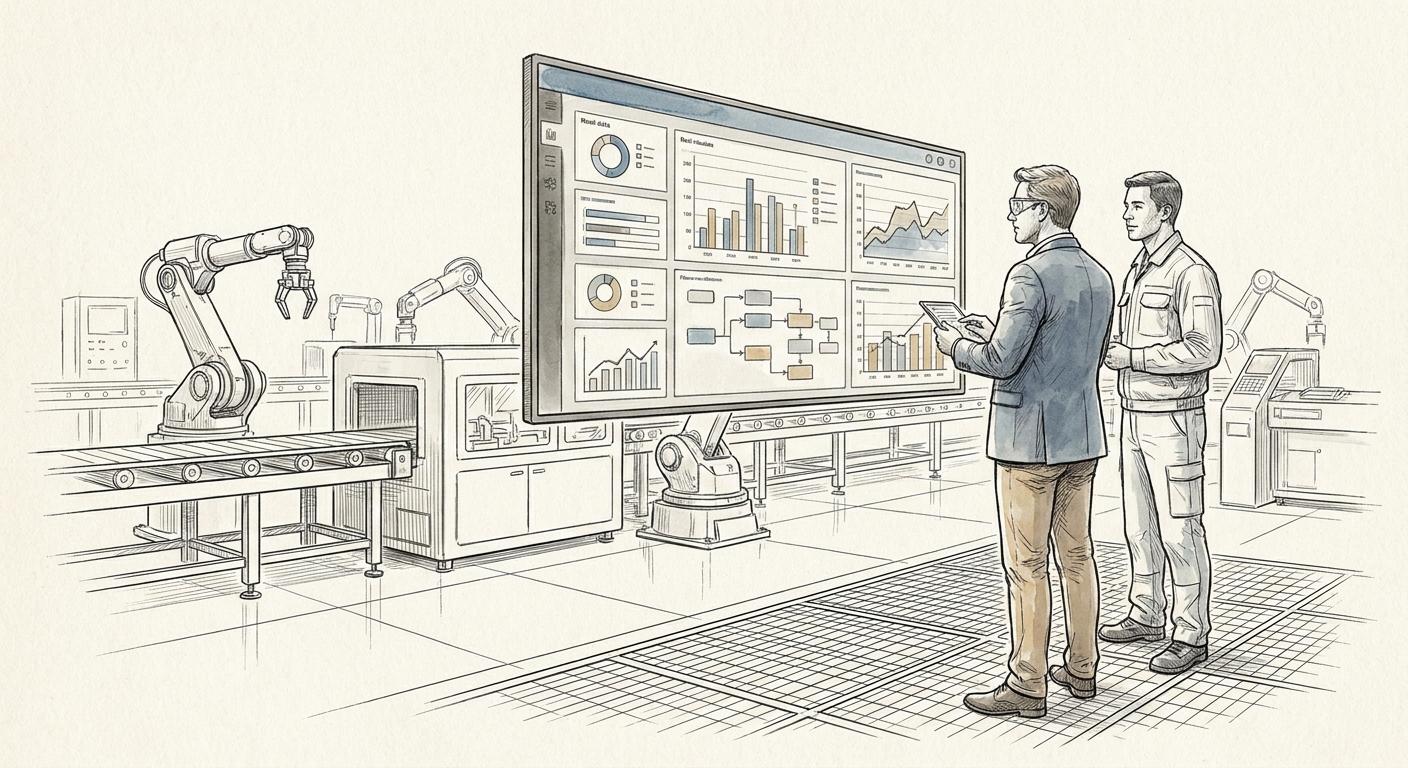
Portfolio CEOs face a specific type of pressure: the mandate to drive margin expansion within a shrinking investment window. While generic AI tools like basic chatbots offer minor administrative gains, they rarely touch the operating leverage required to move the needle on a manufacturing P&L. To see real value creation, firms must deploy specific AI initiatives for manufacturing that target the floor, not just the back office. These initiatives close the gap between estimated costs and actual execution, ensuring that every point of efficiency gain flows directly to the bottom line.
Manufacturing AI Initiatives are targeted applications of machine learning and data science designed to optimize production throughput, reduce waste, and improve cost-accuracy. By integrating these tools into the existing production workflow, companies can achieve measurable EBITDA improvement without the need for a total infrastructure overhaul.
The EBITDA Pressure: Why Generic AI Isn't the Answer for Manufacturing
Most manufacturing portfolios are currently grappling with margin leakage caused by fragmented data and manual processes. When an Operating Partner asks for an AI strategy, they are not looking for a generative AI tool that writes emails; they are looking for a way to fix OTIF (On-Time In-Full) misses and rising COGS. Generic AI fails in this environment because it lacks the context of the shop floor.
Effective AI in a manufacturing context must act as an operating wedge, driving a gap between revenue growth and headcount or resource consumption. If a solution doesn't directly address job costing or throughput, it is a distraction from the value creation playbook. Successful deployment requires a shift from broad digital transformation to specific, high-intent use cases that can be validated in a single quarter.
1. Closing the Estimate-vs-Actual Gap with Predictive Costing
One of the most persistent threats to EBITDA in mid-market manufacturing is the estimate-vs-actual gap. Sales teams often quote based on historical averages or optimistic assumptions, while the shop floor deals with the reality of fluctuating material costs and machine variability. This misalignment leads to "phantom" profit - margins that look good on paper but vanish during production.
AI-driven predictive costing analyzes years of historical ERP data, sensor logs, and external market trends to generate hyper-accurate quotes. By identifying patterns where certain geometries or materials consistently lead to overruns, the system flags high-risk quotes before they are signed. This protects margin expansion by ensuring that every job is priced for actual profitability, not just volume.
2. Reducing COGS through AI-Driven Predictive Maintenance
Unplanned downtime is a primary driver of margin erosion. When a critical machine fails, the costs go beyond the repair; they include labor idle time, expedited shipping fees to meet OTIF commitments, and potential late penalties from Tier-1 customers. Traditional scheduled maintenance is often inefficient, either replacing parts too early (wasting capital) or too late (causing outages).
Implementing predictive maintenance ROI involves using machine learning to monitor vibration, temperature, and power consumption in real-time. By predicting a failure 48 hours before it happens, plants can schedule repairs during natural shifts or planned downtime. In our experience, moving to a predictive model can significantly reduce emergency repair costs and extend the useful life of capital equipment, directly benefiting the exit multiple.
3. Intelligent Inventory Optimization to Free Up Working Capital
For a PE-backed manufacturer, cash is king. Excess safety stock is essentially dead capital sitting on the warehouse floor, yet most plant managers over-order to compensate for unreliable demand signals. Supply chain optimization through AI allows for much tighter inventory controls without increasing the risk of stockouts.
AI models process internal sales data alongside external market signals - such as housing starts or automotive production cycles - to refine demand forecasting. This allows management to reduce safety stock levels by 15-20%, freeing up significant working capital that can be redeployed into other value creation initiatives or used to pay down debt.
4. Automated Quality Control to Combat Scrap and Rework Rates
Scrap and rework are hidden EBITDA killers. When a defect is discovered at the end of the production line, the company has already sunk the maximum amount of labor and energy into a product that cannot be sold. Automated quality control uses computer vision and sensor integration to identify anomalies at the source, rather than at the final inspection.
By catching a deviation in the first ten minutes of a production run, operators can pause and recalibrate, saving hours of wasted material. This initiative reduces the overall cost of quality and improves throughput. For companies with high-volume, low-margin components, reducing scrap rates by even 2% can result in a significant uplift in annual EBITDA.
5. Upskilling the Shop Floor: Turning Operators into AI-Enabled Technicians
The most sophisticated AI tools will fail if the shop floor treats them as a threat or a burden. AI maturity is not just about software; it is about cultural adoption. We have seen that the highest time-to-value comes when machine operators are trained to use AI as a co-pilot rather than a replacement.
This involves upskilling the workforce to interpret AI insights and act on them. When an operator understands why an AI is suggesting a specific tool change, they become a partner in the optimization process. This human-in-the-loop approach ensures that the technology "sticks" post-acquisition and remains a permanent part of the company's operating DNA. iForAI has trained over 1,500 employees to ensure that these tools move from pilots into daily production habits.
Execution Over Strategy: The 90-Day Production Timeline
Private Equity firms cannot afford two-year transformation roadmaps. The goal is to identify a quick win that proves the concept and generates immediate cash flow. A disciplined approach starts with an 8-12 week sprint: 30 days for data auditing, 30 days for model development, and 30 days for production integration.
By focusing on a single, high-impact use case - such as predictive costing or inventory optimization - a portfolio company can demonstrate a measurable ROI within their first 100 days. This rapid execution builds confidence with LPs and sets the stage for a repeatable AI playbook that can be scaled across the entire portfolio.
Manufacturing AI FAQ
How long does it take to see EBITDA impact from manufacturing AI? Measurable operational improvements can typically be seen in 60-90 days. By focusing on a specific, high-intent use case like scrap reduction or demand forecasting, companies can realize P&L benefits within a single fiscal quarter rather than waiting for a multi-year digital transformation.
Do we need to replace our current ERP or MES for AI to work? No, modern AI should act as an execution layer that sits on top of your existing data silos. The goal is to bridge the gaps between disparate systems like the ERP and MES to provide a "single source of truth" without the cost and disruption of a full rip-and-replace.
What is the most common reason AI initiatives fail in manufacturing? Failure is usually caused by a lack of shop floor adoption rather than technical limitations. If the operators and plant managers don't trust the data or find the tools difficult to use, the AI will be ignored, leading to zero ROI regardless of how advanced the algorithm is.
Can AI help with labor shortages in the manufacturing sector? Yes, AI addresses labor shortages by automating repetitive data entry and providing decision support to less experienced workers. By capturing the knowledge of veteran operators in a machine learning model, companies can maintain high quality and throughput even as their workforce demographic shifts.
Focused AI initiatives allow manufacturing CEOs to attack margin leakage and drive defensible EBITDA growth. By prioritizing execution over abstract strategy, PE-backed firms can ensure their portfolio companies are optimized for a high-multiple exit.
Book a Manufacturing Diagnostic at ifor.ai/solutions/manufacturing