

.svg)

Middle-market manufacturers often watch 2% to 4% of their annual revenue vanish into warranty reserves, a significant source of margin leakage that directly suppresses EBITDA. Traditional warranty cost reduction methods rely on backwards-looking spreadsheets, which means by the time a quality trend is identified, thousands of defective units are already in the field. This article explores how focused, embedded AI strategies allow operations teams to identify failure patterns in real-time and automate the claims lifecycle. By moving from reactive firefighting to predictive quality control, manufacturers can protect their brand reputation while expanding their operating wedge. The Financial Leak: Why Warranty Costs Erode Mid-Market EBITDA For a $200M industrial equipment manufacturer, even a 1% reduction in warranty spend generates $2M in immediate EBITDA improvement. Manual claims processing is often the culprit behind "trapped capital," where high warranty reserves are maintained to cover the uncertainty of field failures. When claims are processed through manual entry and subjective technician notes, the delayed execution truth prevents the CFO from seeing the actual cost of poor quality until the fiscal quarter has already been impacted. This inefficiency results in higher-than-necessary accruals and lost opportunities for reinvestment.
AI Warranty Cost Reduction is the application of machine learning and data analytics to identify product failure patterns, automate claims processing, and prevent defects before they reach the customer. This approach transforms unstructured data into actionable insights that directly improve bottom-line margins and operational efficiency.
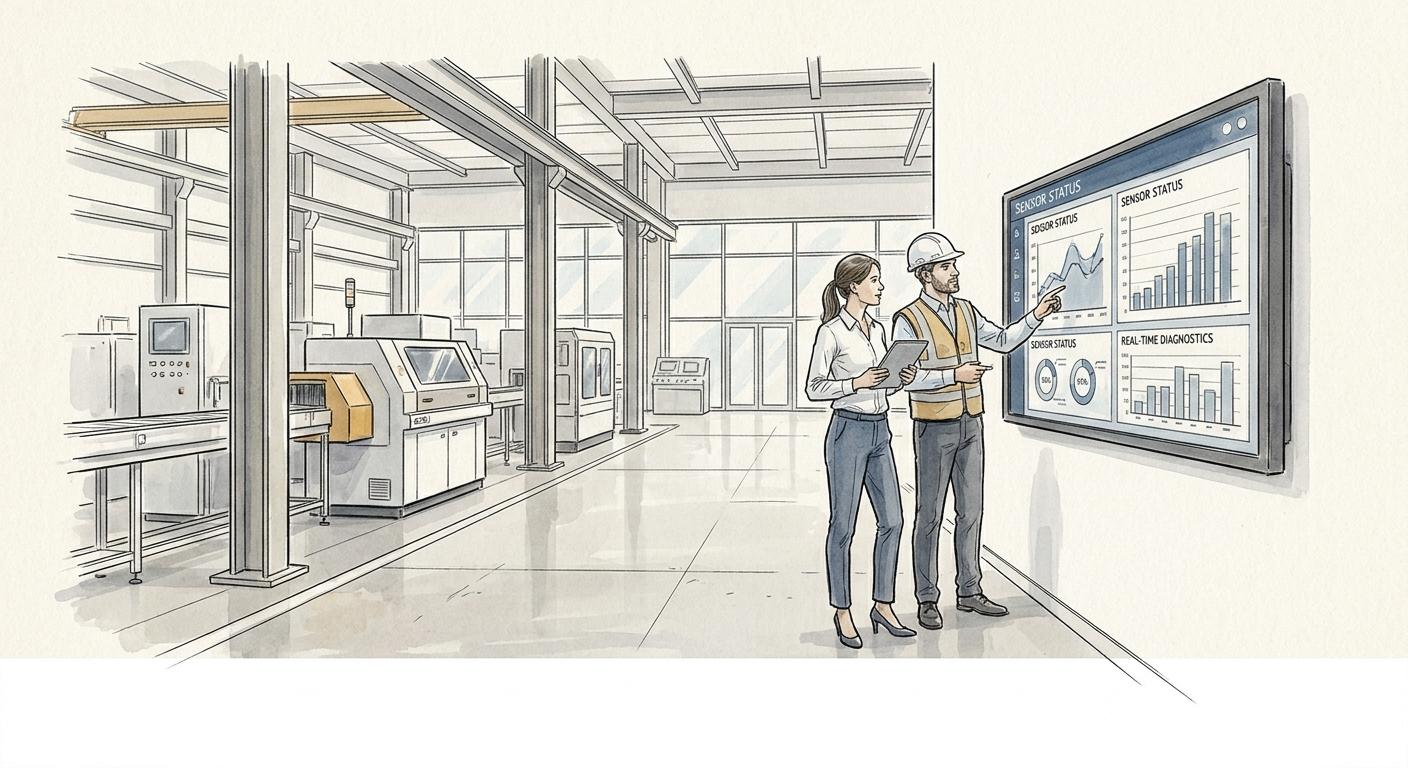
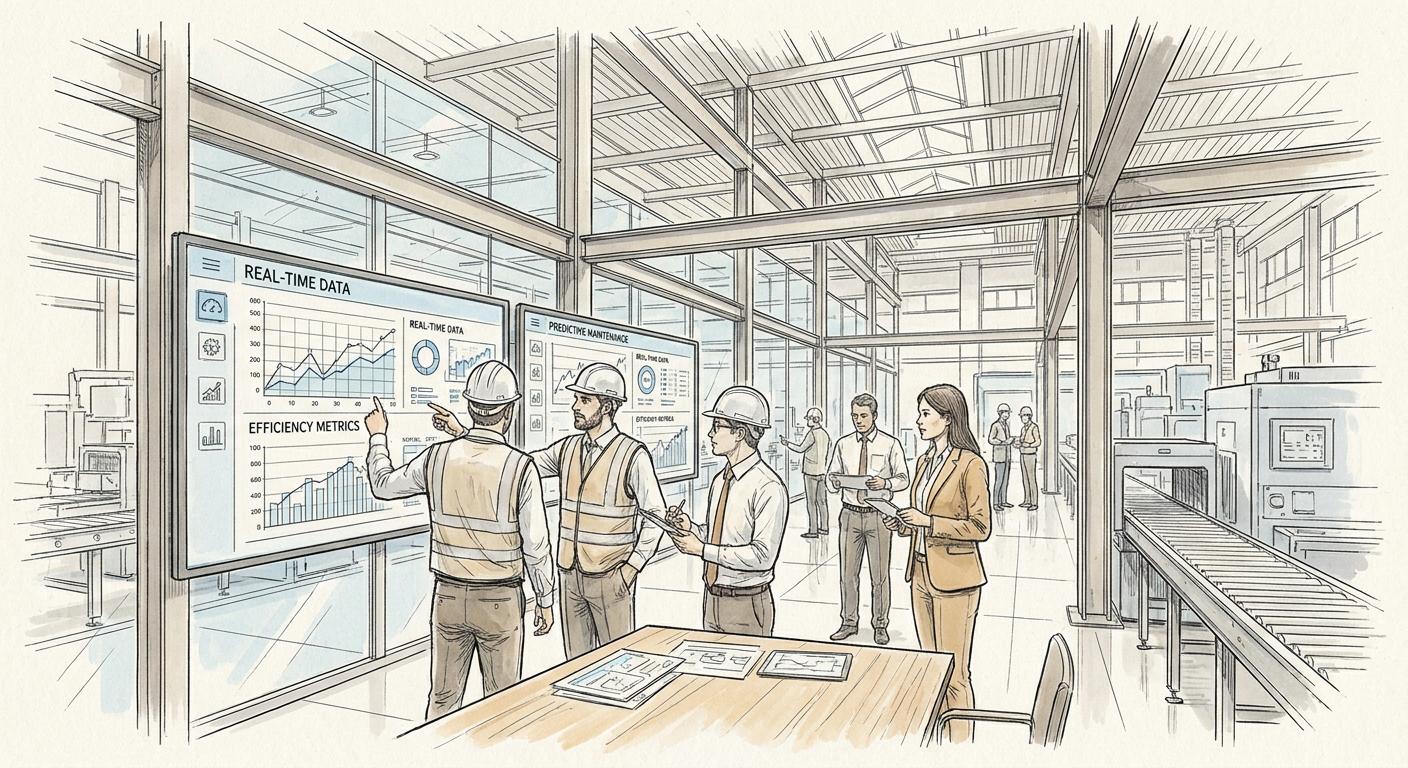
- Predictive Early Warning Systems for Batch Defects When a specific batch of sensors or hydraulic valves begins to fail, the clock is ticking. Embedded AI models can monitor production line variables - such as torque, temperature, and cycle time - and correlate them with early field failure reports. A 300-employee pump manufacturer in the Midwest used this approach to identify a calibration drift that would have affected 5,000 units. By catching the anomaly before the "threshold of awareness" reached the service department, they avoided a mass recall and saved an estimated $450,000 in logistics and replacement costs.
- High-Precision Root Cause Analysis (RCA) Traditional root cause analysis (RCA) takes weeks of manual investigation across disparate silos: shop floor logs, supplier quality reports, and technician notes. AI-driven RCA automates this correlation, slashing the mean-time-to-resolution. By analyzing field telemetry data alongside estimate-vs-actual production performance, the system identifies whether a failure was caused by a design flaw, a supplier material issue, or an assembly error. This precision ensures that corrective actions are applied to the source, preventing the same issue from eroding margins year after year.
- Intelligent Claims Triaging and Fraud Detection Unstructured data is the enemy of efficient manufacturing operations. Technicians often input vague notes like "unit won't start" or "broken." Natural Language Processing (NLP) can categorize these notes instantly, identifying "gray" warranty abuse or outlier claims that deviate from standard labor times. By automating the triaging of simple claims and flagging suspicious ones for human review, firms can reduce the administrative overhead of claims processing automation by 30% or more, ensuring that only legitimate repairs are funded.
- Dynamic Spare Parts Inventory Optimization Warranty fulfillment is often hampered by the wrong parts being in the wrong place, leading to OTIF (On-Time In-Full) misses in the service department. AI forecasting analyzes historical failure rates and peak seasonality to optimize spare parts levels without over-stocking. This reduces the capital tied up in "just-in-case" inventory while ensuring that service technicians have the necessary components to complete a first-time fix. For many mid-market firms, this optimization provides a quick win by improving the service experience while simultaneously lowering inventory holding costs.
- Closing the Loop: Fed-Forward Product Design The most sustainable way to reduce warranty costs is to engineer out the failure points. AI models can synthesize thousands of warranty claims to provide R&D teams with a prioritised list of components with the highest "cost of failure." This "fed-forward" design approach ensures that the next product iteration is more robust. By treating warranty data as a high-value R&D asset, the investment window for new products becomes more predictable, and the long-term cost of quality trends downward.
- Personalized Proactive Outreach to At-Risk Customers Manufacturing is shifting from transactional product sales to a model focused on customer lifetime value (CLV). When AI identifies a specific serial range as "at-risk" based on environmental conditions (e.g., high-humidity operation), manufacturers can reach out to offer a proactive service check. This preemptive move shifts the customer's perception from "this product broke" to "this company provides premium support." Preventing a catastrophic failure in the field is significantly cheaper than a reactive emergency repair and builds the brand equity required for higher renewal rates.
- Automated Dealer and Distributor Compliance For manufacturers selling through third-party networks, dealer compliance is a major source of margin leakage. AI monitors the service network to ensure that repairs meet brand standards and cost benchmarks. If a specific distributor consistently bills 20% more for a standard labor procedure than their peers, the system flags the variance for a performance review. This level of oversight ensures that warranty funds are used efficiently and that the end-user receives a consistent level of service. The iForAI Execution Model: One Warranty Win in 8 Weeks Most manufacturers do not need a massive data lake to start seeing results. The "Operating Wedge" approach focuses on one specific data silo - such as current year warranty claims in the ERP - and applies an AI model to solve a single problem: identifying the top three drivers of frequent part replacement. This strategy ensures a high time-to-value and achieves a tangible ROI within an 8-week window, providing the proof of concept needed to scale AI readiness across the entire organization. FAQ How does AI specifically improve Customer Lifetime Value (CLV)? By reducing downtime through predictive service and ensuring high-quality replacements, manufacturing brands move from transactional vendors to trusted partners. When a customer knows a machine will not fail unexpectedly, their likelihood of repurchasing from the same OEM increases significantly.
Do I need a massive data lake to start reducing warranty costs? No. Most mid-market firms have enough data in existing ERP or CRM systems to execute a 4-8 week "wedge" project. High-impact wins usually come from cleaning and analyzing your most recent 24 months of claims data.
What is the fastest way to see an EBITDA improvement from AI? Automating the detection of duplicate or fraudulent claims and identifying "batch" defects before they leave the warehouse are typically the fastest paths to cost reduction. These interventions prevent immediate cash outflows and reduce the need for high warranty reserves.
Manufacturers can transform warranty departments from a cost center into a strategic source of operational data. Implementing these targeted AI strategies protects margins and ensures that quality remains a competitive advantage in a tightening market.
Book a Manufacturing Diagnostic at ifor.ai/solutions/manufacturing