When Generative AI (G-AI) is discussed, the conversation often centers on chatbots, marketing copy, or coding assistants. However, for enterprise leaders, a significant shift is occurring where digital intelligence intersects with the physical world. This marks the era of Robotics G-AI, a development poised to redefine supply chain autonomy.
From Scripted Automation to Intelligent Adaptation
For decades, industrial robotics operated on a principle of efficiency through repetition. Robots were programmed to perform specific tasks with high precision, but only under highly controlled and consistent conditions. For example, a robot could pick up an item accurately if it was always in the exact same position. Minor variations, such as a slightly tilted box or a change in warehouse lighting, could cause the system to stall, requiring human intervention.
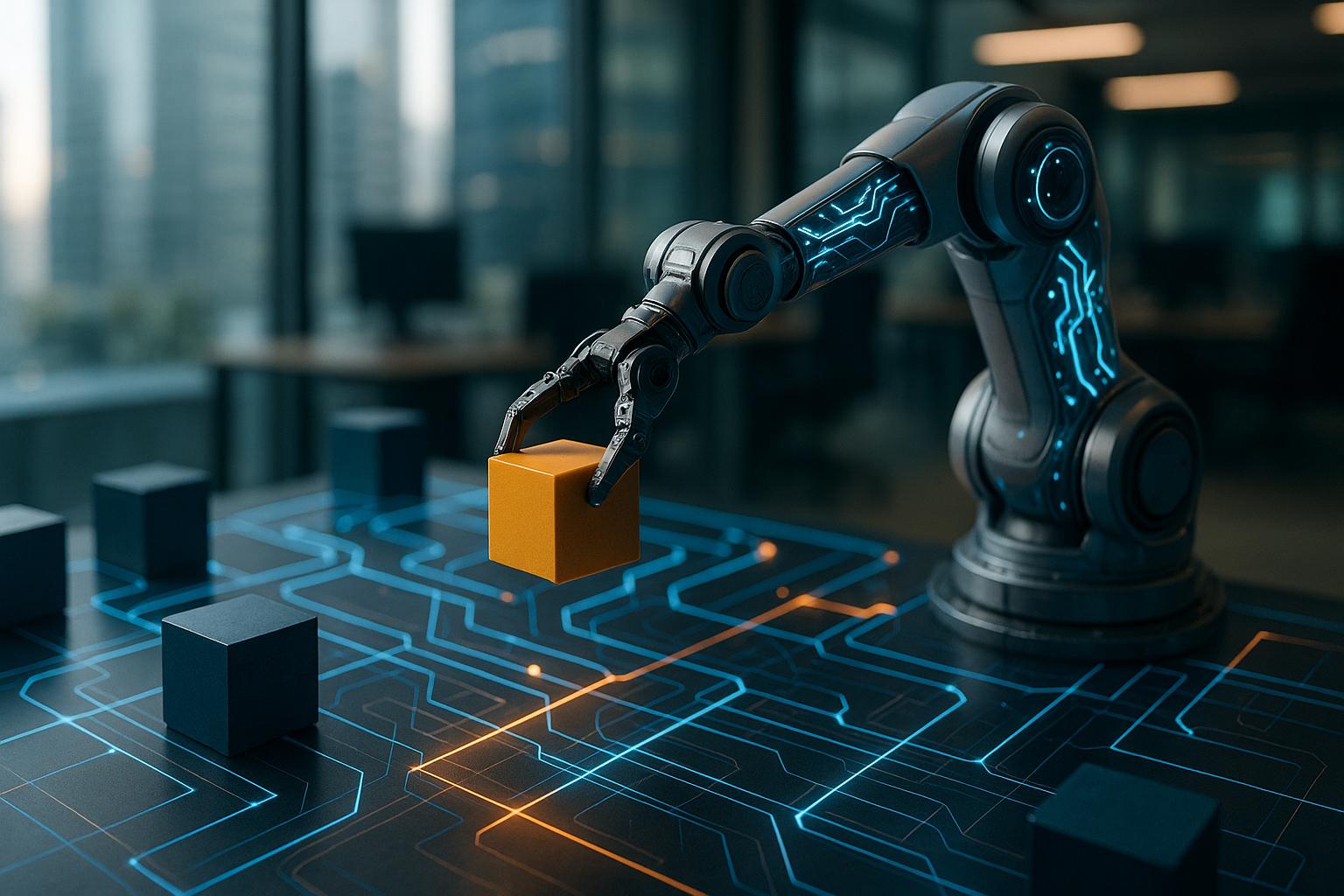
This inherent lack of flexibility historically made robotics a high-stakes and costly investment, particularly for mid-market companies. Generative AI is changing this dynamic. By leveraging Large Behavior Models (LBMs), robots are evolving beyond simply following instructions to understanding their environment. They can now process real-time visual data, anticipate physical outcomes, and adjust their movements dynamically. This represents a fundamental shift from a machine that executes a predefined task to a system that can achieve a goal, even when variables change.
Solving the Supply Chain ‘Edge Case’ Problem
In logistics and warehousing, the impact of G-AI is becoming operational rather than theoretical. Here’s how it is manifesting in practical applications:
Autonomous Problem Solving: Traditional automation often falters when encountering unexpected situations, known as "edge cases." G-AI enables robotic systems to manage issues like damaged packaging, shifted loads, or disorganized pallets without requiring immediate human intervention to reset the process.
Accelerated Time-to-Value: Historically, implementing a new robotic workflow involved months of custom programming. With G-AI, systems can be trained efficiently through high-fidelity simulations and natural language instructions, significantly reducing deployment times.
Continuous Learning and Optimization: These systems do not merely execute tasks; they learn from their experiences. Every navigation adjustment or unconventional pick becomes a data point that refines subsequent operations, fostering a self-improving physical workflow.
The iForAI Strategy: Focusing on Workflows, Not Just Hardware
At iForAI, we frequently engage with innovation leaders who perceive robotics implementation as overly complex. Our approach is straightforward: rather than beginning with an audit of hardware catalogs, we recommend identifying the decision bottlenecks within your physical workflows.
Consider where operations halt because a human must intervene for a non-standard task. These friction points represent prime opportunities for G-AI integration. We assist organizations in bridging this gap by layering intelligent agent logic over their existing infrastructure. The goal isn't necessarily to build a "factory of the future" from scratch, but to implement a system that leverages current data to secure future return on investment (ROI).
Moving Forward
The frontier of supply chain autonomy is becoming increasingly accessible. By bringing G-AI from digital screens to the warehouse floor, mid-market enterprises can achieve levels of operational resilience and efficiency that were once primarily available to large global logistics corporations.
To explore how G-AI can transform your operations, consider assessing your current workflows for G-AI readiness and developing a scalable path to enhanced autonomy.