

.svg)

Portfolio companies often struggle with "innovation theater," where small wins fail to move the needle on the P&L. Scaling AI pilots requires moving beyond technical experiments and into the "operating wedge" where data improves unit economics. This playbook outlines how to transition from a successful prototype to a repeatable execution model that maximizes enterprise value (EV) within the current investment window.
The Pilot Purgatory Trap: Why Most Portfolio AI Initiatives Stall
Many CEOs find their AI initiatives stuck in "pilot purgatory" - a state where a tool works in a silo but fails to impact the broader organization. This usually happens because the pilot was designed as a science project rather than an operating wedge. In a Private Equity context, if a tool doesn't directly address margin leakage or labor efficiency, it is a distraction.
Operating partners and CEOs often mistake a successful proof-of-concept for AI readiness. A pilot that requires three manual data exports a week to function is not scalable. It is merely a prototype that creates more work for your analysts, rather than automating a core business process.
Defining AI Pilot Scaling for Private Equity
AI pilot scaling is the process of transitioning a successful niche artificial intelligence application into a standardized, cross-departmental operational standard that drives measurable EBITDA growth. Unlike a proof-of-concept, scaling focuses on enterprise AI integration - ensuring the tool communicates with ERPs, CRMs, and shop-floor systems to provide a delayed execution truth that managers can act upon in real-time.
Phase 1: Identifying the 'Operating Wedge' for Immediate ROI
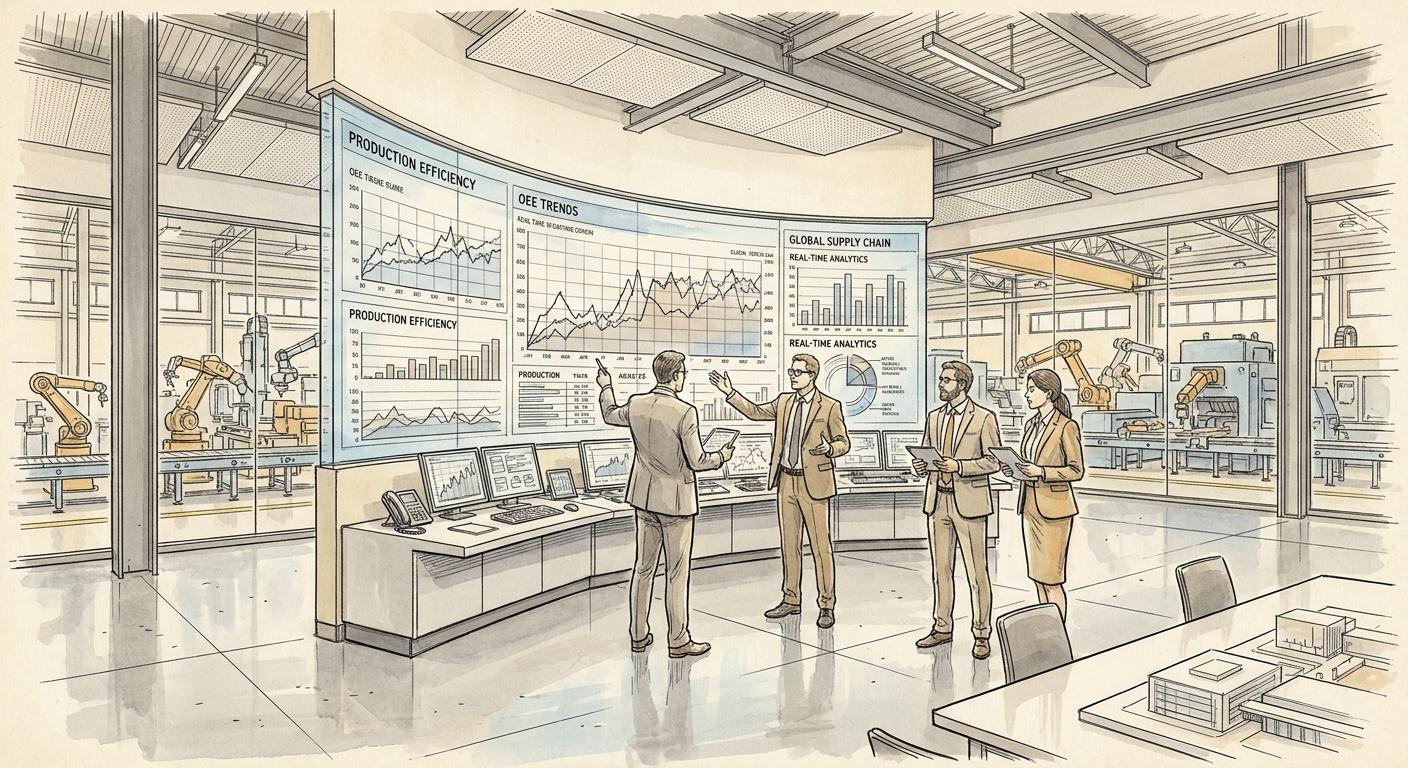
To secure the next round of funding or board approval, you need a quick win that produces a measurable uptick in cash flow. The most effective "operating wedge" usually sits in the gap between your ERP and your actual shop floor or office performance.
For example, a 150-employee precision machining shop in the Midwest focused their first pilot on estimate-vs-actual job costing. By using embedded AI to analyze historical run-time variances, they identified a 12% margin erosion on a single product line within 6 weeks. This specific, high-velocity win provided the political capital needed to scale the tool to the rest of the plant.
Target a win achievable in a 4-8 week time-to-value window. If the pilot takes six months to show a result, it will likely be killed by the next quarterly review.
Overcoming the Integration Hurdle: Legacy Systems vs. Modern AI
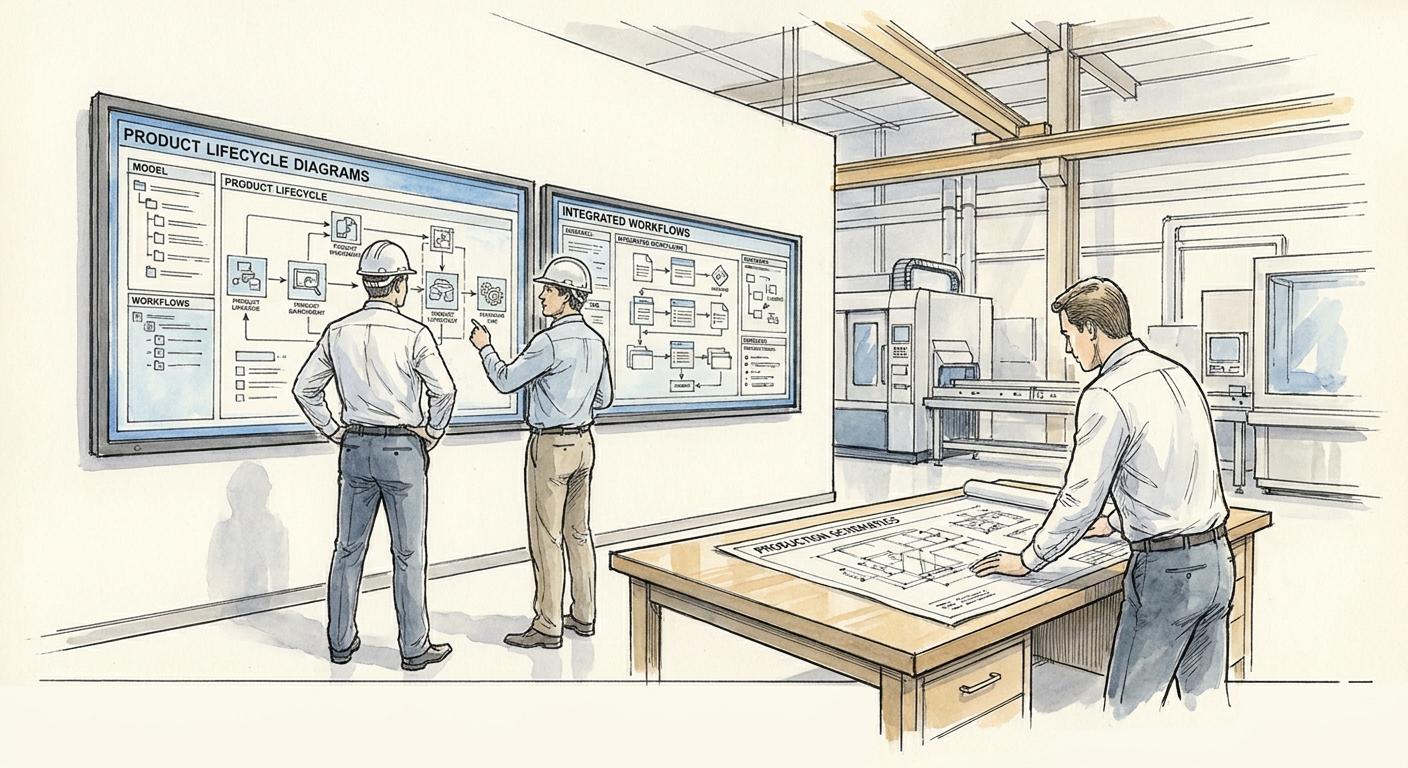
The biggest technical roadblock to scaling AI pilots is the "spaghetti bowl" of legacy systems. Many portfolio companies run on older ERPs that weren't built for high-frequency data exchange. You do not need a three-year "digital transformation" or a total system overhaul to realize value.
The strategy is to use AI as a translation layer. Instead of trying to rebuild the database, use embedded AI to pull specific data points into a clean environment for analysis. This minimizes friction and allows the AI to provide insights on OTIF (On-Time, In-Full) performance or inventory levels without disrupting existing workflows. Success here depends on data cleanliness at the source, not the complexity of the AI model itself.
The C-Suite Buy-in Framework: Selling AI as a Margin Lever
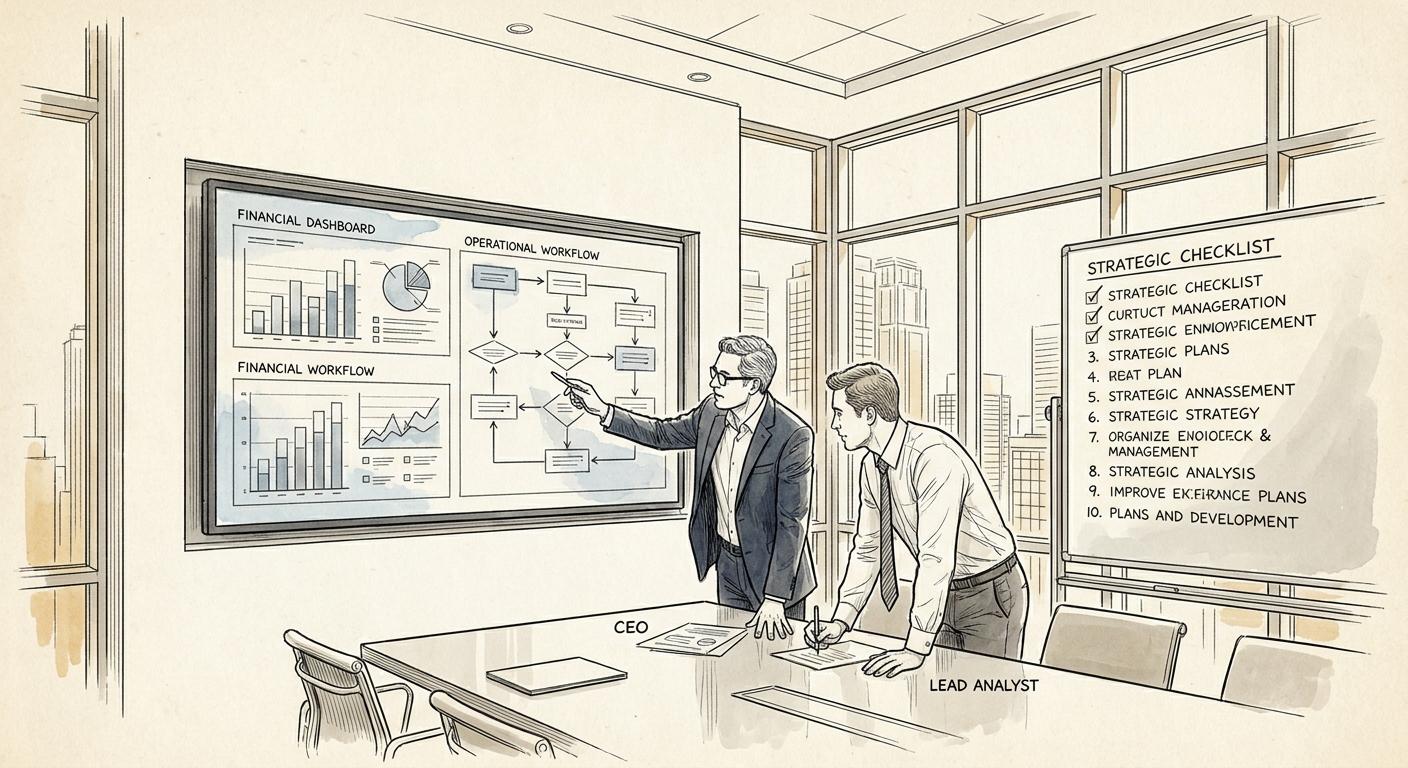
Corporate leaders and PE sponsors don't want to hear about large language models or neural networks; they want to hear about EBITDA improvement. When presenting to the board, frame the AI project through the lens of value creation levers.
Instead of saying "The AI is 95% accurate," say "The system has reduced margin leakage by 450 basis points by optimizing our procurement schedule." Show the direct line from the AI pilot to the operating leverage of the business. When the C-suite sees that AI is a tool for professionalizing the transition from "gut-feel" management to data-driven execution, the budget for enterprise-wide scaling usually opens up.
From Pilot to Playbook: Standardizing AI Success Across the Portfolio
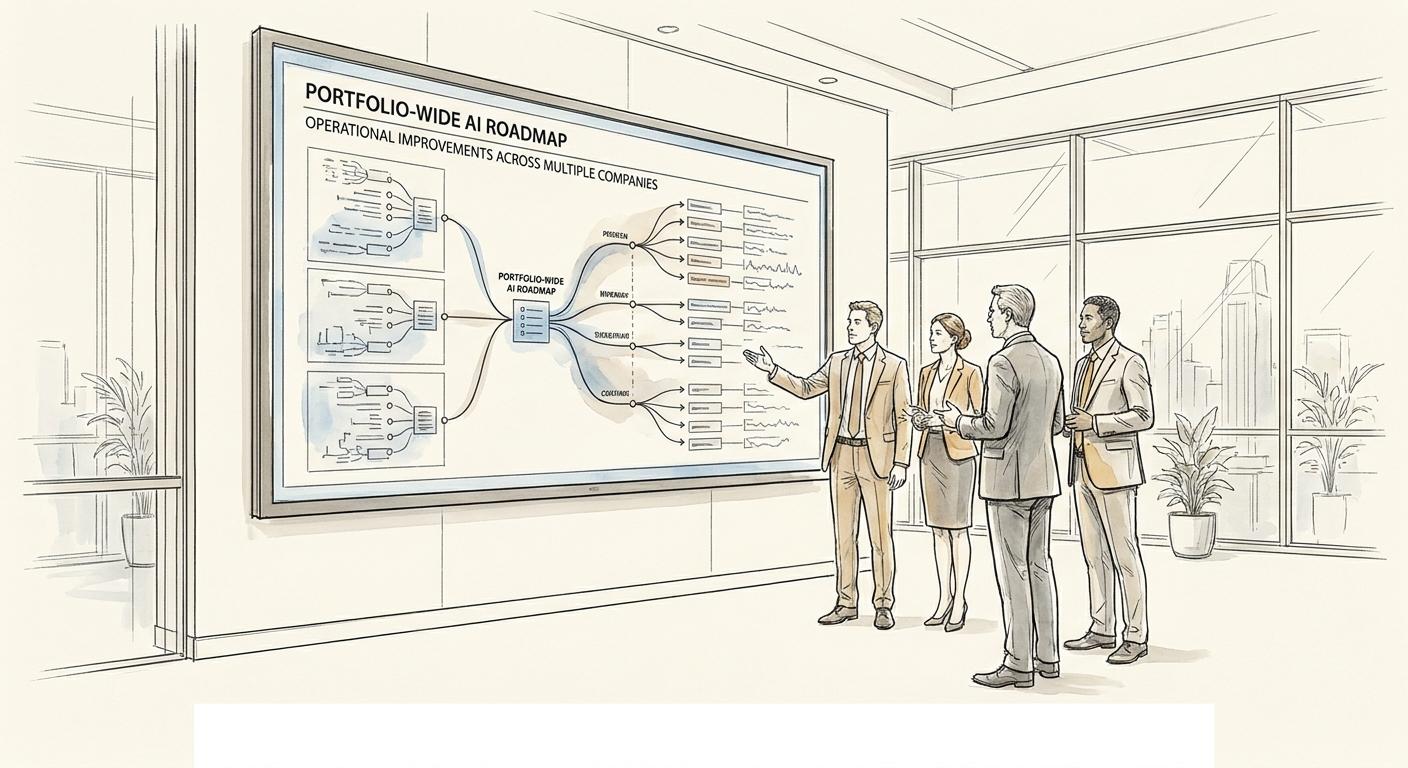
Scaling across a portfolio requires a repeatable execution model. Once a pilot proves successful at one "Gold Star" site, the operational leaders must document the integration steps as a "value creation playbook."
Standardization allows you to apply the same AI implementation roadmap to subsequent acquisitions. This reduces the risk in the 18-36 month investment window and ensures that the AI is not dependent on a specific local manager, but is instead an institutionalized asset that increases the exit multiple.
Frequently Asked Questions
How long should it take to see ROI from an AI pilot?
For most portfolio companies, a measurable quick win or "operating wedge" should be visible within 4 to 8 weeks. While full enterprise integration takes longer, the initial ROI should be proven through specific metrics like reduced overtime or improved job costing accuracy before moving to a larger rollout.
What is the biggest barrier to scaling AI in manufacturing portfolios?
The primary barriers are data silos and cultural resistance from mid-level management. These are best addressed by embedding execution partners directly into the workflow and focusing on tools that simplify the user's daily tasks rather than adding new administrative burdens.
How do you measure the ROI of enterprise AI pilots?
ROI should be measured by the improvement in EBITDA and the reduction in margin leakage. Specifically, look for improvements in OTIF rates, reduction in scrap/rework costs, and more accurate estimate-vs-actual calculations that allow for better pricing strategies.
How do I identify the best candidate for an AI pilot?
Choose a process with high-volume data and a clear financial impact, such as supply chain procurement or shop-floor scheduling. The ideal candidate has a high variance in performance that, if narrowed, would directly increase the company's bottom line.
Summary: Scaling AI requires a shift from technical experimentation to a disciplined focus on EBITDA-driving operational wedges. By proving value in 4-8 weeks and addressing legacy integration hurdles, CEOs can turn AI into a permanent value creation lever.
Ready to move past pilot purgatory? Book a Manufacturing Diagnostic at ifor.ai/solutions/private-equity