Beyond the Honeymoon: Building a Strategic Intelligence Layer for AI ROI
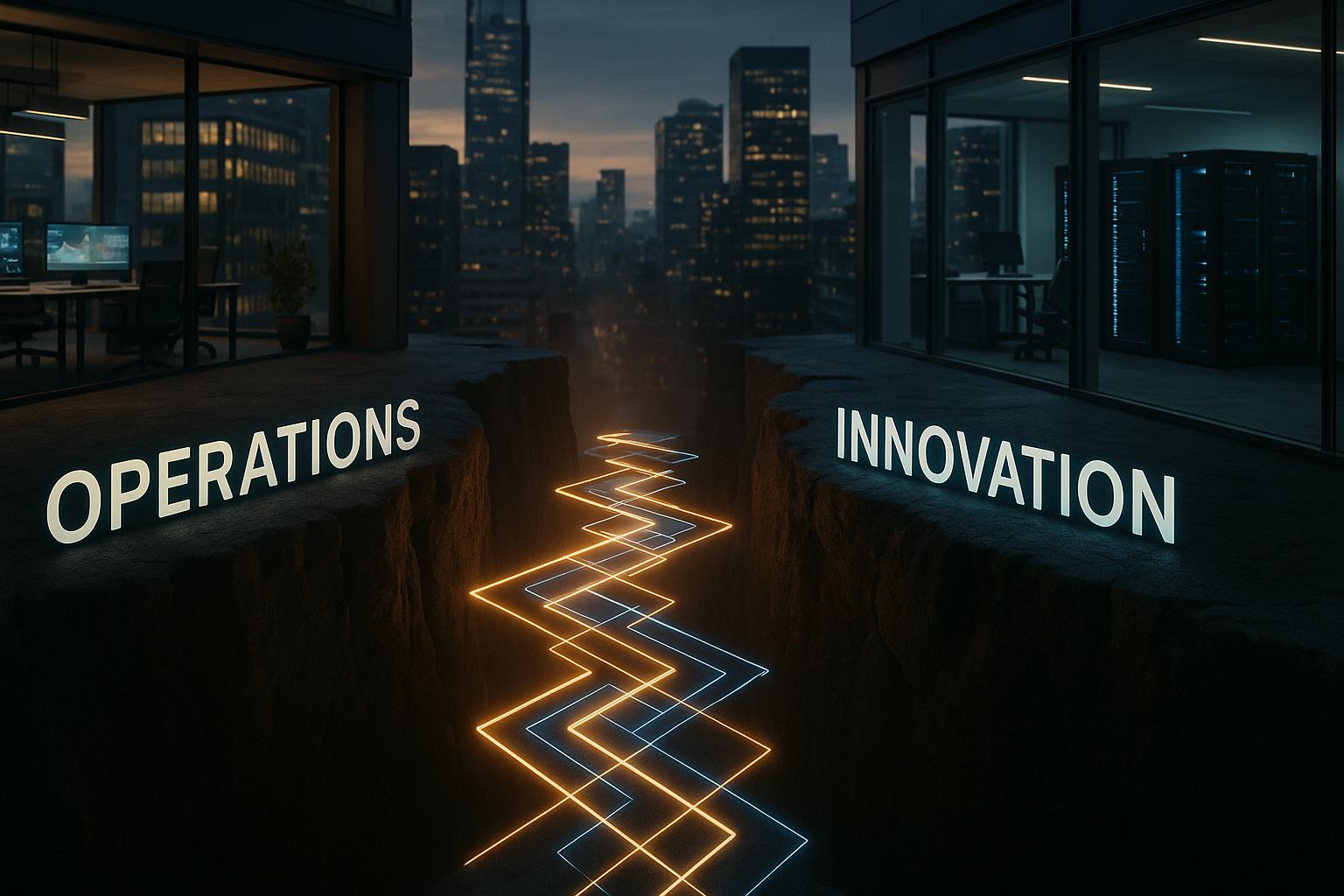
Imagine reviewing your quarterly cloud spend, only to discover your AI inference costs are rising faster than your revenue. This phenomenon, which we term the “Accidental Productivity Tax,” occurs when an organization successfully develops an AI solution in a lab environment but fails to architect it for sustainable, cost-effective operation in a real-world business context.
For many SaaS, FinTech, and enterprise leaders, the initial AI pilot often feels like a significant achievement. However, as organizations transition from simple "ask-and-answer" chat interfaces to Intelligent Agents—autonomous systems capable of performing numerous logic checks per minute—the unit economics can quickly become challenging.
Using a high-reasoning frontier model, such as GPT-4o or Claude 3.5 Sonnet, for basic tasks like data entry or routine classification is akin to hiring a senior architect for a simple delivery. While the task gets done, this approach is often financially unsustainable for ongoing business operations.
The Efficiency Trap: Performance vs. Predictability
The transition from a proof-of-concept to a production environment marks a critical shift. While performance is paramount in early development stages, predictability becomes the ultimate metric for CTOs. CFOs are typically hesitant to approve enterprise-wide rollouts when costs are volatile and the return on investment (ROI) remains unclear.
To bridge this gap, organizations need more than just an API key; they require a Strategic Financial Intelligence Layer. This represents a shift from mere "AI implementation" to sophisticated "AI orchestration."
Solving Unit Economics with Strategic Model Tiering
The key to scaling AI solutions without eroding profit margins is Strategic Model Tiering. In the current AI landscape, not every task demands the capabilities of the most advanced models. By intelligently routing tasks based on their specific computational and reasoning requirements, organizations can achieve substantial cost reductions while maintaining, and often improving, enterprise-grade accuracy. Some reports indicate potential cost savings of 60% to 80% through this approach.
Here’s how a sophisticated tiering strategy can be implemented:
- High-Stakes Reasoning: Reserve "frontier" models (e.g., GPT-4o, Claude 3.5 Sonnet) for complex tasks such as multi-step financial forecasting, nuanced strategic decision-making, and advanced data synthesis. These models excel at tasks requiring deep understanding and intricate problem-solving.
- Routine Execution: Deploy lighter, faster, and more cost-effective models (e.g., Claude 3.5 Haiku, Gemini Flash, or fine-tuned open-source models) for routine operations like data extraction, classification, and simple database lookups. These models are optimized for efficiency and speed on less complex tasks.
The AI Gateway: Where Governance Meets Agility
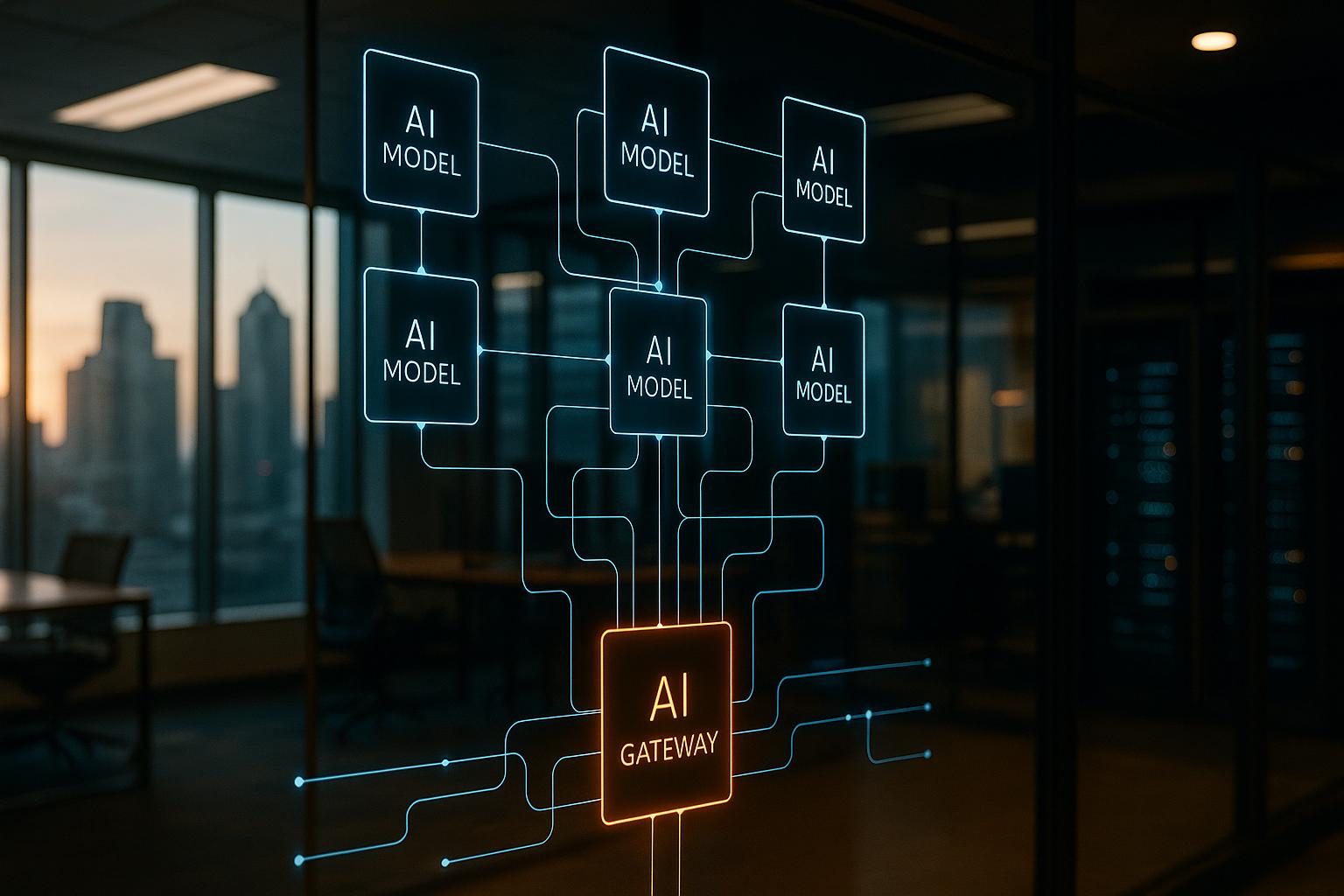
Managing multiple AI models does not have to lead to a fragmented codebase or complex vendor management. The solution lies in implementing an AI Gateway.
An AI Gateway functions as a central control point, positioned between your applications and various model providers. It offers three key advantages:
- Dynamic Routing: Automatically directs each request to the most cost-effective and capable model in real-time, optimizing resource allocation.
- Unified Governance: Ensures that security protocols, compliance checks, and data privacy standards are consistently applied across all AI interactions, maintaining regulatory adherence.
- Vendor Agility: Prevents vendor lock-in by allowing organizations to easily swap in new models that offer improved performance or cost efficiency without requiring extensive application refactoring.
From Cost Center to High-Margin Asset
AI should not be a volatile expense that concerns leadership. Instead, it can become a predictable, high-margin engine for business growth. By adopting a tiered, multi-model architecture, organizations can transition from AI experimentation to achieving measurable business impact and sustainable ROI.
The critical question for leadership is no longer just "Does it work?" but "Is it sustainable?"
If your organization is experiencing the "Accidental Productivity Tax," it may be time to re-evaluate your AI architecture. Organizations that specialize in AI strategy help mid-market and enterprise leaders transform pilot projects into high-performing, ROI-driven systems.
Building an intelligence layer that aligns with your strategic ambitions can unlock significant value.