

.svg)

Beyond the 'Turbocharger in Traffic': Scaling ROI with Agentic Coding Loops
Why Your AI Investment Isn’t Accelerating Product Releases
Many Chief Technology Officers (CTOs) and engineering leaders are observing a paradox: their development teams are generating code faster than ever with generative AI, yet actual product release dates remain largely unchanged. This appears to be a productivity gain on paper, but its impact on business outcomes is often unclear.
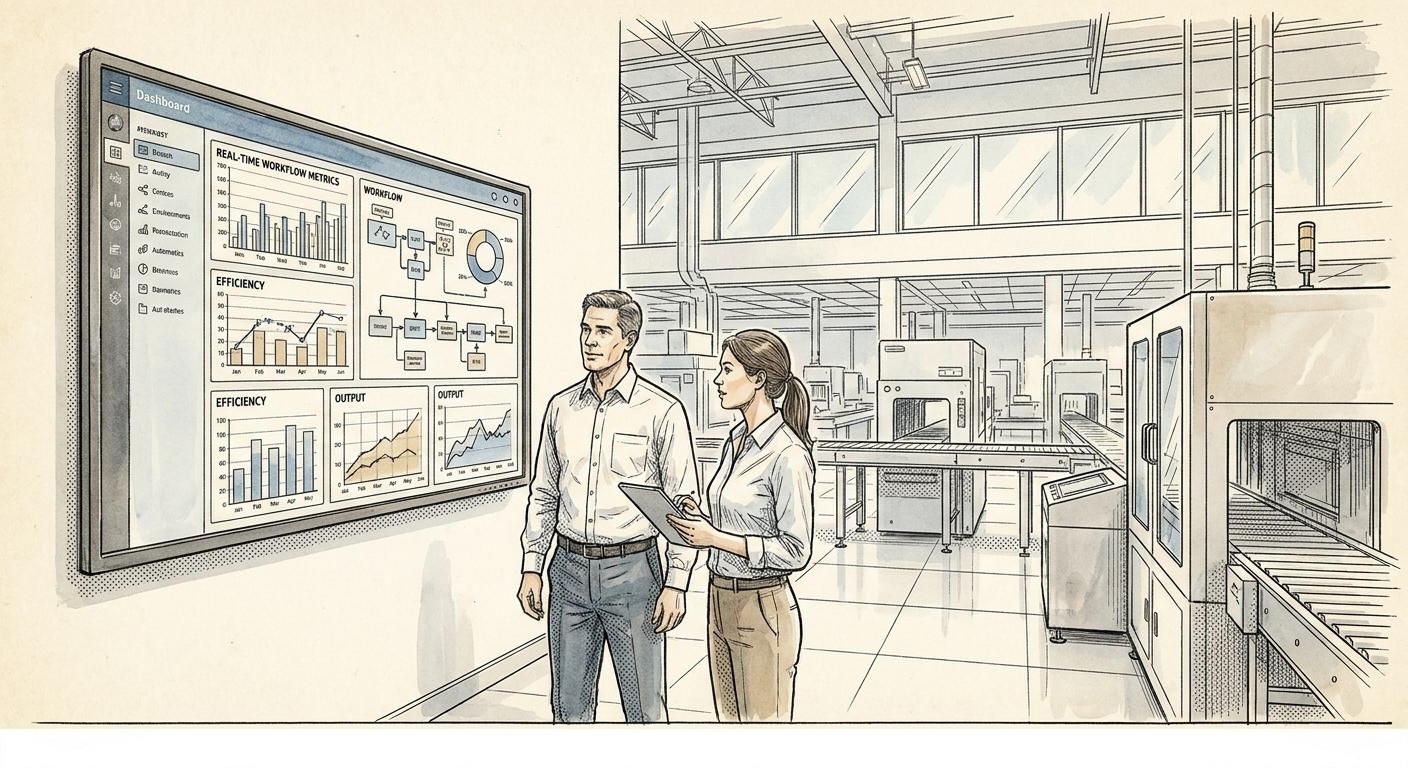
This phenomenon can be described as the 'Turbocharger in Traffic' paradox. While individual developer output has increased, the overall system remains constrained by bottlenecks such as manual reviews, accumulating technical debt in documentation, and fragmented handoffs between teams. Enhancing individual output offers limited benefit if the surrounding infrastructure cannot keep pace.
The Shift: From Reactive Assistants to Objective-Driven Agents
To overcome these systemic bottlenecks, organizations need to advance beyond basic AI assistants. A standard AI assistant, similar to a basic chatbot, operates reactively; it requires a prompt to generate code snippets or unit tests. While useful for specific tasks, this approach still demands continuous human oversight.
In contrast, an AI Agent is objective-driven. When an agentic loop is tasked with an objective like “auditing this pull request and synchronizing the architectural documentation,” it does more than just provide a list of suggestions. It comprehends the overarching goal, navigates the relevant repositories, and executes the required workflow autonomously. This transition elevates AI from a managed tool to an autonomous collaborator capable of handling specialized tasks independently.
Targeting the 'Connective Tissue' of Engineering
To unlock significant return on investment (ROI) from AI transformation, organizations should focus beyond mere code generation and instead target the "middle-work." This "connective tissue" of engineering encompasses high-friction tasks that can consume a substantial portion of a team's capacity, with some estimates suggesting up to 40%.
Agentic loops can act as a force multiplier by automating these often-overlooked areas:
- Dynamic Documentation: Moving away from static wikis that quickly become outdated. Agents can ensure that documentation, serving as the source of truth, evolves in real-time alongside the codebase.
- Product Requirement Document (PRD) and Requirement Validation: Identifying logical inconsistencies or edge cases early in the development cycle, potentially before a developer begins coding. This proactive approach can significantly reduce costly late-stage reworks.
- Automated Alignment: Detecting potential integration conflicts across different workstreams before they manifest as issues in testing or staging environments.
Moving Beyond Shadow AI to Enterprise-Scale Results
For many organizations, current AI adoption often resembles "Shadow AI"—a fragmented collection of individual tools used by developers in isolation. This approach can introduce security risks and offers minimal visibility into organizational ROI.
True enterprise-level scaling of AI occurs when these capabilities are integrated directly into Continuous Integration/Continuous Delivery (CI/CD) pipelines and broader delivery workflows. The goal shifts from merely increasing individual keystrokes to achieving systemic speed and efficiency across the entire development lifecycle.
At iForAI, we assist mid-market and enterprise teams in bridging the gap between strategic vision and practical execution. We focus on implementing agentic systems within existing technology stacks to translate AI's potential into measurable business outcomes.
If you are ready to move beyond incremental gains and accelerate your product delivery, it’s time to re-evaluate your approach to AI integration. Let’s collaborate to build the systems that will streamline your path from development to production, faster.