
.svg)


6
min read

June 23, 2026
Most manufacturing COOs have already digitized their maintenance logs, yet AI predictive maintenance manufacturing remains the missing link in stopping margin leakage. You likely have a CMMS in place, but your plant floor still suffers from unpredictable machine failures that result in OTIF misses and emergency shipping costs. This article explores why legacy scheduling is failing to protect your margins and how embedding AI into your maintenance strategy creates an operating wedge that directly improves EBITDA.
Predictive Maintenance 4.0 is an AI-driven strategy that uses machine learning algorithms to analyze real-time sensor data and historical performance to predict equipment failure before it occurs. Unlike a legacy CMMS, which relies on static, time-based intervals, AI-driven systems focus on the actual condition of the asset to prevent unplanned downtime reduction issues. The CMMS Ceiling: Why Your Current System Isn't Stopping Unplanned Downtime A legacy Computerized Maintenance Management System (CMMS) is essentially a digital filing cabinet. It excels at tracking what happened in the past and scheduling what should happen based on equipment manuals. However, it operates on a "preventative" rather than "predictive" basis. This leads to two specific types of waste: performing maintenance on machines that don't need it or missing a failure sign that wasn't on the calendar.
When a critical asset goes down unexpectedly, the ripple effect through the plant is immediate. You see it in labor overruns, estimate-vs-actual gaps, and the inevitable "firefighting" mode that pulls your best technicians away from value-add tasks. Despite having a digital system, many plants still operate with a delayed execution truth, where the data in the CMMS is always 24 to 48 hours behind the reality of the shop floor. The EBITDA Math: How 20% Less Downtime Equals 15% More Margin For a PE-backed manufacturer, maintenance isn't just a cost center - it is a lever for value creation. Reducing unplanned downtime by 20% does not just save on repair parts; it unlocks hidden capacity without the CAPEX of adding new lines. This OEE optimization AI approach increases throughput, allowing for higher revenue capture on the same fixed cost base.
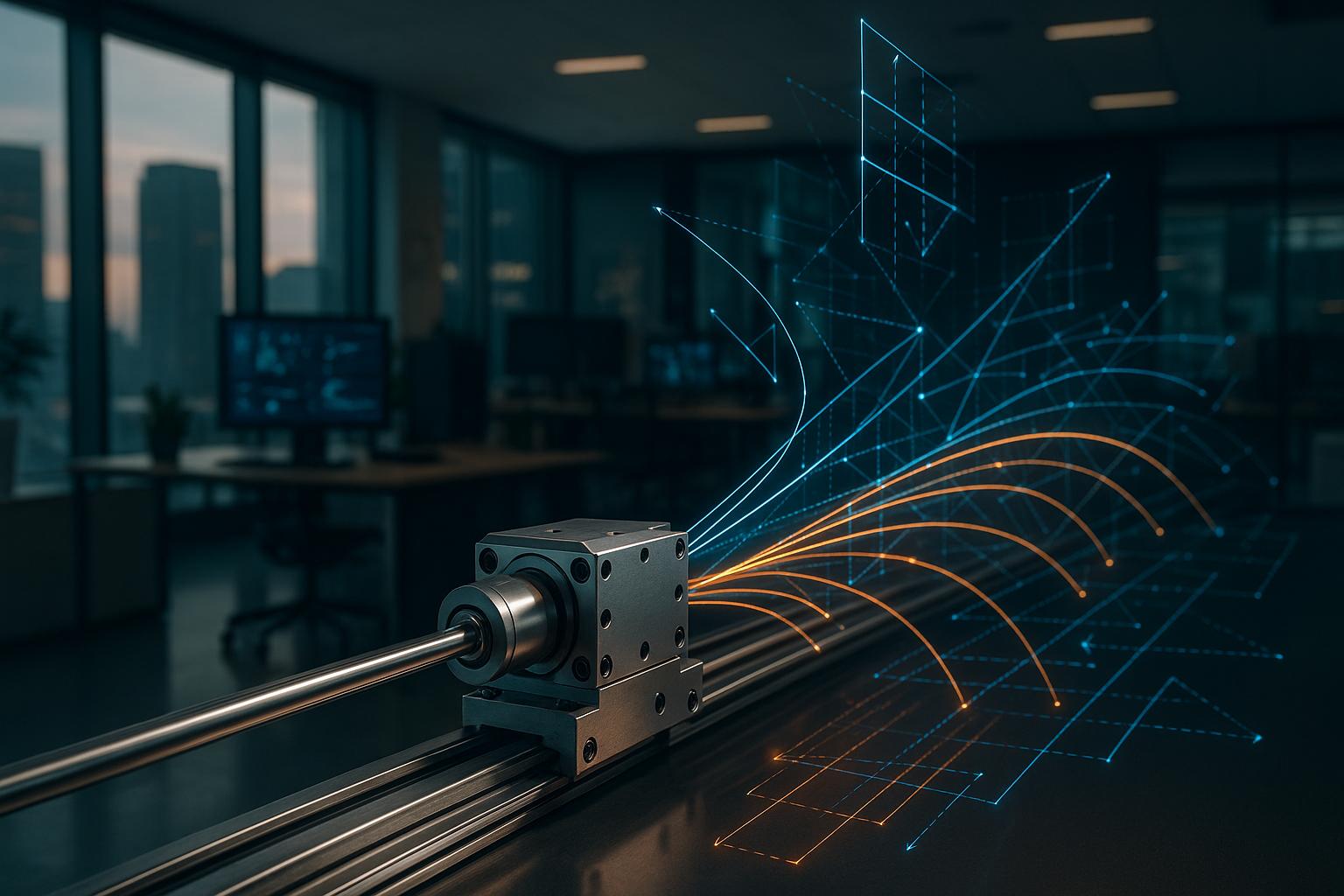
The financial impact manifests in three specific areas. First, it eliminates the 3x to 5x price premium paid for emergency part shipping and rush repairs. Second, it reduces technician overtime, which often spikes during weekend "crunch" repairs. Finally, it tightens the operating leverage of the plant. At iForAI, we have seen specialized projects reduce validation times from minutes to seconds, a principle that applies directly to industrial sensor data processing. Benchmarking Performance: Legacy CMMS vs. AI-Embedded Execution The gap between legacy systems and industrial AI implementation is defined by data latency and prediction accuracy. A CMMS is reactive, triggered by a date or a manual entry. An AI-embedded system is proactive, triggered by a vibration anomaly or a temperature spike that a human operator - or a calendar - would never notice.
In a side-by-side comparison, legacy systems often result in "calculated guesses" regarding asset health. AI models, conversely, provide a high-confidence window of failure. This allows plant managers to schedule repairs during natural shifts or planned changeovers, preserving OTIF integrity. By moving from schedule-based to condition-based logic, firms achieve a 56% average increase in AI readiness and operational efficiency. Bridging the ERP-MES Gap: Turning Sensor Data into Operational Intelligence One of the largest hurdles to ROI of AI in industrial plants is the fragmentation of data. Your ERP knows the customer demand, and your MES knows the machine state, but they rarely speak the same language. This creates margin leakage because the production schedule doesn't account for the degrading health of the assets required to fulfill it.
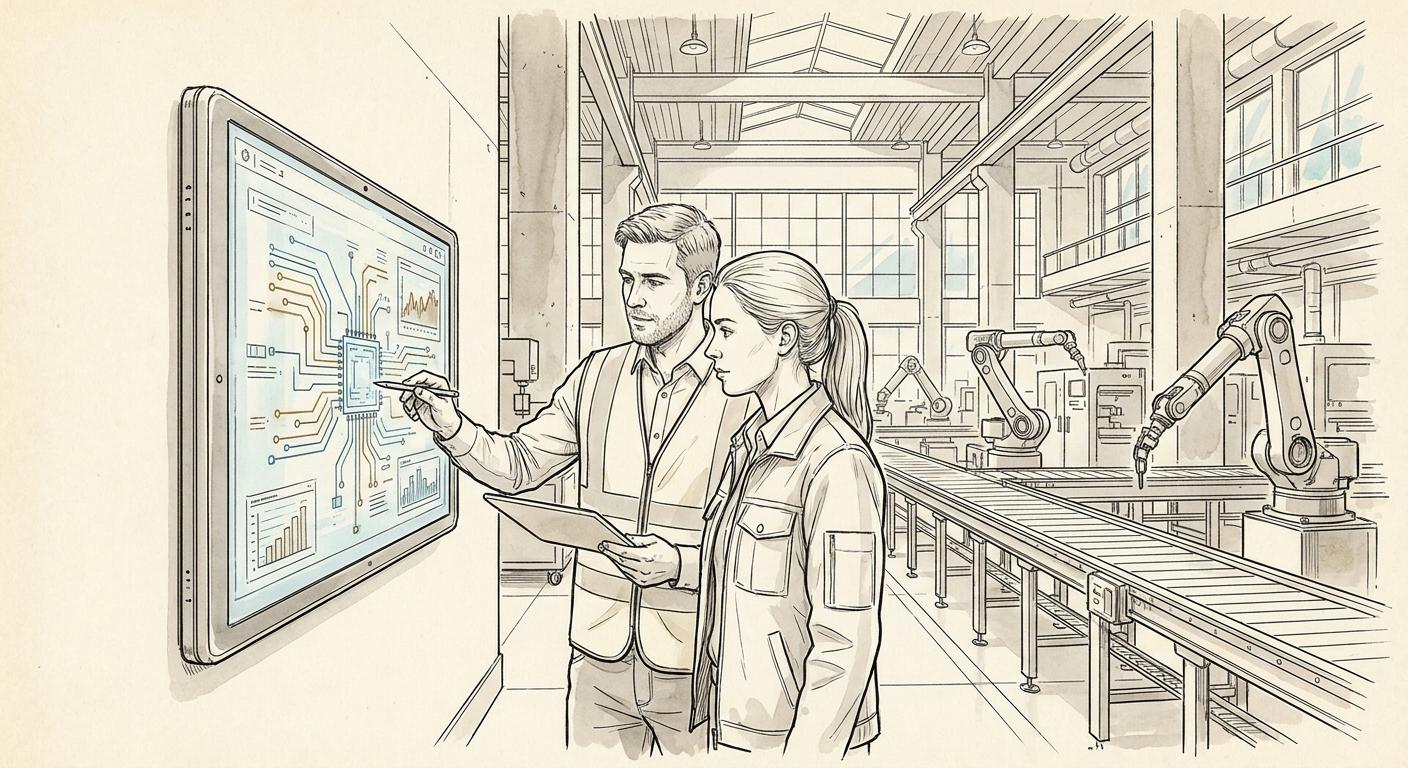
We specialize in connecting these disparate data streams without requiring a total rip-and-replace of your existing infrastructure. By layering embedded AI over your current stack, we turn raw sensor data into executive-level decision intelligence. This ensures the "truth" on the shop floor matches the "truth" in your financial reporting, closing the gap between estimated and actual job costing. The 90-Day Roadmap: Implementing AI Predictive Maintenance Without Shifting Focus You do not need a three-year transformation project to see results. The AI Starter Package focuses on one critical asset - the one that causes the most pain when it fails - and brings it into production within 8-12 weeks. This quick win proves the model to the board and the plant floor, providing the repeatable AI playbook needed for a portfolio-wide rollout.
Our process involves 35+ specialists who act as your outsourced AI department, providing the strategy and execution that a single hire cannot match. This approach ensures exit readiness by institutionalizing data-driven maintenance, making the company more attractive to future buyers who value predictable, scalable operations. FAQ Do I need to replace my existing CMMS to use AI for manufacturing downtime reduction? No. High-performing AI solutions act as an execution layer that integrates with your existing CMMS. The AI pulls data from your sensors and ERP to make the current system proactive, alerting your team to specific failures before the CMMS schedule would have caught them.
What is the ROI of AI in industrial plants regarding maintenance? Most plants see the first measurable results in 60-90 days through reduced emergency repair costs and improved OEE. Full payback on the initial investment is typically achieved within 6-9 months as the system prevents major catastrophic failures and stabilizes the production schedule.
How does improving EBITDA with predictive maintenance impact our exit multiple? By reducing maintenance costs and increasing throughput capacity, you directly improve EBITDA margins. More importantly, showing a data-driven, repeatable maintenance playbook demonstrates institutionalized operational excellence, which can lead to a higher multiple during the exit process.
Can AI help with estimate-vs-actual job costing gaps? Yes. By providing a more accurate view of machine availability and health, AI allows for more precise production scheduling. This reduces the variance between estimated labor/time and the actual execution on the shop floor, plugging margin leaks.
AI-driven predictive maintenance transforms the maintenance department from a reactive cost center into a strategic driver of EBITDA. By focusing on asset health rather than the calendar, manufacturers can unlock hidden capacity and secure their margins against unplanned disruptions.
Book a Manufacturing Diagnostic at ifor.ai/solutions/manufacturing