
.svg)


4
min read

June 24, 2026
The True Cost of AI Integration Without Strategic Alignment
Many organizations find that their AI inference costs can quickly outpace revenue growth. This phenomenon, sometimes called the "Accidental Productivity Tax," often occurs when high-tier models, such as GPT-4o, are deployed for every task, regardless of its complexity. It's akin to hiring a senior architect for basic data entry—effective, but not cost-efficient.
For leaders in SaaS, FinTech, and HealthTech, transforming a successful AI pilot into a high-value business asset demands more than just refined prompts. Moving from conceptual "slideware" to measurable impact requires a Strategic Financial Intelligence Layer that treats AI tokens as a valuable resource, not an unlimited utility.
The Logic-to-Cost Ratio: Optimizing Model Selection
To scale AI initiatives without eroding profit margins, adopting Strategic Model Tiering is crucial. Not every step in an autonomous workflow requires extensive reasoning capabilities. By routing tasks based on their specific cognitive demands, organizations can potentially reduce operational costs by 60% to 80% while maintaining quality.
Consider this hierarchy for model selection:
- High-Stakes Reasoning: Premium models are best reserved for nuanced tasks such as legal contract analysis, complex financial forecasting, or multi-step logical processes. These tasks benefit from the advanced capabilities of larger models.
- Routine Processing: Simpler, faster, and more cost-effective models, like Claude 3.5 Haiku or Gemini Flash, are well-suited for routine operations such as CRM updates, lead tagging, and sentiment analysis.
Intelligent scaling involves matching the model's capability to the task's difficulty. This "Logic-to-Cost Ratio" can differentiate an AI experiment from a sustainable business advantage.
The AI Gateway: Your Enterprise Control Tower
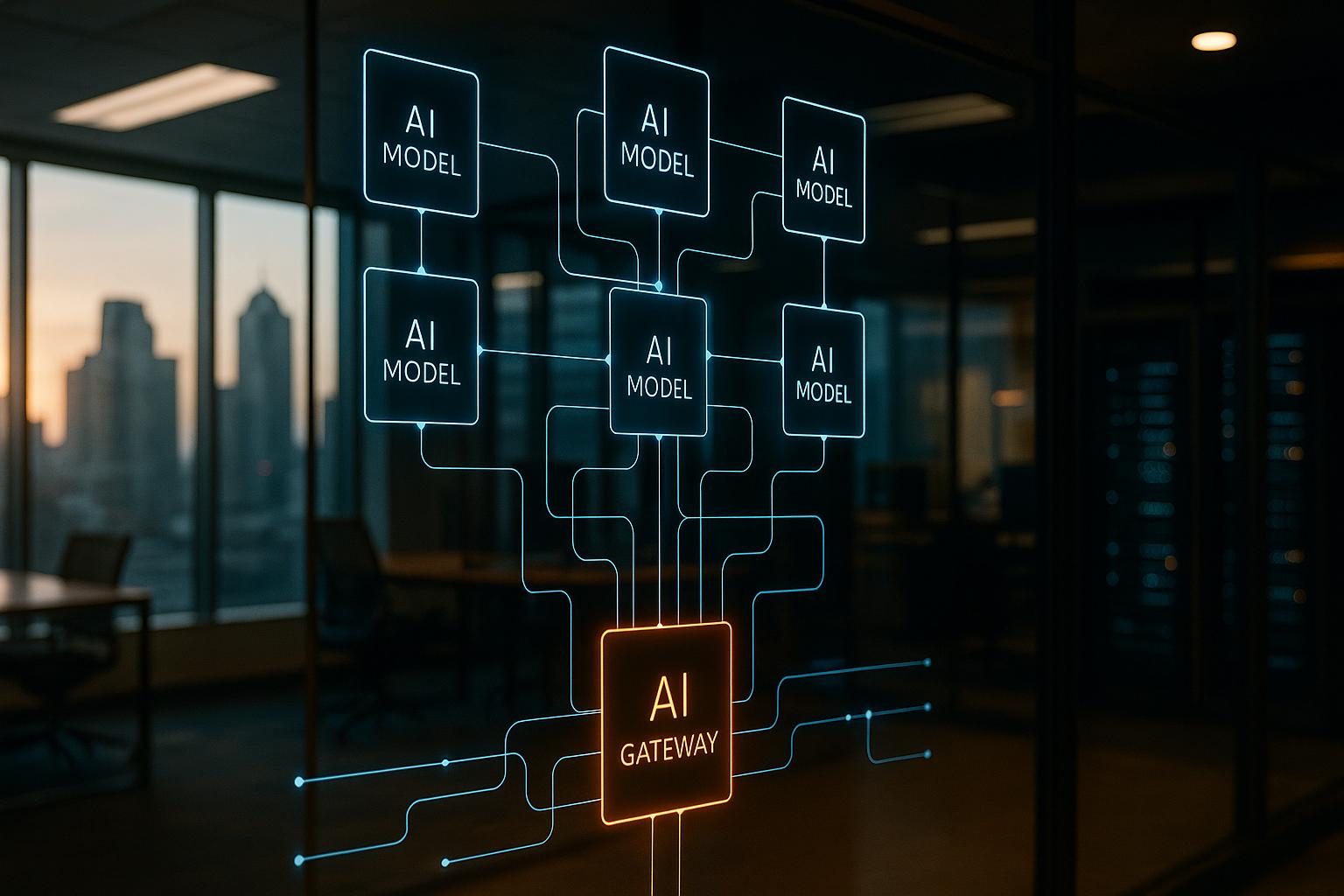
Managing a diverse fleet of AI models across various departments, from marketing to operations, benefits from a centralized "Control Tower," often referred to as an AI Gateway. This system provides strategic oversight beyond mere technical integration. A robust gateway typically offers three key functions:
- Dynamic Routing: Tasks are automatically directed to the most cost-effective model capable of performing the job efficiently.
- Unified Governance: The gateway helps ensure secure data handling and Personally Identifiable Information (PII) masking, addressing the stringent requirements of CTOs and compliance teams.
- Future-Proofing: By maintaining a technology-agnostic architecture, organizations can swap models as newer, more efficient versions emerge. This approach helps mitigate vendor lock-in and allows businesses to capitalize on the rapidly evolving AI landscape.
Turning AI into a Predictable Growth Engine
AI should ideally function as a predictable engine for growth, rather than a speculative line item or a cost center. When integrated with strategic alignment, AI can transition from a technical expense to an operational powerhouse. This shift involves moving from a performance-only mindset to an ROI-driven approach.
At iForAI, we focus on operationalizing AI within your existing cloud, data, and workflow infrastructure. Our goal is to ensure your AI journey is fast, secure, and profitable.
Ready to optimize your AI investments? We help mid-market enterprises bridge the gap from pilot projects to high-impact ROI. Explore how to refine your AI roadmap and achieve measurable outcomes.