

.svg)

3 Strategic Advantages of Diversifying Beyond Monolithic AI Models
Many founders and product leaders begin their generative AI journey by integrating with the most powerful large language models (LLMs) available, such as GPT-4o or Claude 3.5 Sonnet. While this approach can quickly get a pilot project off the ground and demonstrate impressive capabilities, relying solely on a frontier model for every internal task can be akin to over-engineering. It's like hiring a Senior Software Architect for basic data entry—effective, but not always efficient.
This common scenario can lead to what some experts term an "Accidental Productivity Tax." This occurs when high inference costs and increased latency begin to diminish the very margins that AI was intended to enhance.
To evolve from an experimental phase to a high-impact business asset, enterprise leaders often benefit from transitioning from a single-model mindset to a diversified AI ecosystem. Here are three strategic advantages of moving beyond monolithic AI models.
1. Optimize the Logic-to-Cost Ratio with Strategic Model Tiering
Efficient scaling in AI involves Strategic Model Tiering. This approach focuses on matching the "reasoning density" or cognitive demand of a task with the appropriate AI model. Not every workflow requires the most advanced, high-stakes cognitive processing.
For instance, routing routine, high-volume tasks—such as document classification, lead sentiment tagging, or basic customer relationship management (CRM) updates—to faster, lighter models like Claude 3.5 Haiku or Gemini Flash can lead to significant cost reductions, often ranging from 60% to 80%. This strategy allows organizations to reserve premium, more powerful models for complex tasks that genuinely require nuanced understanding and deep reasoning, such as financial forecasting, creative strategy development, or legal analysis.
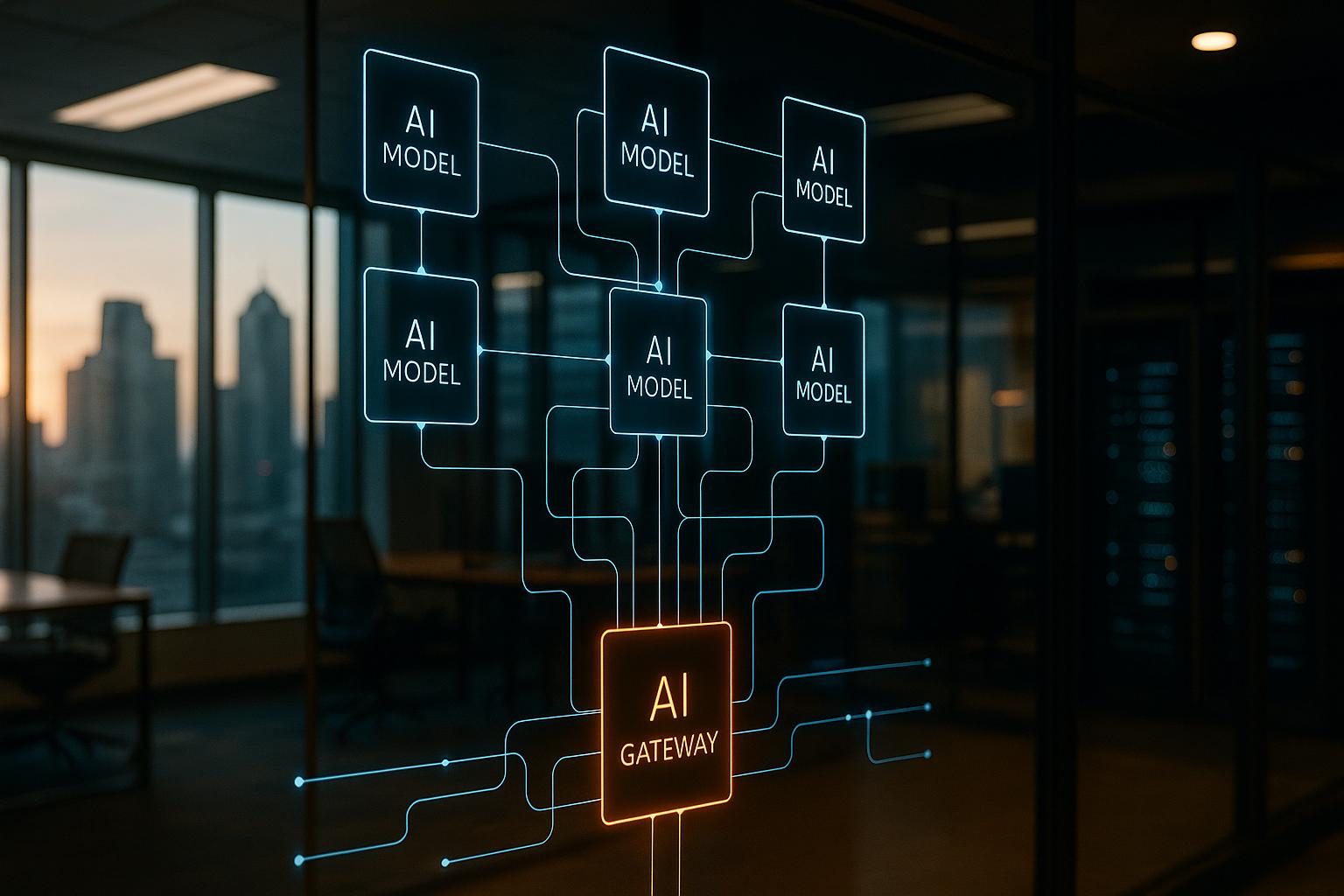
2. Implement an AI Gateway: Your Centralized Control Tower
As AI adoption expands across an enterprise, managing disparate AI experiments in various departments can introduce governance and security challenges. An AI Gateway addresses this by serving as a centralized control tower for an organization's entire AI infrastructure.
Beyond simply connecting to various AI model APIs, an effective AI gateway provides dynamic routing capabilities based on factors like performance, cost, and specific task requirements. Crucially, it also acts as a vital layer for security and compliance. For example, it can automatically mask Personally Identifiable Information (PII) before data ever reaches a third-party AI provider. This transforms a potentially chaotic collection of API keys into a secure, streamlined, and auditable AI operation.
3. Future-Proofing Through a Model-Agnostic Stack
The AI landscape is characterized by rapid evolution, with new models and capabilities emerging frequently. If an organization's entire product infrastructure is tightly coupled to a single provider's ecosystem, it can become vulnerable to vendor lock-in, unexpected price increases, or service outages.
Adopting a model-agnostic architecture ensures business agility. This approach provides the flexibility to integrate the newest, most efficient models as they become available, ensuring the technology stack remains optimized for both performance and cost. In a field as dynamic as AI, this kind of architectural flexibility is not merely a technical preference but a competitive necessity.
Moving from Experiments to Predictable Growth
AI should be viewed not as a speculative cost center but as a predictable engine for business growth. By treating AI tokens (the units of text processed by LLMs) as a valuable resource and optimizing model selection through a diversified approach, organizations can transform AI from a technical experiment into a sustainable operational powerhouse.
Specialists in AI integration help mid-market and enterprise organizations bridge the gap between AI strategy and measurable return on investment (ROI). This often involves implementing the necessary governance and routing layers within existing tech stacks to enable AI to scale effectively.
Ready to evolve your AI initiatives into a high-performance system? Explore how strategic AI implementation can benefit your organization.