

.svg)

The Loop Engineering Horizon: Why Your AI Isn't Learning From Its Own Failures (Yet)
Many Chief Technology Officers (CTOs) observe their teams utilizing tools like GitHub Copilot and might conclude that their AI transformation is complete. However, the reality is that writing code has rarely been the primary bottleneck in the software development lifecycle (SDLC). If developers are generating code functions 20% faster but release cycles remain unchanged, it's akin to installing a high-performance engine in a vehicle still caught in heavy traffic.
At iForAI, we frequently observe mid-market enterprise firms encountering a similar challenge. They have optimized the act of coding but have often overlooked the "connective tissue" that surrounds it. This includes essential processes such as security audits, maintaining legacy documentation, and managing the friction associated with architectural handoffs. To overcome these hurdles, leaders need to shift their focus from Reactive Assistants to Objective-Driven Agents.
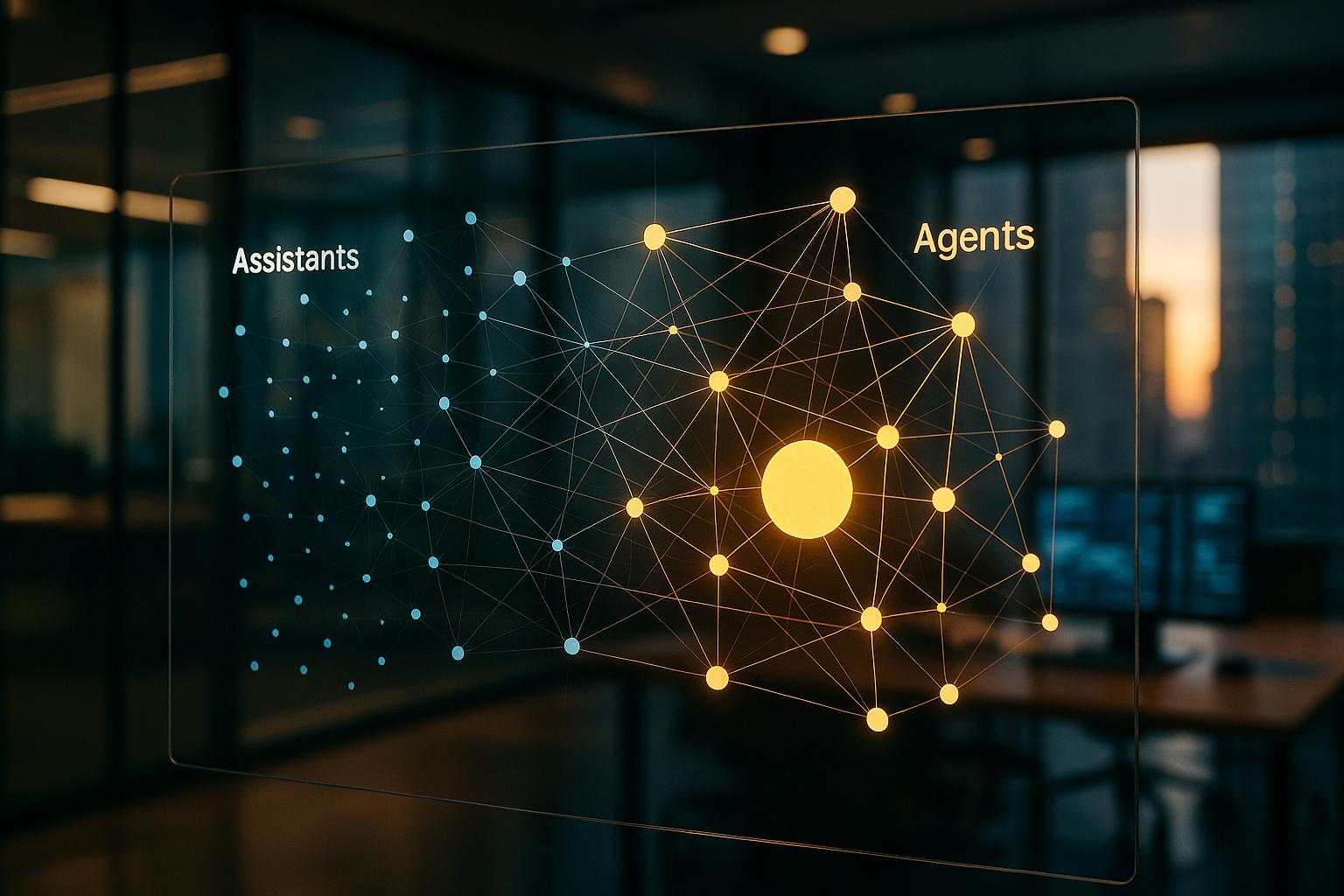
Assistants vs. Agents: A Fundamental Shift
Most current AI adoption in development environments is tactical. An Assistant operates reactively; it waits for a developer to provide a prompt, functioning much like an advanced search engine or an intelligent autocomplete feature.
An Agent, conversely, is mission-oriented. Instead of waiting for a query, it is given a specific goal and navigates the workflow autonomously. Agents handle routine tasks that often delay a sprint. Consider an agent that not only suggests a code fix but also:
- Updates the API schema to prevent disruptions to the frontend.
- Initiates a targeted security scan to ensure compliance with standards like SOC 2 before human review.
- Sends a notification if a pull request deviates from the established architectural roadmap.
This approach is not merely about increasing speed; it's about transitioning from individual productivity gains to fostering systemic momentum.
Addressing the "Connective Tissue"
For companies with 100 to 1,000 employees, complexity can silently erode return on investment (ROI). Simply increasing headcount is often not a sustainable solution for managing technical debt. The most significant bottlenecks frequently exist in the gaps between teams—such as manual documentation updates that are often delayed or security reviews that take days to initiate.
By integrating agentic workflows into your Continuous Integration/Continuous Delivery (CI/CD) pipeline, AI transforms from a supplementary tool into a core operational system. These agents act as a crucial link, managing the complexities of compliance and cross-team communication in real-time. This allows senior engineers to maintain a flow state, dedicating their focus to high-level design rather than administrative overhead.
From Faster Typing to Faster Shipping
The ultimate goal of AI transformation in software development is not to enable developers to type more characters per minute. Instead, it is to enhance organizational throughput. When the "connective tissue" of your SDLC is automated, AI initiatives move beyond experimental phases and begin to deliver measurable business outcomes.
Mid-market firms that successfully bridge this gap now are positioned to scale efficiently without the traditional burden of substantial headcount increases. Those that do not may find themselves with faster ways to create new bottlenecks.
Is your SDLC prepared for this evolution? To explore how to move beyond basic autocomplete functions and transform your AI pilots into enterprise-grade agents, consider a consultation with experts in the field.