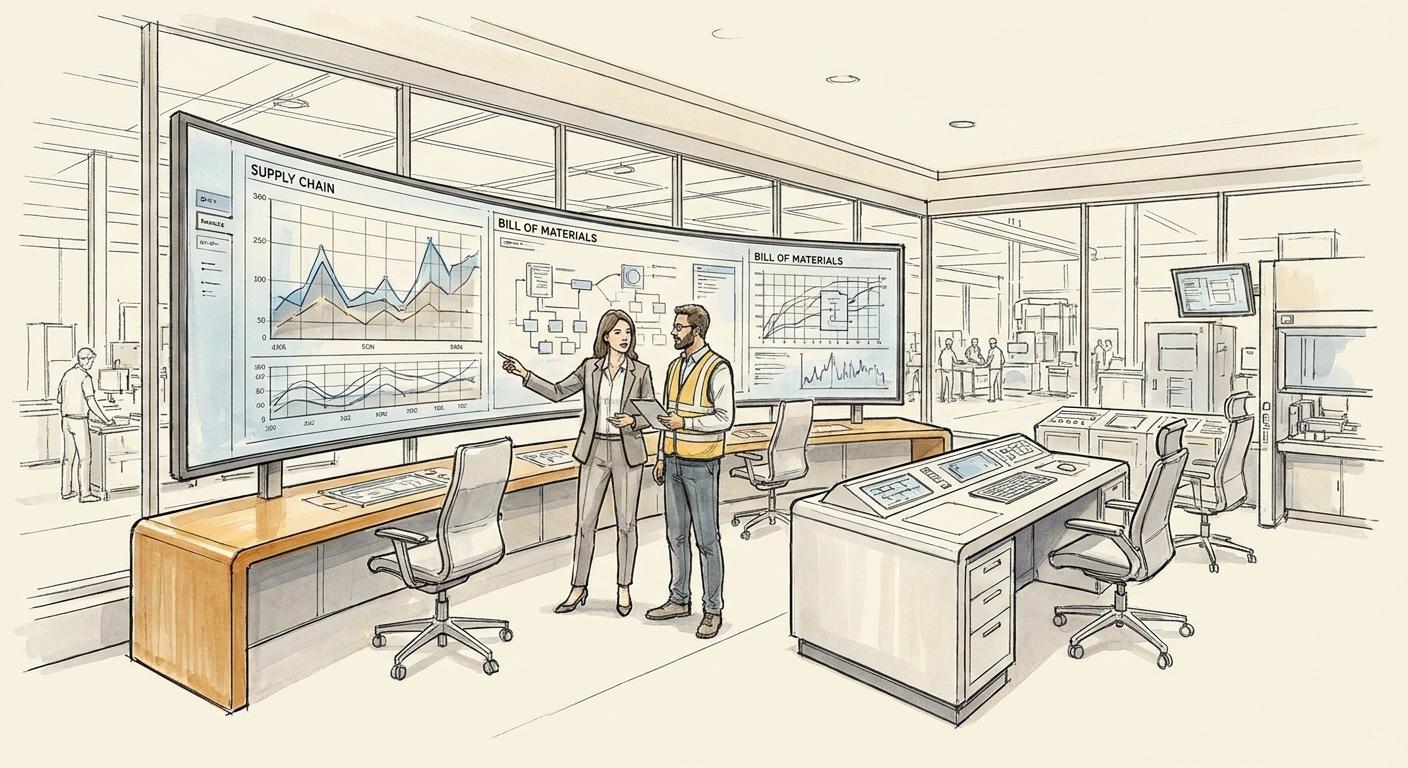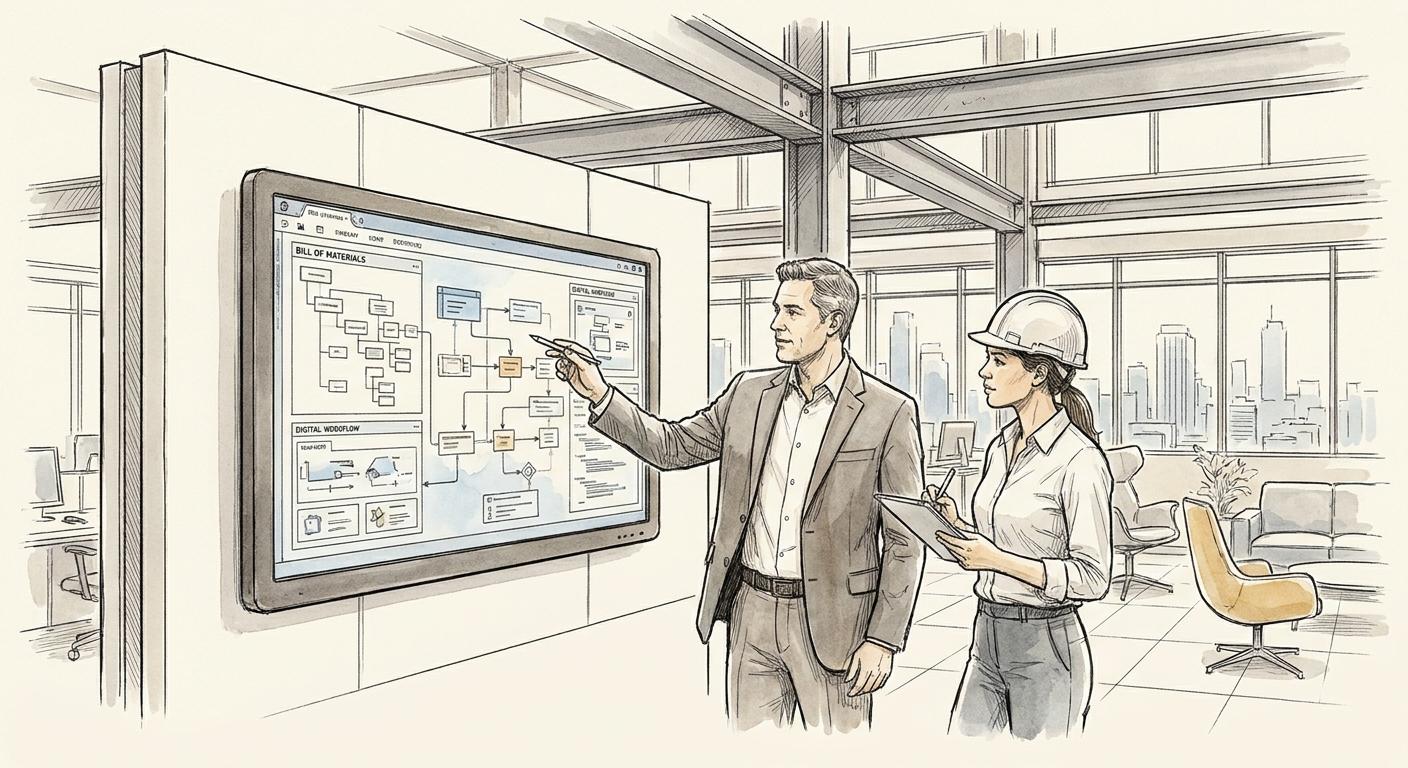


When an engineering team pushes a late-stage revision to a Bill of Materials (BOM) in a PLM system, that update rarely makes it to the enterprise resource planning platform without manual intervention. For a COO or an Operating Partner tracking portfolio value creation, this friction creates an invisible margin drain. Planners spend hours cross-referencing change notes, procurement orders get placed against obsolete revisions, and the plant floor builds scrap because the shop floor schedule does not match the engineering intent.
Engineering change order reconciliation PLM ERP processes are traditionally manual, error-prone, and sluggish. When design changes stall between systems, plants miss delivery windows and absorb unnecessary rework costs. This article examines how machine learning automates this workflow, closing the gap between engineering design and plant floor execution to protect EBITDA.
The Hidden Margin Drain: Why Manual ECO Reconciliation Fails
Most mid-market and enterprise manufacturers operate with a persistent disconnect between their Product Lifecycle Management and ERP platforms. When an engineering change order (ECO) is approved, it triggers a cascade of updates across item masters, routings, supplier lists, and inventory allocations. Because PLM and ERP databases lack native, context-aware synchronization, this work falls on planners and data entry clerks.
This manual handoff introduces severe operational vulnerabilities. A single mistyped part number or a missed revision note on a complex assembly can lead to thousands of dollars in scrapped material before the error is caught on the line. These delays widen the estimate-vs-actual gaps that plague job costing.
For private equity firms holding manufacturing assets, this administrative drag directly harms exit readiness. When operational teams spend 30% of their week reconciling data between disconnected legacy systems, they are not working on throughput optimization or vendor consolidation. The resulting OTIF misses and margin leakage quietly erode the operating leverage that the investment thesis relies upon.
Where Traditional Integrations and Custom Scripts Fall Short
To solve this, IT teams often deploy rigid API middleware or hardcoded scripts to bridge the PLM-to-ERP divide. While these tools handle structured, deterministic updates well, they fail the moment an engineer inputs unstructured notes or non-standard part attributes.
Hardcoded logic requires exact matching on part numbers, unit of measure codes, and revision formats. If an engineer uses a slightly different naming convention or includes critical manufacturing instructions in a free-text field, the automated script rejects the payload or pushes corrupted data into the ERP. Planners must then halt production workflows to investigate the integration failure manually.
Custom scripts also demand continuous maintenance. Every time the engineering team updates their CAD or PLM schema, or the ERP undergoes a minor version upgrade, the integration breaks. Organizations end up dedicating scarce technical resources to maintaining fragile middleware rather than deploying revenue-generating capabilities.
How Machine Learning Solves the PLM-to-ERP Reconciliation Problem
Engineering Change Order (ECO) reconciliation is the process of verifying and synchronizing design modifications from a PLM system with the master data, routing, and bill of materials (BOM) inside an enterprise resource planning (ERP) platform to prevent costly manufacturing errors.
Machine learning for manufacturing data reconciliation bypasses the limitations of rigid rules by using probabilistic matching and natural language processing. Instead of requiring exact string matches, an embedded AI model understands context, semantic meaning, and historical patterns across both systems.
When a new ECO is generated, the ML model parses unstructured engineering notes, identifies substitute components, and flags discrepancies between the old BOM and the proposed revision. If a part description in the PLM system reads "BRACKET, STAMPED, 316SS" while the ERP master lists it as "STAINLESS STEEL 316 BRACKET," legacy scripts flag an error. An ML model recognizes that these entities refer to the exact same part, automatically mapping them and reducing manual review queues.
Furthermore, machine learning models flag high-risk changes before they hit the floor. By analyzing historical scrap data and past ECO error rates, the system can automatically hold a work order if a specific type of revision historically caused assembly failures. This moves the organization from reactive firefighting to predictive quality control.
Step-by-Step Implementation Blueprint for COOs and Operating Partners
Deploying machine learning for PLM ERP integration does not require a disruptive rip-and-replace of core enterprise architecture. A structured, phased implementation model protects active plant floor operations while delivering rapid time-to-value.
- Scope and Data Profiling (Weeks 1-3): Audit historical ECO logs, BOM discrepancies, and ERP error codes. Identify the top three product lines or plants where manual reconciliation causes the highest scrap rates and inventory variance.
- Model Training and Entity Resolution (Weeks 4-7): Train the machine learning models on historical data pairs from both the PLM and ERP environments. Establish confidence thresholds for automated approval versus human review.
- Pilot Deployment and Exception Handling (Weeks 8-10): Run the ML reconciliation engine in shadow mode alongside the existing manual process. Planners review and validate the model's discrepancy flags and auto-mappings to refine accuracy.
- Production Go-Live and Scale (Weeks 11-12): Transition verified ECO workflows to fully automated processing, retaining human oversight only for edge cases flagged by the model as high-risk.
This controlled approach ensures that plant managers maintain absolute visibility and control over master data updates without introducing operational downtime.
Accelerating Time-to-Value: What a 60-90 Day Execution Window Looks Like
Private equity operating partners and manufacturing COOs operate under strict timelines. Waiting eighteen months for a traditional systems integrator to deliver a custom integration is incompatible with a standard three-to-five-year hold period.
By utilizing targeted AI readiness assessments and pre-built ML components, industrial organizations can achieve production-ready ECO reconciliation within a 60-90 day window. The focus centers on deploying a single, high-impact use case that immediately removes administrative friction and stops margin leakage.
When execution partners combine domain expertise in manufacturing operations with rapid software deployment, the results compound quickly. Automating the ingestion and validation of engineering changes reduces manual customer service and administrative effort, freeing up engineering talent to focus on product innovation rather than data entry.
For portfolio companies seeking measurable EBITDA improvement ahead of an exit, solving the PLM-to-ERP data gap is a low-risk, high-leverage initiative. Securing clean, automated data flows between engineering and the plant floor ensures accurate job costing, dependable delivery schedules, and protected operating margins.
Frequently Asked Questions
What is engineering change order (ECO) reconciliation?
Engineering change order (ECO) reconciliation is the process of verifying and synchronizing design modifications from a PLM system with the master data, routing, and bill of materials (BOM) inside an enterprise resource planning (ERP) platform to prevent costly manufacturing errors.
Why do manual ECO updates cause manufacturing delays?
Manual data entry leads to desynchronization between engineering design and shop floor execution, resulting in procurement orders placed for obsolete parts, incorrect routings, scrapped materials, and missed OTIF targets.
How long does it take to implement an ML-based ECO automation tool?
With a targeted execution partner using pre-built models and structured scoping, the first working use case can go live in production within 60 to 90 days.
How does machine learning handle unstructured engineering notes in PLM systems?
Machine learning models use natural language processing to parse free-text descriptions, recognize semantic equivalents, and map non-standard part attributes to the correct master data fields in the ERP platform without requiring exact string matches.
Book a Manufacturing Diagnostic at ifor.ai/solutions/manufacturing

Ira Komarova
COO at iForAI