

Private equity buyers reviewing an industrial asset within a 12-to-24-month exit window have grown skeptical of pitch decks that label basic reporting scripts as intelligent automation. When a portfolio company claims to run an AI-enabled manufacturing platform, sophisticated buyers skip the marketing slides and send technical due diligence teams straight to the data warehouse. If your manufacturing data governance AI exit strategy relies on static spreadsheets, fragmented sensor logs, or unvalidated model training sets, the multiple will take a hit. Preparing for a clean exit requires rigorous data architecture that proves operational leverage and sustainable margin expansion to prospective acquirers.
Why PE Buyers Are Scrutinizing Your Manufacturing AI Claims
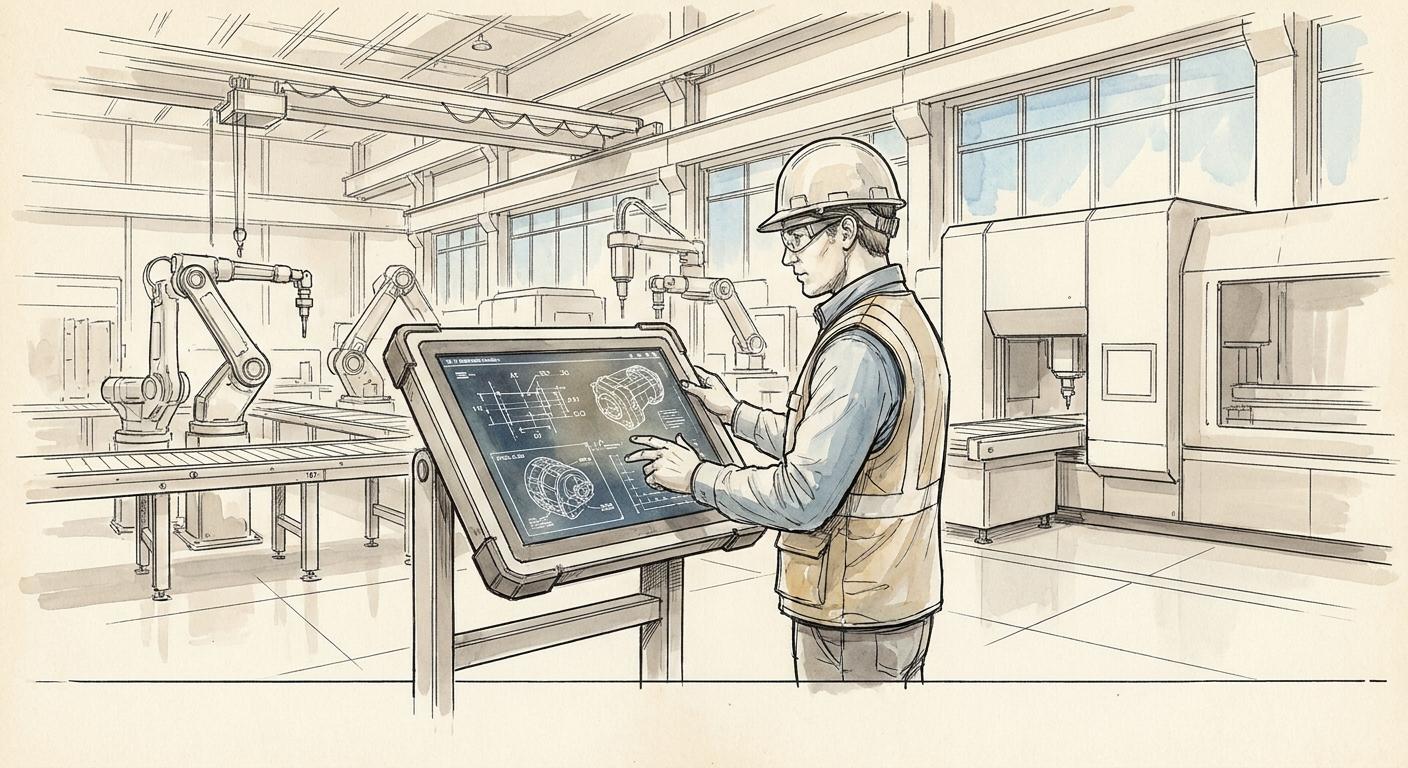
Buyers are no longer paying a premium for stranded proof-of-concepts or pilot projects that live only on a data scientist's local machine. During technical due diligence, acquirers evaluate whether predictive maintenance, automated scheduling, and demand forecasting models are actually integrated into daily shop-floor workflows or if they are fragile demonstrations that will collapse under production scale.
Manufacturing data governance is the framework of processes, controls, and technical standards that ensure shop-floor and enterprise data is clean, secure, and ready to power reliable machine learning models for buyers.
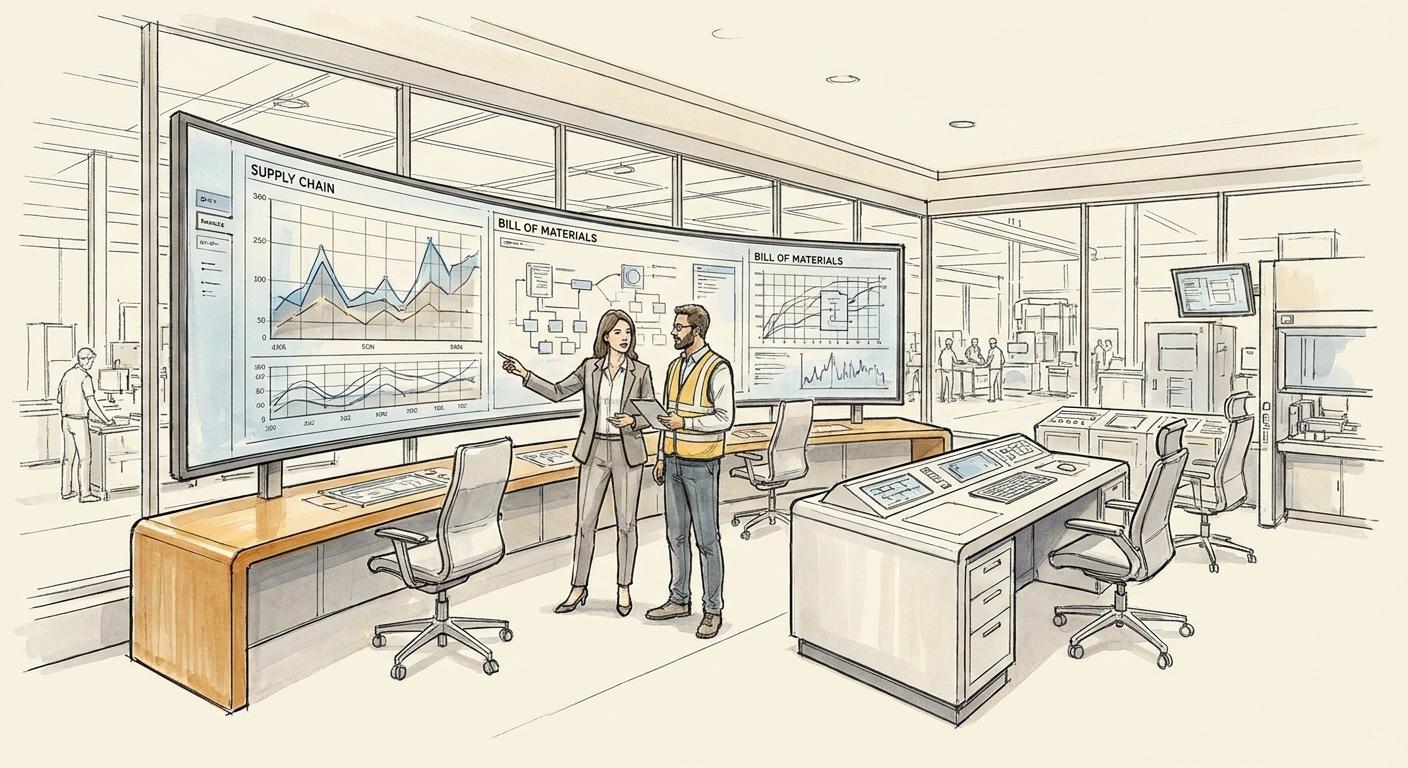
When operating partners present a portfolio company with an established AI readiness score, buyers look for verifiable data integrity. They want to see that AI tools are driving measurable EBITDA improvement rather than consuming capital without clear adoption metrics. Proving this value requires systematic documentation of every data pipeline from the plant floor to the executive dashboard.
Milestone 1: Unifying Siloed ERP, MES, and Shop Floor Data Sources
The most common vulnerability in industrial due diligence is data fragmentation across legacy systems. Enterprise Resource Planning (ERP) databases, Manufacturing Execution Systems (MES), and disparate plant-floor historians often operate in isolation. This creates an estimate-versus-actual gap that obscures true job costing and gross margins.
Establishing a single source of truth is mandatory for any credible AI valuation. Technical due diligence teams will inspect your portfolio company's data architecture to verify that transactional data from the ERP matches physical output recorded by the MES. Consolidating these sources into a centralized data lake provides the foundation needed for machine learning models to analyze throughput bottlenecks accurately and support the broader value creation playbook.
Milestone 2: Establishing Real-Time OT-IT Data Pipelines
Static batch exports are insufficient for modern industrial analytics. Buyers expect operational technology (OT) from CNC machines, automated guided vehicles, and assembly lines to feed live telemetry into production models continuously.
Bridging the gap between plant-floor hardware and enterprise IT infrastructure requires secure, low-latency data pipelines. When telemetry streams in real time, predictive maintenance algorithms can flag equipment anomalies before unexpected downtime impacts on-time in-full (OTIF) delivery metrics. Demonstrating robust OT-IT integration reassures buyers that the platform can scale across additional facilities post-acquisition.
Milestone 3: Implementing Master Data Management (MDM) for Inventory and SKU Consistency
Messy part numbers, duplicate vendor records, and inconsistent cataloging destroy AI-driven inventory forecasting. If different plants use conflicting nomenclature for identical raw materials, machine learning models will generate flawed predictions that inflate working capital.
Master Data Management (MDM) imposes strict governance protocols on product catalogs and bill-of-materials data. Clean, standardized data ensures that automated procurement and demand planning algorithms function with high accuracy. During the exit process, clear SKU consistency demonstrates to buyers that the portfolio company operates with disciplined internal controls and optimized inventory turns.
Milestone 4: Documenting Data Lineage and Model Provenance
Technical due diligence teams will inevitably ask detailed questions regarding regulatory compliance, intellectual property ownership, and algorithmic bias. They need to trace every data point from its source on the shop floor to the final output of the prediction model.
Documenting data lineage means maintaining a clear audit trail that records where training data originated, how it was cleaned, and which personnel authorized model updates. Clear provenance protects the transaction from intellectual property disputes and proves that the algorithms were built on proprietary operational insights rather than restricted third-party data sets.
Milestone 5: Automating Data Quality Audits and Anomaly Detection
Data degradation happens naturally as new machinery is added, software patches are applied, and workforce turnover occurs. Relying on manual data cleaning introduces human error and creates compliance blind spots right when the exit audit is underway.
Automating data quality audits ensures that ingestion pipelines continuously flag missing sensor values, duplicate entries, or out-of-range metrics. Automated validation rules keep models running at peak performance right up to the close of the transaction. This continuous oversight protects EBITDA by preventing bad data from disrupting automated supply chain decisions.
Milestone 6: Tying Data Governance Directly to EBITDA and Margin Expansion
Technical milestones must translate directly into the financial narrative presented to the investment committee. Buyers want to see a direct line from clean shop-floor data to reduced scrap rates, optimized labor utilization, and predictable gross margins.
When data governance supports reliable predictive scheduling, the resulting OTIF improvements reduce costly chargebacks and premium freight expenses. Connecting technical readiness metrics to financial performance validates the operating leverage achieved during the hold period, supporting a higher exit multiple.
Accelerating Exit Readiness with an Embedded AI Partner
Preparing an industrial asset for a high-multiple exit requires specialized technical capabilities that often outpace internal IT resources. Many PE firms attempt to solve this by hiring a single Head of AI, only to watch months pass while trial-and-error projects stall out before reaching production.
iForAI provides an alternative execution model designed for the fast timelines of private equity value creation. Through a dedicated team of 35+ specialists, we harden data pipelines, implement master data management, and get production-ready AI use cases live in 60 to 90 days. We focus on upskilling existing operational teams so that purchased tools achieve high adoption and deliver undeniable ROI before buyers walk through the door.
Frequently Asked Questions
How early in the hold period should we start preparing data governance for an exit?
Data governance preparation should begin during the first 100 days post-acquisition to establish clean baselines and ensure machine learning models have sufficient historical training data before the formal exit process starts.
What do technical due diligence teams look for in an AI-enabled manufacturer?
Acquirers evaluate clean API endpoints, fully documented data lineage, demonstrable reductions in estimate-versus-actual variances, and operationalized models running in production rather than stranded proof-of-concepts.
Can we achieve these milestones if our portfolio company is struggling with legacy ERP systems?
Yes, modern data integration layers can bridge legacy OT and IT environments without requiring expensive, disruptive, multi-year ERP replacement projects that drain operational capital.
Talk to an AI expert or see how iForAI works with manufacturers

Ira Komarova
COO at iForAI