

Frequent changeovers in high-mix, low-volume manufacturing plants create a persistent drag on On-Time In-Full (OTIF) performance and operating margins. When plants must switch production lines multiple times per shift, setup time eats directly into available capacity, leading to estimate-vs-actual gaps that erode plant profitability. Traditional time-and-motion studies often miss the micro-delays accumulating during complex tool swaps, fixture adjustments, and first-article inspections. Integrating computer vision line changeover strategies provides plant leadership with a reliable mechanism to capture hidden capacity, reduce setup duration, and protect margins without requiring massive capital expenditures on new machinery.
The High-Mix Changeover Bottleneck: Why Traditional SMED Has Hit a Wall
Single-Minute Exchange of Die (SMED) methodology remains the standard framework for reducing setup times by separating internal and external tasks. Yet, in high-mix environments, traditional SMED hits a wall because process variation outpaces manual observation. Plant managers rely on clipboard audits and stopwatch studies that capture broad averages but miss the micro-wasted time occurring during every tool swap and parameter adjustment.
Margin leakage accelerates when operators spend valuable minutes hunting for the correct components, verifying torque specifications manually, or waiting for quality control sign-offs. These recurring friction points contribute to chronic OTIF misses and prevent plants from scaling production volume. Operations teams need automated visibility into the exact sequence of events unfolding on the shop floor. Without objective, real-time data on every step of the setup process, plants continue to lose productive hours to preventable delays and setup errors.
Computer vision in manufacturing is the use of AI-powered cameras and image processing algorithms to automatically inspect, verify, and guide assembly and setup processes on the factory floor without manual intervention.
1. Automated Setup Verification and Error-Proofing
Setup errors account for a significant percentage of first-piece scrap and immediate line stoppages after a changeover. When an operator installs the wrong fixture, selects an outdated program, or positions a guide rail incorrectly, the subsequent teardown destroys shift productivity. Setup reduction manufacturing initiatives often stall because human verification remains prone to fatigue and oversight.
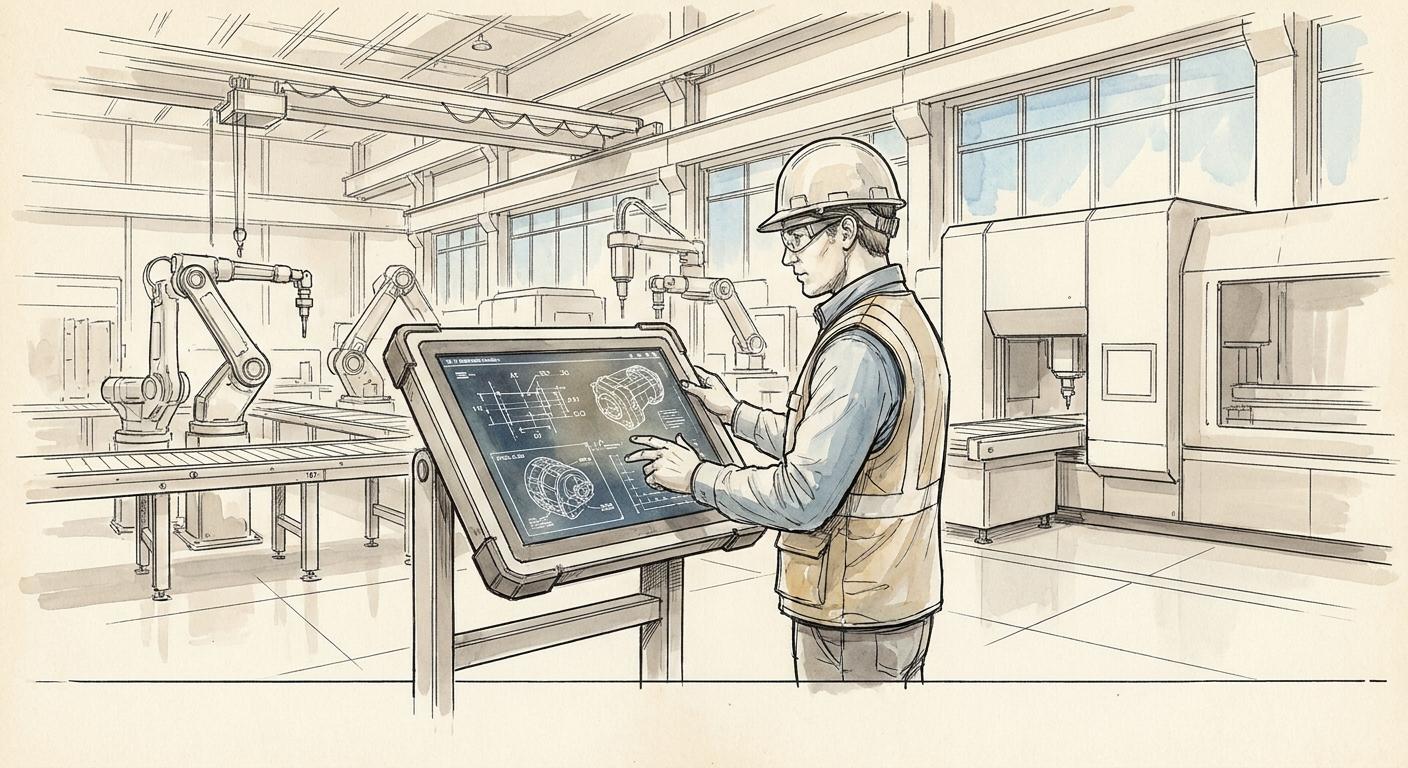
Deploying edge cameras above the workstation allows the system to instantly scan tools, part numbers, and fixture orientations before the line starts. The vision model compares the physical setup against the digital work order pulled from the MES. If a component is misaligned or incorrect, the system halts the start sequence and flags the exact discrepancy on the operator display. This automated error-proofing eliminates first-piece scrap and ensures the line runs correctly on the first attempt.
2. Real-Time Guidance for Operators During Complex Changeovers
High-mix plants often struggle with high employee turnover and heavy reliance on tribal knowledge. When seasoned operators transition a line, changeover times remain low, but newer shift workers require extended periods to complete multi-step sequences. This variance makes scheduling difficult and leads to unpredictable throughput across shifts.
High-mix low-volume automation through vision-guided prompts helps standardize changeover execution across all shifts and skill levels. By projecting visual cues directly onto the work surface or displaying step-by-step instructions triggered by camera feeds, the system guides operators through the exact removal and installation sequence. The camera confirms the completion of each step before unlocking the next instruction, significantly reducing cognitive load and cutting onboarding times for temporary or junior staff.
3. Automated Tracking of Internal vs. External Changeover Steps
Improving changeover efficiency requires separating internal tasks (performed while the machine is stopped) from external tasks (performed while the machine is running). However, manual logs of these durations are notoriously inaccurate, as operators rarely stop to record timestamps while managing a frantic line setup.
SMED computer vision models automatically timestamp and analyze video feeds of every changeover without manual data entry. The system segments the operation into distinct phases - such as tool removal, cleaning, fixture placement, and calibration - generating objective data on where time is lost. Plant engineers can review these automated breakdowns to identify whether a delay stems from operator hesitation, missing tooling, or waiting for material handling support, allowing for targeted process improvements.
4. Tool and Die Condition Inspection During Removal
Premature wear and minor damage on tooling frequently go unnoticed during manual changeovers, leading to unexpected jams, quality defects, or catastrophic failures mid-production. Operators focused entirely on speed during a setup rarely perform detailed visual inspections of removed components.
Automated changeover verification includes scanning tools and dies the moment they are removed from the machine. Vision algorithms detect chips, cracks, wear patterns, or missing inserts instantly, routing damaged components directly to maintenance rather than back into the active tool crib. Catching tooling defects during the teardown phase prevents downstream production interruptions and protects the next batch from unexpected quality failures.
5. Automated Golden Batch Verification and First-Article Inspection
Waiting for quality control inspectors to manually measure the first unit off the line creates an invisible buffer of idle machine time. In plants running multiple short batches per day, cumulative waiting time for quality sign-offs can consume hours of potential production capacity.
Integrating vision systems with digital twin specifications allows for instant comparison of the first produced unit against strict tolerance models. The camera captures high-resolution dimensions, surface finishes, and critical features, verifying compliance against the production recipe within seconds. This rapid sign-off process eliminates the bottleneck of manual metrology and accelerates the time to full-speed production.
How to Pilot Computer Vision Without Disrupted Production Schedules
Deploying new technology on a busy shop floor requires minimizing disruption to active production runs and daily output targets. Operations leaders can mitigate risk by implementing lightweight, non-invasive vision edge-boxes on a single high-mix line rather than attempting an enterprise-wide rollout.
Proof-of-concept projects typically focus on a single bottlenecked line to establish baseline metrics and demonstrate rapid time-to-value. By partnering with specialized implementation teams, manufacturers can integrate vision data directly with existing automation infrastructure to capture measurable OEE gains within 60 to 90 days. This controlled approach proves the operational value of the technology, builds operator trust, and establishes a repeatable playbook for scaling vision across additional plant facilities.
Frequently Asked Questions
How does computer vision reduce changeover time in high-mix manufacturing?
Computer vision eliminates manual verification steps, automates quality sign-offs, and guides operators in real time through complex sequences to prevent setup errors. By replacing manual checklists with automated visual validation, plants remove friction points that cause extended downtime between batches.
Can computer vision be integrated with existing MES and ERP systems?
Modern edge-AI solutions connect directly to existing manufacturing execution systems and enterprise resource planning software via standard API protocols. This integration allows the vision system to pull active work orders, log precise changeover durations, and trigger automated quality workflows without replacing current IT infrastructure.
What is the typical ROI timeline for manufacturing computer vision projects?
Manufacturers typically observe measurable results, improved line uptime, and operational efficiency gains within 60 to 90 days of pilot deployment on a single high-mix production line.
Book a Manufacturing Diagnostic at ifor.ai/solutions/manufacturing

Ofer Hermoni, Ph.D.
Founder & Chief AI Officer at iForAI